
Why People Ask Your Age in Korea So Early
If you grew up in a culture where age feels private, one moment in a K-drama can land like a shock. Two characters meet for the first time, and within seconds someone asks, “How old are you?” It can sound personal. It can sound like a test. It can even feel like someone is trying to place you “above” or “below” them.
But in many everyday Korean interactions, the age question isn’t meant as a judgement of your value. It’s often a shortcut to something very practical: choosing the safest way to speak.
In Korean, how you speak can signal distance or closeness in a way English usually doesn’t. The words themselves matter, but the “level” of the words matters too. That’s why age can work like a setting—less a curiosity about your number, more a quick way to avoid stepping on a social landmine.
What Changes Right After the Age Question
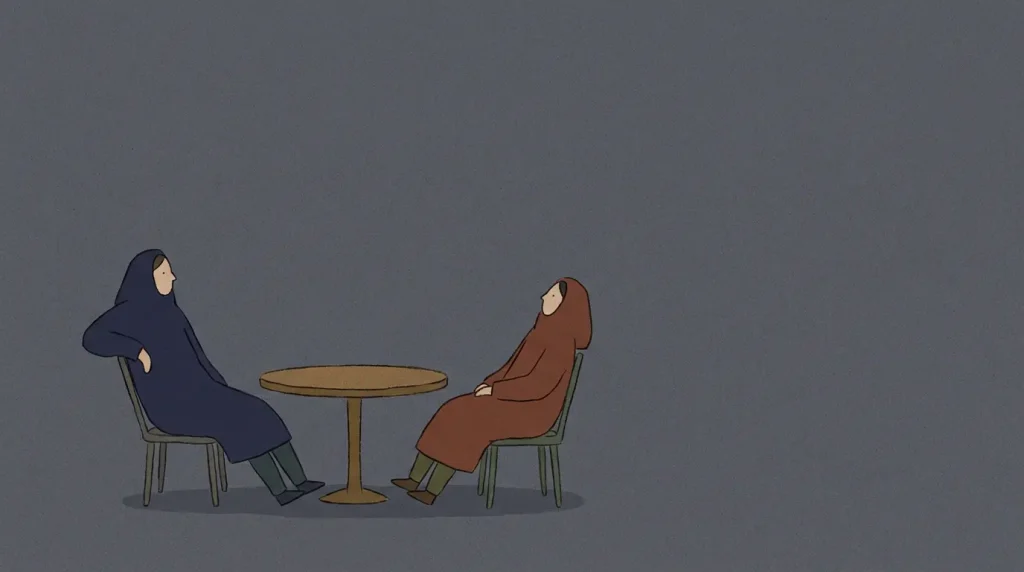
International viewers often react to the age question because they can see the mood shift immediately. A character’s tone changes. The formality changes. The rhythm of the conversation changes. From the outside, that looks like power.
From the inside, it often feels like error prevention.
Mini Dialogue 1: “What should I call you?”
Here’s a very common Korean first-meeting pattern—especially in casual settings where people aren’t sure whether they can be informal yet:
“Hi, nice to meet you.”
“Nice to meet you too.”
(brief pause) “Can I ask… how old are you?”
“I was born in 1994.”
“Ah, got it. Should we speak comfortably, then?” / “Okay, I’ll keep it polite.”
The point isn’t the exact phrasing. The point is what the speaker is trying to solve. They’re trying to decide how to address you and which speech level will feel natural. If they guess wrong, the conversation can become awkward later—especially if the relationship continues.
Mini Dialogue 2: When you find out late and everything feels off
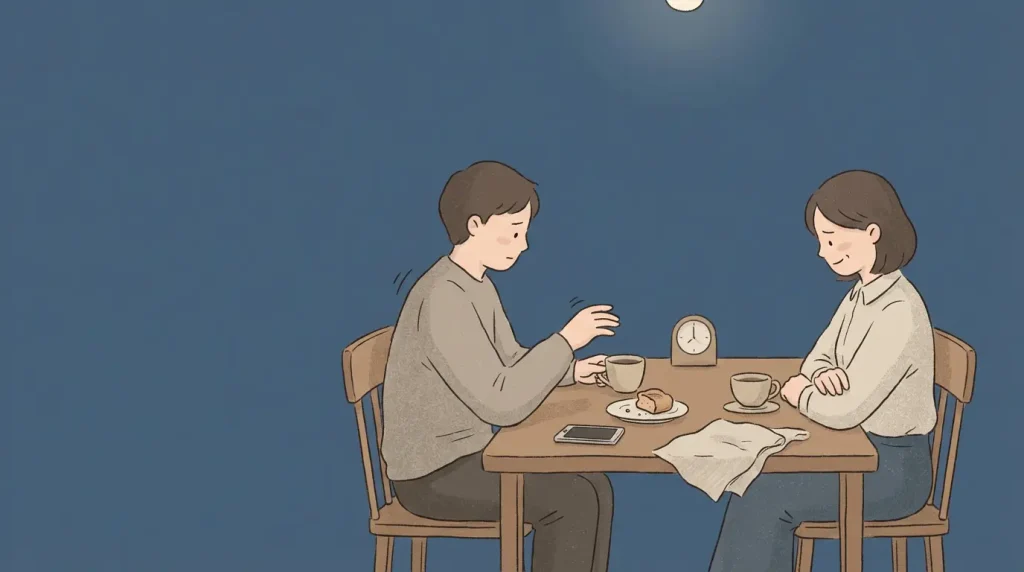
Sometimes Koreans ask early because they’ve learned what happens when they don’t ask.
Two people talk for hours. They feel friendly. They speak casually. Then someone mentions their birth year.
“This is so fun. You think so too, right?”
“Yeah, totally.”
“Oh, by the way—I’m a 1992 baby.”
“…Oh. I see.”
At that moment, both people may feel their brain recalculating. Do we change speech level now? Was my casual tone disrespectful? Do we switch to a different way of addressing each other?
No one was trying to be rude. The problem is that the “settings” of the relationship got updated late. In Korean, that late update can feel like a small crack in the flow.
So for many people, asking early is less about ranking and more about protecting the conversation from future embarrassment.
Why It Still Looks Like “Hierarchy” to Outsiders
It’s understandable that the age question reads as hierarchy. You ask age, then speech changes. That looks like a system.
But in many situations, the “above/below” feeling is not about domination. It’s about what kinds of language choices are considered safe. Korean has multiple ways to say the same thing depending on who you’re talking to. So people use age as a quick coordinate.
That said, not every age question is innocent. Context matters.
If the question is asked calmly in a first-meeting scene, it often functions like a setting tool.
If it’s thrown out during conflict, it can function like a weapon.
The “Fast Birth Year” Problem and Why Koreans Say Things Get “Messy”
If age were only a number, Koreans wouldn’t have so many words for situations where relationships become confusing. One famous example is the “fast birth year” situation (from a period when some children entered school a year early).
Here’s why it matters. Someone born in 1991 could end up in the same school grade as people born in 1990. In school, that grade creates a strong “same group” feeling, so friendships form naturally.
Later, in adult life, that same person might meet someone born in 1991 who entered school on the normal timeline. They’re the same birth year, so they might casually decide, “We’re the same age—let’s be friends.”
Everything feels fine until there’s a social moment where those two worlds collide.
Imagine the early-entry person introduces both friends in the same room:
“This is my friend from school (born 1990). And this is my friend from my birth year (born 1991).”
Now the two people facing each other have a one-year difference. One context says “we’re all friends.” Another context says “there’s an age line.” And suddenly the most sensitive part of Korean interaction—the address terms and speech level—becomes unclear.
This is the kind of moment Koreans describe as “messy,” not because anyone is fighting for a throne, but because the rules that normally make conversation smooth are colliding.
Why K-Dramas Make the Age Question Feel Harsher
In real life, the age question often comes with softening language. It’s careful. It’s framed as a small check.
In dramas, you’ll also see a different version—usually in conflict. Instead of a polite, careful question, you might hear something closer to:
Mini Dialogue 3: When it becomes a power move
“Are you done talking?”
“What makes you so confident?”
“Hey—how old are you?”
In that moment, the question isn’t about setting the conversation safely. It’s about pushing the other person back into a position. Dramas like clear emotional turns, so they use this question to sharpen conflict quickly.
That contrast is important. The same question can mean “let’s set the tone” in one scene and “know your place” in another.
Closing: Age as a Conversation Setting, Not Just a Number
When people ask your age in Korea, they’re often trying to choose the safest way to speak—how formal to be, how close to act, and what kind of address will feel natural. That’s why the question appears early, and that’s also why it can feel jarring to international viewers who don’t expect age to shape language so much.
In K-dramas, the effect becomes even stronger because writers use the question in two different ways: as a neutral tool in first-meeting scenes, and as a sharp move in conflict scenes. If you watch for the mood of the moment—calm setting versus heated power—what looks confusing at first starts to make more sense.
