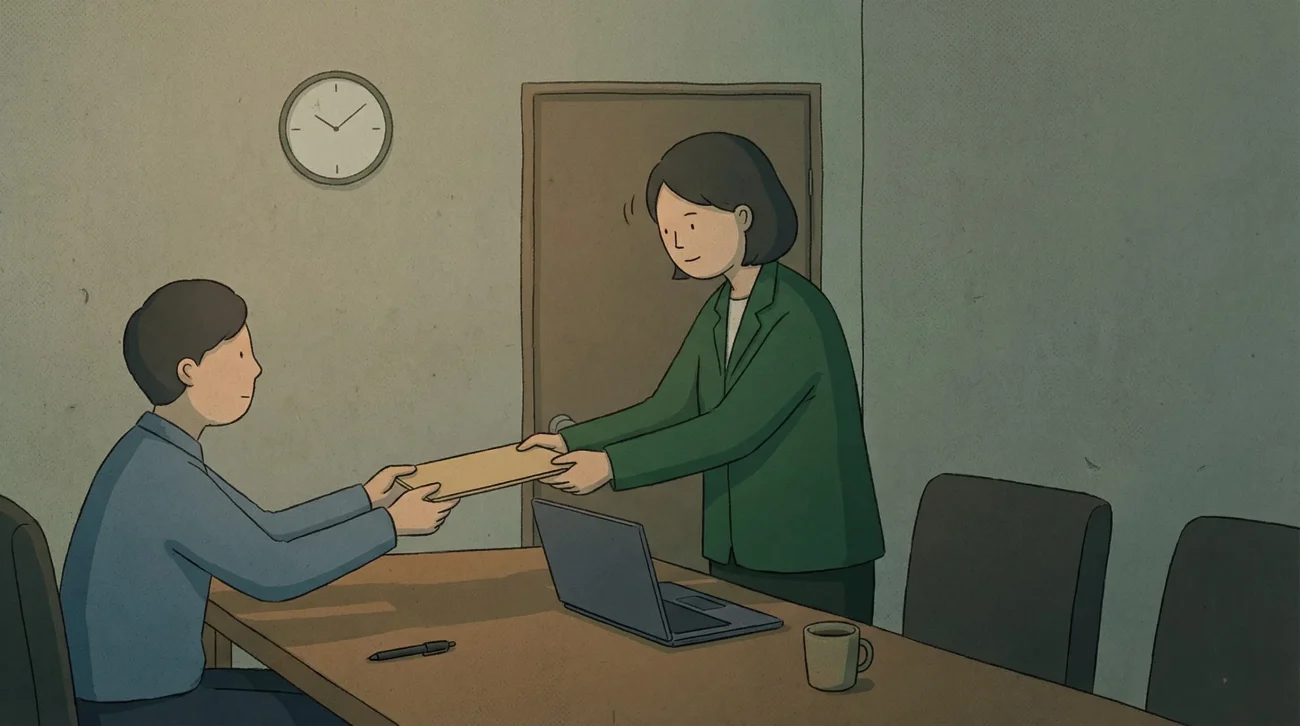
The Most Common Mistake: Overcorrecting Korean Two-Hand Etiquette
If you’re visiting Korea after watching K-dramas, one gesture can stand out before you learn any words: overcorrecting korean two-hand etiquette. You see a document handed over with both hands, a small gift received the same way, or one hand holding the item while the other supports the wrist as if one hand isn’t “enough.” It’s easy to read that as a hidden rule you’re supposed to get right, and the pressure can creep in fast when you imagine doing it wrong in real life.
What often creates the awkward moment, though, isn’t simply “one hand vs. two hands.” The awkwardness tends to show up when the gesture becomes bigger than the moment. Not rude. Not offensive. Just a brief stiffness in the air, like everyone suddenly noticed the movement more than the conversation. That’s the moment most first-time visitors worry about, because it feels like you tried to show respect and accidentally changed the mood.
Why it feels like a test when you first arrive
When you first notice korean two-hand etiquette on screen, it can look strict and precise, like there’s a correct form you’re expected to perform. That’s why the first questions are usually practical. Is it required every time? Is one hand automatically careless? Why does the “supporting hand” exist? How do people decide which version to use without thinking about it?
Those questions aren’t really about the object being passed. They’re about reading the relationship temperature in that moment: respectful or casual, close or distant, private or public, relaxed or formal. And because dramas make the gesture very visible, it can feel like the gesture carries a bigger social meaning than it actually does in everyday life.
A helpful shift is to stop treating it like an exam and start treating it like tone.
What korean two-hand etiquette is usually doing in the room
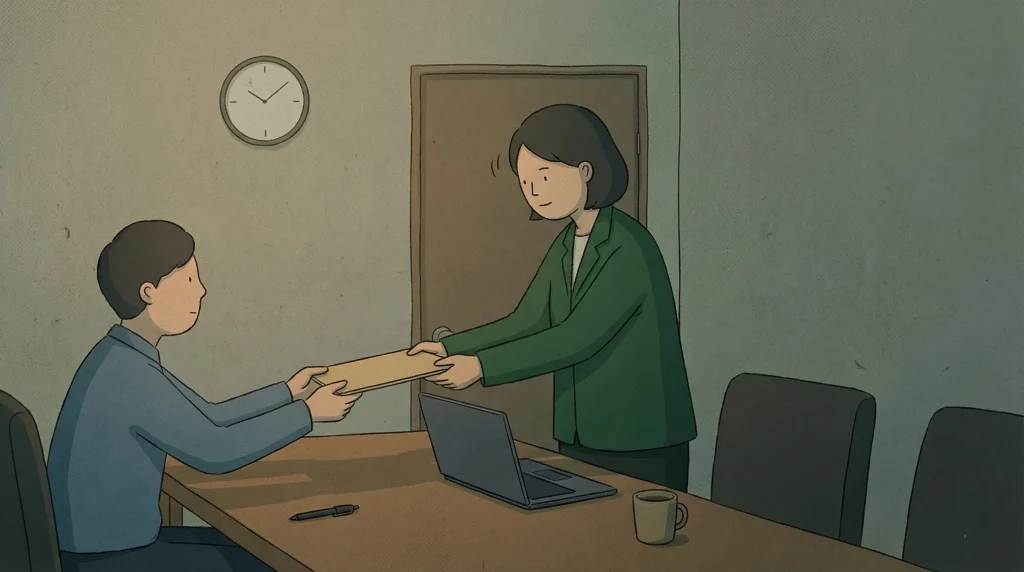
Many Koreans learn early that giving or receiving something with two hands is a safe way to show respect, especially with older people or in formal situations. It becomes muscle memory, not because everyone is constantly calculating hierarchy, but because it’s a simple “low-risk” option when you want to be careful. In adult life, that same habit often extends beyond age. Workplaces, first meetings, official settings, and situations where you want to stay polite can all pull the gesture out naturally.
In that sense, korean two-hand etiquette works like a tone switch. It’s closer to using a more formal speaking style than reciting a rule. The hands aren’t just “polite hands.” They signal, “I’m keeping this moment careful.” That’s also why you’ll sometimes see it between people who aren’t far apart in age—because the trigger can be formality, not just seniority.
Overcorrecting korean two-hand etiquette stands out for the same reason a sudden overly formal speaking style stands out in a relaxed room: the body turns the volume up, and the room notices the jump.
What overcorrecting usually looks like (and why it reads “off”)
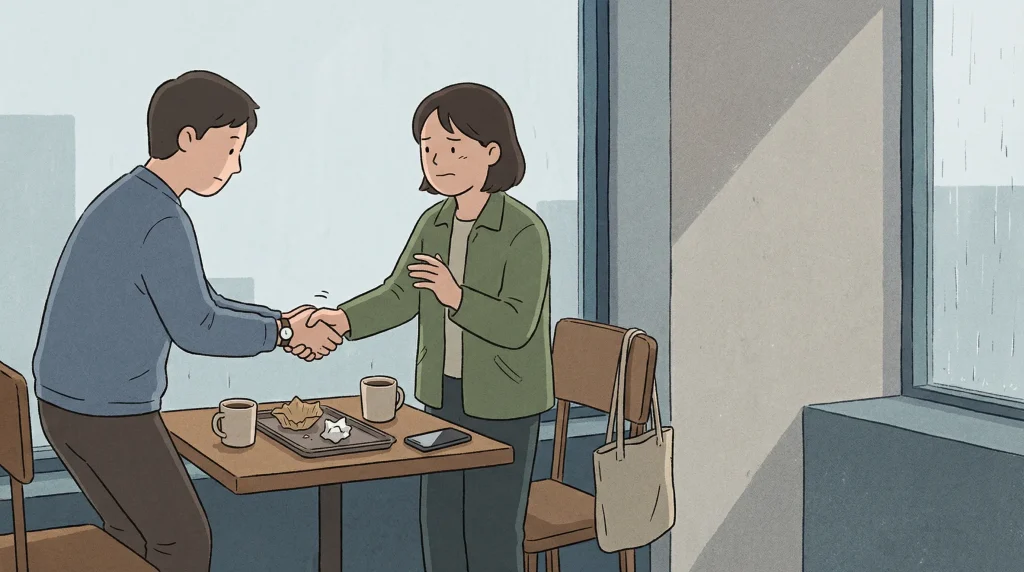
Overcorrecting doesn’t mean “using two hands.” It usually means adding weight, length, or performance to a motion that would normally be quiet. One common example is a two-hand handshake between peers in a casual setting. If one person suddenly does a very formal handshake—shaking with one hand while the other hand covers the wrist or forearm—it can create a tiny pause, as if the room briefly asked, “Are we supposed to be this formal right now?”
The detail that makes it feel “acted” is often extra motion, not the size of the object. A gesture that becomes unusually large for the situation, a stiff posture that turns a simple handoff into a mini-ceremony, or a hand position that lingers too long can freeze the rhythm. Hesitation also matters. If someone looks like they’re trying to remember choreography—where to place the second hand, how far to bow, how long to hold—it becomes visible, and the visibility itself is what makes it awkward.
A personal image that captures it well is “too much body.” When the movement starts to feel like a performance rather than a natural handoff, people notice the mismatch before they judge the manners.
Seven fixes that keep the moment natural without giving up respect
1) Match the room before you match the rule
A simple handoff at a café counter and a document exchange in a meeting room are different worlds, even if the object is similar. In fast, casual places, people move with speed and lightness, and a big ceremonial gesture can slow the rhythm. In formal settings, the same two-hand gesture can feel completely normal because the room is already “slower” and more careful. When you’re unsure, notice the pace of everyone’s body language and let that pace guide yours.
2) Keep the motion smaller than your intention
Respect doesn’t need to be large to be real. If you choose two hands, make it compact: closer to your body, with minimal flourish, and without lifting the object up like it’s an award. Overcorrecting korean two-hand etiquette tends to happen when the body tries to “prove” respect. The quieter version usually reads more sincere because it blends into the moment rather than taking it over.
3) Shorten the “hold time” so the air doesn’t freeze
A surprisingly common awkward detail is how long the hands stay in the position. If you hold the item out and keep your hands there for an extra beat, the moment can feel stuck. A smoother approach is to offer, let the other person take it, and release naturally. People often accept quickly anyway, not to “correct” you, but to keep the flow comfortable.
4) Let the other person lead when you’re uncertain
If you’re not sure whether a moment calls for two hands, a gentle way to avoid overcorrection is to follow the other person’s energy. If the other person uses one hand casually, mirroring that tone can be safer than suddenly escalating formality. If the other person presents something carefully with two hands, meeting that level is rarely awkward. This keeps the exchange relational instead of rule-based.
5) Use your face to soften the moment, not your hands to amplify it
Many awkward moments come from seriousness that doesn’t match the vibe. A small, natural smile and steady eye contact can carry warmth even when your hands are a little formal. If you look tense while doing a formal gesture, the tension becomes the message. If your expression stays relaxed, the same gesture reads as simple politeness rather than a rigid performance.
6) If your hands are full, choose practicality without guilt
Real life is messy. People carry bags, phones, cups, umbrellas. In those moments, one hand is not a moral failure—it’s just logistics. Most people read the situation first: you’re juggling something, you’re moving quickly, you’re in a tight space. If you want to add a respectful touch, the “supporting hand” can be subtle, but it’s never worth creating danger or awkward contortions just to follow a drama-like form.
7) If you realize you overdid it, don’t explain—just continue
Trying to fix awkwardness by explaining it often makes it heavier. If you notice you went too formal, the easiest recovery is a natural continuation: accept the next beat of conversation, shift your posture back to relaxed, and move forward. In many cases, the other person will already be smoothing the moment with a quick acceptance or a light smile. Let that smoothing work.
A small reset is often more graceful than a big apology.
How people usually read it in everyday life
Here’s the reassuring part: most people don’t treat overcorrecting korean two-hand etiquette as a serious problem. If you look like a visitor trying to be respectful, the effort is often appreciated. A common reaction is simply, “They studied,” followed by a quick move forward so the moment doesn’t drag.
That’s why even when the timing is slightly off, the relationship rarely takes damage. The exchange becomes a tiny wobble that the conversation absorbs. And if someone finds it a bit funny, it’s often the gentle kind of amusement that comes from watching someone try sincerely, not the harsh kind that judges.
Why it looks louder in K-dramas than it feels in real life
K-dramas compress social information. They need to show distance, hierarchy, caution, and formality quickly, sometimes without any explanation. Gestures like korean two-hand etiquette are perfect for that because they communicate mood in half a second.
Real life is less consistent. People multitask. They rush. They switch tones depending on who’s nearby. A handoff at home can be casual, while the same handoff in a public, formal space can become more careful because the “room” changed. So if drama etiquette feels loud, it’s often because the camera is using the gesture as a shortcut for emotional context.
A simple way to think about it next time
Instead of “Do I have to use two hands?”, a more useful question is “What does this moment need?” If the moment is formal, two hands usually feel easy and natural. If the moment is casual, the respectful version is often just a smaller motion, a relaxed face, and a pace that matches the room.
Korean two-hand etiquette isn’t meant to be a performance you perfect. It’s a tool people use to keep the vibe aligned—and the quiet version is usually the one that works best.
