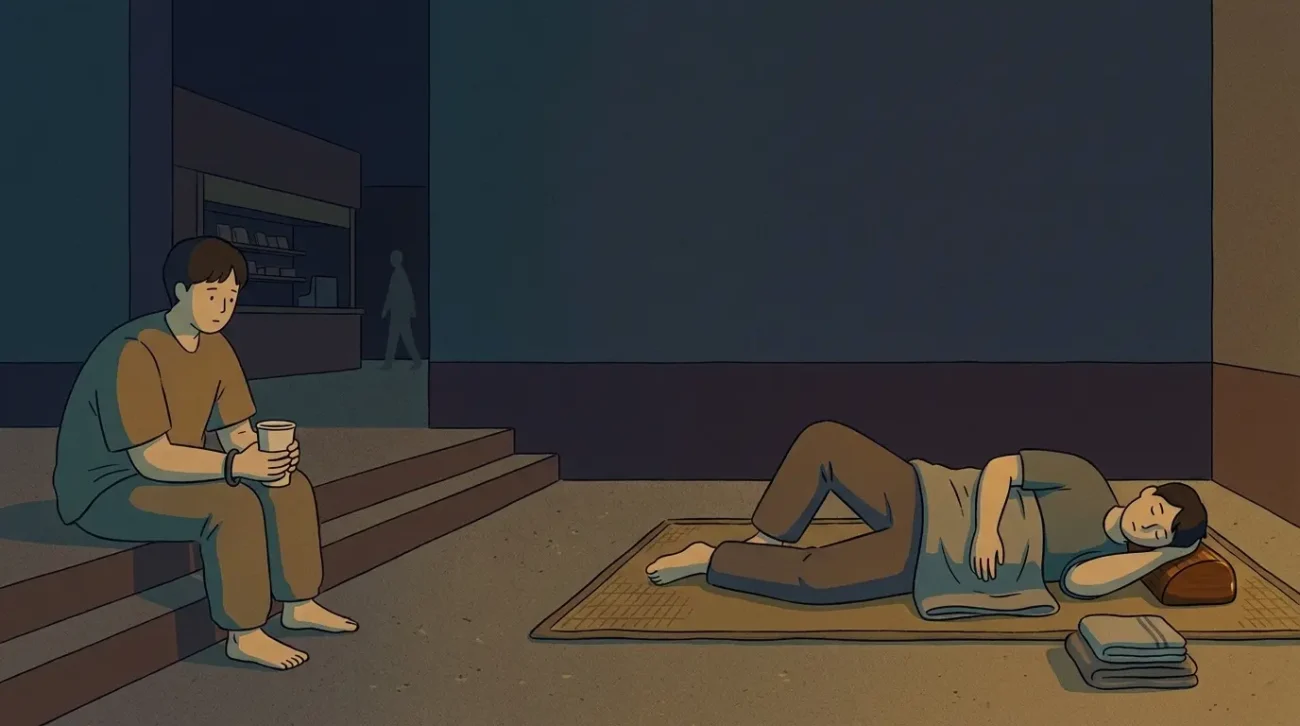
When I watch a drama and see a wide room full of people in matching shorts and T-shirts, towel hats on their heads, someone peeling eggs, someone asleep flat on the floor, I understand why a first-time viewer pauses. The place looks like a sauna, a lounge, and, somehow, a family living room all at once. But to me, that scene never felt strange. I grew up going there with my parents, I went there on dates with my boyfriend, and I have even slept there after a work dinner because I was too tired to make it all the way home before work the next morning.
That is why a jjimjilbang (찜질방) never stays in my head as one neat image. It is a bathhouse, yes, but also a place to warm up, a place to eat eggs and sikhye (식혜), a place that somehow still carries the air of dawn and old family memories. People who are new to Korea often ask me if it is just a Korean sauna. I always feel that answer falls a little short. A jjimjilbang is a place to wash, but also a place to stay. It is a place to rest, but also a place to spend time.
And there is one word that matters before anything else: jjimjil (찜질). It means applying heat to the body, warming it deeply, almost like pressing warmth into your skin. Koreans even say morae jjimjil (모래찜질) for lying in hot sand at the beach. So a jjimjilbang is not just a room that happens to be hot. The whole idea starts with warming the body on purpose, and then building a place around that feeling.
That becomes clearer once you step inside.
Before Jjimjilbang, There Was the Public Bathhouse
When I think back, the real starting point is not the modern jjimjilbang but the older public bathhouse. There were always bathhouses, but not always these all-night places where people washed, rested, ate, lay down, and sometimes slept. In the older rhythm I remember, the bathhouse closed at night, and once you were done washing, you went home. Then, sometime in the early 2000s, twenty-four-hour jjimjilbangs began spreading more widely, and the feeling of the place changed. It stopped being somewhere you passed through and became somewhere you could remain.
That was what felt new to me at first. A bathhouse had always been a short errand. A jjimjilbang made the day feel longer. When I went with my parents, we would wash, scrub, change clothes, and then stay there for a while. It did not feel like a simple convenience. It felt like a place designed to hold a family in the same space a little longer. Later, it also made sense as a date place for young couples who did not have much money. You could eat, sit, talk, rest, and spend hours in one building without doing anything dramatic at all.
So when I think about it now, a jjimjilbang feels less like an oversized sauna and more like a place that learned how to keep the after-part of bathing from ending too quickly.
If You Ask Me Why Koreans Go to a Jjimjilbang, I Can Never Give Just One Answer
If someone asks me why I go to a jjimjilbang, I always get stuck trying to choose only one reason. When I was young, it was a family place because I followed my parents there. Later, it became a date place. On other days, it was simply a shelter for a tired body. After a company dinner, when the buses and trains had stopped and I was too exhausted to take a long taxi ride home, I went to a jjimjilbang instead. I have slept there badly, half-curled on a mat, and then gone to work the next morning. It may sound odd if you have never lived here, but to me it never felt like a random decision.
One of the memories that stayed with me most is going to a neighborhood jjimjilbang around four in the morning with my mother. The air at that hour does not feel like daytime at all. There are fewer people, your body is still half asleep, and then you step into hot water and come back out feeling as if the day started a little earlier than it was supposed to. Because of memories like that, a jjimjilbang feels to me less like a place with one fixed purpose and more like a place that appears in certain moods of life. On days when I am tired, on days when I want to spend more time with someone, on days when I do not want to go straight home just yet, it comes to mind.
That is why I can never reduce it to one function and be satisfied with the answer.
The First Visit Feels Confusing in Small, Unexpected Ways
The first confusing part is often not the hot rooms but the small system at the entrance. At the front desk, you are given clothes, towels, and a rubber ring that goes on your wrist or ankle. That ring matters more than it looks like it should. It is not only the key to your locker. In many places, it is also how purchases are tracked inside — food, drinks, or a session with a sesinsa (세신사) are all charged through it and settled as one total when you leave. The base entry fee covers the facility itself, but anything you add inside goes onto the ring. If I were sending someone for the first time, that is probably the first thing I would warn them not to lose. It is tiny, but it can become the most inconvenient missing object in the building.
The number on the ring matches your locker, and once you change clothes, it stays with you. My own habit has usually been to go into the bath area first, wash, scrub, and only then come back out in the jjimjilbang clothes. Other people do it differently, but that order is what settled into my body over time. Nobody sat me down and taught it to me as a rule. It just became my rhythm.
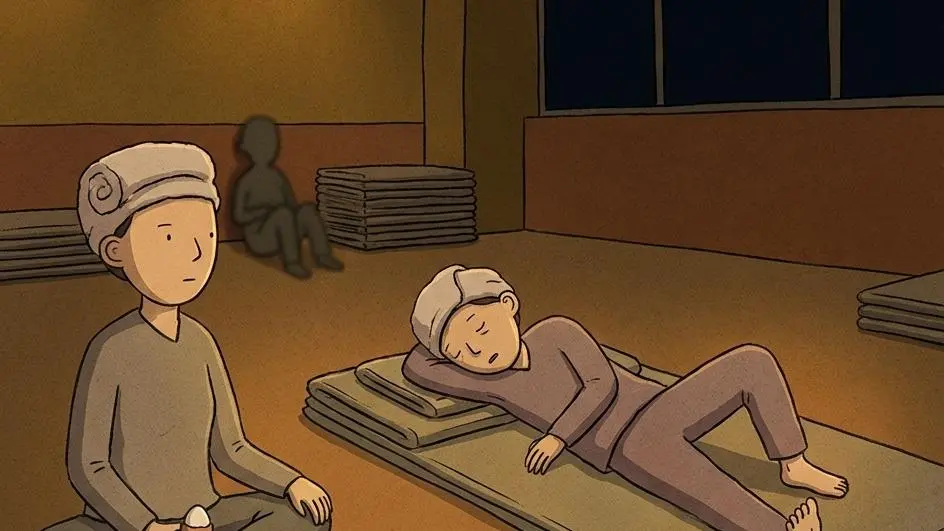
And then there is the thing that first-time visitors notice immediately: the towel hat. People twist the towel into what looks like sheep ears and wear it on their heads. We call it yangmeori (양머리). The funny thing is that Koreans did not always do this as some ancient fixed tradition. It spread much more widely after appearing in dramas and variety shows, and now it feels almost inseparable from the image of the jjimjilbang itself. It is one of those cases where TV did not just reflect a habit. It helped make the habit more visible and more common.
Once those little details begin to make sense, the whole place becomes easier to read.
You Cannot Really Understand It Without the Scrubbing Culture
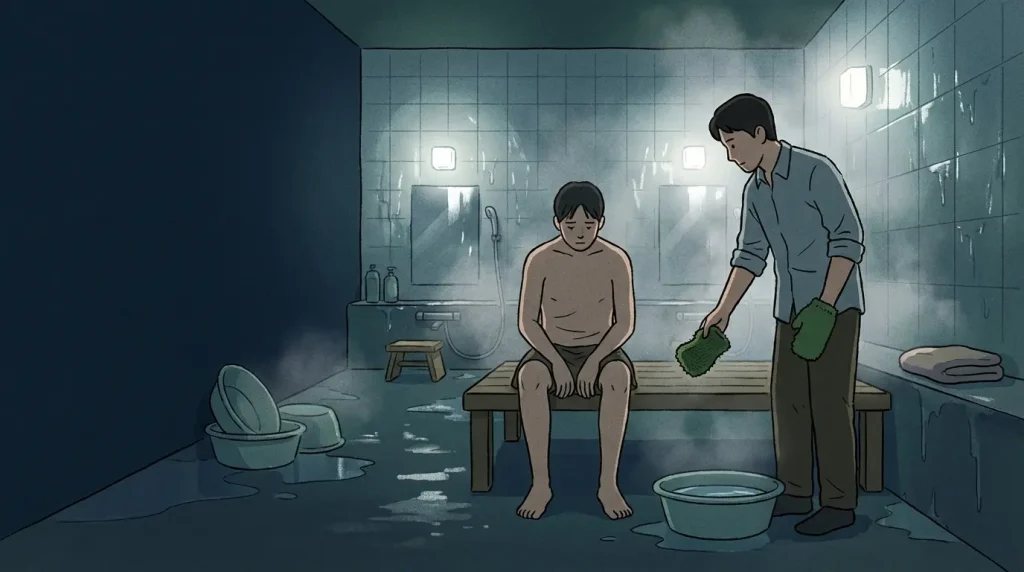
If I had to tell someone to try one thing there, I would say the bathing and scrubbing culture first. After soaking in hot water long enough, you get a full body scrub, either by yourself or from a sesinsa (세신사), a professional body scrubber. For people who grew up with it, this feels ordinary. For someone trying it for the first time, it can feel surprisingly intense. The gray rolls of dead skin that come off your body can be mildly shocking the first time you see them. But honestly, I think that shock explains the culture better than a polite description ever could.
When a sesinsa scrubs you, the whole thing feels less relaxing than efficient. It is rougher than a spa treatment, less elegant, more practical, and then suddenly it is over and your body feels lighter. To me, it never feels like simple exfoliation. It feels like a reset. Your skin is clean in a way that makes the rest of the day feel new.
And sometimes you may see people rubbing yogurt or milk on their bodies inside the bath area as a kind of skin treatment. The first time you see that, it can look slightly absurd. But inside that environment, it somehow just becomes one more thing that makes sense there before it makes sense anywhere else.
Only after the body has been soaked and scrubbed does the deeper rhythm of the place really start to feel natural.
Eggs and Sikhye Are Not a Rule, Just the Order Your Body Starts Asking For
A lot of people ask why everyone seems to eat eggs in a jjimjilbang. My honest answer is that there is no strict rule. You do not have to eat them at some sacred point in the visit. It is simply what many people start wanting after a bath or after sweating in the hot rooms. Sometimes it is eggs. Sometimes it is sikhye (식혜), the sweet rice drink that shows up in almost every jjimjilbang memory. Sometimes it is something else simple.
Sikhye feels especially tied to the place for me. It is cold and sweet, and after heat and steam it lands in the body with an almost unreasonable amount of satisfaction. A boiled egg in that space also tastes more jjimjilbang-like than it would anywhere else, which is one of those ridiculous facts I cannot prove but still believe. Even a cold soda after a scrub feels different there.
So eggs and sikhye are not a formal custom I would describe as a rule. They feel more like the order your body naturally starts choosing once it has been heated, washed, and calmed down.
The Point Is Not to Endure One Hot Room Forever
Someone who has never been might imagine a jjimjilbang as a place where the goal is to prove you can survive the hottest room the longest. That is not how I have ever used it, and I suspect it is not how most people use it either. If I stay too long in one hot room, my body gets tired instead of restored, which is the opposite of why I went in the first place. The normal rhythm is shorter and less dramatic: ten or fifteen minutes in the heat, then out again, then cooling down in a colder room, then maybe back in once more. That cycle is what the body actually responds to.
The same logic applies in the bath area. You move between hot water and cool air, between soaking and resting, and the effect builds through repetition rather than through suffering. I think of it less like exercise and more like slowly convincing my body to let go of whatever it has been holding. The heat alone does not do it. The going back and forth does. If someone goes in thinking they need to be tough, they may end up miserable instead of relaxed, which is a shame when the whole point is the opposite.
So the point is not endurance. It is circulation. You are not supposed to punish the body. You are supposed to change its rhythm gradually, and then let that change do the work.
Even After COVID, When I Think of a Jjimjilbang, I Still Think of People First
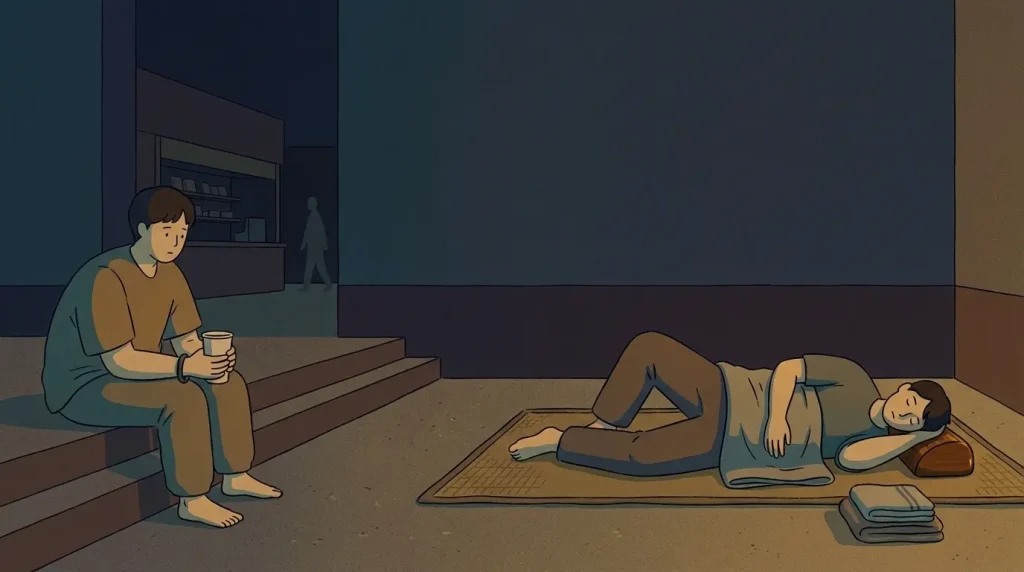
It does feel to me as if there are fewer jjimjilbangs now than before. After COVID, some closed down, and the easy everyday familiarity of them seems a little thinner than it once was. But when I think of a jjimjilbang, I still think of people before facilities. My parents. My boyfriend. Coworkers after dinner. My mother at dawn. The mats on the floor. The tired sleep. The quiet after hot water.
That is why I cannot close the subject by saying it is simply a Korean sauna. It is a place to wash, yes, but also a place to pause. A place to rest with other people nearby. A place where a day sometimes stretches out instead of ending on time. When I watch those drama scenes now, with people in matching clothes lying around under the big lights, I do not just see a quirky Korean set piece. I see a lot of ordinary Korean time packed into one room.
When I watch that scene now — matching clothes, towel hats, someone already asleep on the floor — I do not see a strange Korean set piece anymore. I see a lot of ordinary Korean time packed into one room. And that is probably why it stops looking strange after a while. Not because it becomes less specific, but because it starts to feel more lived in.
People ask me if they need to speak Korean to get through the entrance process.
The honest answer is that you do not, but having the number on your rubber ring ready helps more than any phrase would. The system at the front desk runs on that ring more than on conversation. You point, you receive, you change clothes. The part that actually requires patience is not the language — it is figuring out that the ring on your wrist is doing four jobs at once, and that losing it would be a significantly worse problem than mispronouncing anything.
The question I get most often is whether it is awkward to be in the bath area with strangers.
I understand why people ask. The first time you walk into a room full of people who are not wearing anything, the instinct is to look at the ceiling or the floor or anywhere else. But the thing about that environment is that no one is particularly interested in you. Everyone is there to wash and be washed, and the social contract of the space moves faster than you expect. By the time you have been in the hot water for ten minutes, the awkwardness has usually dissolved into something closer to boredom, which is exactly the right state to be in.
Some people want to know if they have to get a scrub from a sesinsa or if they can skip it.
You can absolutely skip it. Nobody will follow you around insisting. But I would say that skipping it is a little like going to a jjimjilbang and staying in the lobby — you are technically there, but you have avoided the part that most people remember. The scrub is not elegant. It is not particularly relaxing in the way a massage is relaxing. It is efficient in a way that feels slightly shocking and then, about thirty seconds after it ends, completely worth it.
A common question is what to do if you are not sure which hot room to start with.
Start with the one that does not feel like walking into a wall. The rooms are usually labeled by temperature, and the difference between them is not subtle. I have always found it easier to begin somewhere that lets the body adjust rather than somewhere that makes the body argue. From there, the rhythm usually figures itself out — a few minutes in, then out, then cooler air, then back again. The goal is not to conquer any single room. It is to let the body change its mind about whatever it came in carrying.
People also ask whether the eggs actually taste different inside a jjimjilbang, or whether that is just something Koreans say.
I have thought about this more than I probably should have. My conclusion is that the eggs taste more like themselves inside a jjimjilbang than they do anywhere else, which is not a very scientific answer but is the most accurate one I have. Something about being warm and slightly tired and hungry in a specific way makes simple food register differently. The sikhye does the same thing. Cold and sweet after heat lands in a way that cold and sweet after nothing in particular does not. I cannot explain the mechanism. I only know that I have never wanted a boiled egg as much as I have in that building, and I have never thought about it at all outside of it.
The last question, and the one that is hardest to answer quickly, is whether it is worth going even if the whole idea feels a little overwhelming.
I think the answer depends on what you mean by overwhelming. If you mean the logistics — the ring, the locker, the order of operations — those resolve themselves within the first twenty minutes and are not worth worrying about in advance. If you mean the cultural unfamiliarity — the shared space, the scrubbing, the eggs — those are exactly the reason to go. A jjimjilbang does not ask you to perform anything. It just asks you to be tired somewhere warm, which is something most people already know how to do.
