Why Korean honorifics when angry feel so strange on screen
Korean honorifics when angry can look like a contradiction if you’re seeing them for the first time. The line endings sound polite—formal verbs, careful sentence endings—yet the content is clearly confrontational. The face is cold, the tone tight, the questions stack up, and the sentences get shorter instead of softer. If your instinct is “anger makes speech rougher and faster,” this switch feels like the opposite of what anger should do. That’s why the same moment can spark two thoughts at once: is this a person trying to stay respectful, or is this a person drawing a sharper line?
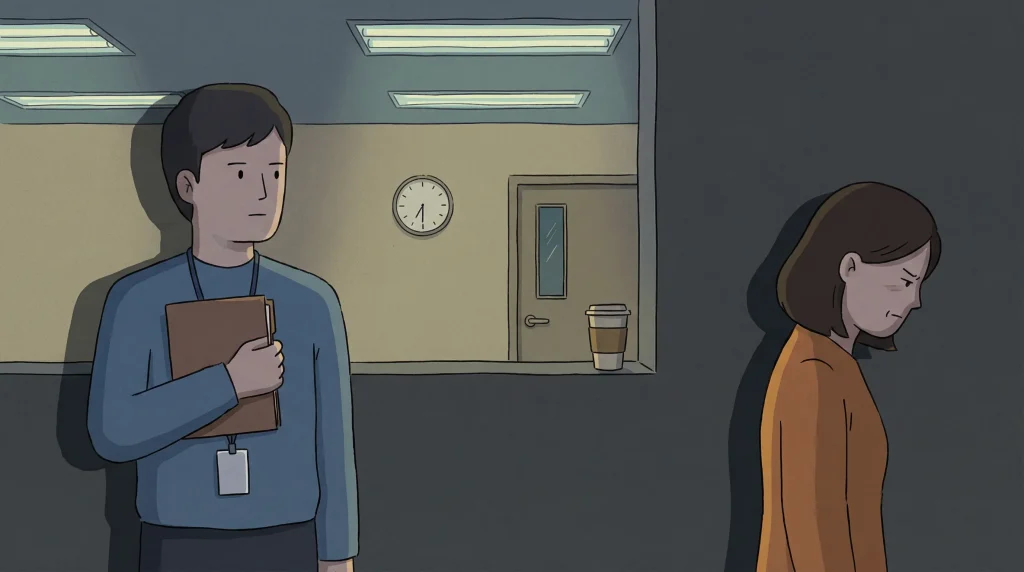
The scene often feels heavier because of how everyone else reacts. In many dramas, the air freezes right when the honorifics appear: someone stops talking, someone looks away, someone quietly steps back. At that point, the speech style stops feeling like grammar and starts feeling like a button that changes distance. It resembles that familiar social cue in other cultures—when someone suddenly uses a full legal name instead of a nickname and the room instantly understands the mood shift. The strangeness isn’t the vocabulary itself; it’s how speech style seems to move the relationship in real time.
A small change in speech can do the work of a big change in posture.
When honorifics show up, it’s often “argument mode,” not a brawl
In real life, close friends who speak casually to each other usually keep that casual speech even when they fight. If two people have years of comfort built up, the argument tends to go straight and blunt, and the language can get rough quickly. That’s why the classic drama move—two people who banter in casual speech suddenly flipping into formal speech at peak emotion—doesn’t feel common in everyday situations. When it does happen outside fiction, it often happens in relationships that already contain distance, rules, or an audience.
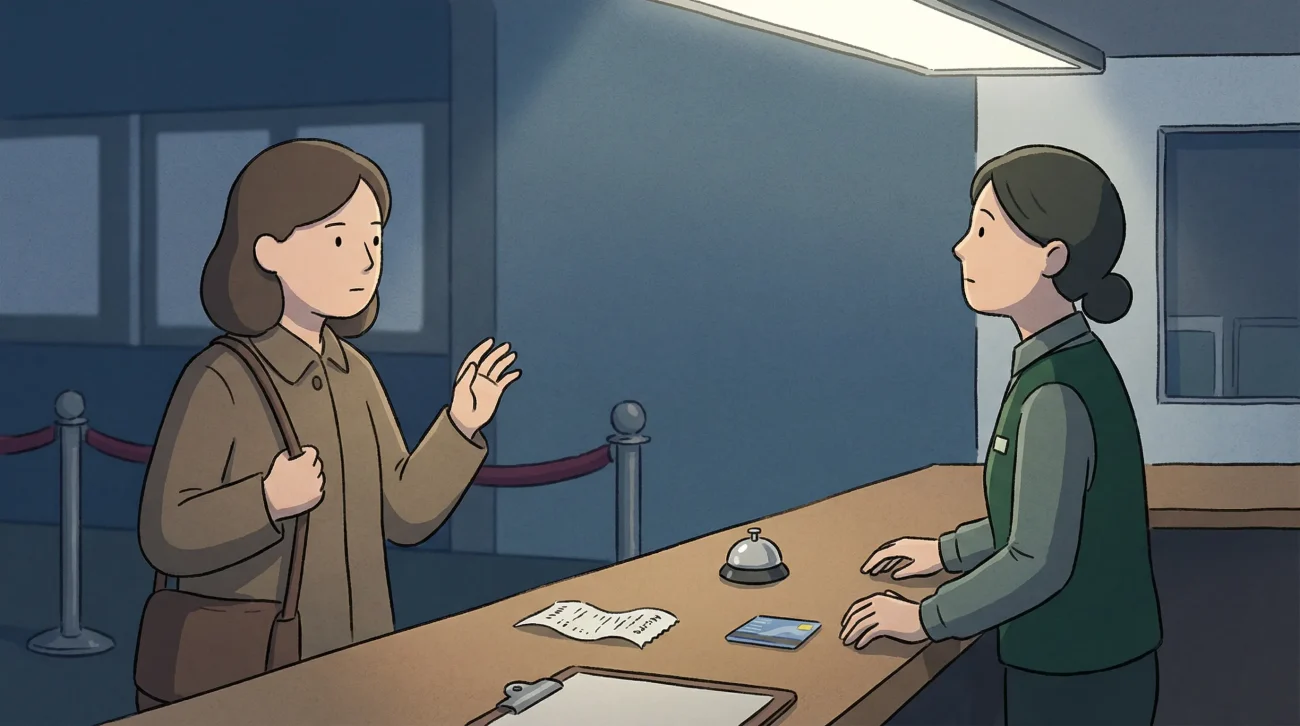
There are a few common “stages” where honorifics appear naturally. One is conflict with someone you just met, where neither side knows how far the other might go, so both sides cling to a minimum framework. Another is a service setting—repair centers, shops, customer support—where the roles are already defined, and the moment your tone collapses, your complaint can be re-labeled as you being unreasonable. A third is the workplace middle zone: not strangers, not close friends, but people who have to keep working together after the heat of the moment passes. In those spaces, formal speech can function less like “I respect you” and more like “I’m not letting myself fall apart.”
That’s why honorifics can feel like a guardrail. Casual speech can slide into insults faster than you expect, especially once frustration turns into shame or humiliation. Formal speech doesn’t erase anger; it reduces the chance of saying something that can’t be walked back. It’s not so much “politer” as it is “I’m choosing not to cross a point of no return.”
“Jeogiyo” isn’t a fighting word—it’s a “look here” word
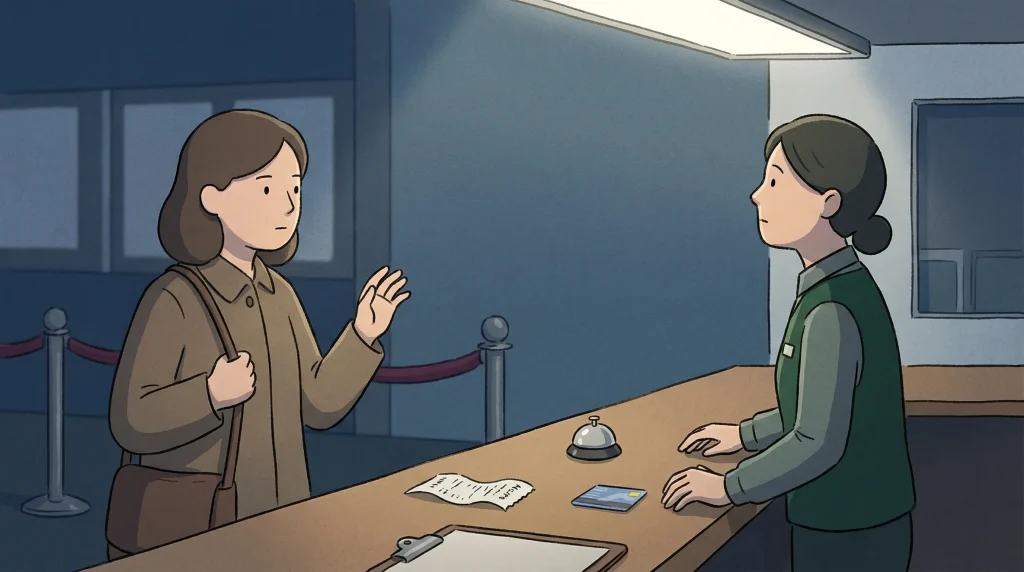
“Jeogiyo” is, at its core, a request for attention: “Excuse me,” “Hey—one moment,” “Could you look here.” You use it to call a staff member, to ask for directions, to return something someone dropped, or to gently make your presence noticed. So if you’re traveling and someone says “jeogiyo,” the safest default is not “they’re picking a fight,” but “they’re trying to get attention for a normal reason.” The word itself isn’t a punch; it’s a tap on the shoulder.
But right at the threshold of an argument, “jeogiyo” can take on a second role. When someone has been listening, holding back, and then reaches the point where they can’t let the conversation drift anymore, “jeogiyo” can become the first button they press to stop the flow. In that moment, it can carry the feeling of “Hold on—let’s reset this,” or “Wait—this is not okay,” even if the grammar remains formal. It’s less “I’m attacking you now” and more “I’m switching the conversation into a complaint format.”
The contrast becomes clearer when you compare it to how arguments start among closer acquaintances. With familiarity, people often cut in with a name plus a suffix, or they jump straight into blunt openers like “Wait,” “Listen,” or “Are you serious?” The closer the relationship, the shorter and more direct the entry line tends to be, and the faster emotion shows. “Jeogiyo” shows up more naturally where a frame still exists—first meetings, professional roles, and public-facing spaces—where the argument begins as structured pushback rather than a raw fight.
This is where polite speech can look like both manners and a weapon, depending on what you’re listening for.
Polite speech can mean manners and “I’m holding it in” at the same time
Formal speech in conflict can be read as a type of manners: “Even if this gets unpleasant, I’ll keep a minimum boundary.” That boundary matters in settings where reputation, fairness, or third-party judgment can change outcomes. At the same time, formal speech can also signal restraint, especially when it becomes crisp and deliberate. If someone who’s usually relaxed suddenly switches into careful honorifics and speaks with unusually controlled pacing, it can feel like a warning: “I’m extremely angry, and I’m spending effort not to explode.”
That’s the paradox. Politeness doesn’t always mean warmth, and distance doesn’t always mean hatred. In some moments, formal speech is simply a tool for self-control: slow down, choose words, don’t slip into insults, don’t give the other side an easy excuse to dismiss you. When the anger is high, the speech becomes less decorative and more functional—shorter sentences, fewer softeners, more “pinpointing” questions that corner the issue. The listener can feel the chill because the speaker is no longer negotiating mood; they’re managing damage.
Why it sounds aggressive: rhythm, breath, and timing more than vocabulary
People often try to decode this by looking at words, but the impact frequently comes from delivery. When someone is holding anger back, the voice can flatten or sharpen, breaths can become louder, and sentences can be cut at unusual places. Speaking “clearly” can be a form of pressure: not kindness, but precision. Some people deliberately slow down because speed increases the chance of slipping into vulgarity or saying something that ruins their credibility.
Even the way sentences end can split into two different meanings. Sometimes a clipped ending happens because the mind is overwhelmed and the speaker can’t organize the next clause. Sometimes it’s intentional—cutting the line short to create tension and force the other person to fill the silence. Either way, the listener reads the temperature through rhythm, pauses, eye contact, and timing more than through whether a polite ending is attached. The honorifics are the frame; the emotion leaks out through the cracks.
As long as the frame holds, the conflict stays “manageable.” When it breaks, everything changes.
When honorifics break, the argument drops to the floor fast
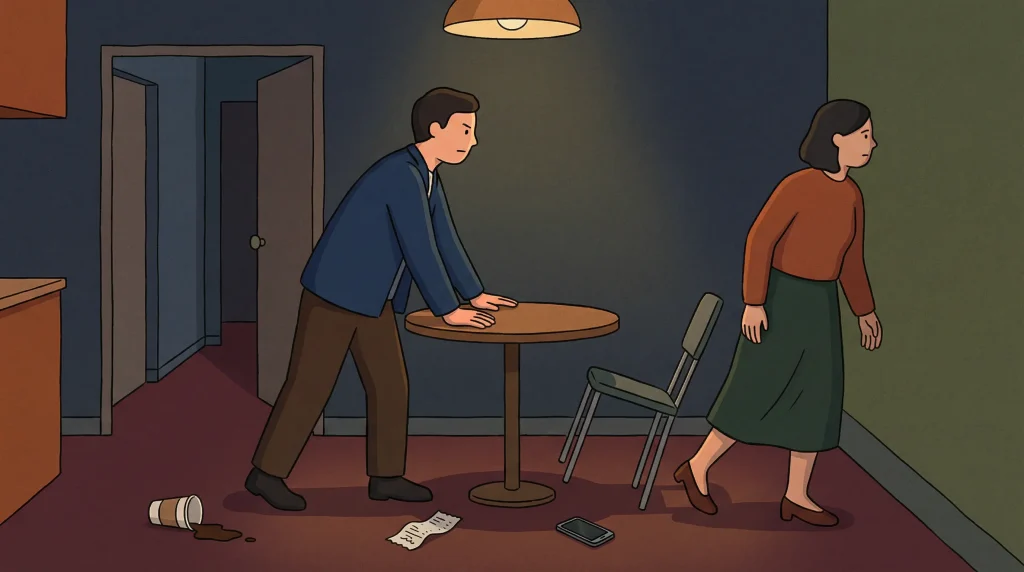
Even between people who normally use honorifics, there’s a moment where restraint can fail. Once insults, personal attacks, or casual speech spills into a conversation that was being kept “formal,” the power dynamic shifts instantly. At that point, the content matters less than who crossed the line first, because the scene becomes about loss of control. In public-facing or first-meeting contexts, the person who breaks first can become the “problem person” in the eyes of bystanders, even if their complaint started from a reasonable place.
This is why some people cling to honorifics through clenched teeth. It’s not always moral superiority; it’s often strategic self-protection. Staying formal keeps the dispute inside a social container where third parties can still judge the issue, not just the outburst. If a conflict later gets mediated—by a manager, staff, colleagues, or the simple “public eye”—the person who stayed inside the boundary can come out less damaged.
If close friends switch to honorifics later, it can signal a relationship reset
There’s one situation where honorifics can feel less like restraint and more like re-labeling the relationship: after a serious fallout. If two close people end up speaking formally to each other later, it usually isn’t a mid-fight switch; it’s a post-fight reset. The formal speech can sound like “I’m no longer inside the old closeness,” or “I’m keeping distance because I don’t want to reopen intimacy.” This is not everyday common, but when it happens, it’s memorable precisely because it feels like a reclassification, not a mood.
In that scenario, formal speech can carry a sharper edge, and sarcasm can appear more easily. The politeness becomes a wall rather than a handrail. That’s why the same grammar can feel very different depending on whether it’s used to prevent escalation in a public situation, or to keep a former closeness from returning.
The questions first-time viewers keep asking afterward
After watching this kind of scene, the first question tends to be simple: “So is formal speech automatically respectful?” Right behind it comes the sensory question: “Why does polite speech feel colder and scarier?” People also wonder whether the speaker is being sarcastic or simply drawing a boundary, and why a single word like “jeogiyo” can flip a drifting conversation into a structured complaint. Another set of questions circles the mechanics: is the sharpness coming from vocabulary, sentence endings, or intonation—and why does slow, clear speech feel more threatening than fast speech?
Underneath all of those questions is one bigger curiosity. This isn’t really about memorizing honorific rules; it’s about what people reach for when they’re trying not to ruin the situation. Formal speech can be a way to keep anger from turning into irreversible damage, and it can also be a way to signal distance when a relationship is being re-sorted. The drama makes the switch more visible, but the core idea is everyday: sometimes the “polite” choice is the loudest sign that someone is fighting themselves, not just the other person.
