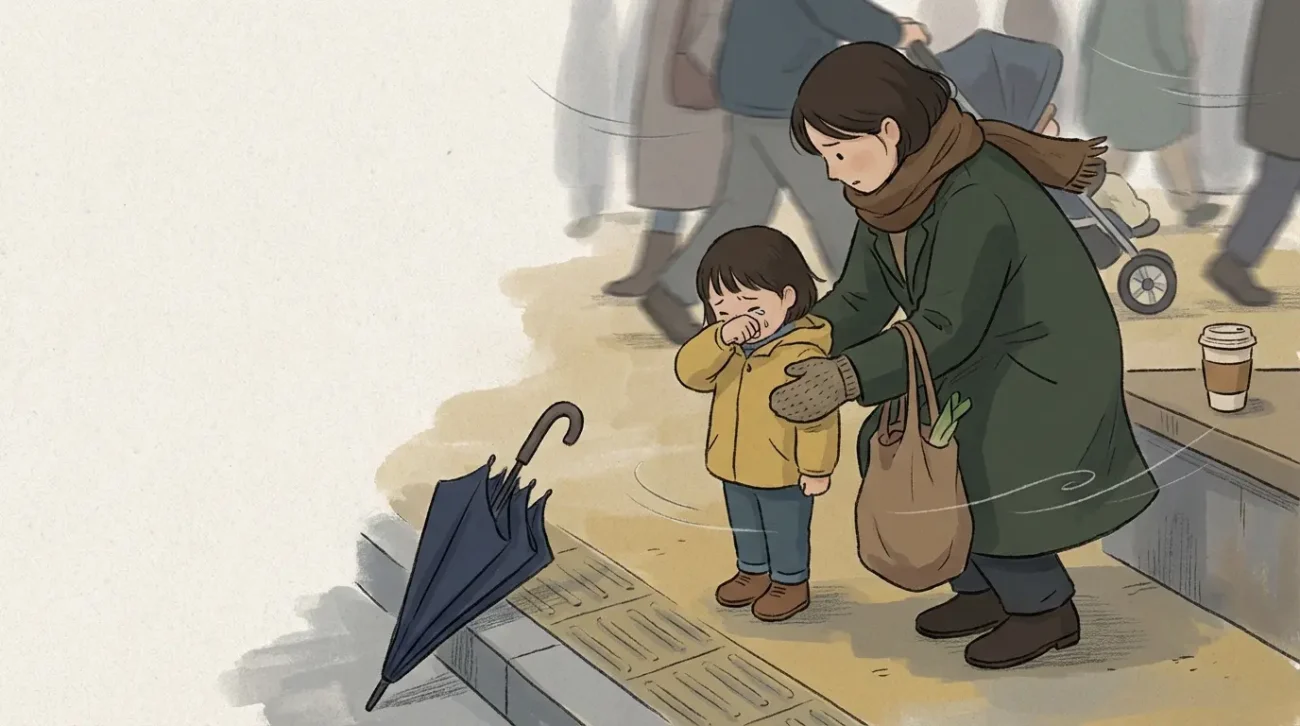
If you’ve ever seen a Korean mom give a quick smack to a child’s back when emotions run high, you’re not alone in freezing for a second. It’s a tiny gesture, sometimes followed by a sigh or a worried voice, and the mix can feel confusing. The body looks harsh. The tone doesn’t always match what you’d expect from a “hit.”
This post isn’t here to hand you a neat moral verdict. It’s here to explain why the scene exists, what people inside Korea often read into it, and why it’s been fading—while still leaving behind a recognizable rhythm in certain families.
Korean moms hit kids on the back: the air that lingers after one smack
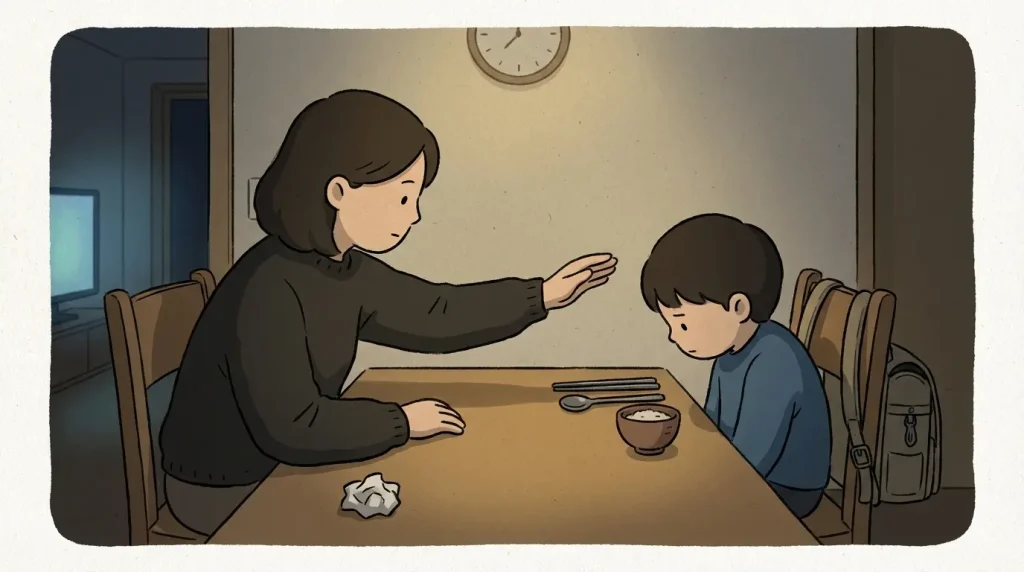
There’s a particular kind of silence that comes after a back smack at a dinner table. A child is crying louder or refusing to budge, and a mom lets out one long sigh, then lands a palm on the child’s back—sometimes a single, quick beat. If you isolate the action, it’s easy to label it as hitting. What throws people off is what sometimes happens next: the room doesn’t always explode. The scene moves on, as if the gesture was meant to cut the emotion in half rather than start a bigger war.
That’s where many questions begin. The voice can sound worried. The face can look tired. The hand still moves. For someone seeing it for the first time, the mismatch feels like a glitch: why would a caring moment include a strike?
What first-time viewers notice right away
Most people don’t begin with history. They begin with the contrast. A worried tone paired with a physical smack looks contradictory, and on screen it can look even harsher because the motion is fast but the reaction is big. That’s why the first question is usually practical: was that a real hit, or a light “tap” that only looks severe?
The second question comes right behind it: why do it at all? Why use the body to interrupt emotion? Some viewers read it as authority. Others read it as a family habit—almost like a rough form of punctuation. The same movement can sit on the border between “scolding” and “a frustrated, familiar gesture,” and that border is exactly where misunderstandings grow.
Why the back, not the arm or hand
The back is wide and flat. A palm lands easily, and even a small motion creates a distinct thud-like feeling—more “impact” than precision. It also avoids a face-to-face wrestling match. Grabbing an arm or blocking a hand can turn into direct confrontation. A quick smack on the back can end faster, almost like closing a door rather than holding an argument open.
But the back isn’t magically “safe.” On small children, the body is still sensitive, and what an adult thinks is mild can still hurt. That’s part of why this gesture is so easy to misread: it looks casual to the person doing it, and can feel very different to the person receiving it.
Why it used to look “normal” in many homes
Korea had a long period where corporal punishment was treated as a standard discipline tool. Older generations remember switches and physical discipline as normal, and later many families also used rulers or quick hand smacks as a “lesson.” The point here isn’t nostalgia. It’s mechanics: when a parent believes “I have to scold you,” but doesn’t have any of the traditional tools nearby, the hand becomes the tool. The back or the butt is simply the easiest target in the moment.
What’s changed is that this has been shrinking—especially with younger children. In many households, physical discipline toward small kids has become far less acceptable. At the same time, a leftover version survives: the gesture shifts into something used more with older kids or even adult children, not as a serious punishment, but as a frustrated, familiar signal paired with lines like “I can’t live with this!” It’s the same movement, but it doesn’t always carry the same meaning anymore.
Two quick tests: scolding vs a light tap
People often ask for a clear line: when is it “real scolding,” and when is it closer to a light tap meant to break the mood? There’s no perfect universal rule, but two quick tests usually help.
First, listen for sharpness. If the voice is cutting, if specific accusations follow immediately, and if the hand doesn’t stop at one brief beat, it’s more likely to be scolding in the classic sense. It’s not just the palm—it’s the edge in the words and the insistence that continues after.
Second, watch for the exit. When it’s closer to a light tap, it tends to be small, brief, and followed by a reset—lower voice, a move to change the situation, a quick “let’s stop now” tone. The goal looks less like punishment and more like ending the scene before it grows.
Home vs outside: why the rhythm changes
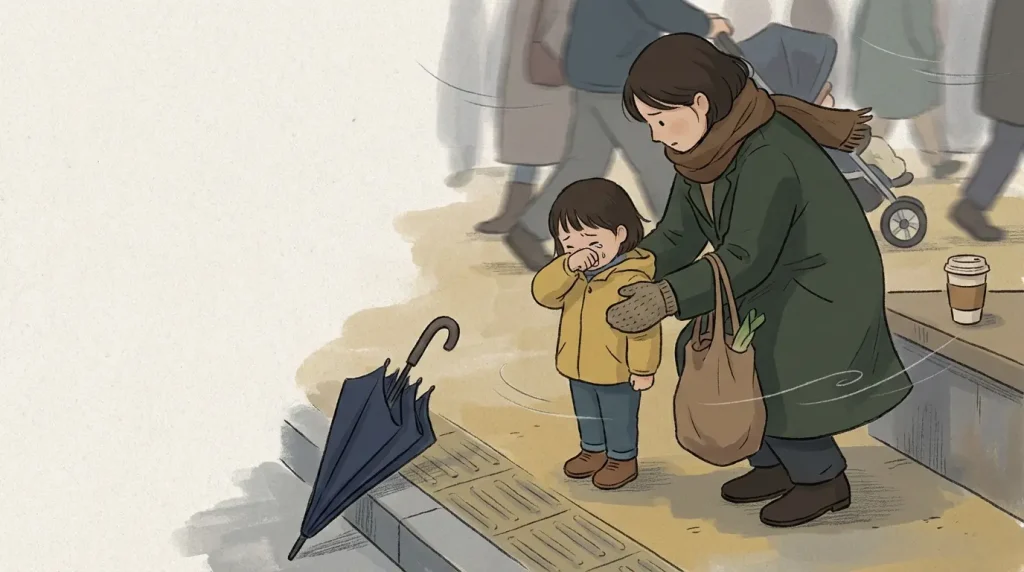
Yes, you can see this outside—at a restaurant, in a market, on a sidewalk. But outside, the rhythm often changes. When there are strangers watching, dragging out a long scolding can feel humiliating for both parent and child, and it can quickly escalate the atmosphere. So the gesture, if it happens, tends to become shorter and quicker: one brief smack, then movement—taking the child aside, lowering the voice, shifting locations.
At home, the same family might talk longer, scold longer, and show more emotion without the pressure of public eyes. That’s one reason a quick street scene can be misleading. A person who only sees the outside version may imagine an entire household built on that one snapshot.
Why dramas make it look harsher
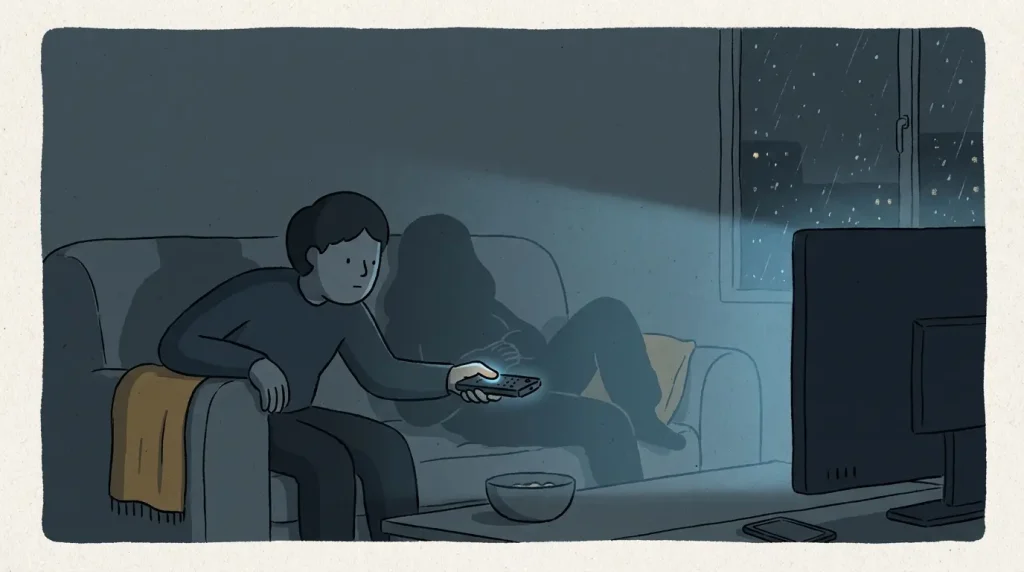
On TV, a back smack has a job: it has to communicate a relationship dynamic instantly. That’s why you’ll see repeated gestures, heightened reactions, and sound design that turns a quick motion into a “moment.” In some dramas, a mother smacks the back of her grown son repeatedly, and it reads as comedic dominance or family intimacy—but the repetition can look far more intense than what many people encounter in everyday life.
Drama isn’t always showing the average. It’s often showing a shorthand. The gesture becomes a symbol, and symbols get amplified. If you treat that amplification as a documentary, you miss how much Korea’s norms have shifted across generations.
The version I remember: academy money and the arcade
When I was a kid, my mom gave me money for academy fees. I spent it at an arcade instead. When she found out, she hit—both my back and my butt—open palm, no tools. What I remember most clearly is that the back could hurt even when the motion didn’t look “hard,” simply because there isn’t much padding on a child’s back. I also remember getting hit on the butt more, as if even in anger there was an instinct to aim for what felt “less risky.”
That memory sits in an uncomfortable place. It wasn’t a random act of cruelty. It was a parent’s conviction that a child had to be corrected, combined with the simplest tool available: the hand. It’s not a scene I romanticize, but it does explain why the gesture exists in people’s muscle memory.
Why it’s fading, and what still remains
A lot has changed. Many teenagers today are far less likely to experience physical discipline the way older generations did, and with younger kids it has become especially sensitive. Korea’s rapid social change means multiple parenting styles exist side by side, and what one generation treats as “how it used to be” another generation treats as unacceptable.
That’s why the line can look blurry from the outside. A light tap between close friends can exist, a frustrated gesture toward an adult child can exist, and a genuinely harmful act can also exist—sometimes in the same society, sometimes in the same neighborhood. If there’s one steady clue, it’s this: when anger takes over and control disappears—especially with harsh language—whatever “habit” the gesture once had becomes something else entirely.
The uneasy part is real. But so is the context. If you look again at that moment after a back smack, the key isn’t only the hand. It’s what follows—how the parent’s tone shifts, whether the scene de-escalates, and whether the relationship moves toward repair or spirals into something bigger.
