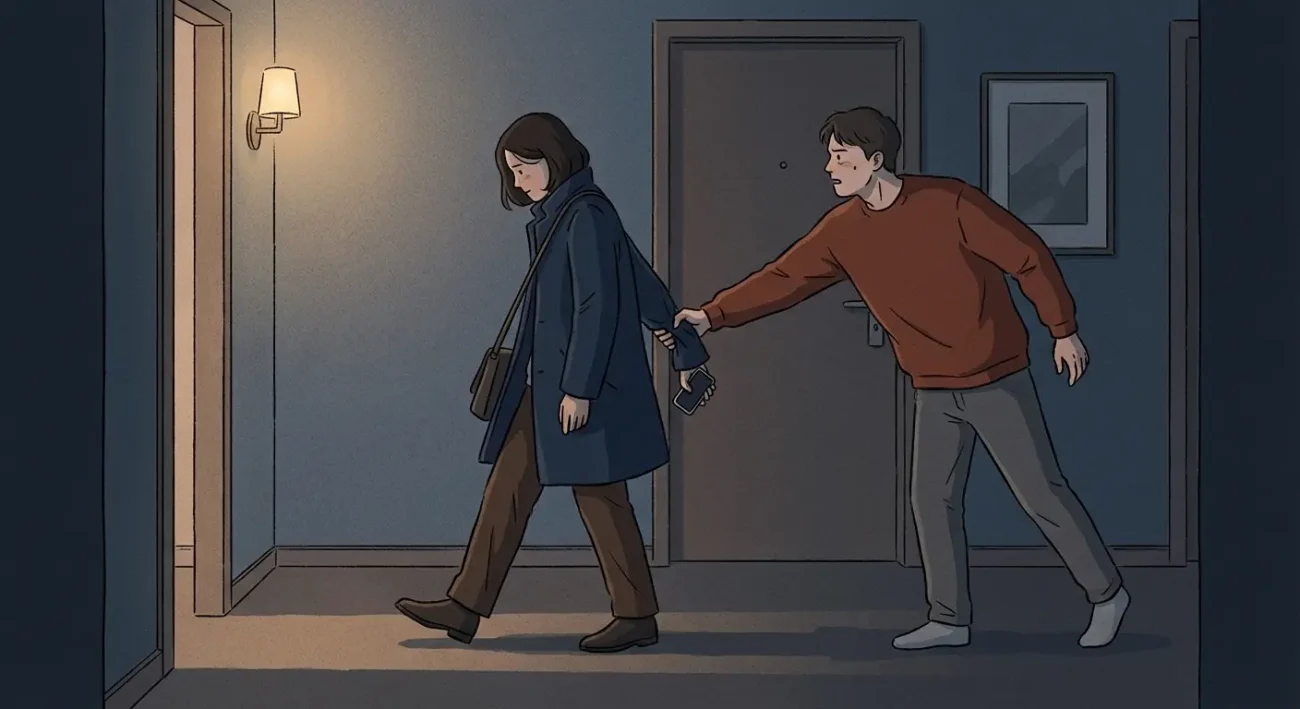
The Wrist Grab That Stopped You Mid-Episode
You have probably seen the scene. Someone turns to leave, and another person reaches out and catches their wrist before one more word can disappear. The body stops first. The face changes next. Then the silence hangs there for a second longer than it should. It is one of those kdrama moments that can make you stop mid-episode and think, wait, does this really happen?
That question is exactly why the korean wrist grab kdrama scene keeps pulling people out of the story and into a search bar. The action is small, but it does a lot at once. It interrupts movement, it raises the emotional temperature, and it suggests that what cannot be said directly is about to come out some other way. For many first-time viewers, the strange part is not just the touching. It is the idea that a hand reaches first and words come later.
And that is where the scene starts feeling less like random drama choreography and more like a cultural clue.
Does This Actually Happen in Korea?
When I first tried to answer that question for myself, I realized I had never really sat down and thought about it. But once I did, the memories came back more easily than I expected. Friends have stopped me that way. My parents have done it. Even a close coworker has caught my wrist while trying to stop me before I walked off too quickly. None of those moments looked like a full melodrama. Still, the basic structure was the same.
That is what matters here. Not the dramatic lighting. Not the soundtrack. Just the structure. Someone is already leaving. Someone else still has something left to say. Words alone may not catch the moment in time, so the body reacts first. In real life, it is usually smaller, quicker, and quieter than on television. But smaller does not mean unreal.
That is why I would not call the korean wrist grab kdrama trope fake. Exaggerated, yes. Invented from nothing, no.
The scene exists because the emotional logic already exists.
What a Wrist Grab Is Actually Saying
A wrist grab is rarely just a wrist grab. In many cases, it is the first half of a sentence that has not managed to become words yet. If someone catches your wrist and says, “Wait,” the meaning is fairly clear. The conversation is not over. Something is still there. The hand arrives to stop the ending before the mouth can explain why.
But there is another version that feels more Korean to me. Sometimes the person grabs the wrist and then hesitates. They do not immediately say what they mean. Their eyes shift. Their mouth opens and closes once. The hand stays there for a second too long. In that version, the message is not simply “stop.” It is “I still have something I want to say, but I cannot say it cleanly yet.”
That is where nunchi (눈치) starts working. In Korea, body language and nunchi often travel together. The other person reads the hesitation, the timing, the broken rhythm, the fact that the hand came before the sentence. So the wrist grab becomes less like a physical act and more like a short conversation made out of movement, pause, and emotional guesswork.
That is also why the wrist matters. It is more precise than grabbing an arm and more urgent than touching a shoulder. It catches motion at the exact point where someone is about to leave the scene entirely.
Korea’s Physical Language Goes Beyond Wrist Grabs
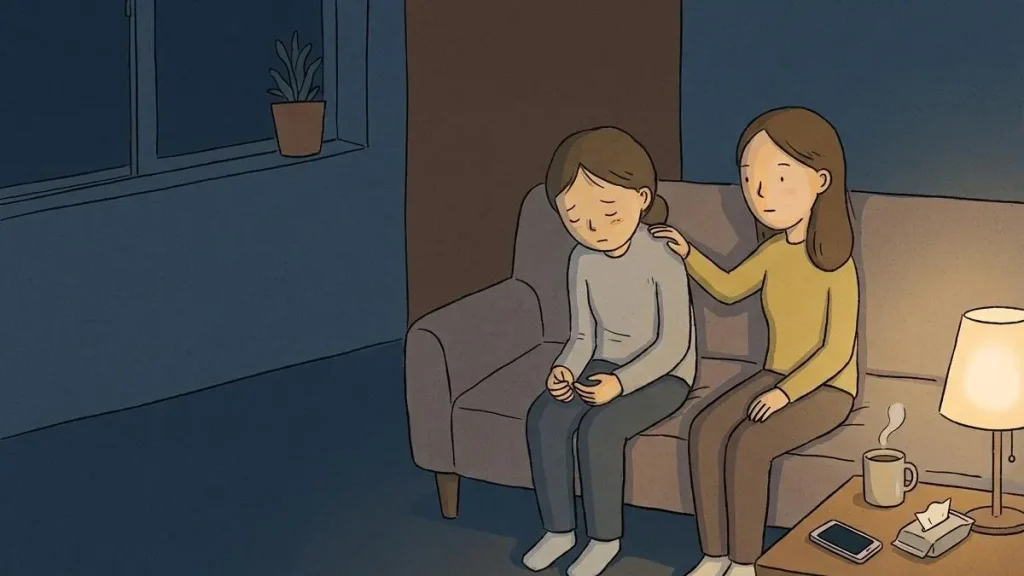
The wrist grab stands out because dramas isolate it. But from where I stand, real life is broader than that. When a friend of mine was going through something difficult, I did not open with a carefully worded sentence. I pulled them into a hug first and patted their back while they talked. Another time, I put my hand on a colleague’s shoulder and held it there for a moment because the words I had felt too small for what they were going through. The words came later, if they came at all.
That is the pattern I keep noticing. It is not that language gets avoided. It is that the body often gets there first because it is faster, more direct, and far less likely to come out wrong. A hug does not need to be grammatically correct. A hand on the shoulder does not require a second draft.
Seen from that angle, the wrist grab belongs to something wider. It is not a dramatic device invented by a screenwriter short on ideas. It is one version of a social instinct I actually recognize from my own life: say it with your body first, then let the other person read the rest.
Once you notice that pattern, the scene starts looking considerably less strange.
Why Koreans Touch More Than You Might Expect
What actually surprised me more was when I found out that in some places, people who are not in a romantic relationship may avoid physical contact almost entirely. That felt stranger to me than any wrist grab scene ever did. Where I grew up, once people got even a little emotionally close, touch started appearing in very ordinary ways — not as a statement, just as part of how closeness looks.
Friends I knew well would walk arm in arm. Female friends would hold hands without it meaning anything beyond comfort and familiarity. Male friends would throw an arm around each other’s shoulders mid-conversation and keep talking without missing a beat. None of that felt like a gesture requiring explanation. It was just part of how you acted once someone stopped being a stranger.
I have always thought of jeong (정) as something that does not arrive in a single meaningful moment. It builds slowly, through shared time, repeated small experiences, and the kind of ordinary presence that is hard to put into words but easy to recognize once it is there. And when jeong is there, touch tends to follow — not as a declaration, but as a natural extension of a relationship that has already softened. That is part of why a wrist grab can look startling from the outside but feel considerably less loaded to me once I understand what kind of relationship is already in the room.
This is not to say that everyone in Korea walks around touching everyone else. Strangers are still strangers. Personal distance still matters. But once the emotional gap narrows, physical closeness tends to arrive faster than some people expect.
When a Stranger Grabs Your Wrist
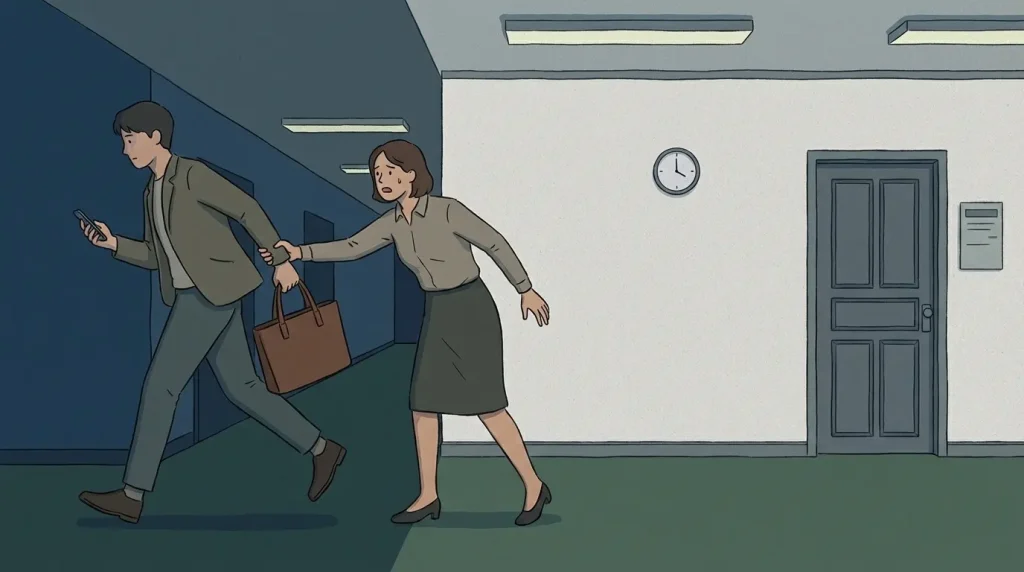
This is where the discomfort question gets sharper. If someone you barely know catches your wrist, does that not feel aggressive or out of place? It can, depending on how it lands. But from my experience, what tends to change the meaning first is not the relationship. It is the immediate context.
The situations I recognize follow a fairly consistent pattern. The other person was trying to say something. I had already turned away and started moving off, probably because I did not realize the conversation was not finished. The grab happens in that gap — not randomly, but as a last-second correction. So my first reaction is rarely “how dare you.” It is closer to “oh, they still had something to tell me.”
That is not a universal experience. I would not claim every situation reads cleanly or that discomfort never happens. But I do think the action tends to get interpreted as part of a sequence rather than judged in isolation. Someone tried to speak. Someone else missed it. The body stepped in to close the gap before the moment was gone entirely.
That is the part I find harder to explain but easier to recognize.
So Is the Kdrama Wrist Grab Real or Just TV?
If you go back to the scene now, it probably looks a little different. The drama version is still more polished, more frequent, and more emotionally inflated than anything I experience on a normal Tuesday. Television takes a real emotional structure and turns the volume up considerably. That is its job, and it does it well.
But the underlying logic is real enough. Someone is leaving. Someone else is not ready to let the moment end. The hand appears before the sentence does. A little nunchi fills in what the words have not caught up to yet. That part belongs to life as much as it belongs to television, and I say that as someone who has been on both ends of it.
The next time you see one person stop another by the wrist, it may still look dramatic. But it will probably look less random.
And that is usually the point where the scene stops feeling strange and starts feeling readable.
Is the wrist grab only used in romantic situations in Korean dramas?
Not in my experience, and not in real life either. The version that appears most often in dramas tends to involve two people with unresolved feelings, which is why it reads as romantic so easily. But the gesture itself is not romantic by default. I have had my wrist caught by a friend who was not finished talking, by a parent who wanted me to slow down, and by a coworker who realized I was about to walk out of a conversation that still had a few sentences left in it. The emotional weight changes depending on who is doing it and why. What stays consistent is the structure — someone is leaving before something gets said. The hand is what closes that gap.
Why do Korean dramas use the wrist grab so often if it is just an everyday gesture?
Because television needs to compress things. In real life, the moment where someone catches your wrist and hesitates is over in a few seconds. A drama has to make that same moment visible, legible, and emotionally clear to someone watching from a couch. So the gesture gets held a little longer, lit a little better, and scored with something that signals importance. The underlying feeling is real. The production around it is doing the work of slowing it down enough to register. That is not dishonest. It is just what cameras do to small human moments.
Would it be rude for a foreigner to grab someone’s wrist in Korea?
From where I stand, the action itself is not the problem. The context is what matters most. If you catch someone’s wrist because they are about to walk away and you still have something to say, that tends to read the way it is meant — as an interruption, not an intrusion. Where it gets complicated is when the relationship is new and the other person has no frame for what you are doing. Without jeong (정) in the room yet, the gesture can feel abrupt in a way it would not between people who already know each other well. My suggestion would be to read the temperature first. If the relationship has softened, the gesture will likely land fine. If it has not, words are usually the safer first move.
Do Korean men and women use physical touch differently?
In my observation, yes, though not in the way dramas sometimes suggest. Among women, casual touch tends to appear fairly early once two people feel comfortable — holding hands while walking, linking arms, leaning into each other mid-conversation. Among men, the version I grew up with was more likely to involve a shoulder or an arm around the back. Neither of these is loaded with the weight that a wrist grab carries in a drama. They are just part of the ordinary physical vocabulary that closeness produces over time. The wrist grab sits at a slightly different register — it is more urgent, more intentional, and more visible as a gesture. That is part of why dramas reach for it.
What should I do if someone grabs my wrist in Korea and I am not sure what it means?
Stop and turn around. That is almost always what the gesture is asking for. The person behind you probably has something left to say and ran out of time to say it before you started walking. In my experience, the moment you stop and face them, the next part usually becomes clear quickly — either they find the words they were looking for, or the hesitation itself tells you something. What the gesture rarely means is aggression or hostility. It is almost always a request for a few more seconds of the same conversation. Once you know that, the appropriate response is usually just to stay still and wait.
