The Orange Tent You Keep Seeing in K-Dramas
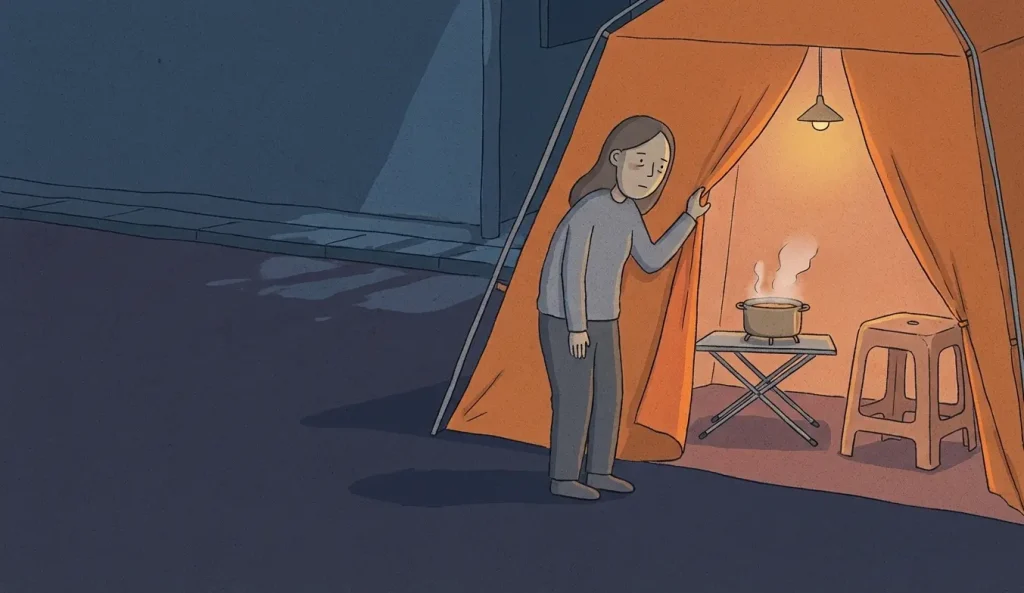
If you’ve watched Goblin or Reply 1988, you’ve already seen it. The main character — tired, broke, or quietly falling apart — lifts a tent flap and steps into a small glowing space. There’s steam rising from a pot, a plastic stool, and the kind of lighting that makes everything feel like it happened a long time ago. The tent is orange. It is almost always orange. And if you’ve spent any time with Korean dramas, you’ve probably wondered: is that place real?
I should tell you something before we go any further. I have never gone to a pojangmacha to drink. I don’t drink, which puts me slightly outside what most people imagine when they think of these tents — the soju, the tears, the late-night confessions. My version of a pojangmacha is quieter. It’s somewhere I step into on a cold evening for a bowl of hot udon, or a skewer of fish cake sitting in broth. That’s how I know this place. And it turns out that perspective matters more than you might expect.
Is That Orange Tent Actually Real?
Yes, it is real. It is also much more ordinary than it looks on screen, and that is exactly why it stays with you.
A pojangmacha is a covered street stall, something between a place to eat and a place to pause. The word itself comes from older terms that suggest a covered cart, and once you see how temporary and improvised the whole thing feels, the name makes sense immediately. When I was younger, I remember seeing blue tents more often than orange ones. Not the darker blue people now associate with seafood areas, but a lighter blue that used to feel normal and has mostly disappeared.
At some point, orange became the standard color, especially in Seoul. People often say it stimulates appetite, which sounds plausible for a food stall trying to stand out at night, although the exact origin is not completely certain. What is clear is that the orange tent became a signal. From a distance, it looks almost cinematic. Up close, it feels smaller, simpler, and far less polished than television suggests. But once I sit down, the core experience is exactly what those scenes get right. The wind is blocked, the food is hot, and nothing else is really required.
A Pojangmacha Is Not a Restaurant
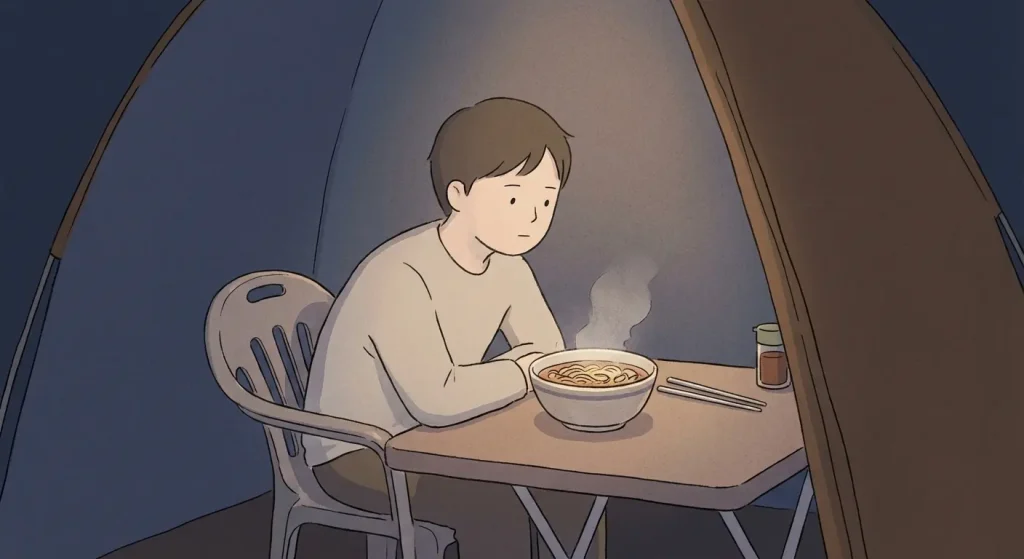
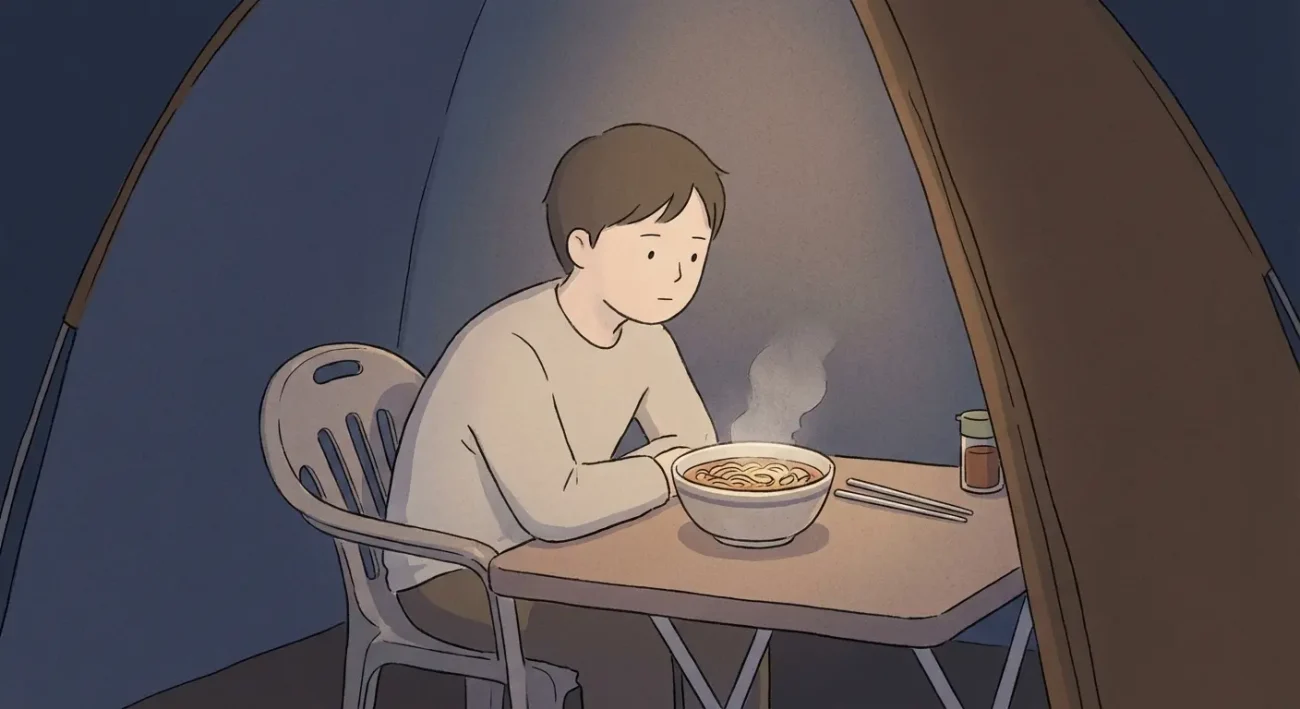
The easiest mistake is to think of a pojangmacha as a small restaurant. It isn’t. It serves food, but the meaning of the space is different. I have never thought of it as somewhere I would take someone to impress. It is not a place you plan for carefully. It is a place you end up in because it is there, and because at that moment, that level of simplicity feels right.
That is also why it does not fit as a company dinner location. A work dinner in Korea usually follows a certain structure. There is a tone to maintain, a rhythm to follow, and a sense that everyone is playing a role. A pojangmacha does not support that. It is too exposed, too informal, and too unpredictable. If someone senior suggested holding a team dinner there, the reaction would not be excitement. It would be confusion. People would quietly wonder what was going on. That reaction tells you exactly where this place sits in everyday life. It is not where you go to perform. It is where you go when you are tired of performing.
Why People Go There When Life Feels Heavy
In many Korean dramas, people end up in a pojangmacha when something in their life starts to fall apart. They are short on money, they have heard bad news, or they are simply not ready to go home yet. That pattern is not random. I have always found it natural.
Older pojangmacha used to be cheaper than they are now. That mattered. It meant people with limited money could still sit down, eat something warm, and stay for a while without thinking too much about cost. So when those scenes appear again and again, they are not creating a symbol from nothing. They are using one that already existed.
It is not that the tent itself represents sadness. It is that it does not demand anything from you. When things feel difficult, people do not always choose the best place. They choose the place that is easiest to enter. For a long time, the pojangmacha has been that kind of place.
Rain, Jeon, and Makgeolli
The combination of rain, jeon, and makgeolli appears so often that it starts to feel like a rule. It isn’t.
I don’t make pajeon every time it rains. If anything, I am more likely to make kimchi jeon because kimchi is always there. But there is something about cooking on a rainy day that feels different. The smell spreads more deeply, and the sound of oil and rain overlap in a way that feels strangely familiar.
Makgeolli and jeon do go well together, but not because they have to. The taste simply works. The oil from the pancake and the soft, slightly sour flavor of makgeolli fit naturally. It is less a fixed tradition and more something that settled into place over time.
Do Strangers Really Share a Table?
There is a scene where someone sits alone at a pojangmacha and ends up talking to a stranger. I have never experienced that myself. I usually eat quietly and leave.
I have heard that those moments did happen more often in the past. People in similar situations would start talking and share a table for a while. But now, it feels less common. People are more careful. It still happens, but it is not something you should expect. Those scenes feel more natural in Korean dramas than they do in everyday life now.
Where to Find a Real Pojangmacha
If you are reading this as a pojangmacha guide for foreigners and want to see one yourself, there are a few things worth knowing.
Traditional pojangmacha often operate in a gray area. Business registration, taxes, and regulations are not always clear. Because of that, some places do not accept cards. That has always been part of how they exist — slightly outside the formal structure of the city.
If you want to see the version most people recognize, Jongno 3-ga is the easiest place to go. At night, the orange tents line the street in a way that feels very close to what you have seen in dramas. If you want something less arranged, the area near Jungnang Station comes to mind. The stalls sit under a railway overpass, and the atmosphere feels closer to what pojangmacha used to be.
What the Orange Tent Really Means
When I think of a pojangmacha, I still think of soup first. Not alcohol, not drama — just something warm.
So when I see that orange tent in a drama, I do not focus on what people are drinking. I think about why they chose that place. A pojangmacha has always been slightly outside the center of things. It is not formal, not polished, and not meant to impress.
That is probably why people keep going back. It is a place where the wind is blocked, the food is warm, and no one asks you to be anything more than what you are at that moment.
Is a pojangmacha something you should plan to visit?
I’ve never really planned to go to a pojangmacha. It’s not that kind of place. Most of the time, I end up there because I happen to pass by one and the timing feels right. If you try to treat it like a destination you carefully schedule, it can feel a bit forced. It works better when you let it happen naturally.
Do you need to drink alcohol at a pojangmacha?
I don’t drink, and I’ve still gone to a pojangmacha without any issue. A lot of people associate these tents with soju, but that’s not the only way to experience them. For me, it’s always been more about hot food than alcohol. You can sit down, eat something simple, and leave. No one really expects anything more.
Is it okay to go alone?
I’ve done that many times, and it never felt strange to me. In fact, going alone sometimes makes more sense. It’s a place where people don’t pay too much attention to others. You can sit quietly, eat, and leave when you’re ready. That kind of freedom is part of why the place feels comfortable.
Are pojangmacha always cheap?
They used to be cheaper than they are now. That’s something I’ve noticed over time. The image of a very low-cost place still exists, but the reality can be different depending on where you go. Some places are still affordable, but others feel closer to regular dining prices. The meaning stayed, even if the price changed.
Do you really talk to strangers there?
I haven’t had that experience myself. I’ve always kept to myself and left quietly. I’ve heard that those kinds of interactions were more common in the past, but now they feel less frequent. It’s still possible, but it’s not something I would expect to happen just because you walked into a pojangmacha.
