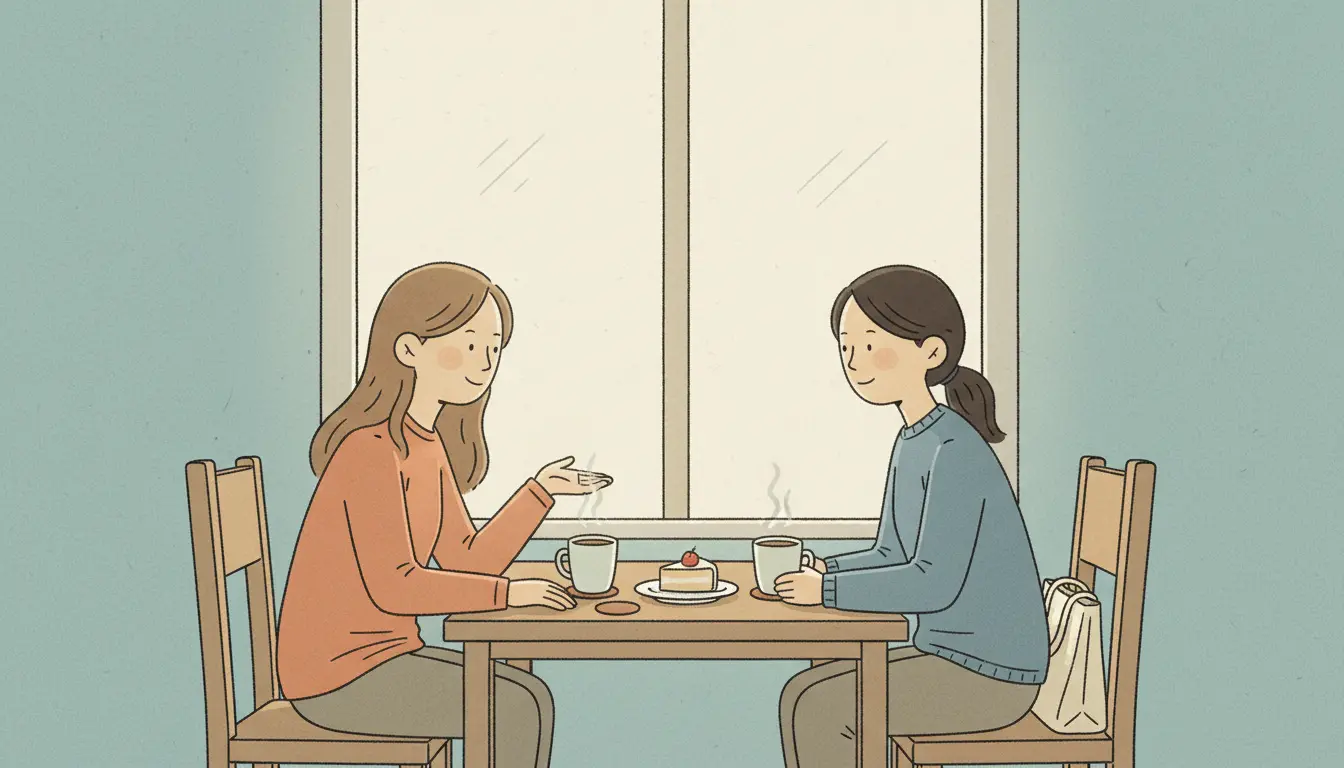
If you learned Korean through K-dramas, banmal can look simple. Two people meet, the mood softens, and the speech level drops fast. For many English-speaking viewers, that shift feels like a friendly shortcut: less distance, more warmth, more “we’re close now.”
But when to use banmal in Korea is not a mood-only decision. It’s a relationship decision, and the same banmal line can sound charming in one situation and disrespectful in another. The biggest trap for foreigners is also the most common: using banmal toward an older stranger because the conversation feels casual.
This post is not about grammar. It’s about timing. It explains the safest first-meeting route, what “Speak comfortably” usually allows, and the one banmal pattern that can flip a friendly moment into a rude one.
The #1 Foreign Mistake: Banmal to an Older Stranger
Foreigners often treat banmal as “friendly Korean.” It can feel like the language version of a smile. That’s why people use it when they want to reduce awkwardness.
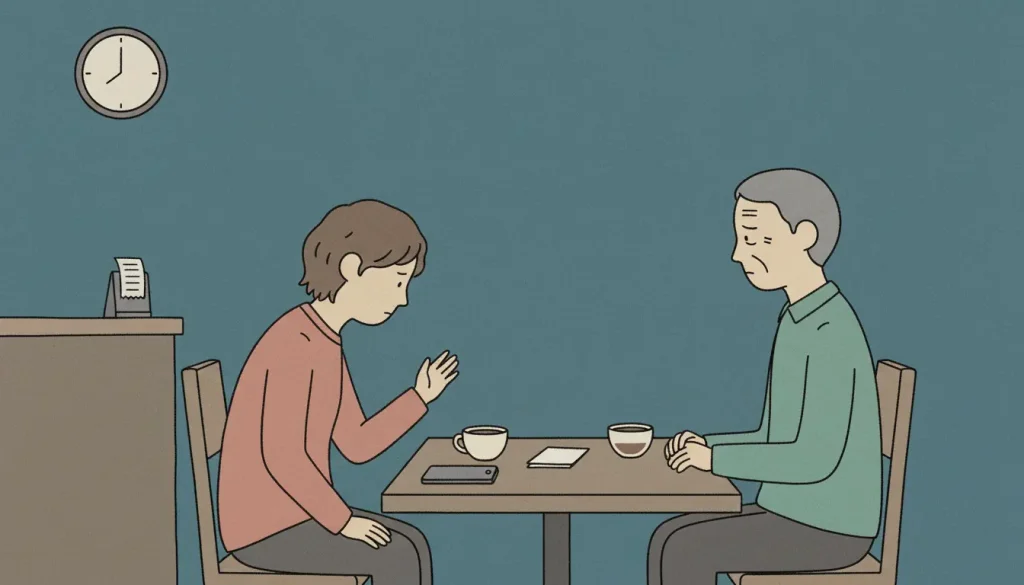
In Korea, the most dangerous version of banmal is not “wrong conjugation.” It’s banmal directed at an older person who is still in the stranger zone. In that frame, banmal can sound like you’re placing the other person below you, even if you have no such intention.
There is a reason this story shows up in Korean anecdotes: a foreigner speaks banmal to a middle-aged or older person, then switches to polite speech the moment a university senior appears. From the older person’s point of view, the message can feel brutal: “You respect them, but you speak down to me.” Even if the foreigner is simply struggling with speech levels, the social meaning can land as disrespect.
If you remember one principle about when to use banmal in Korea, make it this: age plus unfamiliarity is the highest-risk combination.
Banmal Is Not Just Speech Level. It’s a Relationship Door
Korean speech levels are not only about politeness. They are also a way to keep relationships stable while they form.
Polite speech gives both sides room. It lets you talk without forcing emotional closeness. Banmal does the opposite: it opens a door to familiarity. That familiarity can be positive, but it can also change how people interpret your attitude, especially in public or mixed settings.
This is why Koreans often decide when to use banmal in Korea based on conditions rather than time. Foreigners ask, “After how many days?” Koreans silently ask, “Has the relationship moved into a safe lane yet?”
If the relationship is still new, banmal can feel like skipping steps. If the relationship already feels shared, banmal can feel natural even without a formal announcement.
What “Speak Comfortably” Usually Allows (And What It Doesn’t)
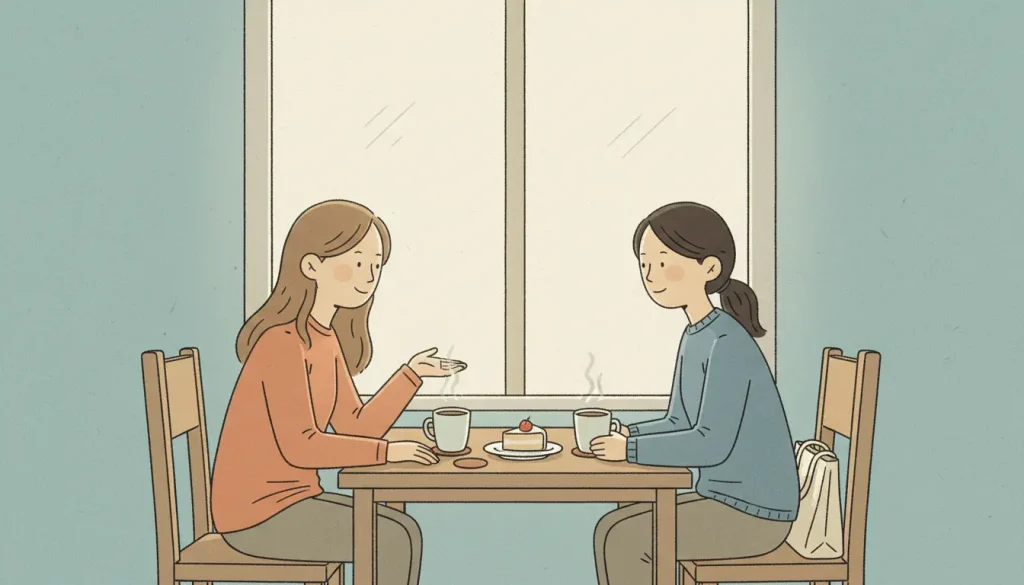
Many foreigners hear this phrase and assume everything is unlocked: banmal, teasing, jokes, casual nicknames, even playful pushing. In real life, the permission is usually narrower.
Most often, “Speak comfortably” means you can lower formality in speech, but it does not automatically approve every kind of closeness. The boundary depends on who the other person is and where you are standing socially.
Banmal may be okay, but titles and teasing can still be limited
If the other person is your age, a moderate level of joking can be fine once the mood is warm. If the other person is younger, the expectation can be stricter: “I said you can use banmal, but keep your jokes and tone respectful.” In public settings, even friends can keep their teasing softer because other people are watching and interpreting.
Time also matters in a specific way. Not “three days,” but “shared time.” As you spend longer periods together, boundaries often blur naturally. Early on, they are clearer and easier to cross by accident.
So when to use banmal in Korea after hearing “Speak comfortably” is not a full permission slip. It is a controlled opening.
What Makes Banmal Feel Offensive: Not the Banmal, the Attitude
Many Koreans are surprisingly flexible with foreigners who are clearly trying. A beginner’s awkward banmal can be read as effort, not arrogance. That flexibility disappears when banmal starts to carry a commanding or demeaning feel.
The most common trigger is not the banmal sentence itself. It’s what gets attached to it.
Name-calling, commands, and reaction are the real problem
Banmal can turn sour when it comes with careless addressing, ordering, or a tone that sounds like you are using the other person. A short command like “Do it” or “Give me that” can land differently in Korean because speech level already implies a position. If you add command energy on top, it can feel like you are pulling rank.
Reaction matters too. If the other person stiffens and you push forward anyway, the message becomes: “I don’t care how you feel.” That is often what people remember, more than the grammar.
This is also where personal experience matters. Many Koreans find it cute when a beginner uses imperfect Korean with a sincere attitude. But if someone has already been corrected and still uses banmal in a bossy, ordering way, it stops being “cute effort” and becomes “rude choice.”
The Minimum Conditions for Safe Banmal
Foreigners often want a number: “After one day? After two meetings?” In Korea, the safer answer is a checklist.
1) The age lane is clear, and you are truly peers
If you confirm you are the same age, banmal becomes much easier—especially outside business settings. Among real peers, banmal is often read as equal warmth rather than disrespect.
If you are not peers, banmal is not automatically wrong—but it becomes more sensitive. The older-stranger frame is where foreigners get punished socially, even when they meant nothing.
2) Either you get agreement, or they lower first
The safest route is simple: ask, or follow. A short check like “Can I speak comfortably?” is often enough in polite Korean. Another safe signal is when the other person starts mixing banmal first. At that point, matching their level is usually less risky than initiating the drop alone.
This matches a very Korean instinct: banmal is not a solo decision. It’s a pace-matching decision.
7 Safe Rules for First Meetings (The Practical Guide)
Below are seven rules that help you decide when to use banmal in Korea without needing perfect social intuition.
1) If they are an older stranger, stay polite by default
Even if the mood feels casual, polite speech protects the relationship. This is the scenario where banmal can feel unforgivable, not merely awkward.
2) If you are the same age, banmal can be fast outside business
In casual social settings, peers can switch quickly once the conversation is warm. The “fast” part is not time. It’s the ice breaking.
3) Treat “Speak comfortably” as a narrow permission, not total freedom
It often allows banmal, but it does not automatically allow teasing, nicknames, or heavy jokes—especially early.
4) Watch for a comfort signal before you drop fully
Comfort signals can look like relaxed tone, playful teasing (soft, not sharp), repeat invitations, or them mixing banmal first. These signals matter more than the number of days.
5) Avoid banmal that sounds like commands
Beginner Korean often reaches for short forms. But short forms can sound like orders. If you want banmal to sound friendly, avoid command energy.
6) If the reaction tightens, do not push
If their face tightens, they answer briefly, or the mood suddenly becomes organized and formal, treat it as a “not yet” signal.
7) If you’re unsure, choose soft polite speech
Soft polite speech is the middle lane: respectful, but not cold. It keeps the relationship safe while still allowing warmth.
Used Banmal Too Soon? The Calm Reset That Works
Foreigners often fear that one wrong line ruins everything. In most casual situations, the bigger risk is overreacting.
In Korean culture, long explanations can create more embarrassment than the original mistake. A quiet reset often works better than a dramatic apology.
The safest reset sequence
Return to polite speech naturally.
Keep your next sentence short.
Let the conversation continue without forcing a “moment.”
If you feel you truly crossed a line, a brief acknowledgment can help: you chose the timing wrong, and you’re sorry. Keep it small. The goal is not to perform guilt. The goal is to restore comfort.
Why K-Dramas Make Banmal Look Faster Than Real Life
Dramas compress relationships. They cannot show every small meeting, every cautious pause, every gradual softening. So they use banmal as a storytelling marker.
After conflict, there is often a reconciliation scene where speech levels suddenly relax. That makes the emotional distance audible to viewers in one second.
Real life is slower and more conditional—especially with older strangers, where speech level can feel like social respect, not personal style.
When to Use Banmal in Korea Is About Reading “Who,” Not Chasing “When”
Banmal can be warmth, but it can also be disrespect, depending on who you are speaking to and what relationship lane you are in.
The most important warning is simple: banmal toward an older stranger is the highest-risk mistake foreigners make, and it can feel rude even when you meant it as friendliness.
“Speak comfortably” can be a real opening, but it usually opens only part of the door. If you want the safest timing for first meetings, confirm the age lane, match the other person’s pace, and keep your banmal free of commanding tone.
And if you slip, reset quietly. In many Korean interactions, calm correction restores comfort faster than dramatic explanation.
