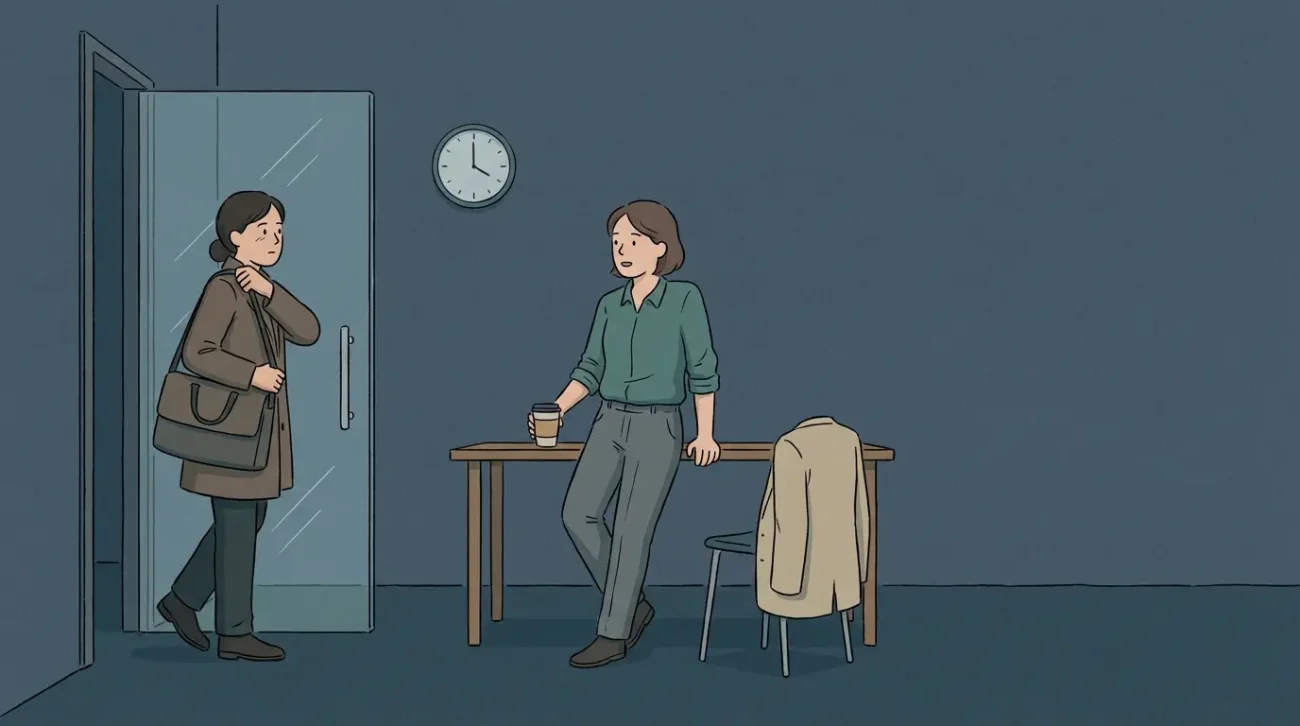
You arrive in Korea, step into work on a Monday morning, and before anyone asks how you are, someone asks, “Did you eat?” That is usually the moment people pause. Why food first? Do I look hungry? Is this a real question, or is this somehow what a greeting sounds like here?
That is exactly why this phrase catches people off guard. If you are wondering about this greeting, the answer is not just that we talk a lot about food. The sentence does several things at once. It can be literal, but it can also carry concern, familiarity, and a soft way of asking whether you are doing all right without putting that too heavily into words.
For me, this phrase never felt unusual. I heard it from my parents, relatives, friends, and friends’ parents so often that I never stopped to think about when it had become an everyday greeting. It was just there. Even now, it is still one of the easiest things for me to say to someone I know.
Why It Sounds Like a Question but Feels Like a Greeting
That is what makes it difficult to translate neatly. On paper, it is clearly asking whether someone has eaten. In real life, though, it often works more like a greeting with a little warmth folded into it. People answer, “Yes, I ate,” or “Not yet,” but the point is often not the information itself. The point is that someone opened the conversation by checking on you in a way that feels ordinary and caring at the same time.
That is also why the phrase can move in two directions so easily. Sometimes it stays a greeting and ends there. Other times it becomes an actual meal, especially when you are meeting a friend after a long time or starting a conversation that naturally leads to food anyway. So the line never sits cleanly in one category. It is not only a question, and it is not only a greeting. It lives in both at once.
People hearing it for the first time often start wondering about the hidden social rule behind it. If I say I have not eaten, does that mean the other person now has to feed me? That question makes sense too, because here, “I haven’t eaten yet” does not always drift away as neutral information.
Why Hunger Feels Bigger Than a Small Detail in Korea
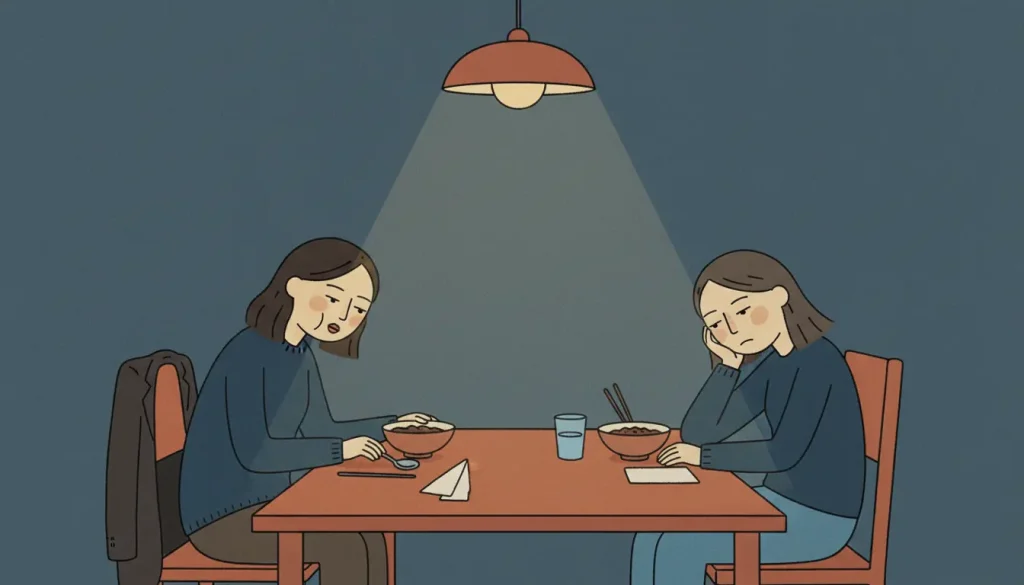
The scene feels strange at first because the emotional order looks reversed. The serious talk is still there, but hunger moves to the front of the room.
This is where the emotional logic of the phrase becomes clearer. Where I grew up, hunger can sound bigger than a small personal detail. It can sound like something that should be dealt with before almost anything else.
That is why an exaggerated image still makes immediate sense to me. If someone were about to say, “We should break up,” but the other person suddenly said, “I’m starving,” I can easily imagine the breakup being delayed until after the meal. It sounds absurd, but it does not sound impossible. The same goes for another extreme image that still feels strangely understandable to me: if a thief broke into the house because they were hungry, there is a very Korean kind of reaction that wants to feed them first and sort out the rest after. I am not saying that makes legal sense. I am saying the emotional logic is recognizable.
That feeling shows up in real life too. I have seen news stories where someone stole food or baby formula and got arrested, and the reaction was not just, “A crime is a crime.” Very often, another response appears first: how desperate must they have been? That does not mean people approve of theft. It means hunger and basic survival can stir pity before moral judgment fully takes over.
I think that reflex became this strong because it had a long time to settle into the culture. Korea lived through years of unstable farming long before modern abundance, including the old barley hump years, the hungry spring gap when the previous harvest had run out before the new barley ripened. After that came colonial rule, war, and the poverty decades that followed. If a society repeats that experience across generations, “Did you eat?” stops sounding like small talk. It starts sounding like a basic way of checking whether someone is getting through the day properly.
Even if I myself grew up without real hunger, I still feel that old reflex inside the culture. I may be full, but the other person may not be. That feeling seems to have hardened into habit.
Who Says It, and When the Meaning Changes
That does not mean people say it to absolutely everyone. This phrase mostly lives inside some level of familiarity. Friends say it. Family says it. Coworkers say it. Older neighbors might say it. It is common, but it is not completely free-floating. It sounds most natural when some relationship already exists.
The same word for meal also changes tone depending on the speaker. If a parent, aunt, or grandmother asks whether you have eaten, it usually lands as warmth right away. But when someone you have not seen in a long time says, “Let’s get a meal sometime,” that can be different. Sometimes it is real. Sometimes it works more like a soft social bridge, a way of ending warmly without fixing a date on the spot. The word stays the same, but the emotional weight shifts with the relationship.
The generational side is a little less certain. From what I can tell, people in their thirties and forties still use this phrase very naturally. People in their teens and twenties clearly know it too, but they seem more likely to mix it with lighter check-in lines like “What are you doing?” or “How have you been?” I would not say it disappeared. It just seems to live beside other casual ways of reaching out now.
So the real skill here is not translating the sentence word for word. It is noticing who said it, how they said it, and what kind of relationship already exists around it.
Why It Still Feels Natural to Me Now
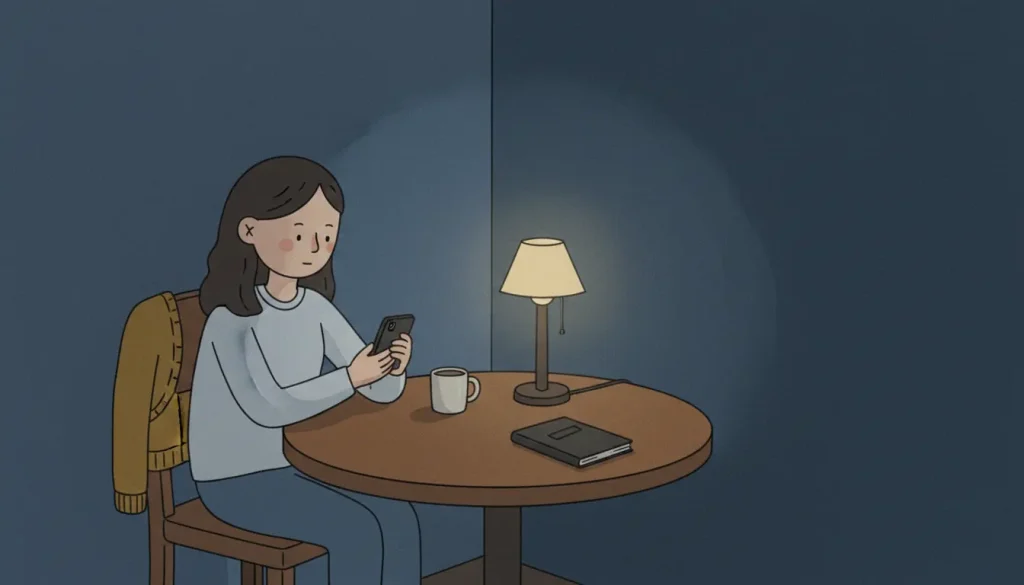
The line is short because it does not need to explain everything. It feels light on the surface, but it still carries care.
This is probably why the phrase still works so well on KakaoTalk too. It is short, soft, and emotionally safe. It lets me check on someone without making the conversation heavy from the start. We do not always jump straight into “I missed you” or “I was worried about you” out of nowhere. That can feel too direct, too fast, or just slightly too much. “Did you eat?” does something gentler. It checks on the other person without forcing the mood.
So if you want the practical answer, it is simple. Yes, you can use this line with a Korean friend, partner, or someone you already know. You do not need a perfect setup. Most of the time, it will feel warmer than awkward. The line only starts sounding strange when it appears with no relationship at all or in a context that feels too forced.
So if someone asks you, “Did you eat?” in Korea, it may not really be about breakfast or lunch. It may be the quickest and most familiar way they know to ask whether your day is going all right. And if I go back to that Monday morning scene, that is why the question starts sounding different once you understand it. At first it sounds like food. After a while, it starts sounding like something else too: Are you okay? Have you been taken care of, even a little?
What does “Did you eat?” mean in Korean?
The phrase is 밥 먹었어, or bap meogeosseo. I have said this line more times than I could count, and it does not always mean I am asking about food. Very often it works as a greeting — a way of carrying a little warmth into the opening of a conversation without making the moment emotionally heavy. It can mean exactly what it says, or it can mean something closer to: are you doing all right?
How should I respond when someone says “Did you eat?”
Most of the time, a simple answer is enough. You can say yes, or say not yet. If the other person actually turns it into a meal invitation, accepting does not feel strange at all — that is often where the phrase naturally leads. And if it was just being used as a greeting, a short answer works perfectly well. The conversation usually knows which direction it is going, and so do the people in it.
Is “Did you eat?” only used by older Koreans?
No. It is not a phrase that belongs only to older people. I still use it, and so do most people I know across different ages. From what I can tell, younger people in their teens and twenties are a little more likely to mix it with other casual check-in lines like “What are you doing?” or “How have you been?” — but the phrase itself still feels very much alive. It has not disappeared. It just shares the space with other ways of reaching out now.
Why does food come up so often when we express care?
Part of it is that jumping straight into heavy emotional language can feel like too much too fast. Saying something like “I was worried about you” can land awkwardly if the mood is not already there for it. I reach for “Did you eat?” because it does something softer. It checks on the other person, but in a way that feels easier, warmer, and more natural in ordinary conversation. The care is in there. It just does not announce itself.
Does “Let’s grab a meal sometime” mean the same thing?
Not always. Between close friends or family, it can be a real plan. But between people who have not seen each other in a while, it often works more like a warm social closing line than a fixed invitation. The word meal stays there, but the meaning shifts with the relationship and the moment.
