Ramyeon Meaning — When Noodles in K-Dramas Aren’t Really About Noodles
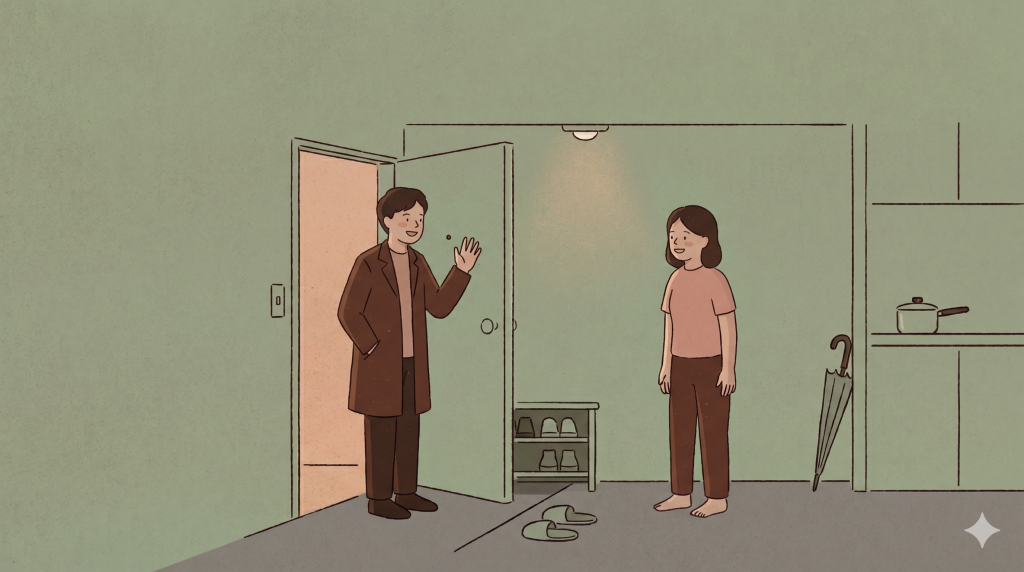
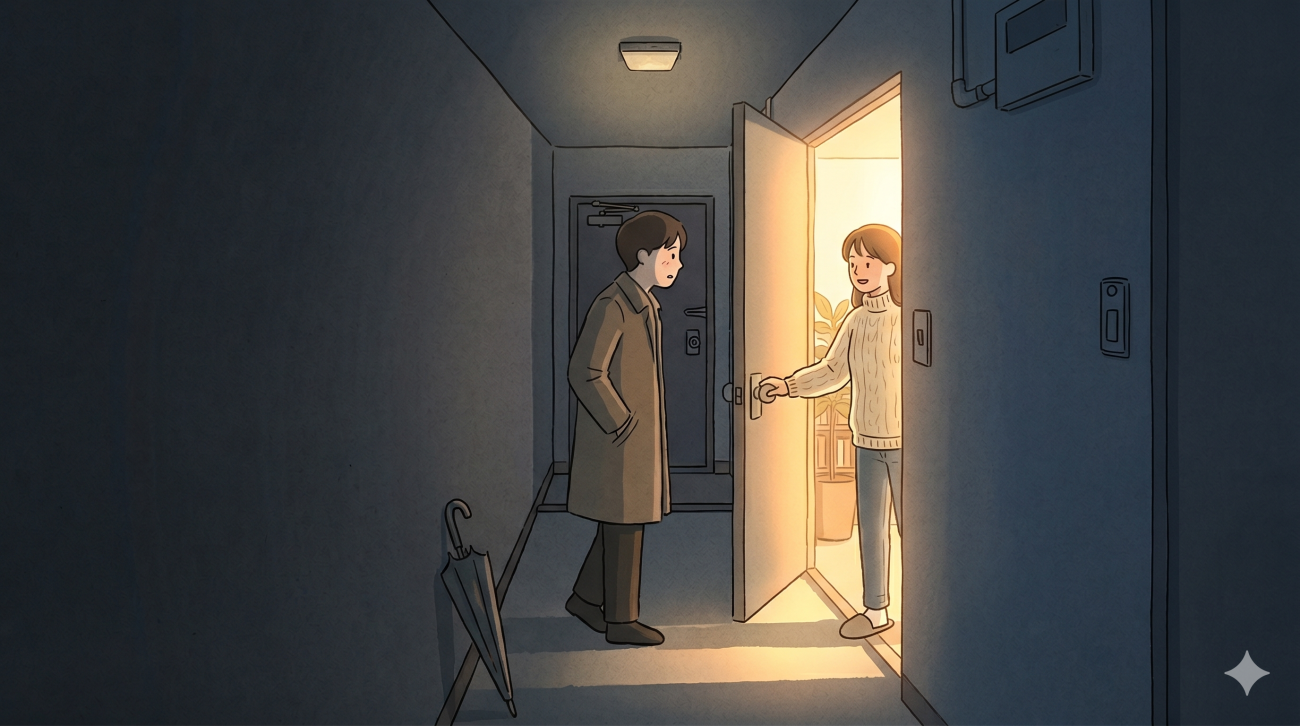
If you’ve watched enough K-dramas, you’ve seen this scene. It’s late. A date has ended. The man has walked the woman to her door, and now neither of them is moving. There’s a pause — the kind that doesn’t need words to fill it. Then she says quietly: “Do you want to eat ramyeon before you go?” He hesitates for just a moment. Then he nods. The door opens, and he steps inside.
Viewers who encounter this scene for the first time often pause and rewind. The comment sections fill up: “Is ramyeon some kind of code?” “Is this the Korean version of Netflix and chill?” Those questions aren’t entirely wrong. But they aren’t quite right either. In Korea, ramyeon can be exactly what it sounds like — noodles, in a pot, eaten quickly and without ceremony. Or it can be something else. What separates those two readings isn’t the word itself. It’s everything surrounding it.
I don’t have a specific memory of saying or hearing this phrase in real life. But as a Korean speaker, I know the feeling of a moment when those words would land lightly — and the feeling of a moment when they would suddenly carry weight. That shift in weight is what this post is about.
What Ramyeon Actually Is — Before Anything Else
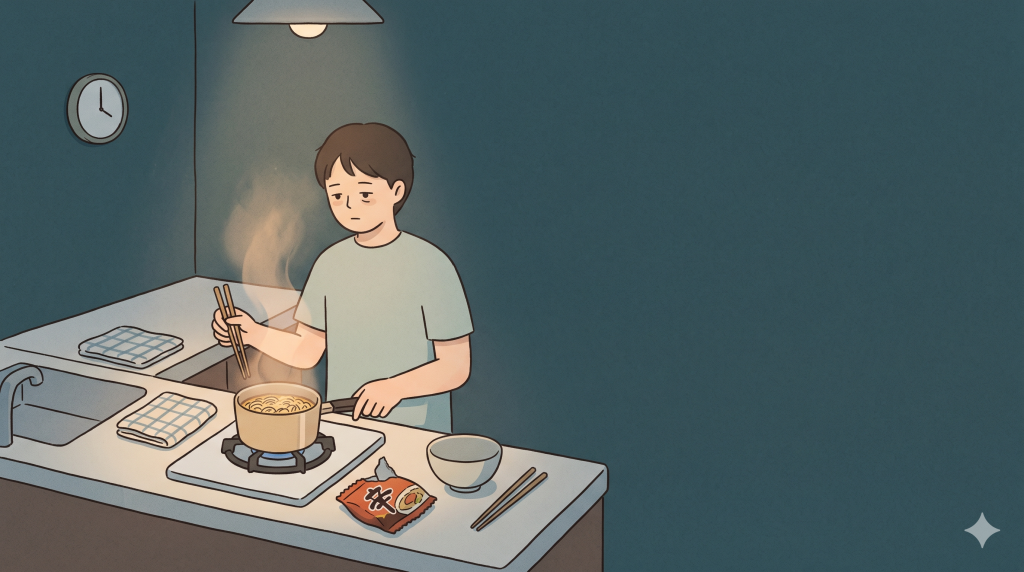
To understand why this phrase works the way it does, it helps to understand what ramyeon (라면) is as a food. It’s what you make when cooking a proper meal feels like too much effort. It’s what you reach for when you’re hungry, but not quite hungry enough for rice. It’s better alone than nothing, and somehow better still with someone else there.
Cold days call for it. Rainy days call for it. The specific craving — hot broth, soft noodles, something quick and uncomplicated — tends to arrive without much reason. You boil water, open the packet, wait about four minutes. That’s the whole process. No preparation, no planning, no cleanup worth mentioning.
That simplicity is part of what makes the phrase function the way it does. “Let’s go get dinner” requires choosing somewhere, getting there, sitting down. “Have another drink” means moving to a different place. But “Do you want ramyeon before you go?” can happen right here, right now, with no transition required. The ease of the offer is part of its appeal — and part of what makes it useful as something other than a food invitation. In the world of K-dramas, ramyeon has appeared in all of these places: the meal after an exam, the thing someone makes alone after a breakup, the quiet excuse offered at the end of a night when no one wants to say goodbye yet. Those accumulated appearances are part of why a single sentence can carry this much.
Same Words, Different Meaning — The Scene Decides
When many Korean speakers hear “Do you want to eat ramyeon?”, something in the background starts making sense of the context. Who is asking. What time it is. Whether anyone else is nearby. These conditions tend to shift what the sentence means.
Between same-sex friends, the calculation is simple. It’s noodles. Come in, boil water, watch something, go home when you feel like it. Even between people of different genders, if it’s the middle of the afternoon and there are family members home — which the speaker has mentioned — the invitation tends to read as what it says. The presence of other people in that space changes what the space means.
But when the conditions stack differently — late at night, a private home, just the two of them, a relationship where feelings are already present — the phrase tends to mean something more. Both speakers often know it. Neither says so directly. The offer of ramyeon creates a way to ask without fully asking, and a way to accept or decline without either person having to commit to a meaning that was never stated out loud. That indirectness is part of what makes the moment feel the way it does in dramas. Saying “please stay” is too direct. Saying “do you want ramyeon” leaves room for both people to pretend — briefly, kindly — that it’s just about noodles.
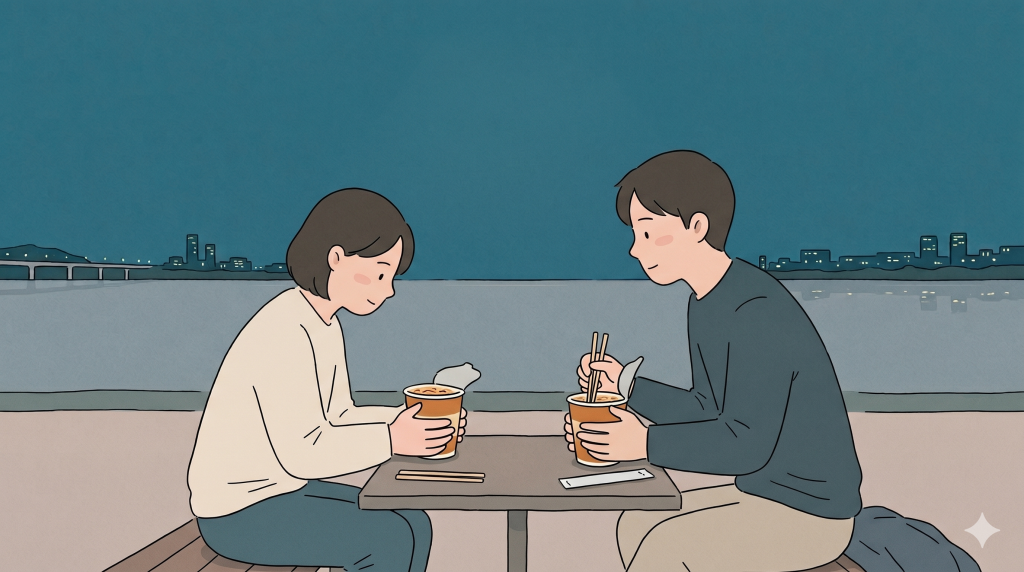
The Han River version of this deserves its own note. Getting convenience store ramyeon at the Han River is one of the more common date activities in Seoul. Couples, friends, near-strangers who’ve just met — all of them eat ramyeon there, surrounded by other people, under open sky. That setting doesn’t carry the same weight. The meaning of “ramyeon at the Han River” and “ramyeon at my apartment, tonight” can begin with the same word and arrive in entirely different places.
The Scene This Phrase Is Most Often Connected To
One of the moments this phrase is most widely associated with appears in the 2001 Korean film One Fine Spring Day. Near the end of a date, the woman’s companion lingers at her door, reluctant to leave. Rather than saying she wants him to stay, she asks — quietly, without pressure — “라면 먹고 갈래요?” He goes inside. The scene captures the feeling of early romance: the wanting, the hesitation, the small courage required to make an offer without naming what you’re actually offering.
She didn’t say “stay a little longer.” She didn’t ask directly for more time. She offered something concrete and harmless — noodles — and let him decide what to do with that. The decision stayed with him. If he had said no, she could have smiled and said goodnight without anything needing to be acknowledged. That structure — the indirect expression of something that goes unspoken — reflects a way of handling feeling that many Korean speakers would recognize without needing it explained.
The phrase moved from that film into everyday cultural awareness, then into drama scenes, then into online conversations where people tried to decode it. What kept it alive was not the noodles. It was that feeling of a night that isn’t quite over yet, and not knowing how to say so.
For a Korean woman living alone, this phrase carries a particular weight that she understands clearly. If she genuinely wants nothing more from the evening than to say goodnight, she doesn’t invite him inside at all — she suggests a nearby restaurant, settles the bill, and heads home separately. She doesn’t say “ramyeon.” She simply doesn’t open that door. When the offer does get made, its presence tends to mean something.
What Happens When a Foreigner Uses This Phrase
If a foreigner said this to a Korean person — especially to someone of the opposite gender, late in the evening — the reaction would likely involve a pause. A moment of not knowing quite how to read what just happened. Does this person understand what they’re implying? Did they mean it that way? Are they just hungry?
That uncertainty tends to be more disorienting than any clear misunderstanding would be. A clear mistake can be corrected. An ambiguous one sits there. The Korean speaker may not know how to respond until they’ve made a judgment about intent — and making that judgment takes time they weren’t expecting to need.
For same-sex friends wanting to extend a night out, different phrasing removes the ambiguity altogether. “Want to grab something from the convenience store?” or “Should we find somewhere to sit outside?” or “Want to get ramyeon by the Han River?” — all of these are friendly, open, and take place in public space. They’re suggestions without the additional layer that a private, late-night ramyeon invitation tends to carry. The Han River version, specifically, keeps the ramyeon and removes the subtext.
This phrase works the way it does because both people in the original context share the same cultural map. They know what the words can mean beyond what they literally say. Using it without that shared map risks sending a signal that wasn’t intended — or missing one that was.
Let’s go back to that scene. Late night. A doorstep. Someone who isn’t ready to leave. “Do you want to eat ramyeon before you go?”
Now you know that it might mean exactly that. And it might not. The answer to which one tends to be visible before the question is even asked — in the hour, the location, the relationship, the pause before the words arrive. The scene usually already contains the answer. The ramyeon is just how the question gets asked.
What does “ramyeon meaning” refer to in K-dramas?
In K-dramas, “Do you want to eat ramyeon?” (라면 먹고 갈래?) can mean either a literal invitation to eat instant noodles or an indirect invitation to stay longer — sometimes with romantic implications. The ramyeon meaning shifts depending on context: who is speaking, what time it is, whether the setting is private, and what kind of relationship exists between the people involved.
Is this phrase always romantic or sexual in meaning?
Not always. Between same-sex friends, or in a daytime setting with other people around, the phrase tends to be read as a simple offer of food. The more intimate reading tends to arise when the setting is private, the hour is late, and the two people involved have some kind of emotional connection or mutual interest. Context carries most of the meaning.
What is the difference between ramen and ramyeon?
“Ramen” in English typically refers to Japanese-style noodle dishes — often served in restaurants, made with fresh noodles and long-simmered broth. “Ramyeon” refers to Korean instant noodles: the kind that comes in a packet, cooked quickly at home or by a riverside. When Koreans say 라면, they mean ramyeon. K-drama subtitles sometimes use “ramen,” but “ramyeon” is the more accurate term for what’s being described.
Can foreigners use this phrase in Korea?
With some caution. A Korean person hearing this phrase from a foreigner will likely wonder whether the speaker understands what it can imply — especially if the setting is late and private. For casual situations where the goal is simply to keep spending time together, phrases like “Want to get ramyeon by the Han River?” or “Want to grab something from the convenience store?” carry the same friendly intent without the additional layer.
Where did this phrase come from?
The phrase is widely associated with a scene in the 2001 Korean film One Fine Spring Day, in which a woman offers a lingering companion the chance to come inside by asking “라면 먹고 갈래요?” The moment — indirect, gentle, and open to interpretation — became a cultural reference point for a particular kind of hesitation at the end of a night. Whether the phrase originated there is difficult to say with certainty, but that film is the scene most often connected to it.
