Josonghandeoyo Meaning: why 죄송한데요 (josonghandeoyo) can sound firm
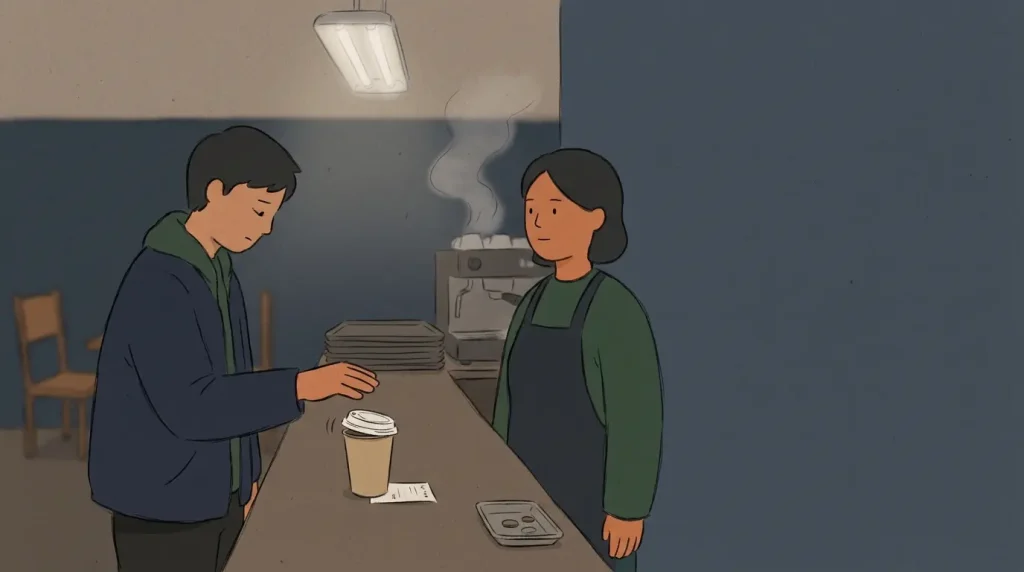
At a café counter in Korea, there’s a tiny pause that sometimes lands right after someone says 죄송한데요. It’s the kind of pause that makes you look up from your cup, not because something dramatic happened, but because the room is waiting for the next sentence. That’s the heart of Josonghandeoyo Meaning in real life: 죄송한데요 (josonghandeoyo) can be “excuse me” or “I’m sorry,” but it often works less like an admission of guilt and more like a polite knock on the door of someone’s attention.
That’s why the same opener can lead to a gentle question (“Do you know where this building is?”) or to a firm objection (“What you’re saying doesn’t add up, and it feels like you’re picking a fight”). The meaning isn’t locked inside the word. It’s built by what comes after it, and by the air of the moment that came before it.
Moment 1: getting a stranger’s attention without jolting them
On the street, it’s often just a polite tap on the shoulder. “죄송한데요, 이 건물 어디 있는지 아시나요?” means, “Excuse me—do you know where this building is?” It’s not dramatic; it’s the linguistic version of stepping slightly to the side so you don’t block someone’s path while you ask. In this moment, the phrase signals “I know I’m interrupting you,” not “I have done something wrong.” People tend to hear it as consideration for the other person’s time and space, which is why it can feel safer than a blunt “Hey.”
Moment 2: correcting a small service mistake without starting a fight
A lot of first-time visitors notice this opener most vividly in stores and service settings, because it shows up right before a correction. Think of a café moment like: “Excuse me—I ordered an iced Americano.” It can sound firm, but it’s usually firm in a practical way: it’s asking the situation to be fixed, not asking the person to be punished. The line is polite on the surface, but it also clears a lane for the request. It says, “Let me speak,” and then it says, “Here is the exact problem.”
That combination can feel like pressure if you expect apologies to be soft and round. In many everyday Korean interactions, the softness is often in the opener, while the clarity lives in the sentence that follows.
Moment 3: asking for repetition without blaming the other person
Sometimes the phrase is used to keep a request from sounding accusatory. “Excuse me—I couldn’t hear what you just said. Could you say it again?” is basically the speaker choosing a route with fewer sharp edges. It frames the issue as a gap in hearing, not as the other person’s failure to speak properly. That’s why it can feel like a social safety belt: it reduces the chance that a simple request is misread as a critique.
Moment 4: drawing a boundary while still sounding polite
Here’s the counterintuitive part that confuses people: the phrase can make a boundary sound even more final. “Excuse me—I’d like to be alone” isn’t a meek sentence. It’s a closed door delivered with a polite handle. When someone is overwhelmed or already irritated, adding that polite opener can make the refusal sound controlled rather than emotional. Controlled refusals often feel stronger than emotional refusals, because they imply the decision won’t change.
Moment 5: stopping bad behavior in public
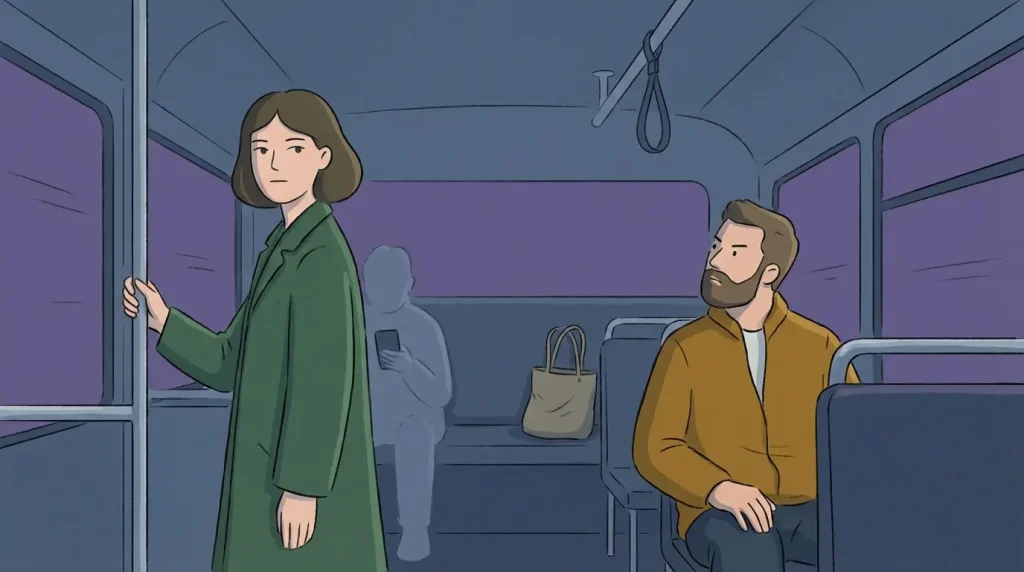
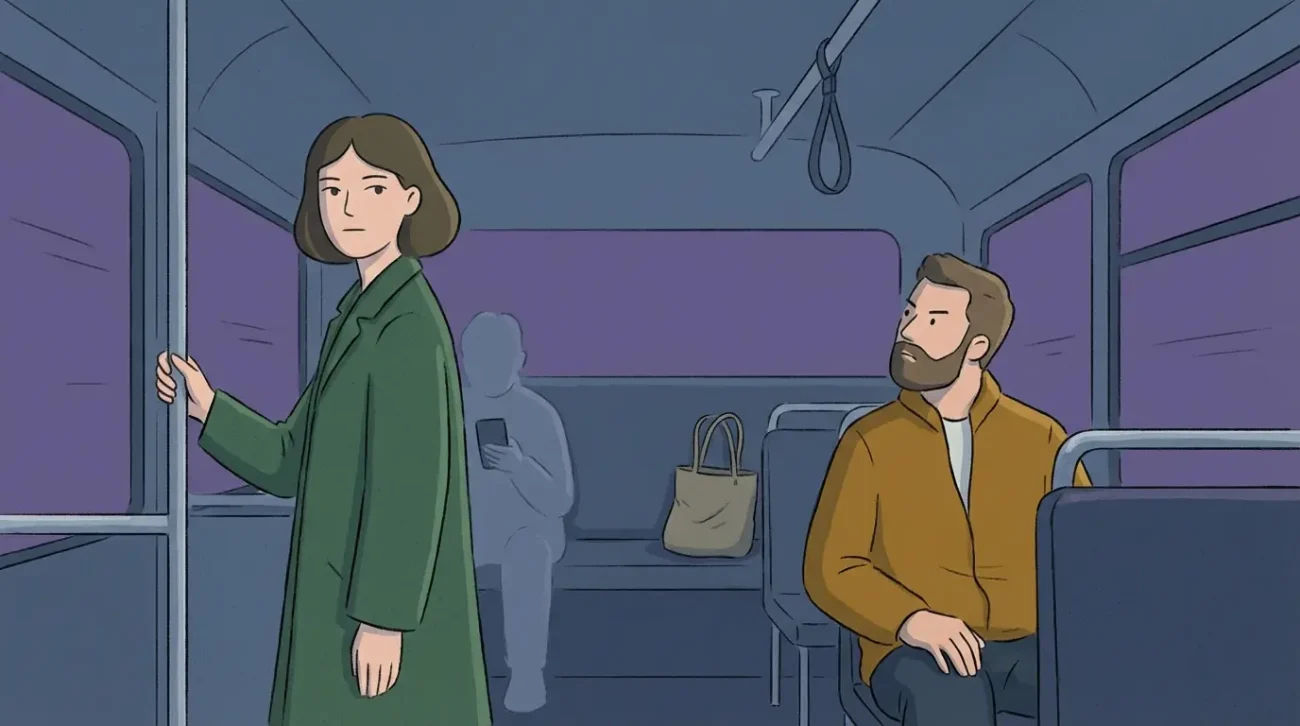
A real-life scene shows the “firm” function very clearly. On a bus, one passenger was being loud and rude to others. A woman who had been watching finally spoke up: “죄송한데요. 그만 좀 하세요. 너무 시끄러워요.” In plain English, it’s “Excuse me. Please stop. You’re being too loud.” The opener didn’t mean she felt guilty. It meant she was stepping into the situation with a socially recognized entry.
What made it powerful was how quickly it moved from polite entry to concrete demand: stop, it’s too loud. After that, other passengers also began to object. In moments like this, the phrase reads less like an apology and more like a formal switch being flipped. The complaint format has begun.
Mianhandeoyo and jeogiyo: same doorway, different temperature
People often ask whether 미안한데요 (mianhandeoyo) and 죄송한데요 (josonghandeoyo) are interchangeable. They overlap, but josonghandeoyo tends to feel a touch more formal and careful. In service settings or official relationships, that extra formality can be why it feels like the safer default.
저기요 (jeogiyo) is different. It’s a direct attention-getter—closer to “hey” or “excuse me,” depending on tone. It can be light, or it can be blunt. Switching from jeogiyo to josonghandeoyo often makes the air more serious, because the phrase carries a sense of “I’m interrupting properly,” which can sound like the start of something consequential. The tools are similar, but they change the temperature of the room in different ways.
Why it feels sharper: tone, timing, and the “complaint format”
Arguments often split on one question: is the firmness caused by the phrase itself, or by tone and scene? In practice, it’s both working together. The phrase can prime people to expect a complaint, especially in customer-service contexts where it frequently introduces a correction. Then tone does the rest. Speed, pauses, eye contact, and how quickly the speaker moves into a demand can turn the opener into a warning bell.
Even with the same sentence, a small pause can feel like a breath taken before confrontation, while a warm tone can make it feel like routine politeness. The phrase isn’t a fixed emotion. It’s a doorway that makes whatever comes next arrive more clearly.
When it gets awkward: the smallest repair that usually works
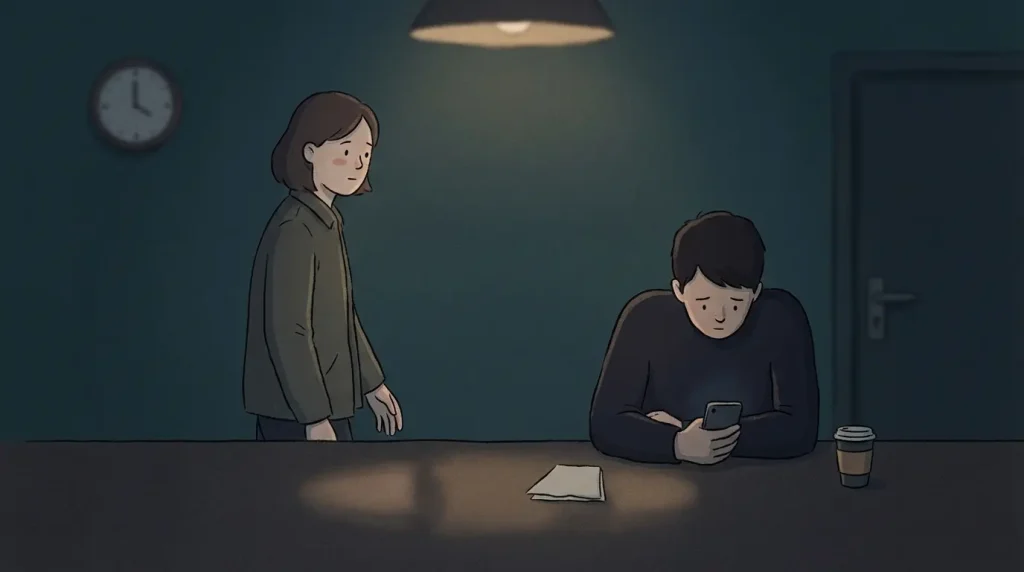
Sometimes people imitate “excuse me” too literally and end up using the opener too often, or they overextend the apology and never reach the actual request. When the atmosphere turns awkward, the safest repair is usually small and specific rather than dramatic: briefly clarify the intention, then return to the concrete ask. Short clarity tends to calm the room more than long explanations.
And if the problem is simply that the message didn’t land because of language limits, showing one clean sentence—on a translator, on a note app, on anything—can reset the scene faster than raising volume or stacking more apologies.
The next time you hear that café-counter hush after josonghandeoyo, listen for the sentence that follows. That second line is where the real meaning shows its face.
