Korean Two-Hand Etiquette in K-Dramas: Why It Feels Strange
If you watch K-dramas long enough, you start noticing that even ordinary handovers can look unusually formal. A character passes a document, a business card, or a small gift with both hands. Someone receives it the same way, or holds it in one hand while the other lightly supports the wrist or forearm. For many first-time viewers, Korean two-hand etiquette is one of those visible habits that feels like a hidden rule.
The confusion usually isn’t, “Do Koreans have manners?” It’s more specific: What is this gesture doing in the relationship right now? And when does it actually matter?
The questions viewers are really asking (even if they don’t phrase it that way)
From the outside, the gesture can look like a strict social code. That’s why people often search for practical answers rather than cultural trivia.
Is using two hands expected in real life, or is it mostly a drama convention?
If someone hands you something with one hand, is that rude—or just casual?
Why does the “supporting hand” show up, as if one hand isn’t enough?
How do Koreans decide, in the moment, which version to use?
These questions aren’t about the object. They’re about reading tone: respect, distance, formality, or sometimes a deliberate attempt to keep things from feeling too casual.
A Korean inside view: Korean two-hand etiquette often works like a tone-setting tool
Many Koreans grow up with a simple lesson: when you give or receive something from an older person, you use two hands. It’s taught early enough that it becomes muscle memory. Later, especially in adult life, the same habit often extends beyond age alone.
In my own experience, I was taught to use two hands with elders, but work life made the rule feel broader. It becomes something you do with people you want to treat carefully—someone you respect, someone you need to be polite with, or someone you’re meeting in a more formal context. In other words, Korean two-hand etiquette can function like switching to a more formal tone of voice. You’re not reciting a rule; you’re choosing a safer, more respectful temperature for the moment.
That’s also why the gesture can appear even when people are close in age. The trigger is not always “older versus younger.” Sometimes it’s “casual versus formal,” or “private versus public,” or “friendly versus professional.”
Not one gesture, but a spectrum
On screen, it looks like a single rule: two hands equals respect. In practice, you may notice two common versions, and they can carry slightly different weight.
Full two hands: when formality is unmistakable
Full two-handed giving or receiving tends to feel strongest when the moment itself is clearly formal. Award ceremonies are an obvious example, because the whole setting is structured around respect. Another is when the age gap is very large and the relationship feels clearly asymmetrical.
In those contexts, Korean two-hand etiquette doesn’t just look polite; it matches the atmosphere. The hands are doing the same job as a respectful posture or a careful greeting: they make the moment feel “proper.”
Dramas use this version because it reads instantly. Without a single line of dialogue, the viewer understands that this exchange carries weight.
The supporting hand: when you want formality without ceremony
The variation that often catches attention is the supporting hand—holding the item with one hand while the other lightly touches the wrist or forearm. In my experience, this version shows up frequently in business-like settings: handing over documents, exchanging items in a formal meeting, or greeting someone with a handshake while the other hand supports the forearm.
It feels less ceremonial than full two hands, but more careful than a casual one-handed pass. That “in-between” quality is exactly why viewers find it hard to decode. Korean two-hand etiquette here isn’t shouting “hierarchy.” It’s quietly saying, “I’m keeping this respectful.”
Depending on the setting, similar supporting gestures can appear around drinking etiquette as well, especially when the group’s mood leans formal. The point is not the drink—it’s the tone.
When one hand is completely normal
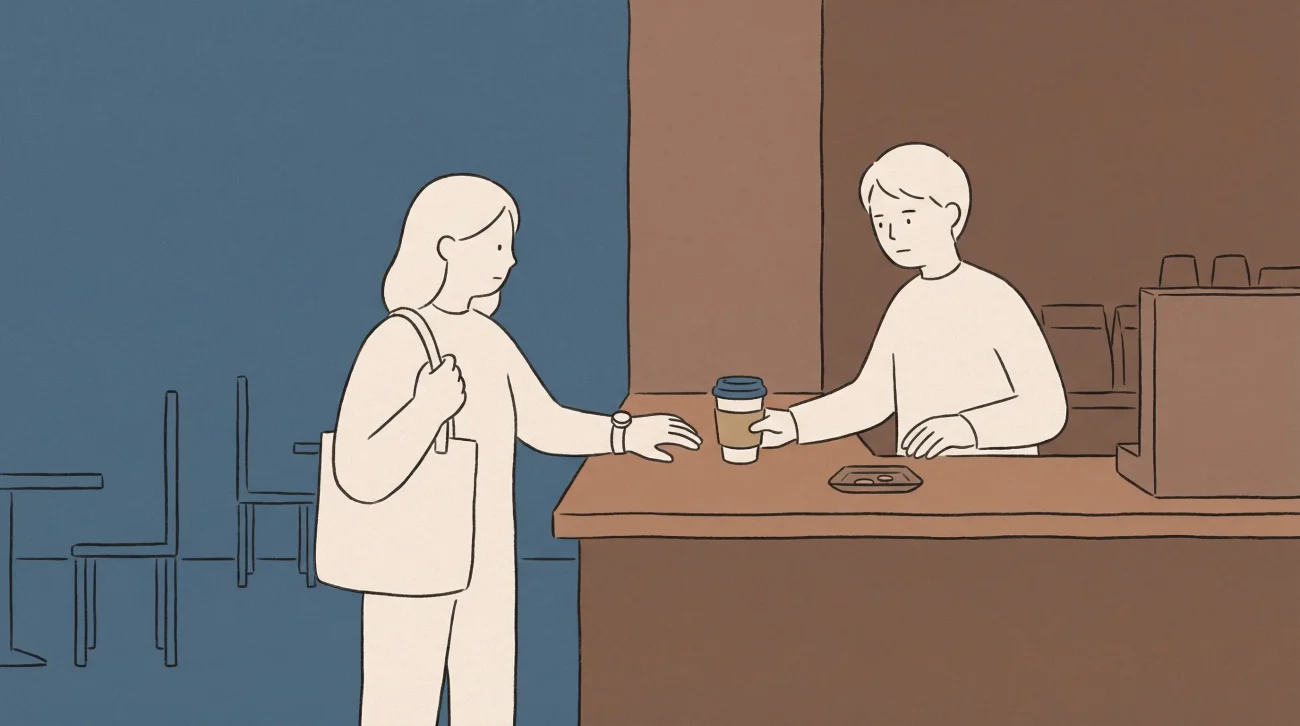
Real life involves constant small exchanges. It would be unrealistic to use two hands for every bottle of water, every phone, every pen. So in everyday situations, one hand can be entirely normal—especially among close friends or within relaxed family moments.
The easiest way to understand this is to stop thinking in terms of a single rule and start thinking in terms of a dial. Korean two-hand etiquette turns the dial toward formality. One-handed passing often keeps the dial where it already is: casual, familiar, unremarkable.
That’s also why you may see variation even with the same people. A handoff at home can be one-handed. The same handoff in a public, formal setting might become two-handed, because the “room” changed.
“Is it rude if I use one hand?” What creates awkwardness
This is the anxious question many viewers carry into real life. Dramas sometimes frame a one-handed handoff as dismissive, careless, or even aggressive—because it’s an efficient storytelling shortcut. But in everyday life, people often interpret the situation first and the gesture second.
In my own day-to-day experience, I don’t automatically judge someone just because they pass something with one hand. Context matters: how close we are, whether the moment is formal, whether the person is rushing, what their tone feels like. If awkwardness happens, it usually comes from a mismatch—when the gesture feels too casual for the relationship or the setting.
Where the judgment can feel sharper is when someone very young uses a too-casual tone toward someone they should treat respectfully. Even then, the reaction is often less “You broke a rule” and more “You weren’t taught the usual manners.”
So Korean two-hand etiquette isn’t best understood as a pass/fail exam. It’s a set of cues that helps people keep the tone aligned.
Has it changed over time? Variation is part of the story
Some Koreans feel that these manners have softened compared to the past, especially among younger people in more casual environments. Others still find Korean two-hand etiquette very natural in official contexts, formal workplaces, or situations where respect is expected.
The important point is not to treat any one version as universal. The same society can hold multiple styles at once. That’s why visitors sometimes feel confused: the “rule” seems to appear and disappear. In reality, the dial is moving with context.
Drama versus real life: why it looks louder on screen
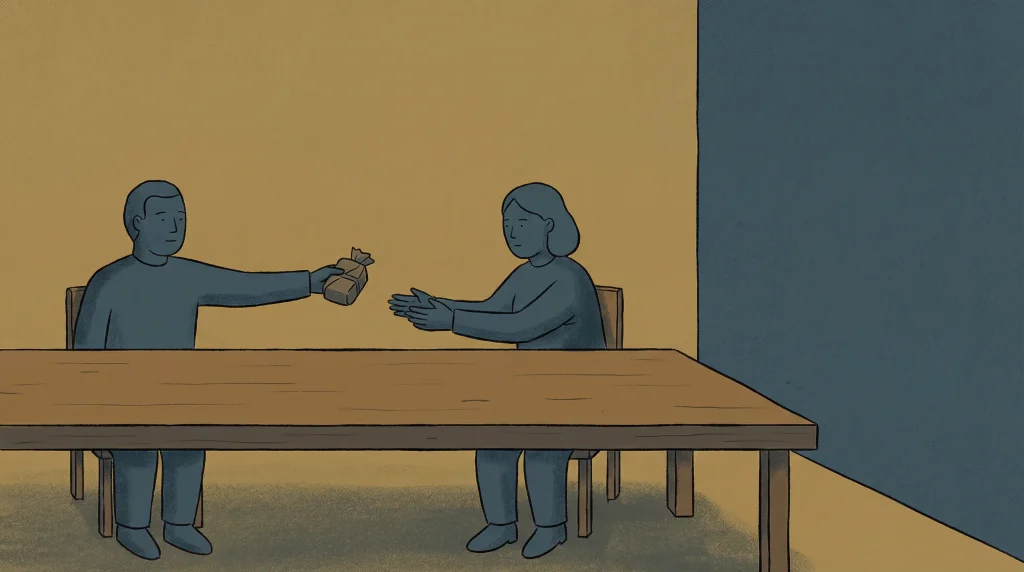
A drama has to compress social information. It needs to show hierarchy, distance, and formality quickly. That makes gestures like Korean two-hand etiquette extremely useful: they communicate mood in half a second.
Real life is messier. People multitask. They’re holding bags. They’re rushing. They’re relaxed with friends. The gesture still exists, but it may be less consistent and less dramatic than it looks on screen.
So it can help to watch with a simple question: What is the scene asking the characters to be right now—casual, respectful, cautious, or formal? The hands often follow that answer.
A more useful way to watch: read the room, not the rulebook
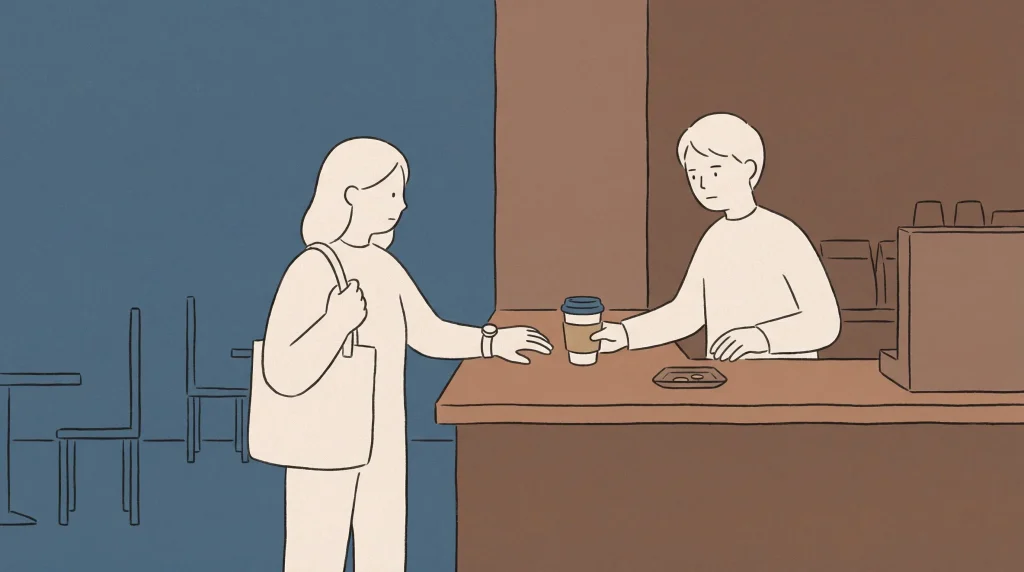
If you treat Korean two-hand etiquette as a checklist, the exceptions will feel frustrating. A more practical lens is to read it as a relationship signal.
- What kind of distance exists between these two people in this moment?
- Is the setting public or private, casual or formal?
- Is the character trying to show care, gratitude, or restraint without saying it out loud?
When you ask those questions, the gesture becomes easier to place. The object may be small, but the tone it carries can be the real point of the scene.
Related Reading
Korean culture often uses small cues to set tone. If you want the next piece of the puzzle, start here.
