Seoul Taxi Luggage: Why Groups With Bags Sometimes Get Refused
Seoul Taxi Luggage — The App Said Yes, but the Driver Said No
A traveler posted on Reddit not long ago with a question that a lot of people have probably wanted to ask. Three people, three mid-size suitcases, Seoul. They tried a regular taxi. Then they tried a Taxi XXL through an app. Both times, the driver said “2 only” and left. No explanation beyond that. The traveler mentioned there had been no problem in other cities — Chinese cities, other parts of Korea. Only Seoul.
The comments had several different answers running at the same time. LPG tanks. App category versus actual car size. Driver’s own call. The thing is, all of those were probably right to some degree. Seoul taxi luggage problems rarely come from a single cause. It’s usually a few things landing at once — the trunk, the people, the language, the moment — and the result is a short refusal that leaves the traveler standing on the curb trying to figure out what just happened.
Korean taxis come in more than one type. There’s the regular taxi you hail on the street, the black mobeom taxi (모범택시) that positions itself as a premium option, and then the app-based options — Kakao T, Uber Taxi, K.ride for foreign visitors, and others. When an app assigns a car, it feels like the answer. But the app doesn’t tell you what’s actually in the trunk or how the driver is reading the situation when he pulls up.
This isn’t a piece about blaming the driver. It’s about understanding why seoul taxi luggage situations go sideways, and what to keep in mind before you’re already standing outside with three suitcases and a timer running.
The Trunk That Looks Big but Isn’t
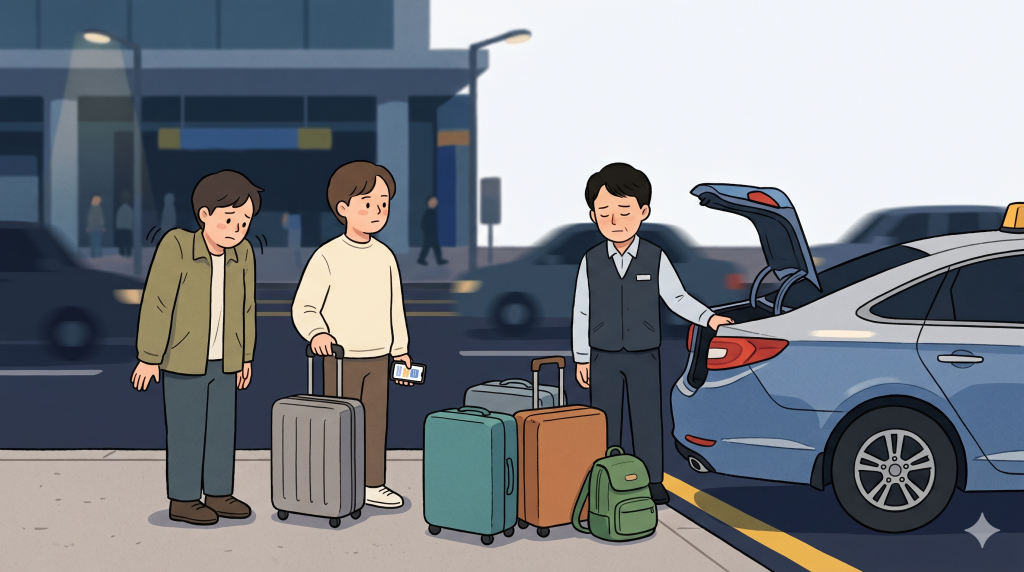
Regular Korean taxis often look roomy from the outside. Then you open the trunk and it’s smaller than expected. One reason that comes up often is the LPG tank. A significant number of Korean taxis run on LPG fuel, and on some models the tank sits inside the trunk cavity, eating into the available space. One large suitcase might go in fine. Two becomes a question. Three is usually the answer to why you’re being told no.
There’s something else worth knowing about how luggage gets loaded. In a mobeom taxi — the black, higher-fare option — the driver will typically get out and help with the bags. That’s part of what you’re paying for. In a regular Seoul taxi, the passenger handles the suitcase. The driver opens the trunk, but lifting and loading is on you. If you’re coming from somewhere that expects the driver to take every bag to the curb, a regular Seoul taxi can feel indifferent. It isn’t, really. It’s just a faster, more practical kind of transport — you get in, you get where you’re going, the rest is on the passenger.
Booking a “Taxi XXL” or a large vehicle through an app doesn’t guarantee trunk space either. The app category and the actual car that shows up are sometimes two different things. A roomy SUV might arrive, or it might not. Checking the trunk before you start loading is worth the thirty seconds it takes.
“2 Only” — Rule or the Driver’s Call
This is the part that’s hardest to read from the outside. If two suitcases fit in the trunk and a third could go on the back seat, and the driver still says no — is that a regulation, or is it personal? Honestly, even from a Korean perspective, it’s hard to say without being there.
One variable that doesn’t get talked about much is the front seat. When there’s a lot of luggage, someone in the group may need to sit in the front, or a bag might end up there. For the driver, that changes the feel of the ride — the arrangement, the space, the dynamic. When the language barrier is also in play, sorting all of that out in a few seconds becomes difficult. What might have been workable with a quick conversation collapses into “2 only” and a window going up.
Cities feel different too. Someone who had no trouble in Busan or Gwangju might hit a wall in Seoul. That’s not necessarily about Seoul being harder — it’s more that a city with this much taxi demand, this many app calls coming in, and this much variation in vehicle types is going to produce more variation in outcomes. The same luggage situation can go three different ways depending on which car shows up.
If something feels genuinely wrong — a refusal that makes no sense, a route that went the long way — the practical move is to note the car’s plate number and keep the app record. If you paid and got a receipt, hold onto it. That paper becomes useful if you need to flag something later.
Kakao T, K.ride, and the Honest Case for the Airport Bus
Kakao T is the app most Koreans use. Foreign cards work, the interface is straightforward, and it covers most of Seoul without trouble. But a Kakao T ride is still a Korean taxi ride — if the assigned car is a regular sedan, the same seoul taxi luggage variables apply.
K.ride was built with foreign visitors in mind. English interface, foreign card support, cleaner communication. It won’t solve every luggage problem, but it removes the language layer, which is often where things get tangled first.
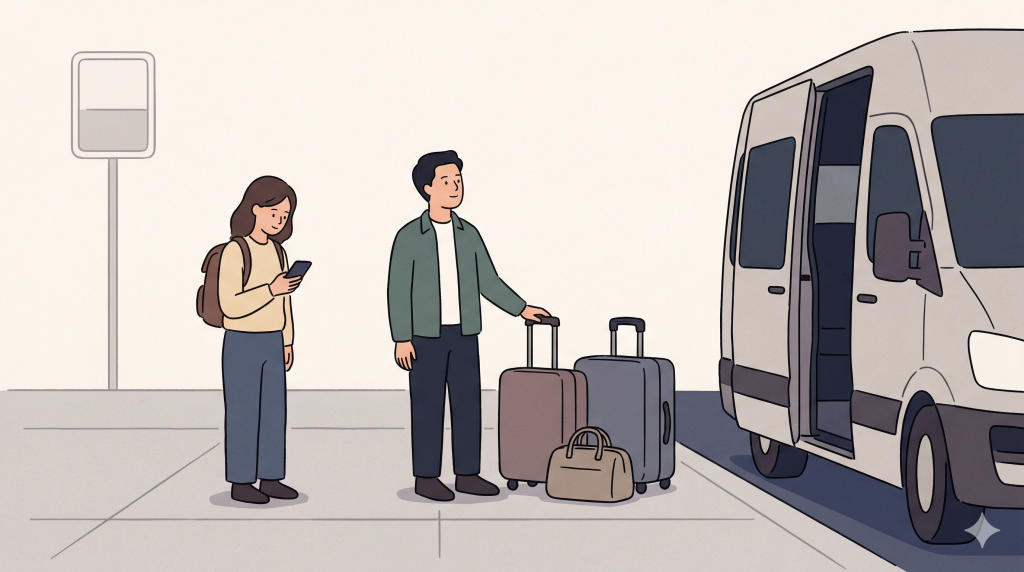
If the group has serious luggage — three people, three full suitcases — the most reliable move is to book a 콜밴 (call van) from the start. The fare is higher than a regular taxi. The space is not. Kakao T has a Venti or large vehicle option that functions similarly, though again, checking the actual trunk when the car arrives is worth doing rather than assuming.
For airport trips specifically, Koreans with a lot of bags tend to use the airport bus or a call van. The airport bus runs on a fixed route, loads luggage before you get on, and gets you there without any of the guesswork that comes with seoul taxi luggage situations. A taxi might feel faster and more direct. With three suitcases in the mix, the bus removes a variable that doesn’t need to be there.
When something unexpected happens at the curb in Seoul — a refusal, a driver who drives off before you finish loading — it helps to know that it probably wasn’t one thing. The trunk, the car type, the app category, the language, the arrangement of people and bags: these tend to land together. Knowing that in advance doesn’t prevent the moment from being frustrating. But it makes it a little easier to figure out what to try next.
Why do Seoul taxis refuse groups with luggage?
There’s usually more than one reason. LPG fuel tanks on many Korean taxis take up part of the trunk space, leaving less room than the car’s exterior suggests. Drivers also make their own calls based on the number of passengers, luggage placement, and how workable the situation looks — especially when communication is limited.
Does booking a Taxi XXL or large vehicle on an app guarantee space for luggage?
Not necessarily. The app category doesn’t always match the actual trunk space of the car that arrives. It’s worth checking the trunk before loading, regardless of which option was selected.
What’s the difference between a regular taxi and a mobeom taxi in Seoul?
A mobeom taxi (the black, higher-fare option) typically includes more service — the driver will usually help load bags. In a regular Seoul taxi, the passenger handles their own luggage. The driver opens the trunk, but lifting and loading is on you.
What’s the best option for getting around Seoul with a lot of luggage?
For airport transfers, the airport bus is the most predictable option — fixed route, luggage loaded before boarding, no guesswork. If you need a taxi, booking a call van (콜밴) gives more space than a regular sedan. K.ride is worth considering for English support and easier communication.
What should I do if I feel a refusal was unfair?
Note the car’s plate number and keep the app booking record. If you paid, ask for a receipt. These records are useful if you want to follow up or report the situation later.