If meat or kimchi needs cutting at my table, my hand reaches for the scissors before I think about it. That habit is so ordinary to me that I only paused over the question “why do Koreans use scissors for food” after other people found the tool surprising.
Their surprise is funny to me because I rarely think of scissors at the table as a cultural statement. To me, the tool is simply quick, clean, and already suited to the food in front of me.
I cannot give you an exact origin story for the habit. Looking back over my own life, however, I do not remember food scissors being as common in my childhood as they are now. Once they became familiar, taking out both a knife and a cutting board began to feel like the more complicated choice.
Table of Contents
ToggleKoreans do not cut every food with scissors. There are plenty of jobs for which a knife is clearly better. Put a long strip of pork belly or a whole section of kimchi in front of me, though, and the calculation changes.
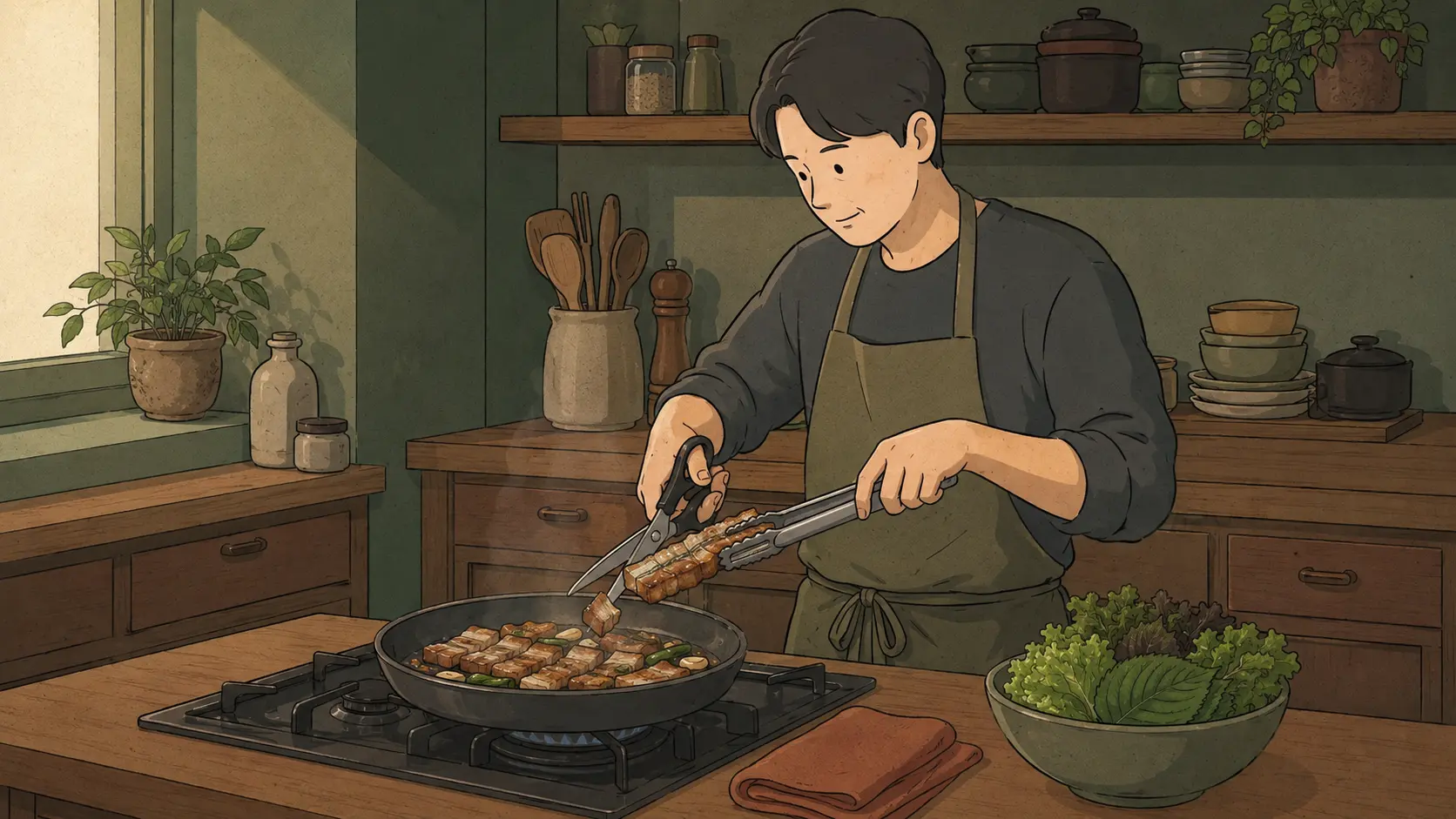
Imagine preparing samgyeopsal (삼겹살, pork belly) in pieces small enough to eat. When I put raw pork on a cutting board and press down with a knife, it does not separate cleanly like a firm vegetable. The soft, slippery meat can slide beneath the blade or stretch, leaving me to hold it down with one hand and make several cuts with the other.
Scissors make the movement simpler. I hold the meat in one hand and snip at the place where I want it divided. Each piece can fall straight into the pan or onto the grill, and I repeat the same motion until everything is the right size.
The knife is not a bad tool. Scissors are simply better for this scene.
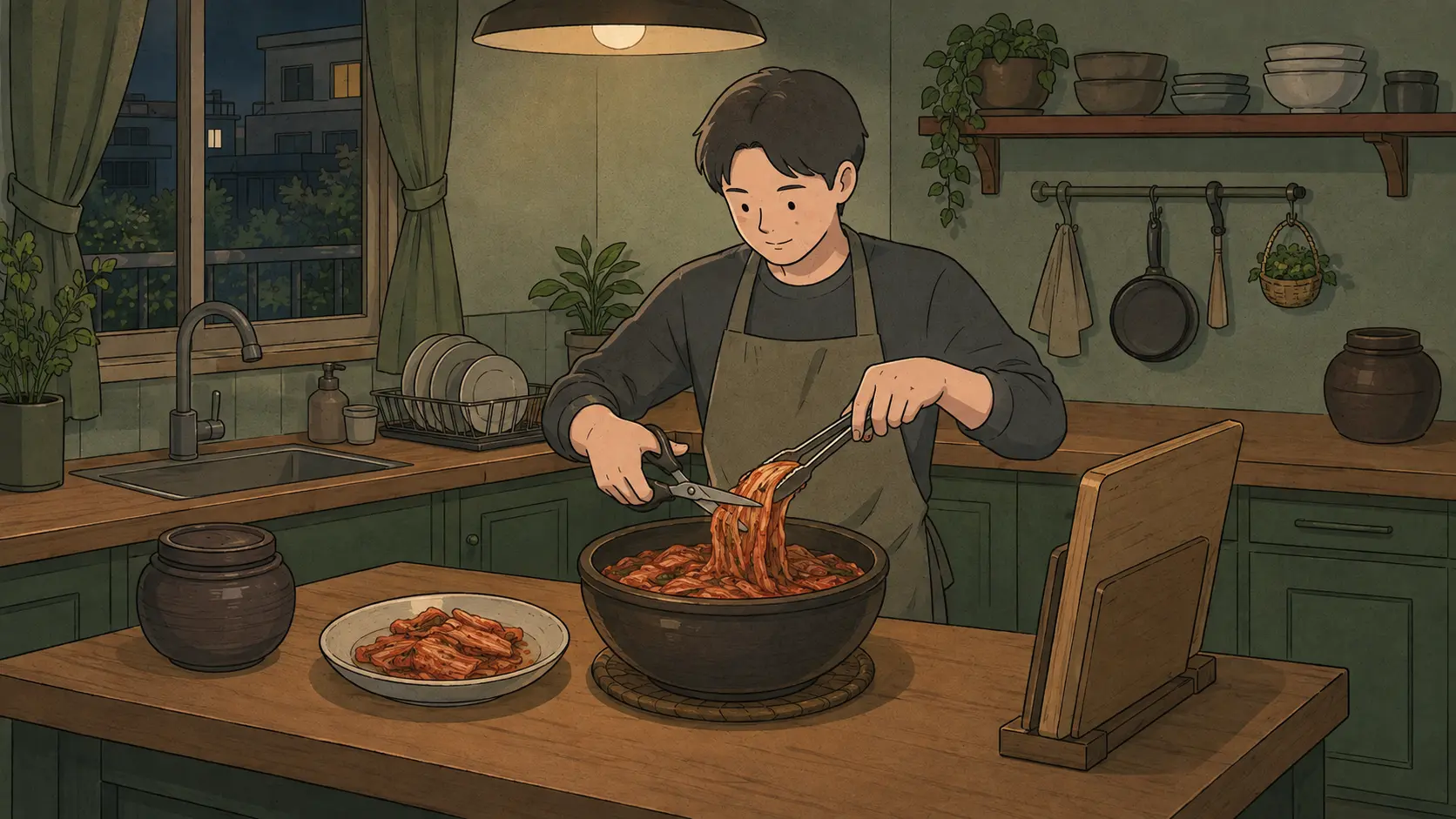
Kimchi creates a similar choice. To cut a long section of napa cabbage with a knife, I first have to take out a cutting board and transfer the kimchi onto it. Then I hold the slippery leaves in place, try not to spread red seasoning across the counter, and wash both the knife and the stained board afterward.
With scissors, I can cut the kimchi where it already is. I lift the long leaves inside the bowl or storage container, make a few cuts, and move the smaller pieces onto a plate. The cutting board stays clean, and one less object lands in the sink.
That may be the most honest explanation for why I keep using food scissors. A grand cultural theory has less power in my kitchen than one fewer thing to wash. Some days, the scissors win before I even open the cutting-board drawer.
I am middle-aged, and I do not remember food scissors appearing nearly as often at the table when I was a child. That makes me hesitant to say Koreans have always used them everywhere. At least in the life I remember, the scene changed within my lifetime.
My memory becomes clearer around the early 2000s. Restaurants began putting scissors beside the meat more often, and cutting food at the table gradually stopped feeling unusual. Holding meat with tongs over a hot grill, snipping it into bite-sized pieces, and spreading those pieces out to finish cooking became a familiar sequence.
The tool I grew accustomed to in restaurants also entered the home. We began using scissors for meat and kimchi there as well, until having a dedicated pair in the kitchen drawer felt ordinary. I did not see them much as a child. Now I notice their absence first.
Habits can change quietly like that. I do not remember anyone formally teaching me the method or announcing that our household would use scissors from then on. We saw them in restaurants, tried them at home, and kept using them because they worked.
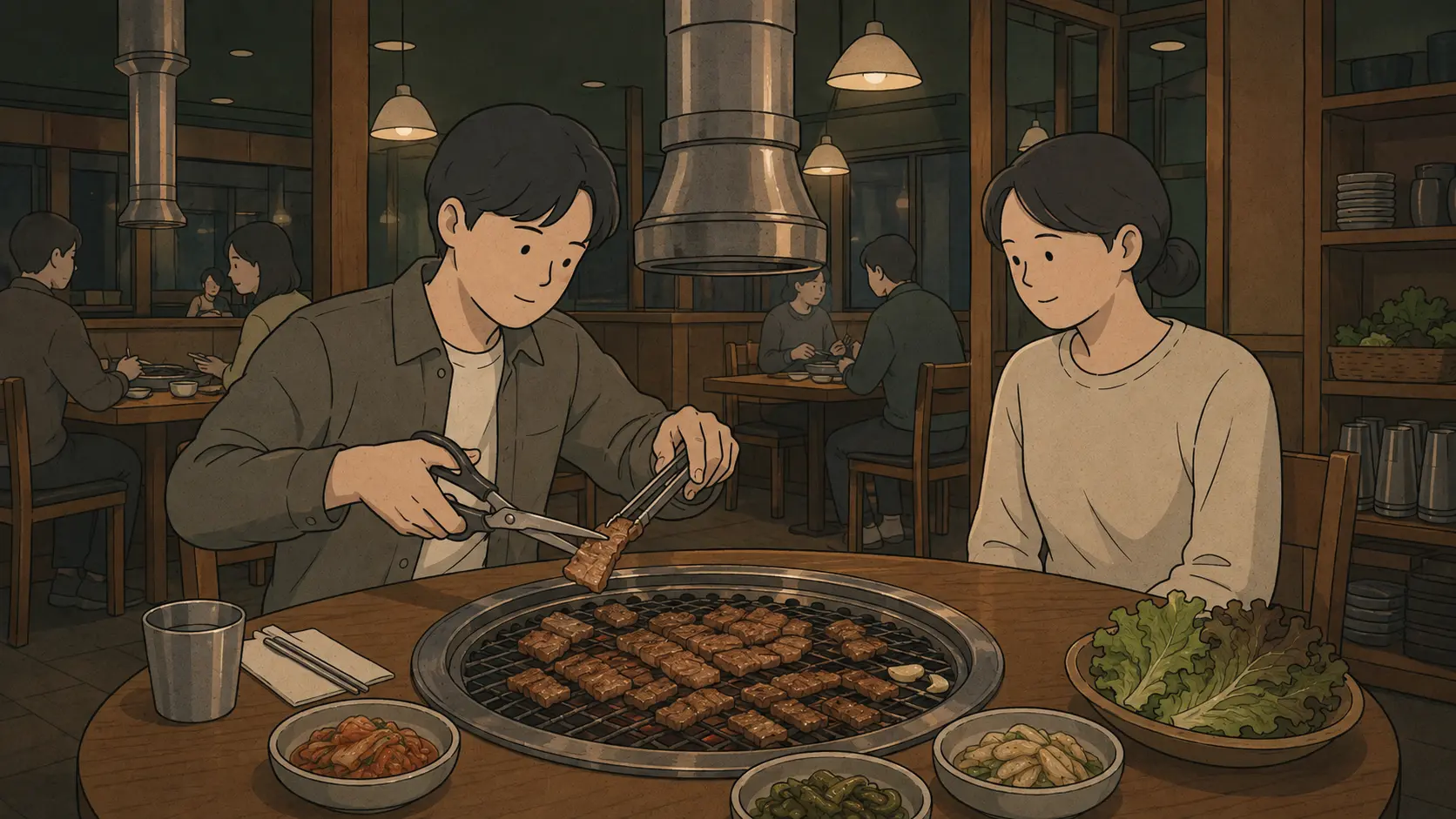
At a Korean barbecue restaurant, scissors do more than divide the meat. The person who picks up the scissors and tongs often takes on a role for the rest of the table.
Some restaurants have staff who cook for the customers. The server watches the heat, turns the meat, and lifts it with the tongs at the right moment before cutting it with the scissors. Everyone else can wait for the pieces to finish cooking.
When the staff do not manage the grill, the tools usually go to whoever believes they are good at cooking meat. That person turns each strip, checks the less-cooked side, cuts it when the timing feels right, and rearranges the pieces across the grill. Nobody holds an election, but a confident hand tends to reach for the tools first.
In the past, this task sometimes fell to the youngest person or the one with the lowest rank in a workplace group. Everyone else ate while the junior person managed the grill. That kind of hierarchy has weakened considerably, so today the role is more likely to follow confidence than age.
Of course, some tables contain no volunteer grill expert. Then the grand social rules disappear. The person sitting closest to the scissors and tongs takes over. The penalty for choosing that seat is only a slightly busier pair of hands.
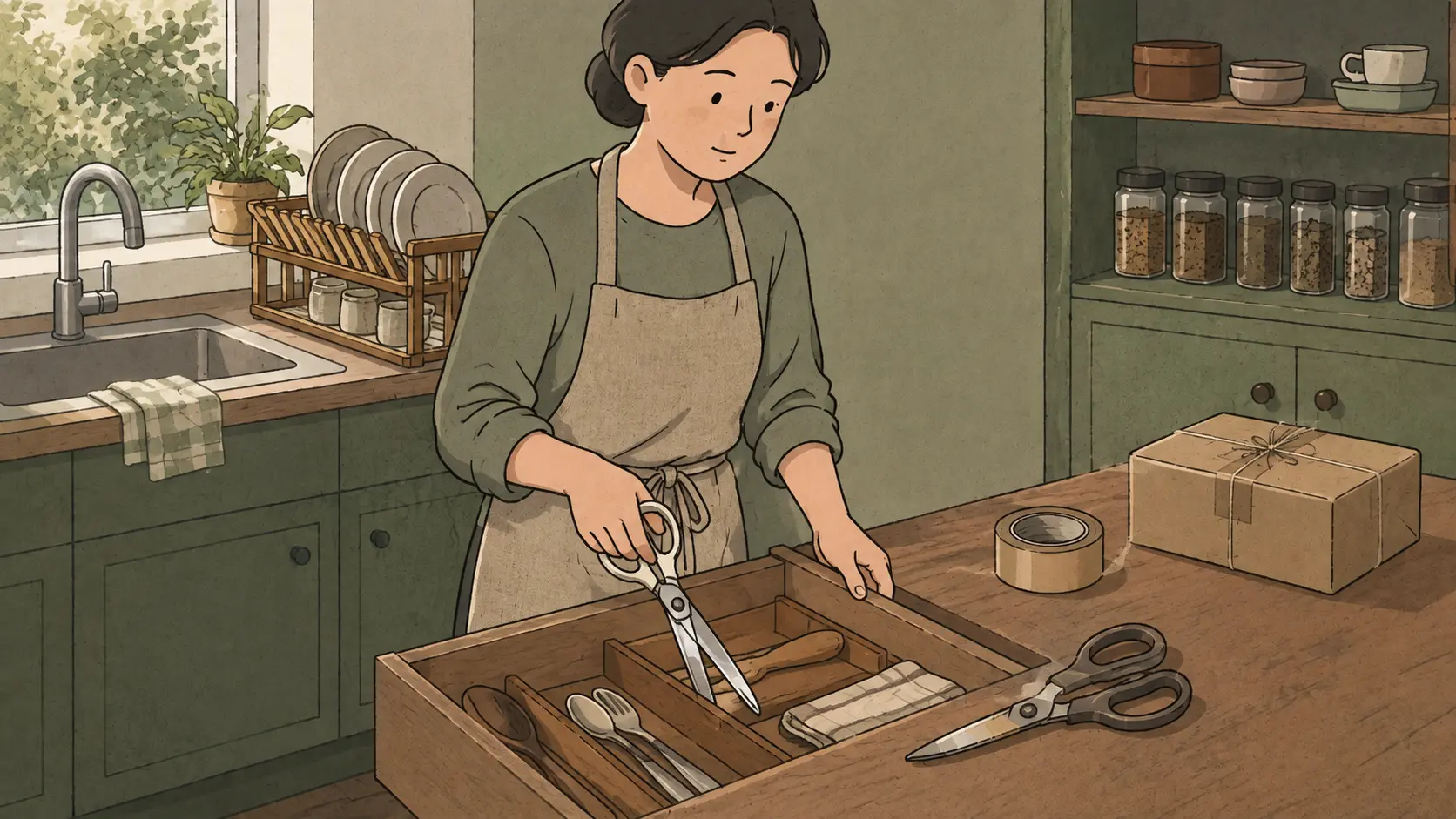
Because their shape resembles office scissors, some visitors naturally wonder about hygiene. In my home, even if I buy two identical pairs, I give them different jobs. One stays in the kitchen and touches food only; the other is for paper and packaging.
They may look the same, but their identities are clear in my mind. The kitchen pair is a cooking utensil, while the other is a household tool. After use, the food scissors are washed like any other kitchen utensil and returned to the kitchen.
I cannot say every household is equally strict. I have heard of easygoing people who do not separate them, although they would presumably wash the scissors before using them on food. Personally, once scissors have cut through something sticky like packing tape, I would rather keep them away from dinner.
Paper itself worries me less than adhesive caught between the blades. If I imagine a tacky pair of scissors approaching my kimchi, one round of washing no longer feels quite reassuring enough. A tool chosen for convenience should not bring an extra suspicion to the table.
When someone asks which food would feel strange to cut with scissors, nothing immediately comes to mind. If I want to cut my food that way, who is going to stop me? If the tool is clean and it makes the food easier to eat, the choice does not need a serious defense.
That does not mean Koreans have abandoned knives and now solve every kitchen problem with scissors. We use a knife when a knife suits the job and reach for scissors when they make meat or kimchi easier to handle. The rule is closer to convenience than formal tradition.
For someone unfamiliar with the habit, scissors beside a meal can look like an office supply has wandered onto the table. Use them once over a barbecue grill, though, and the motion makes sense before the culture does. Hold the meat with the tongs, close the blades once, and you have a bite-sized piece without needing a separate plate or cutting board.
After you use kitchen scissors over a barbecue grill, the habit usually makes sense without a cultural lecture. Hold the meat with tongs, cut away from other people, and use the clean pair provided for food. You do not need special etiquette; you only need to keep the blades clean and point them safely. I will reach for mine at the next meal without thinking twice.
Koreans use knives too. Scissors are simply easier when cutting slippery raw meat or dividing food that is already in a bowl, container, pan, or tabletop grill. With kimchi, they also let me avoid using and washing a separate cutting board.
The foods I cut most often are meat and kimchi. Scissors make it easy to hold pork belly with tongs and divide it into bite-sized pieces over a pan or grill. At home, I can also cut long sections of napa-cabbage kimchi directly inside a bowl or storage container.
If the restaurant cooks the meat for its customers, a staff member uses the scissors and tongs. At a self-service grill, the job usually goes to the person who feels confident about cooking meat. If nobody volunteers, the person sitting closest to the tools may end up in charge.
They are in my home. Even when two pairs look identical, one stays in the kitchen for food and the other is used for paper and packaging. If you keep food scissors at home, separate them clearly and do not use blades exposed to packing tape on food.