Why Doesn’t Ssam Culture Have Rules? A Korean Explains
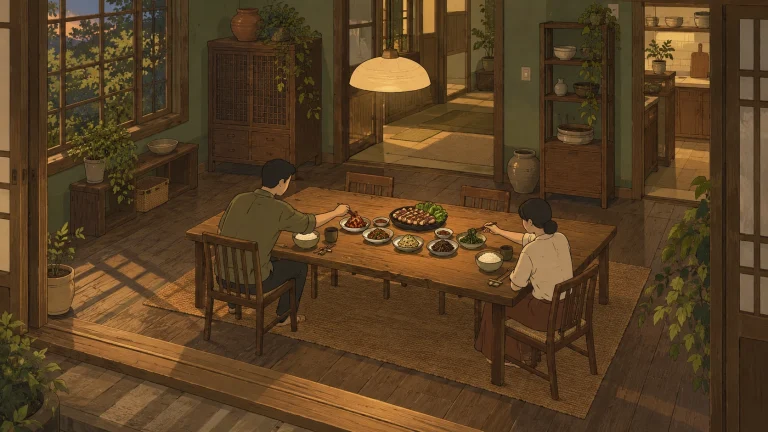
When I make ssam (쌈, food wrapped in a leaf), my hand usually reaches for rice first and whatever looks good next. I do not stop to ask whether lettuce or perilla should go underneath, because the ssam culture I know has never felt that strict. The first wrap may be neat and the next may be too large, but both are ordinary at my table.
When I think about ssam, I think about a spoonful of rice first. Put kimchi on top of rice and the kimchi flavor takes over. Put a small dried anchovy on it and it turns salty. Put meat on it and it becomes a completely different bite. The same rice tastes entirely different depending on what you put on top of it. Ssam, to me, is an extension of that same logic.
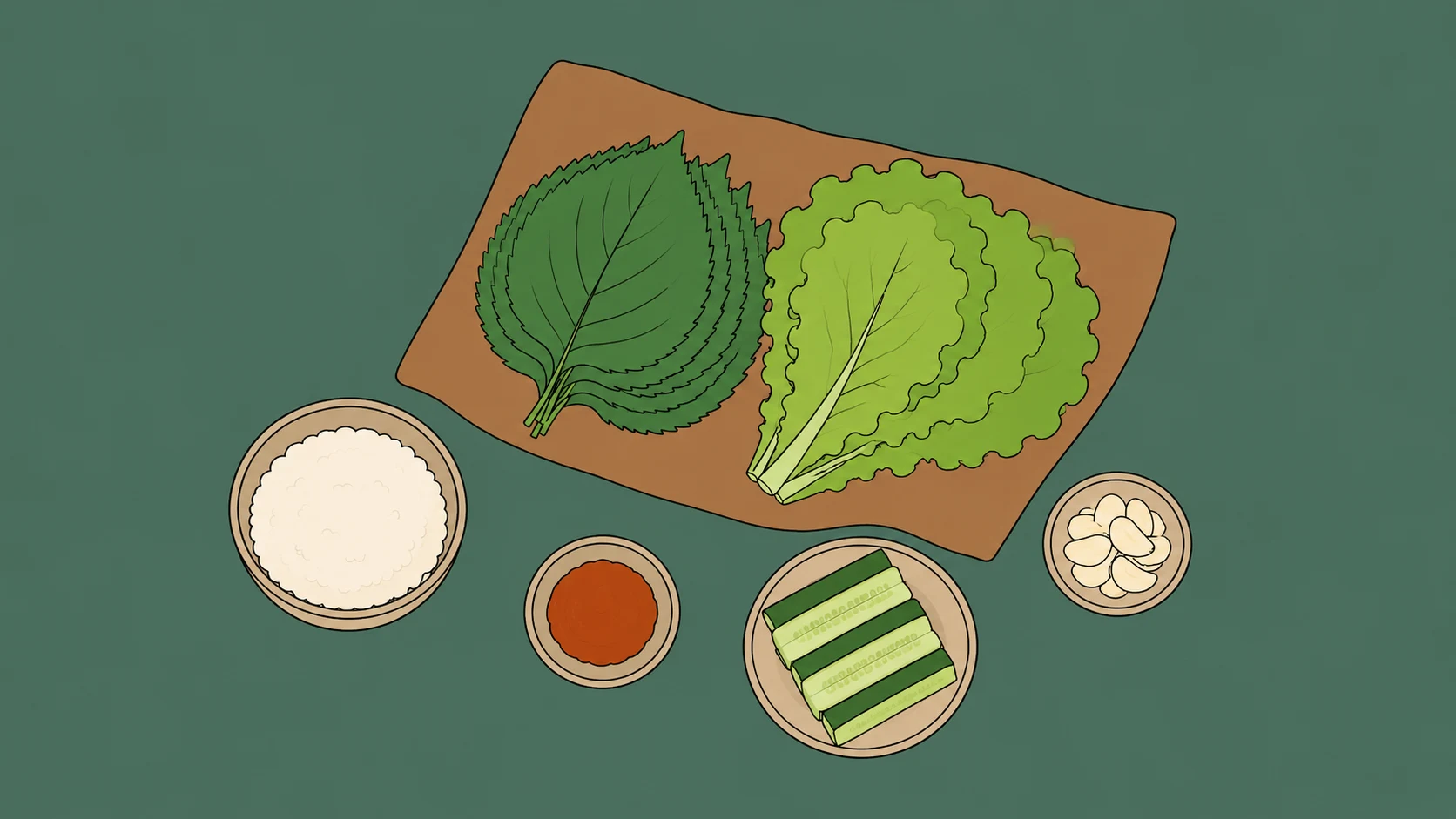
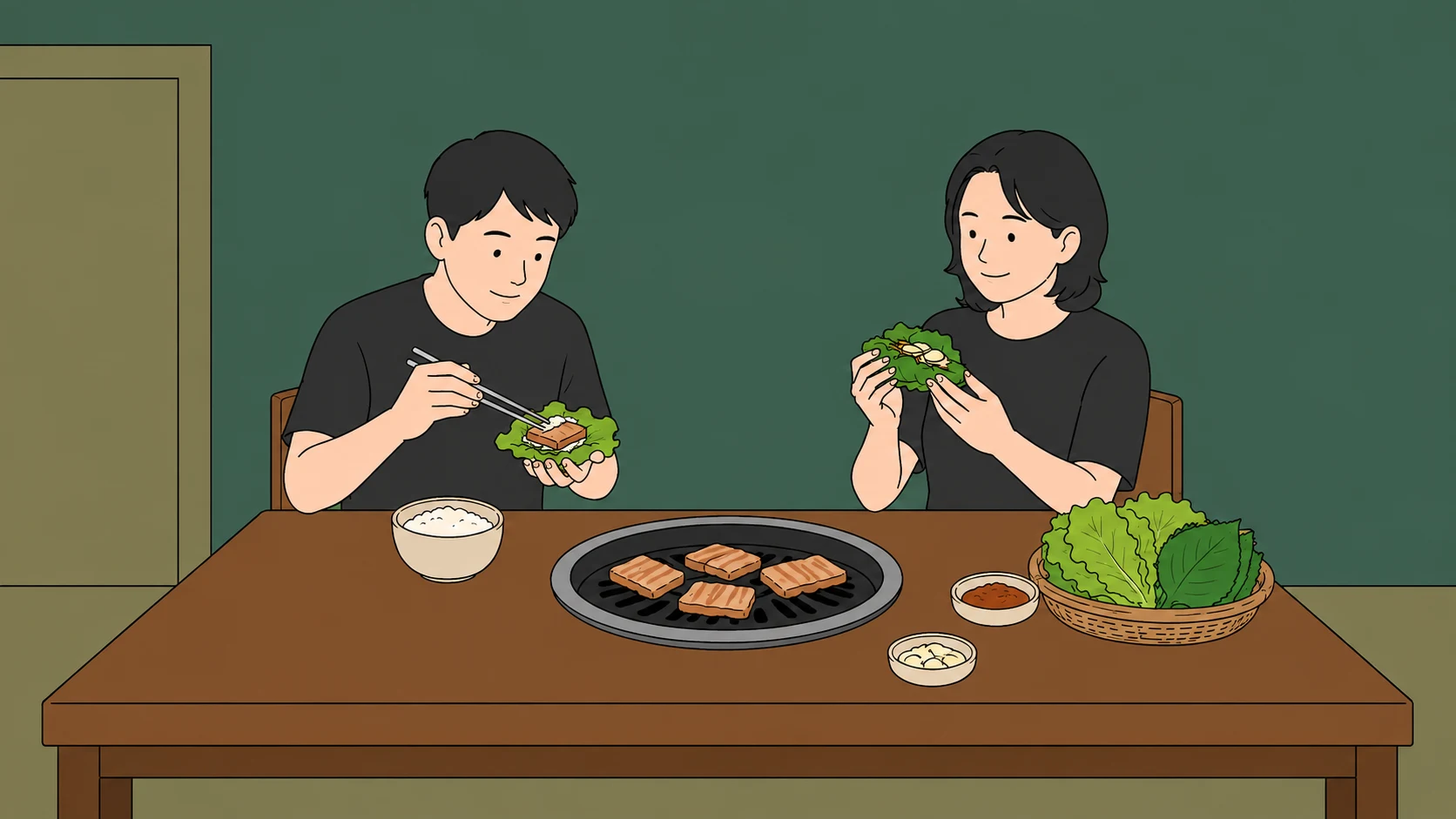
You can put just one piece of meat on a single lettuce leaf. You can lay a perilla leaf underneath it. You can add a little rice. You can add ssamjang (쌈장, a thick dipping sauce made from fermented soybean and chili paste), or skip it entirely. Some people add garlic, some add chili, some just go with meat and rice alone. If that one bite ends up too big, that’s not strange at all.
Ssam is generally understood to have developed a long time ago as a way of wrapping rice or other ingredients in vegetables. Records describing how people ate during the Goryeo dynasty (918–1392) mention wrapping rice in raw vegetables, and by the Joseon dynasty it had become a seasonal dish eaten during certain festivals. But the ssam I meet at the table is far less solemn than that history sounds.
The ssam in front of me is closer to a small bowl for whatever I happen to be craving that day. The lettuce is the bowl, the perilla leaf is the fragrance, and what goes inside changes depending on where my hand happens to reach. So saying ssam has no rules might sound like a throwaway line, but that freedom is actually the best way to describe it.
There’s No Right Way in Ssam Culture
I’ve noticed that the way people wrap ssam is fairly different from person to person. Some people use only lettuce. Some people insist on only perilla leaves. Others lay a perilla leaf on top of the lettuce for good measure. That combination might not sound like much, but the flavor changes quite a bit once it’s in your mouth.
Lettuce alone makes for a relatively mild bite. The meat, rice, and sauce come through first, with the vegetable supporting it from behind. Perilla leaf alone tells a different story — its fragrance hits first, and the meat’s flavor follows after. Use both together and you land somewhere in between.
What goes inside isn’t fixed either. Meat, rice, garlic, ssamjang, chili, kimchi, and scallion salad are the usual suspects that come to mind. But you don’t have to use all of them, and you don’t have to pick only from that list. Ssam is more forgiving than people expect.
I half-joke that if someone put butter in their ssam, nobody would really say much about it. That doesn’t mean it’s common practice. It just means ssam was never a “you must do it this way” kind of food. It’s closer to someone building a single bite on their own plate, exactly the way they like it.
So I find it a little funny to watch how different people’s hands move when they make ssam. Someone wraps it small and neat. Someone else piles on far too much from the very start. One person goes heavy on the ssamjang, another barely touches it. Sitting at the same table with the same ingredients, everyone still ends up making a completely different bite.
A Big Bite Is Not a Bad Look
Ssam often ends up bigger than planned. You start with just one piece of meat on a lettuce leaf, then notice the rice sitting there. You add a little. Then you remember the garlic. A bit of ssamjang goes on. The scallion salad looks good, so that goes on too. Before long, it’s not really a bite anymore — it’s a small bundle.
I’ve never quite understood why that’s supposed to be embarrassing. Ssam was never really a food meant to be eaten prettily; it’s closer to a food meant to be eaten with enjoyment. Sure, if it gets too big, it’s harder to fit in your mouth. But I think that awkwardness is part of the scene of eating ssam, not a flaw in it.
Opening your mouth wide to take a big bite can actually look like you’re enjoying it more. Taking small, careful nibbles doesn’t read the same way a big bite does — going quiet for a second after shoving in a large one feels more sincere, somehow, like you were genuinely looking forward to the meat, rice, vegetables, and sauce all mixing together at once.
That doesn’t mean everyone has to eat that way. Plenty of people prefer small ssam, or go light on the fillings. But I don’t think a big bite deserves a strange look either. If the ssam got large, it usually just means there was a lot the person wanted inside it.
Someone eating a ssam so big it nearly dislocates their jaw is, in a way, someone confident enough to try. A hand that believes it can fit that whole thing in one go doesn’t hesitate. Sometimes that confidence doesn’t quite work out, but even that failure feels perfectly at home at a Korean BBQ table.
Wrapping One for Someone Else Is a Kind of Love
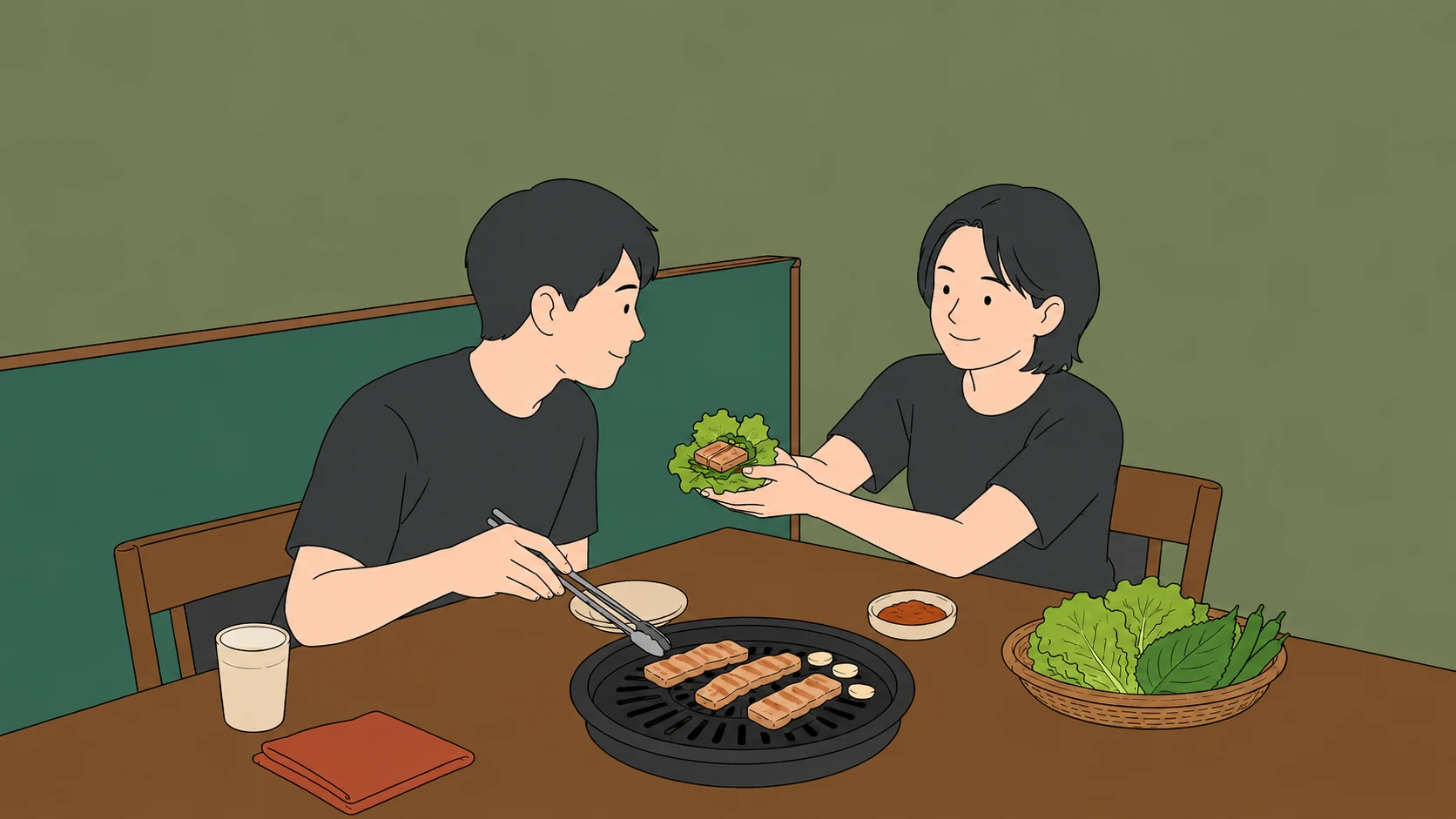
There’s also the scene where someone wraps a ssam and hands it to someone else. I find this moment both distinctly Korean and, at the same time, more practical than it looks. It happens especially when one person is the one grilling the meat. Whoever’s holding the tongs is busy flipping, cutting, and serving everyone else, which means the meat reaching their own mouth tends to come last.
That’s when someone wraps a ssam and passes it over. “You eat too” doesn’t need to be spelled out — it’s already inside that gesture. It’s a way of making sure the person too busy grilling to eat gets a bite of their own. Handing over a ssam like that can feel a little more tender than simply passing food along, part of the quiet etiquette that runs underneath a Korean barbecue table.
Couples sometimes feed each other ssam this way too. From what I’ve seen, though, it isn’t an everyday thing. Sitting side by side, it’s not easy to keep wrapping one for the other every time, and being fed constantly gets a little awkward too. Still, doing it once, whether playfully or affectionately, happens often enough.
It happens between parents and children, and between senior and junior coworkers as well. There’s no single rule for who wraps for whom. It shifts with the situation, the relationship, and whoever happens to be grilling that day. Ssam is small, but sometimes an entire relationship fits inside it.
I like to put it a little jokingly: wrapping a ssam for someone is love. As long as it’s not an affair, pretty much anyone can do it for anyone. That’s an exaggeration, obviously, but it’s close to how it feels. Wrapping one for someone else means thinking of their next bite instead of your own — whether it’s family, a friend, a coworker, or a partner, it means that, in that moment at least, you’re paying attention to whether they’re eating. That same attention to care through food also appears in why Koreans eat miyeokguk on birthdays.
My Own Ssamjang Habits
It’s hard to talk about ssam without mentioning ssamjang, but I don’t actually use that much of it myself. Some people might think ssamjang is the whole point of ssam, but I’m a little different. Sometimes I use barely any, or swap it out for something else entirely.
If a barbecue restaurant serves doenjang jjigae (된장찌개, soybean paste stew) on the side, I’ll sometimes spoon a little of that broth over my rice. It makes the rice slightly moist and lets the doenjang flavor seep in quietly. Put meat on top and wrap it, and the flavor is different from ssamjang — it doesn’t punch through the same way. It settles in between the rice and the meat instead.
I also like using gochujang (고추장, red chili paste) in place of ssamjang. The taste of gochujang varies a fair amount from household to household and brand to brand. Some are sweeter, some hit with heat first. So with the exact same ingredients, the whole ssam can feel different depending on which gochujang you’re using. It’s a small difference on paper, but it’s a big one in the mouth.
I prefer roasted garlic over raw. Raw garlic is still a bit much for me — inside a ssam, its smell rushes up and pushes out everything else. Roasted garlic is far gentler. Softened slightly in the meat’s fat, it blends into the ssam instead of standing out.
I rarely put chili inside the wrap itself. I prefer to bite into it separately. Put it inside the ssam and you never know where the heat is going to hit; eating it on its own lets me control exactly how much I get. In the end, this isn’t really about right or wrong either — it’s a matter of habit. My ssam has been adjusted, bit by bit, to my own taste.
Watching Foreigners Try to Split a Ssam
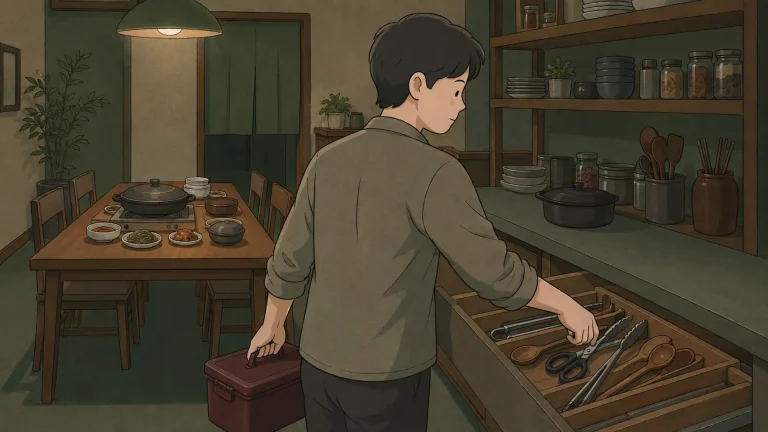
I’ve never actually seen a foreigner try to cut meat with a knife and fork at a Korean restaurant. I can picture the scene, but nothing like that has ever crossed my path directly. Barbecue restaurants usually have tongs and scissors on the table, and the meat gets cut right there. So a knife and fork were never really the image that came to mind.
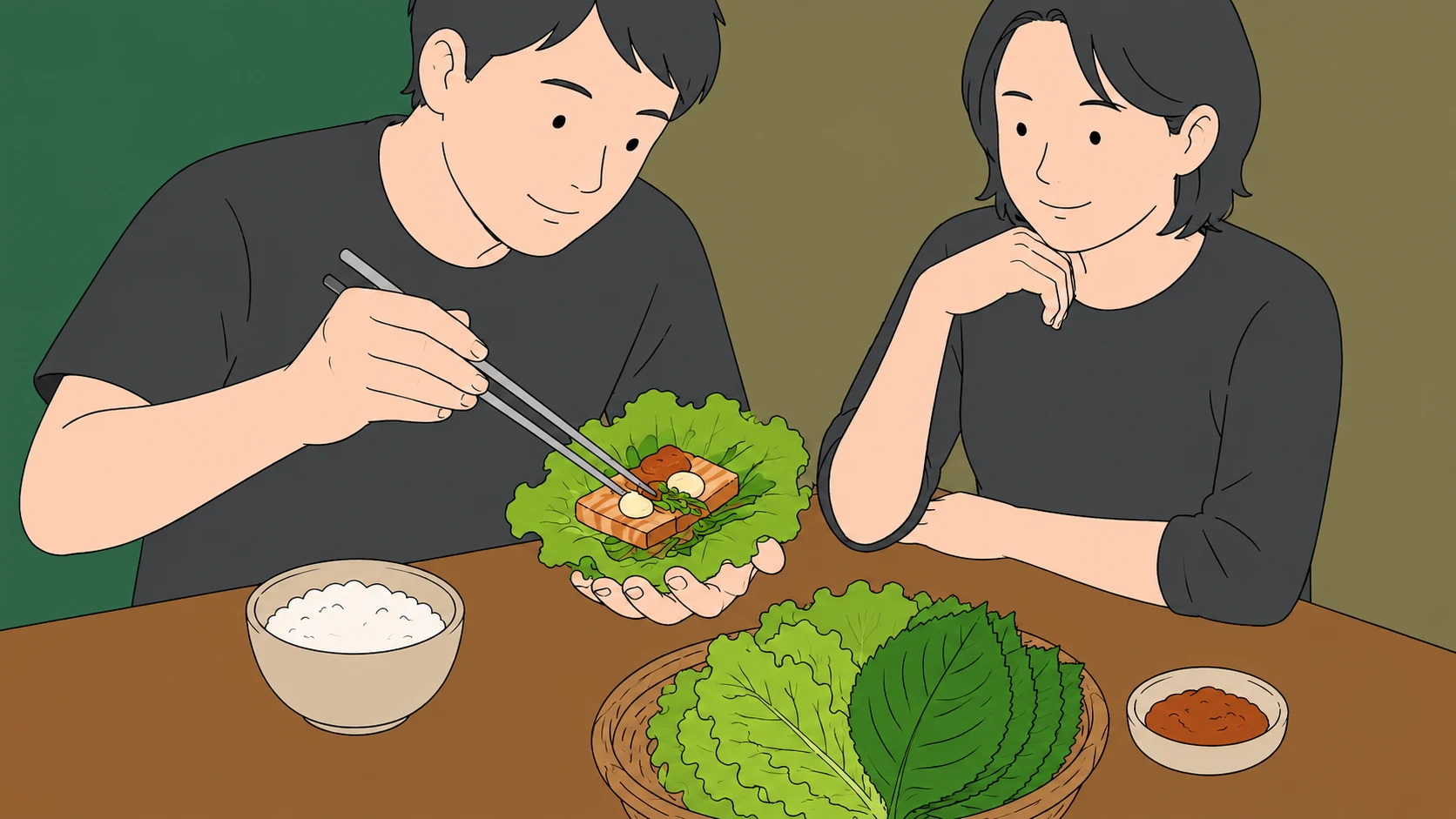
What I have seen on TV, though, is someone trying to split a ssam in half. Faced with a large wrap, they seemed to decide it was too much for one bite and tried cutting it in two or nibbling at it slowly. Watching that, I didn’t find it particularly strange. I just figured that stuffing your mouth completely full probably isn’t considered polite in their culture, and moved on.
That’s just my guess, of course. I can’t say it’s true for every foreigner. Table manners and what counts as an appropriate bite size vary by country and by person. For some people, opening your mouth wide and taking a full bite might feel unfamiliar. I tend to just accept that difference as it is.
Ssam tastes best when all its flavors mix together in one bite. That’s why I’m more used to eating it that way whenever I can. But for someone trying it for the first time, that can feel like a lot to ask. The lettuce is big, the meat is hot, and there’s a lot going on inside. Telling someone to force it all into one bite can turn a meal into homework.
So when I see a foreigner carefully splitting their ssam, I read it as part of getting used to something new. You don’t have to start out eating it the way Koreans do, in one big go. It might just help to know that ssam was never really about cutting things neatly and sharing them — it’s about gathering several flavors into a single bite.
The Ssam Culture You Won’t See at a Barbecue Restaurant
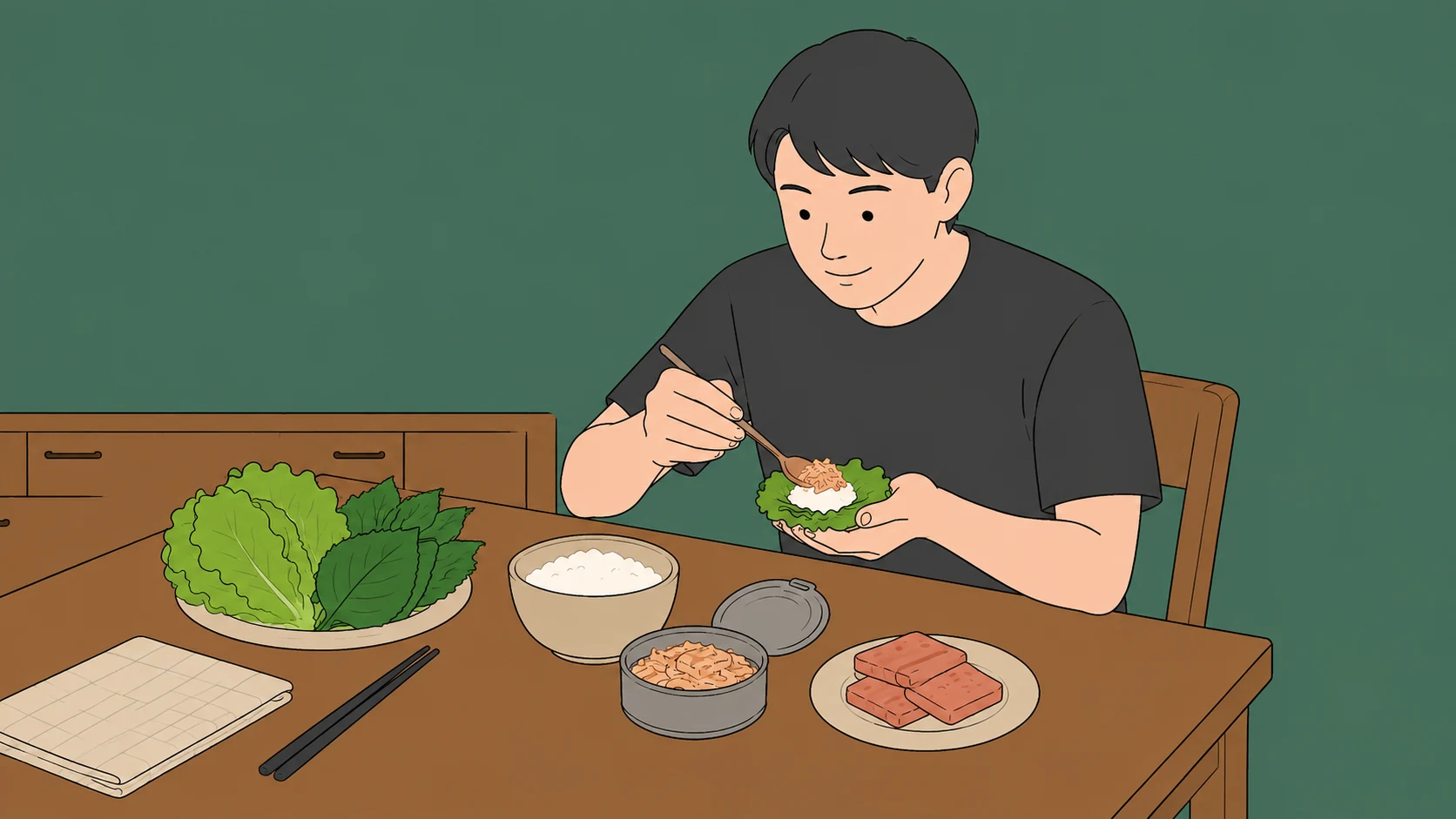
Say “ssam” and most people picture a Korean BBQ restaurant first — lettuce, perilla leaves, grilled meat, ssamjang, garlic, the whole familiar scene. But at home, people eat ssam without any meat at all. If anything, home-style ssam is looser and more down-to-earth.
Lettuce and perilla leaves alone are enough to start. Add some rice, a little gochujang, or homemade doenjang used the way ssamjang would be. Not having meat doesn’t disqualify it from being ssam. Ssam has less to do with what you’re wrapping and more to do with the act of wrapping anything at all into a single bite.
I also enjoy putting canned tuna in lettuce and perilla leaves. It’s too simple to call a real dish, but wrapped up with rice, it’s surprisingly filling. The oiliness of canned tuna pairs well with the perilla’s fragrance. Tuna just steps in where the meat would be — the way you eat it doesn’t really change.
Grilled Spam works too. Lettuce, perilla leaves, rice, grilled Spam, and gochujang are enough to make a full meal. Spam’s saltiness is strong enough that you don’t need much else. This kind of ssam belongs closer to a home refrigerator than to a barbecue restaurant.
A lot of people eat this way in summer when they don’t have much of an appetite. There’s no need to stand over a stove for a long time, and rice goes down a little easier with lettuce and perilla leaves on hand. It’s not a fancy dish — it’s just a way to get through a meal on a day when nothing sounds appealing. That’s why, to me, ssam is a restaurant food, but at the same time, a very homemade one too.
A Small Story That Ends With Perilla Leaves
Whenever I talk about ssam for long enough, I always end up drifting toward perilla leaves. I had perilla leaf jangajji (장아찌, vegetables pickled in soy sauce) as a side dish again today. It’s perilla leaves pickled in soy sauce, and just one leaf laid over rice is enough on its own. The scent is stronger than lettuce, which puts some people off, but I happen to like it.
Perilla leaves hold their own even inside a ssam. If lettuce plays the role of wrapping everything up, perilla makes its presence known through smell alone. It goes well with meat, goes well with tuna, and works fine with nothing more than rice and sauce. I eat perilla leaves in all sorts of ways.
Sometimes I like adding perilla leaves to tteokbokki (떡볶이, spicy stir-fried rice cakes) too. Somewhere between the sweetness and the heat, the perilla fragrance changes the flavor a little. It’s not a dramatic shift, but once it’s in there, tteokbokki without it can start to feel like something’s missing. Perilla has a way of quietly leaving its scent behind like that.
So the ssam I picture doesn’t have to end with a single piece of meat. Lettuce and perilla leaves, rice and sauce, tuna or Spam, roasted garlic, chili eaten on the side — whatever my hand reaches for that day ends up folded into one bite. It’s less a dish with a correct answer and more a way of folding today’s appetite into something you can eat.
If you try ssam, begin with one leaf, a little rice, and one filling you already like. Add perilla or sauce only when you want it, and do not worry if the wrap becomes too large. I still build mine by following my appetite, and that freedom is the part worth keeping.
What is ssam culture in Korea?
Ssam culture is the practice of wrapping rice, meat, sauce, garlic, or other side dishes in a vegetable like lettuce or perilla leaf and eating it in one bite. It isn’t a dish with strict rules about order or ingredients — it’s closer to building a single bite to match your own taste.
Is ssam only eaten with Korean BBQ?
No. While barbecue restaurants are where most people picture eating it, ssam is also common at home without any meat at all — lettuce and perilla leaves with rice, gochujang or doenjang, canned tuna, or grilled Spam. It’s a common way to get through a meal when appetite is low in summer.