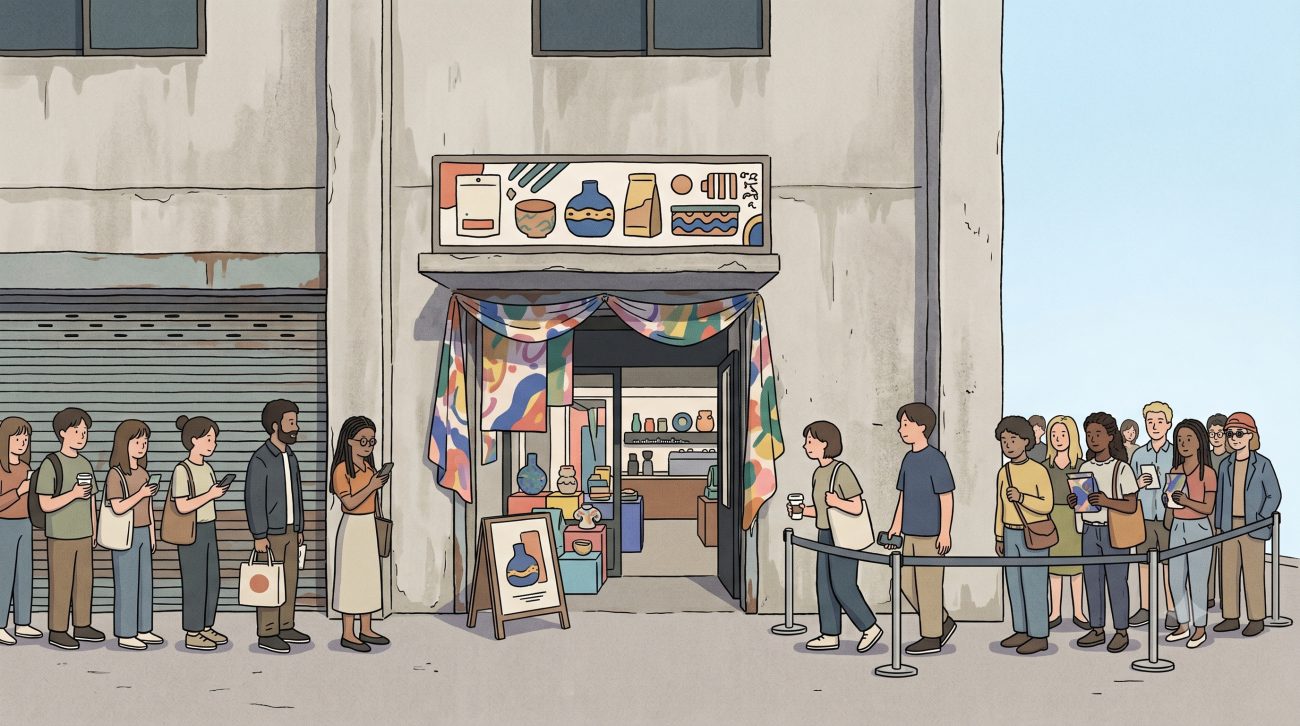
If you have been searching for places to visit in Seoul lately, you have probably seen the name Seongsu come up again and again — on Instagram, in YouTube vlogs, across Reddit threads. But if you kept reading to find out what you are actually supposed to do there, you may have noticed that the answer is not as clear as you expected.
I used to work in Seongsu-dong. On my first commute, I got off at Seongsu Station and started walking. The street was quiet. The buildings were low and worn, with metal shutters and paint that had been fading for a long time. There were no signs trying to get your attention, no crowds, nothing that announced itself as a destination. That street is the same one that tens of thousands of visitors now come looking for every weekend. I still find that a little hard to believe.
Where the Shoe Factories Used to Be
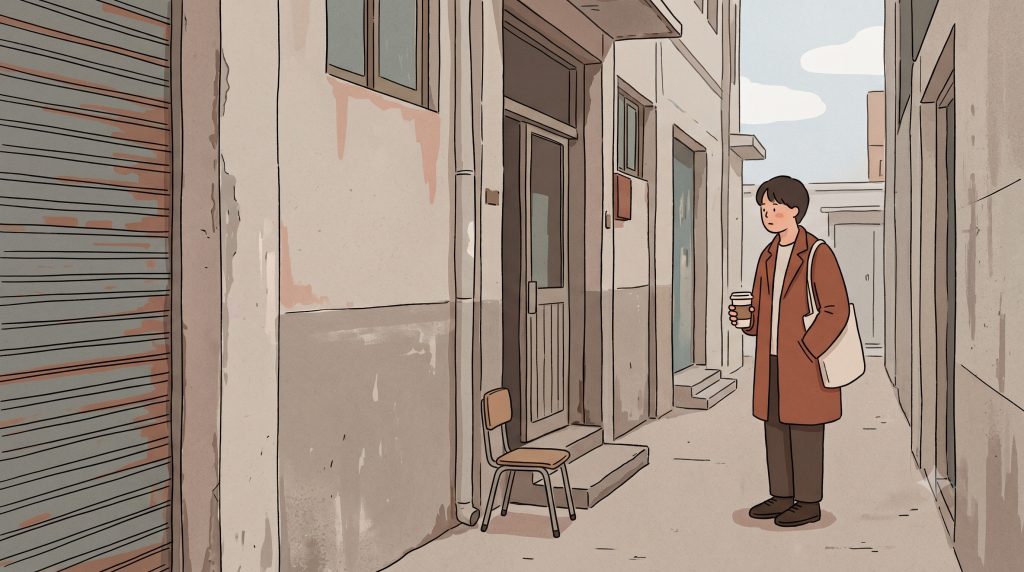
Seongsu-dong was known as a handmade shoe district. Small workshops and factories occupied the alleyways, producing leather goods and footwear, and the neighborhood was built around that industry. As manufacturing costs rose and the economics of small-scale production shifted, many of those workshops closed or relocated — to other parts of the country, or overseas. The buildings stayed behind.
In many parts of Seoul, that would have been the end of the story. In popular commercial areas across the city, older buildings are regularly torn down and replaced — renovated plots become apartment towers or glass-fronted retail blocks. Walk through the neighborhood where you grew up in Seoul, and there is a good chance it looks nothing like what you remember. That kind of turnover is part of how the city works.
Seongsu did not follow that pattern. The old factory shells, the concrete walls with their exposed surfaces, the industrial windows and loading bay doors — they are still there. What changed is what went inside them. Cafes moved into warehouse spaces without covering the original structure. Restaurants kept the ceiling beams. Small shops opened inside rooms that still look like workrooms. The building stays the same; the sign out front changes.
That combination — industrial bones, new interior — is what gives Seongsu its particular atmosphere. It is not something that was designed from scratch. It happened because the buildings were left standing long enough for someone to find a use for them.
What Makes Seongsu Different from Hongdae, Myeongdong, and Gangnam
Hongdae was already a place for young people when I was a teenager. So was Myeongdong. So was Gangnam. Those neighborhoods have been destination areas for a long time — always busy, always adding new shops, always attracting people looking for something to do. They grew into what they are through consistent, steady accumulation.
Seongsu was not part of that story. When those other neighborhoods were already full of cafes and clothing stores and entertainment venues, Seongsu was a working industrial district. There was no particular reason to go there unless you had business there. It became the kind of place people travel to visit only in recent years, and the reason it became that is, at its core, architectural.
This is something that can be genuinely difficult to explain to visitors from Europe, where centuries-old buildings are still in daily use and the preservation of old structures is considered normal. In Seoul, an old building is not automatically preserved. So when a neighborhood full of mid-century factories and small workshops survives largely intact, it stands out. For young Koreans encountering Seongsu for the first time, the aesthetic can feel unfamiliar in a way that is hard to name — they are looking at a version of the city that was not part of their own childhood landscape. For foreign visitors, it reads as something different from the Seoul they expected.
Pop-Up Stores, or How Shopping Became an Event
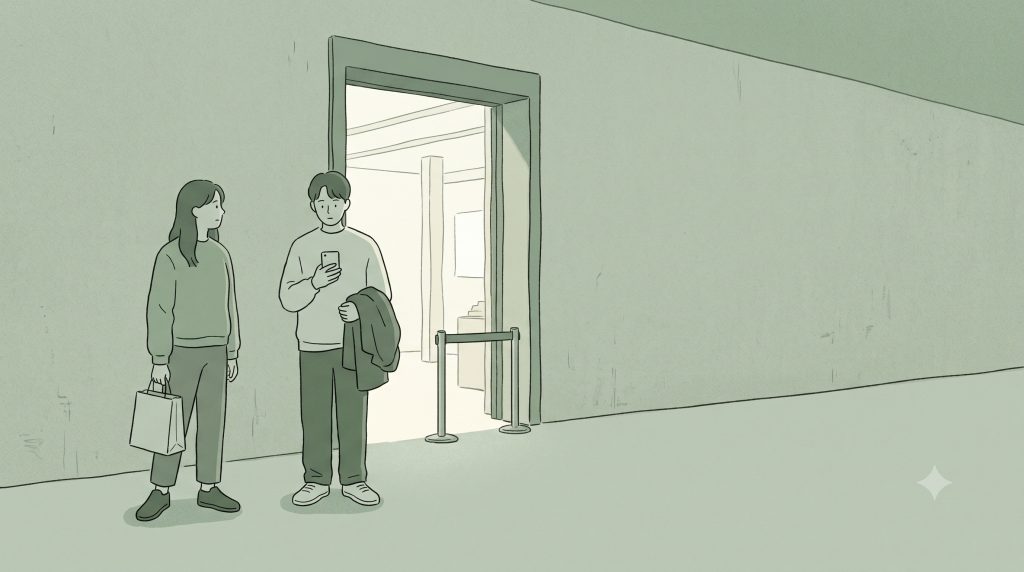
The queues outside pop-up stores in Seongsu are one of the first things visitors notice, and one of the harder things to immediately understand. I will admit I have not entirely figured them out myself. But the structure of what is happening is worth understanding, because it explains a lot about why Seongsu works the way it does.
A 팝업스토어 (pop-up store) in Seongsu is not primarily a place to buy things. It is closer to a short-run event that happens to involve purchases. For young Koreans — especially people in their 20s and 30s — a pop-up is a weekend plan: something to do with friends, a place to photograph, a chance to get a limited item before anyone else. Brands use Seongsu as a testing ground to gauge how younger consumers respond to a new product or concept before committing to a permanent location. The experience is designed to be worth the trip even if you leave empty-handed.
Some travelers come to Seongsu specifically looking for K-pop goods, character collaborations, and limited pop-up events tied to particular fandoms. These visitors tend to research their visit carefully in advance, because pop-up schedules change constantly. What is open this week may be gone the next time you visit. That impermanence is part of the draw — and part of the difficulty.
What Tends to Confuse Visitors in Seongsu Seoul
Seongsu does not have a single obvious starting point. It is not like Namsan Tower, where the destination and the experience are the same thing. Pop-up stores, cafes, concept shops, 서울숲 (Seoul Forest), and flagship brand spaces are spread across the neighborhood, and the value of any given visit depends heavily on what happens to be open that day. Visitors who arrive expecting something fixed and findable sometimes leave feeling like they missed the point.
Entry systems for pop-up stores vary from venue to venue. Some require entering a phone number into a tablet at the door and waiting for an SMS. Others use QR codes for pre-registration, and others simply have a physical line. Knowing in advance which system applies to the place you want to visit saves a lot of confusion at the door.
Timing matters more than many visitors realize. On weekends, popular venues sometimes close their waiting lists by early afternoon. The practical advice that circulates among regular visitors is to arrive before noon, register your place in the queue, and use the waiting time for a nearby meal. Arriving mid-afternoon with plans to walk straight in is often not a realistic option.
Information about what is currently open in Seongsu is also largely in Korean — circulated through Instagram hashtags, KakaoTalk groups, and Korean-language search. Visitors relying entirely on English-language sources can find themselves working from outdated information. If Seongsu is a significant part of your Seoul itinerary, checking Korean Instagram hashtags or recent Reddit threads from other travelers is worth doing before you go.
Who Should Actually Visit Seongsu
I left the job in Seongsu a while ago, and I have not gone back much since. Whether that is because I find crowded places tiring, or because I genuinely cannot think of a reason to go, I am not entirely sure. Koreans who remember Seongsu before it became trendy tend to have complicated feelings about it — neither dismissing it nor especially drawn to it. The neighborhood has become something recognizably different from what it was, and that shift lands differently depending on when you knew it.
The commercial pressure that came with Seongsu’s popularity has not been easy on everyone. As demand for pop-up space increased, rents rose steeply. Some of the smaller cafes and studios that were part of the neighborhood’s early character have since moved out because they could no longer afford to stay. The process of a neighborhood becoming fashionable and the process of that neighborhood losing the people who made it fashionable often happen at the same time. Seongsu is not an exception.
That said, there is still something worth seeing in Seongsu — as long as you know what you are looking for. If a pop-up event is the goal, check the schedule before you go. If the atmosphere itself is what you want, a weekday visit is quieter and easier to navigate than a weekend. Walking the streets with a coffee, looking at the contrast between an old factory exterior and whatever has been installed inside — that experience is available on any day, and it captures something real about how this particular neighborhood ended up where it is.
Seongsu is not a destination for everyone. It works best for people who are curious about where Korean consumer culture is heading, or who want to see what a Seoul neighborhood looks like when it changes without quite erasing what it was.
The street I walked down on my first morning in Seongsu-dong — quiet, worn, easy to overlook — is now a place people plan trips around. The buildings are the same ones. It is the reason people come to stand in front of them that has changed entirely. I still do not fully understand how that happened. But I think it has something to do with the fact that the walls are still there.
What is Seongsu-dong known for in Seoul?
Seongsu-dong is known as one of Seoul’s trendiest neighborhoods, recognized for its mix of old industrial buildings, concept cafes, pop-up stores, and independent boutiques. It was historically a handmade shoe and leather goods district, and its surviving factory architecture is a large part of what gives the area its distinctive look.
How is Seongsu different from Hongdae or Myeongdong?
Hongdae and Myeongdong have been popular youth destinations for decades. Seongsu only emerged as a trend destination in recent years, and its appeal is closely tied to its old industrial architecture — warehouses and factory buildings that were repurposed rather than demolished. That contrast with newer commercial areas is part of what draws visitors.
How do pop-up stores work in Seongsu?
Pop-up stores in Seongsu typically run for a limited time — sometimes just a few weeks. Entry methods vary: some require registering a phone number on-site and waiting for an SMS, others use QR code pre-registration, and some simply have a walk-in line. On busy weekends, waiting lists at popular venues can close by early afternoon, so arriving before noon is generally recommended.
Do I need to speak Korean to visit Seongsu?
Not to visit generally, but pop-up store information, registration systems, and current event schedules are often in Korean. If a specific pop-up is important to your visit, checking Korean-language Instagram hashtags or recent English-language Reddit threads from other travelers can help you get accurate, up-to-date information before you go.
Is Seongsu worth visiting even without a pop-up itinerary?
Yes, though the experience is different. The neighborhood’s architectural character — old factory buildings alongside newer interiors — is visible on any visit. Weekdays are quieter and easier to navigate. For visitors interested in Seoul’s cafe culture or who want a break from more conventional tourist areas, Seongsu offers a genuinely different atmosphere without requiring a specific event to justify the trip.
