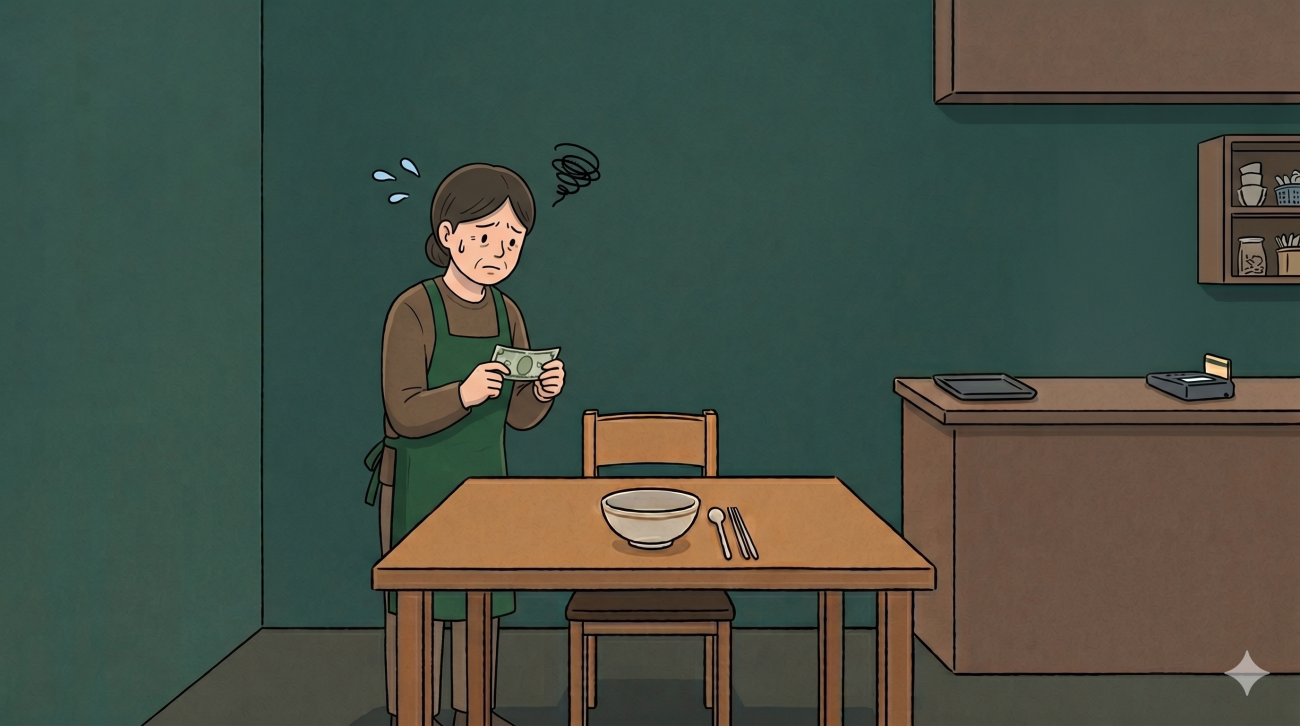
Have you ever finished a meal at a Korean restaurant, gotten ready to leave, and suddenly wondered: should I leave some money on the table? Is it rude if I don’t?
Let me answer quickly first. No. In most situations, you don’t need to tip in Korea.
The Foreigner Who Got His Tip Returned
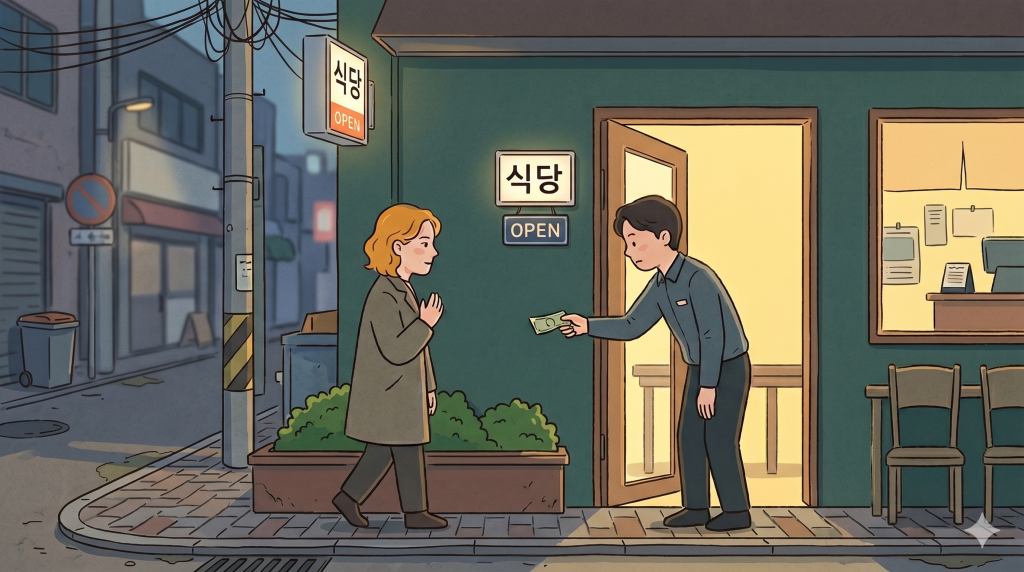
I once watched a short video on YouTube. A foreign customer finished his meal at a restaurant, placed two thousand won on the table, and walked out. To him, it must have felt completely natural. He’d had a good meal, so he left a little money as a sign of thanks to the staff.
But the next part was the whole point. The employee who found the money picked up the bill and ran out of the restaurant. She chased the customer down and handed it back, telling him he’d left his money behind.
The foreigner and the Korean employee were reading the exact same two thousand won in completely different ways. To him, that money was a way of saying “thank you.” To her, it wasn’t a tip at all, it was cash the customer had forgotten to pick up. With no concept of tipping in her head, money sitting on the table could only look like something left behind by accident.
That single moment explains almost everything about tipping in Korea. Leaving money on the table here isn’t a way of showing gratitude. It’s closer to a way of confusing the staff.
Why There Is No Tipping in Korea
So why don’t Koreans even think about tipping?
The way I feel it, kind service in Korea is simply expected. When a server is friendly to a customer, it isn’t a special favor that deserves extra reward, it’s the basic standard a business is supposed to provide. So staff don’t feel they have to go out of their way to earn a tip. Kindness isn’t payment in a transaction, it’s just part of the service.
This can feel strange to someone from a tipping culture. In some countries, tips make up a large part of a worker’s income, so not tipping means cutting into their livelihood. In Korea, the structure is different. The customer pays the amount printed on the menu, and the staff work within their own wages, separately from that.
So from a Korean point of view, there’s no hesitation over whether to tip or not. Hesitation only happens when there’s a choice to make, and the option of tipping was never in our heads to begin with.
How Koreans Actually Pay at Restaurants
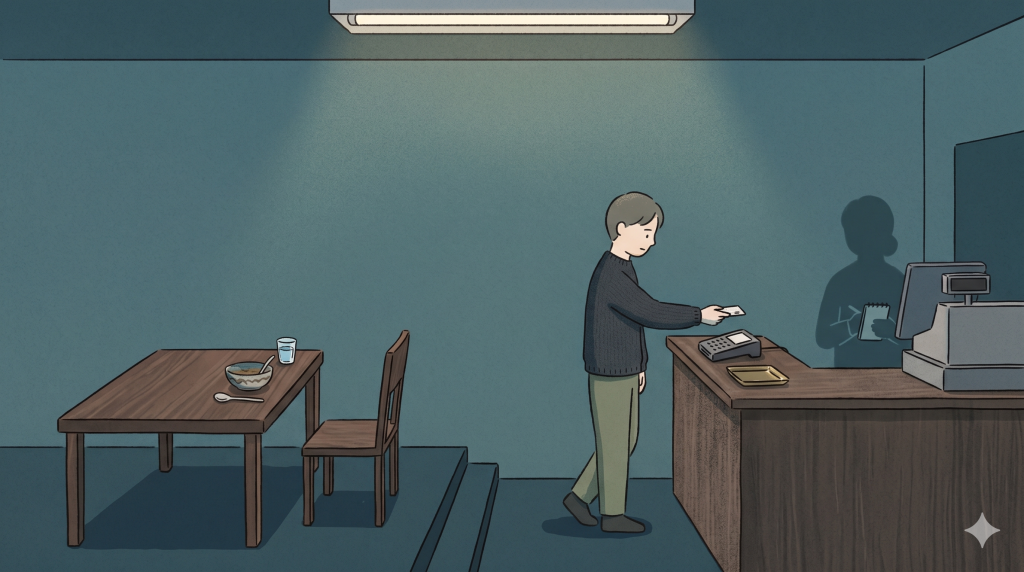
Looking at how payment actually works in a Korean restaurant shows you why there’s no room for a tip to slip in.
In Korea, you usually don’t pay at the table. When you finish eating, you get up and call a server as you go. “Imo!” (이모, literally “aunt,” used to address a female server warmly) or “Ajumma!” (아줌마, a middle-aged woman) or just “Gyesanhalgeyo!” (계산할게요, “I’ll pay now”). Then you walk to the counter and settle the bill there. The table where you ate and the place where you pay are completely separated.
These days, plenty of restaurants have you pay up front instead. At those places, you simply say “Jal meogeotseumnida” (잘 먹었습니다, “I ate well, thank you”) after your meal and head out the door. Either way, they share one thing in common: there’s never an occasion to leave money sitting on the table.
So in the layout of a Korean restaurant, the very spot where that foreigner placed his two thousand won doesn’t really exist. The table was never the stage for payment in the first place.
There can be exceptional situations, like some tours aimed at foreign visitors or high-end hotel service, but at ordinary restaurants, cafes, and taxis, no tip is expected.
Taxis, Hotels, and the Rare Exceptions
What about taxis and hotels?
With taxis, in the past a little money sometimes changed hands when people got out without taking their change. But honestly, that wasn’t a tip given because the driver was kind. It was closer to not wanting to carry around coins and small bills, so you’d just leave a few hundred won behind. Less a reward for good service, more a way of dealing with loose change.
As for hotels, at places with many foreign guests there may be staff who receive tips, but it isn’t a custom you’re required to follow in Korea. It sits in the territory of optional, do it if you like, where guests can just go with whatever they’re used to.
The important thing here is that these exceptions don’t mean “Korea has a tipping culture too.” In everyday Korean life, tipping is barely something people consider at all. So as a traveler, you really don’t need to worry that you’ve been rude for not tipping in a taxi, a restaurant, or a cafe.
What to Do Instead of Tipping
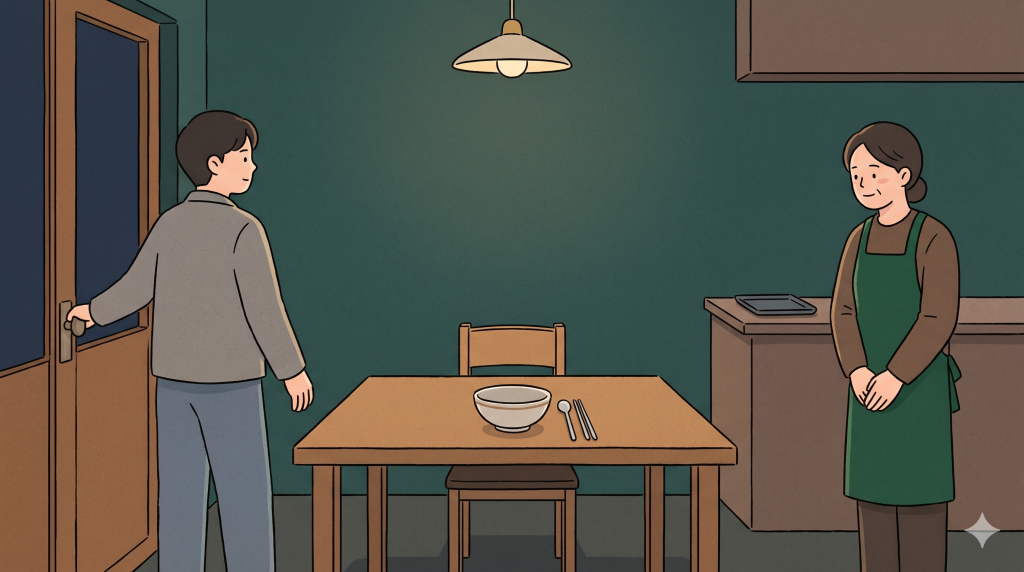
So how do you express gratitude, then? Just because there’s no tipping doesn’t mean there’s no way to say thank you.
The most natural way to show gratitude in Korea is to say it out loud rather than leave money behind. A single line on your way out: “It was really delicious.” Or “I’ll come back again.” To an owner, that short sentence is a better compliment than any cash. It means their food was recognized.
If words feel hard, actions work too. A customer who clears their plate happily, finishing everything that was served, makes an owner glad all on its own. Just seeing the dishes come back clean and empty gives the person who cooked a sense of reward.
So in Korea, instead of opening your wallet, open your mouth. Say thank you, say it was delicious, say you’ll be back. That’s the most natural expression of gratitude that actually lands here.
The Two Thousand Won, Returned
Let me go back to that YouTube video.
When the employee ran out chasing the customer with two thousand won in her hand, she wasn’t refusing a tip. She genuinely worried that the customer had lost his money. There was never any rudeness between the two of them. They had simply read the same action two different ways, one as “thank you,” the other as “you left this behind.”
So if you come to Korea, instead of leaving money on the table, try saying a few words as you walk out. That it was a good meal, that you’re grateful. Those words never get handed back to you. In Korea, a tip is something closer to gratitude offered in words, not money.
Do you tip in Korea?
No, in most situations you don’t. At restaurants, cafes, and taxis, tipping isn’t expected, and leaving cash on the table can actually confuse staff, who may think you forgot your change rather than left a tip.
Is tipping rude in Korea?
It isn’t seen as rude so much as puzzling. Since there’s no tipping custom, money left behind is often read as lost change. Staff have been known to chase customers down to return it, simply out of concern that they dropped it.
Why is there no tipping culture in Korea?
Kind service is treated as the basic standard a business provides, not a special favor to be rewarded. Customers pay the price on the menu, and staff are paid through their own wages, so tipping was never built into the system.
Do Korean taxis or hotels expect tips?
Taxis don’t expect tips, though people have historically left small change just to avoid carrying coins. At hotels with many foreign guests, some staff may receive tips, but it isn’t a required custom anywhere in Korea.
What should I do instead of tipping in Korea?
Say thank you. Telling the owner the food was delicious, that you’ll come back, or simply finishing your meal completely all land as genuine compliments. In Korea, gratitude is expressed in words more than in money.
