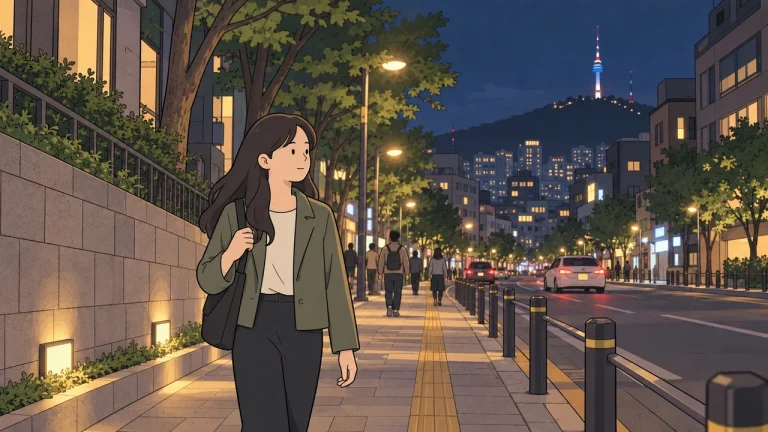
Why You Do Not Need to Worry About Tipping in Korea
When I think about tipping in Korea, I start with an ordinary restaurant meal: I pay the amount printed on the menu. I do not take out extra cash and leave it on the table because the server was attentive or brought several dishes. At a cafe, payment ends once I have paid for my drink. In a taxi, I pay the metered fare, and I have never left a separate tip when staying at a hotel.
That can feel uncomfortable if you come from a country where tipping is routine. You may wonder whether walking away without adding anything is rude, especially after receiving good service. In Korea, however, leaving no tip is not normally treated as stinginess. In the daily life I know, a tip rarely enters the calculation at all.
The Korea Tourism Organization also tells visitors that tipping is neither required nor expected at Korean restaurants. If you pay the menu price after a meal, you have not forgotten part of the bill. Dinner can end without opening a tip calculator.
Why Tips Feel Unfamiliar to Many Koreans
If I had to describe tipping in Korea in one sentence, I would call Korea a culture without everyday tipping. When I receive service at a restaurant or cafe, I understand the listed price to include the work required to provide that food or drink. Taking the order, bringing the dishes, and helping with an extra request do not lead to a second cash calculation.
That is why many Koreans respond to the idea with, “Why give a tip at all?” Good service does not automatically create an expectation that I should pay above the bill. If I have enjoyed the meal, I finish paying and say “thank you” as I leave. That is the expression of appreciation I use most often myself.
The words are brief, but they are not empty. On the way to the door, I might make eye contact with a staff member and dip my head slightly while thanking them. The staff member may answer, “Goodbye,” and the exchange ends naturally within a few seconds. Leaving a folded banknote on the table and waiting to see who collects it has never been part of my routine.
The word “tip” can also bring up a different image for people of my generation. In the understanding I grew up with, money given to workers at adult entertainment establishments may come to mind before anything involving an ordinary restaurant server. As a result, tipping at a regular restaurant can sound connected to an unfamiliar line of work rather than standard dining etiquette. I cannot speak for every Korean, but that association is one reason tips do not feel like a normal part of a meal to me.
I Have Not Seen Tips Change Hands
In my own visits to restaurants and cafes, I have never watched a customer hand a tip to an employee. I paid for my food at restaurants and paid the amount shown on the screen or receipt when buying coffee. I understood tipping at hotels and in taxis to be optional, but I never actually gave a tip while using either service.
I also have no firsthand scene of a foreign visitor discovering that tips are unnecessary and reacting with surprise. When I was young, I heard that foreigners found Korea’s lack of tipping unusual. I cannot turn that childhood hearsay into a present-day visitor’s reaction. Travel information about Korea is widely available now, so many people may already know before arriving.
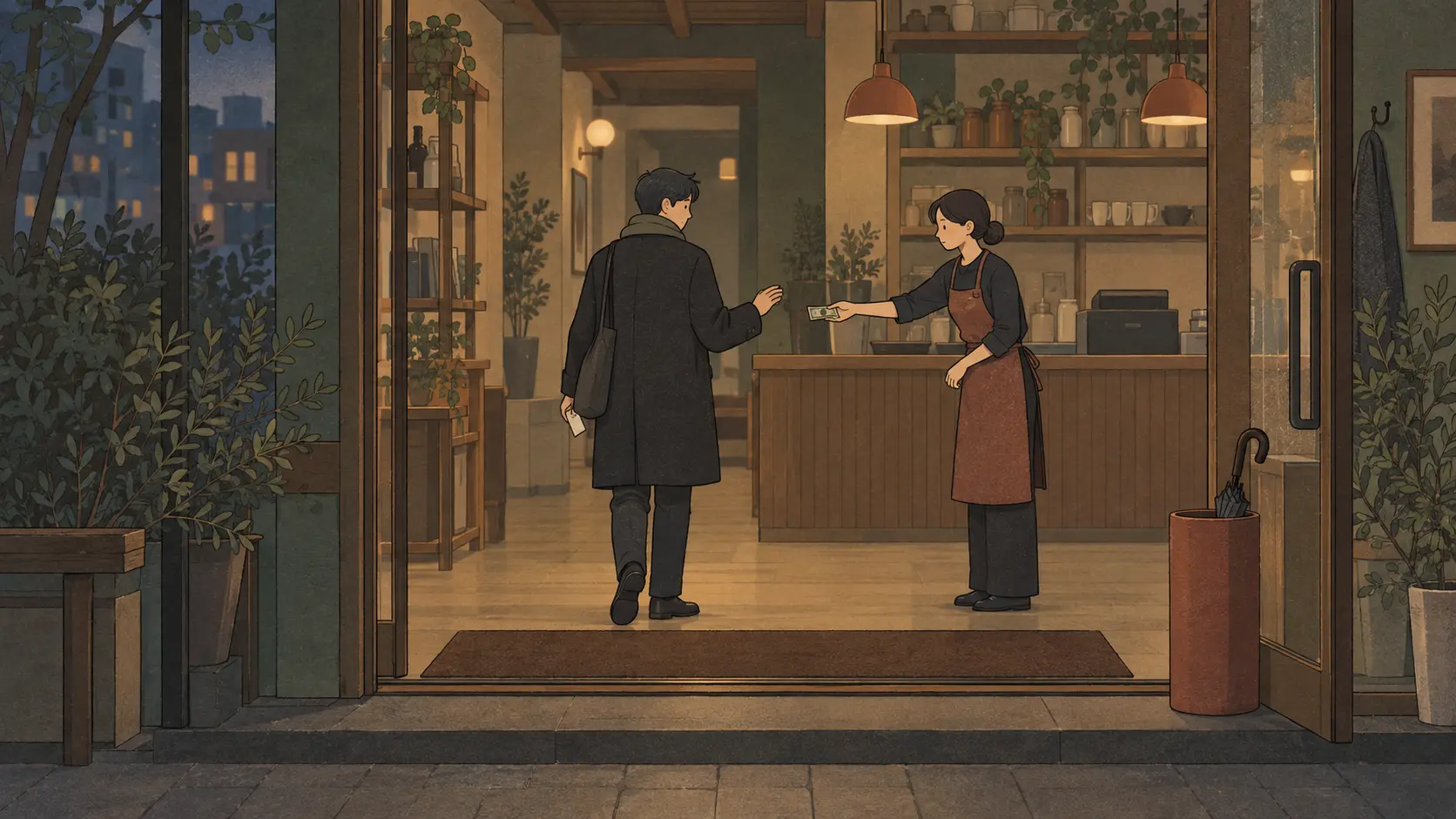
I have heard stories about visitors who did not know the custom, or knew it but still wanted to show appreciation by leaving cash. A staff member might fail to recognize money on a table or counter as a tip. Thinking the customer dropped some change, the employee returns it, while the person who meant it as a tip wonders why the money is coming back.
I did not witness one of those exchanges myself, so I cannot supply the expressions on their faces or the exact words they used. The fact that a story like this sounds natural itself shows how far tipping sits outside everyday life in Korea. If the two sides ended up in a small dispute, it may not have come from dissatisfaction with the service: one person may have seen a gift of thanks, while the other may have seen lost change that should be returned to its owner.
Both people are trying to be kind, while the cash is the only thing with nowhere to go.
The 2,000 Won Returned in a Video
Although I did not see it happen in a restaurant myself, I watched a similar scene in a short YouTube video. A foreign customer finished eating and went outside, leaving 2,000 won on the table. After finding it, an employee followed the customer and returned the money, apparently understanding it as money left behind.
The same money meant thanks to the customer and something to return to the employee. What I remember most is that the two people understood its meaning differently. I did not see it as an attempt to upset the customer by rejecting a tip.
One video cannot show that every Korean employee returns cash. It does make it easy to understand that money left silently on a table may not communicate what was intended. Saying jal meogeotseumnida (잘 먹었습니다), a polite expression of thanks after a meal, is much more familiar to me than leaving a tip.
Leaving the Table to Pay at the Counter
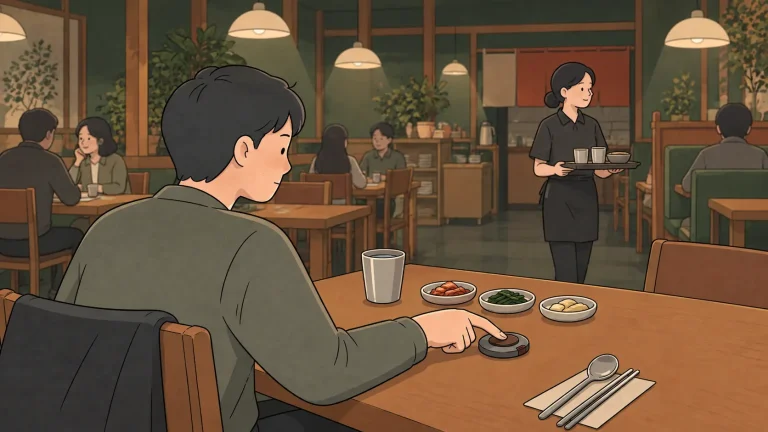
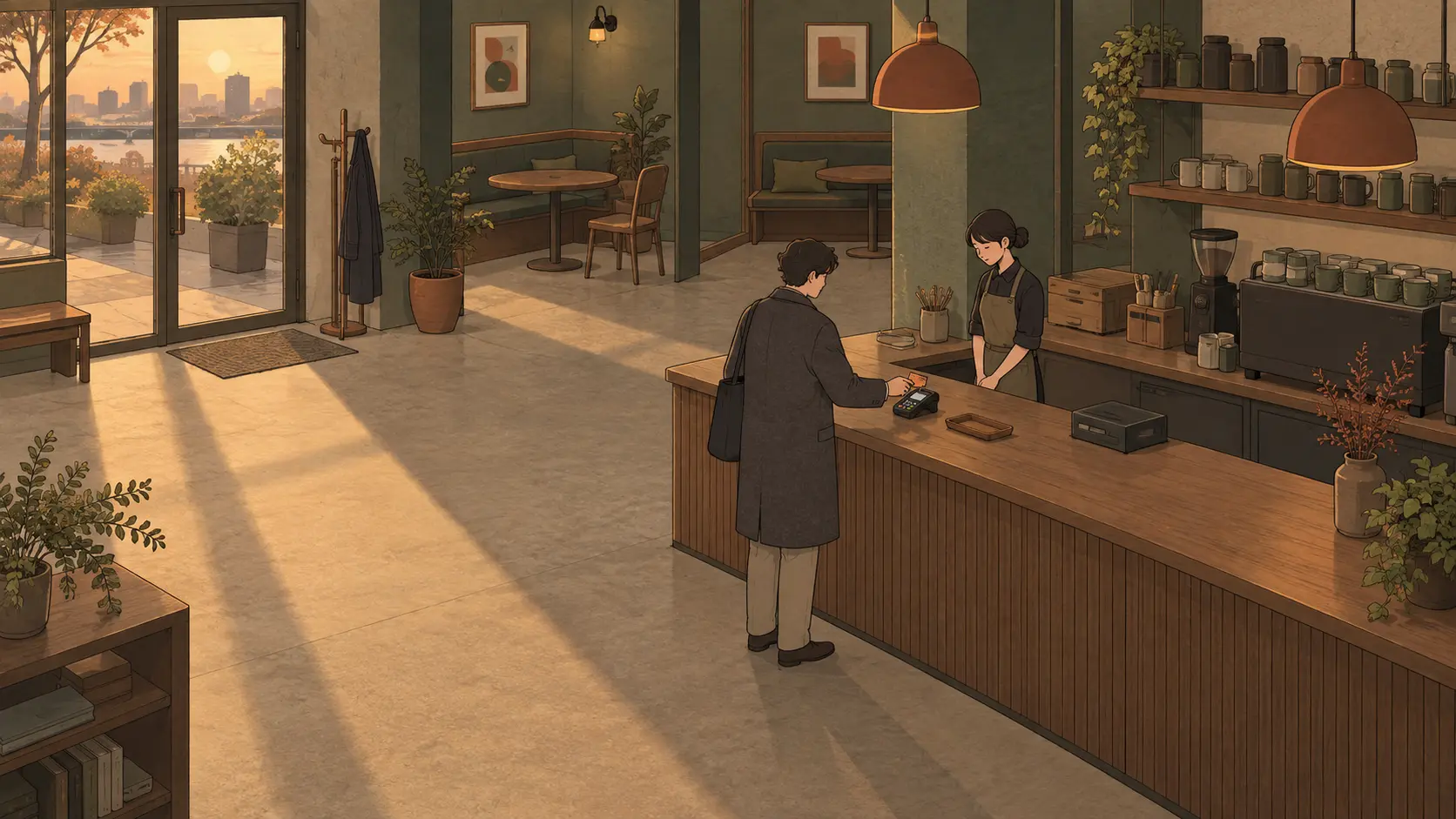
The restaurant payment I know usually happens at a counter after the meal. I stand up, say gyesanhalkkeyo (계산할게요), meaning I would like to pay, and go to the counter to pay for the food by card or cash. The place where I eat and the place where I pay are separate. After payment, I say goodbye and leave.
Some restaurants take payment first. If you paid when ordering, there is no reason to take out money again after eating. You can thank the staff for the meal and leave. Restaurants differ, so follow the table-ordering device or the staff’s directions.
If you are unsure how to call someone at a new restaurant, jeogiyo, gyesanhalkkeyo (저기요, 계산할게요), meaning “Excuse me, I would like to pay,” works. There is no need to learn forms of address such as imo (이모), literally aunt, or ajumma (아줌마), a term for a middle-aged woman, for someone you do not know well. Once you have found where to pay and paid the amount charged, the transaction is complete.
Is Tipping in Korea Actually Illegal?
This is where culture and law need to be separated. I used to understand that accepting a tip was illegal because restaurants cannot charge above the amount on the menu. I saw news reports about businesses being reported after listing tip amounts on their menus or asking for a separate payment, as well as reports of Koreans reacting strongly to businesses that requested tips through payment tablets or tip jars.
The legal material I checked does not support the sweeping claim that giving a tip is itself illegal in Korea. The business rules attached to Korea’s Food Sanitation Act require restaurants to display the price a customer must actually pay and to charge according to that price list. The important protection is that a business cannot quietly turn an undisclosed extra charge into a mandatory part of the bill.
That means we should distinguish between a restaurant adding an unlisted service charge or tip as an obligation and a customer voluntarily offering money to express thanks. I found no basis in these materials for calling every voluntary tip a criminal act. If a restaurant or cafe asks for a tip as though it were an expected part of the payment process, customers may understand that as a request to pay an amount different from the displayed final price.
The difference matters. You do not need to worry that offering a tip will automatically get you punished, but you also have no reason to assume a suggested tip is compulsory. Leaving no tip is the normal choice, and paying the displayed amount is enough.
Why Tip Screens and Tip Jars Draw Attention
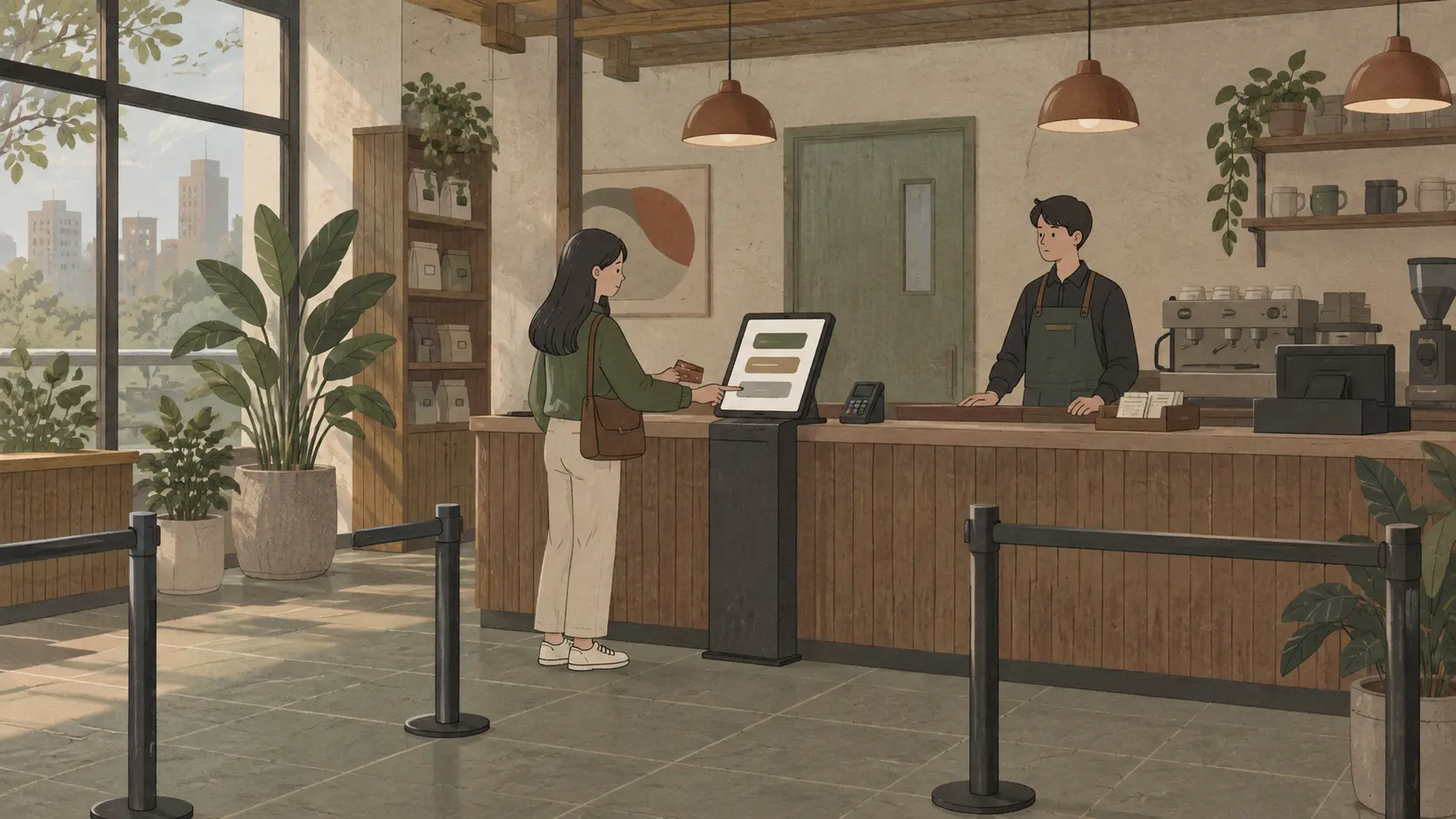
My knowledge of tip-selection tablets and jars at Korean counters comes from news coverage, not from seeing one in person. Reports showed payment screens offering tip percentages or containers placed near registers for customers to add money. Those objects may look ordinary in a country with established tipping customs. In Korea, simply putting one on a counter was unusual enough to become news.
The resistance is easy for me to understand. Korean customers generally expect to choose an item after seeing its price and complete the transaction by paying that amount. If a tip choice suddenly appears on the final screen, even an optional prompt makes the customer perform a small refusal. Selecting “no tip” while an employee is watching can feel like giving that worker a rating to their face.
A tip jar can create similar hesitation. Even if no one has to put money in it, its place beside the register may make a customer pause and wonder whether something has been omitted. The familiar Korean transaction begins with a displayed price and ends when that price is paid. Adding another decision at the end can make people wary that a new charge is finding its way into the process.
Still, the mere sight of a tip option or jar does not prove that every such business is breaking the law. The legal question can depend on whether the extra payment is mandatory and whether the actual charge differs from the displayed price. The travel decision is simpler: decline an optional tip if you wish, and ask what the charge is before paying if an undisclosed amount is presented as compulsory.
What About Hotels and Taxis?
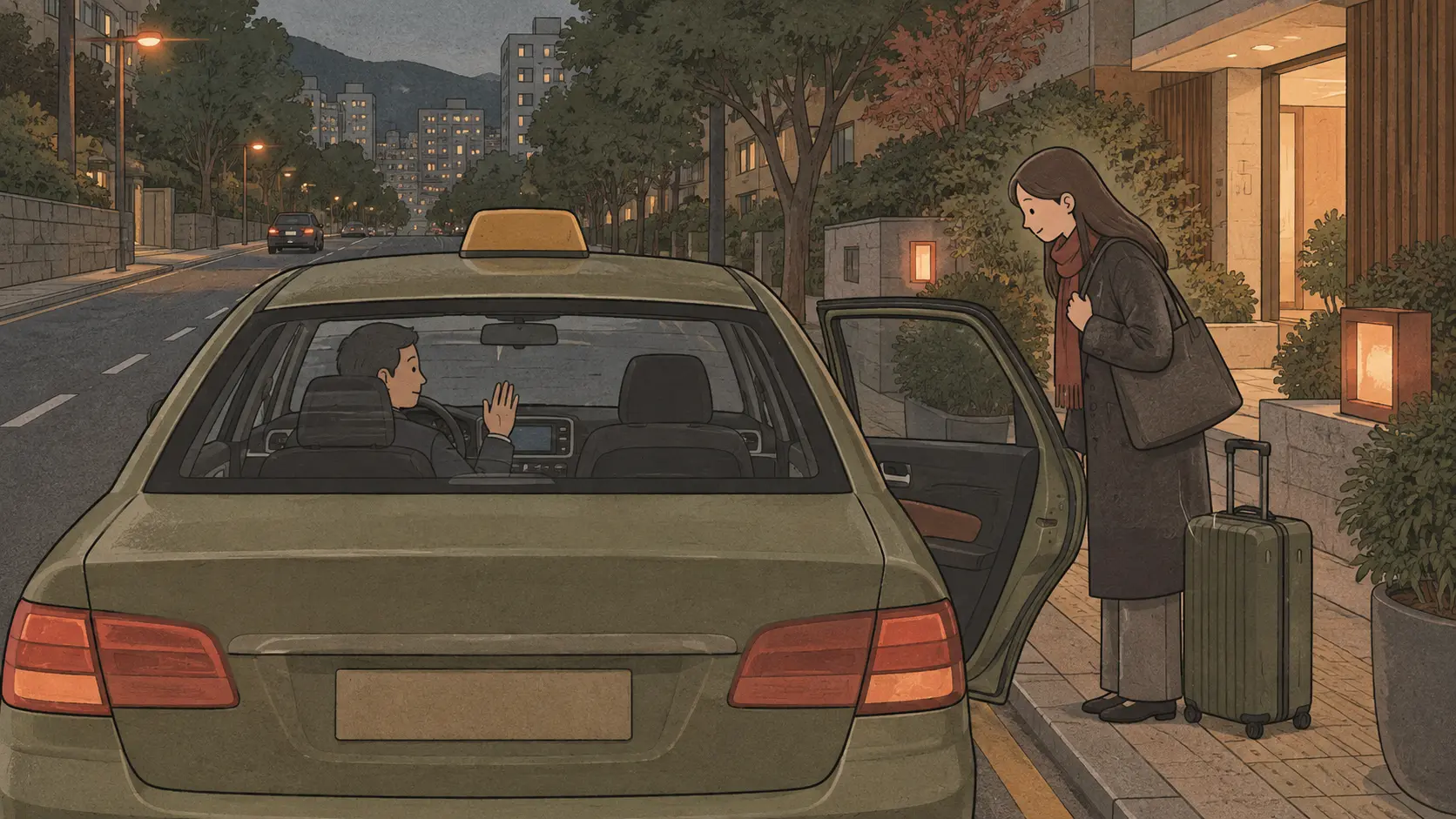
In my experience, I did not tip at either hotels or in taxis. I paid the meter in a taxi and the charges associated with my reservation and stay at a hotel. I never felt that the service was unfinished, or that I had broken an etiquette rule, because I had not prepared separate cash.
Someone who receives unusual help may still want to offer money as a personal thank-you. That payment is not a required expense you need to budget for a trip to Korea. If an employee declines or says it is fine, there is no need to press the cash into their hand. Refusing a tip is not an inexplicable response here.
Words of thanks usually feel much more natural. You can say “thank you” when leaving a restaurant or getting out of a taxi. If Korean does not come easily, saying it in English or accompanying it with a small nod will still communicate your meaning. Spending a moment on that greeting fits everyday Korean life better than spending the same moment calculating a percentage.
Words I Use to Show Thanks
Money is not the only way to express appreciation. If you enjoyed the meal, masitge jal meogeotseumnida (맛있게 잘 먹었습니다) tells the staff you ate well and enjoyed it. If you really intend to return, daeume tto olgeyo (다음에 또 올게요), meaning “I will come again,” is natural too. A small bow of the head as you leave adds to the greeting without requiring a long speech.
Finishing a delicious meal can also give the person who made it a positive response. You do not have to force down food after you are full just to show thanks, however. Eat the amount you want and say what you enjoyed. My most familiar expression is a short gamsahamnida (감사합니다), meaning “Thank you,” after paying.
I have heard that some taxi passengers used to leave without taking their change. That was a choice to leave the small change, rather than a fixed percentage paid for friendly service. Some people may give personal tips in hotels or services aimed at foreign visitors. You do not need to treat that as a standard cost at ordinary restaurants and cafes.
Finish the Meal Without Worrying About a Tip
At a Korean restaurant or cafe, check the menu price and pay that amount. If an optional tip appears on a payment screen, you can decline it. If someone demands an extra amount that was not displayed, ask what the charge covers before you pay.
When the service has been good, thank the staff on your way out. That message is easier for everyone to understand than cash left behind for an employee to chase down and return. In Korea, you can finish the meal knowing that paying the posted price has completed the bill.
FAQ
Do I have to tip in Korea, including at hotels and in taxis?
Ordinary restaurants and cafes do not require or expect tips. In my experience, I did not leave separate tips at hotels or in taxis either. Pay the displayed or charged price; a personal cash gesture of thanks does not need to be treated as an essential travel expense.
Is tipping rude in Korea?
It may seem unfamiliar rather than rude. Cash left silently on a table can be understood as forgotten money. I watched a YouTube video where an employee returned 2,000 won to a foreign customer. If someone declines, express your thanks with a greeting rather than insisting on the money.
Why is tipping absent from ordinary daily life in Korea?
At the meals I am used to, I consider taking the order and bringing the food part of the menu price. I do not calculate extra money for friendly service. Paying for the food at the counter and saying goodbye fits into that everyday pattern of finishing a meal without thinking about a tip.
Are tips illegal, and what should I do if a payment screen asks for one?
I found no basis for saying that all voluntary tips are illegal. Restaurant rules require the actual payable price to be displayed and the restaurant to charge according to that price list. You can leave an optional tip unselected if you do not want it. If an undisclosed extra charge is described as mandatory, ask what it is for before paying.
What can I do instead of tipping?
After paying, say “Thank you” or tell the staff you enjoyed the meal. If Korean is difficult, an English greeting and a small bow of the head can express appreciation too. You do not need to force yourself to finish the food to show satisfaction.