Korean Restaurant Call Button: Why Pressing It Is Never Rude
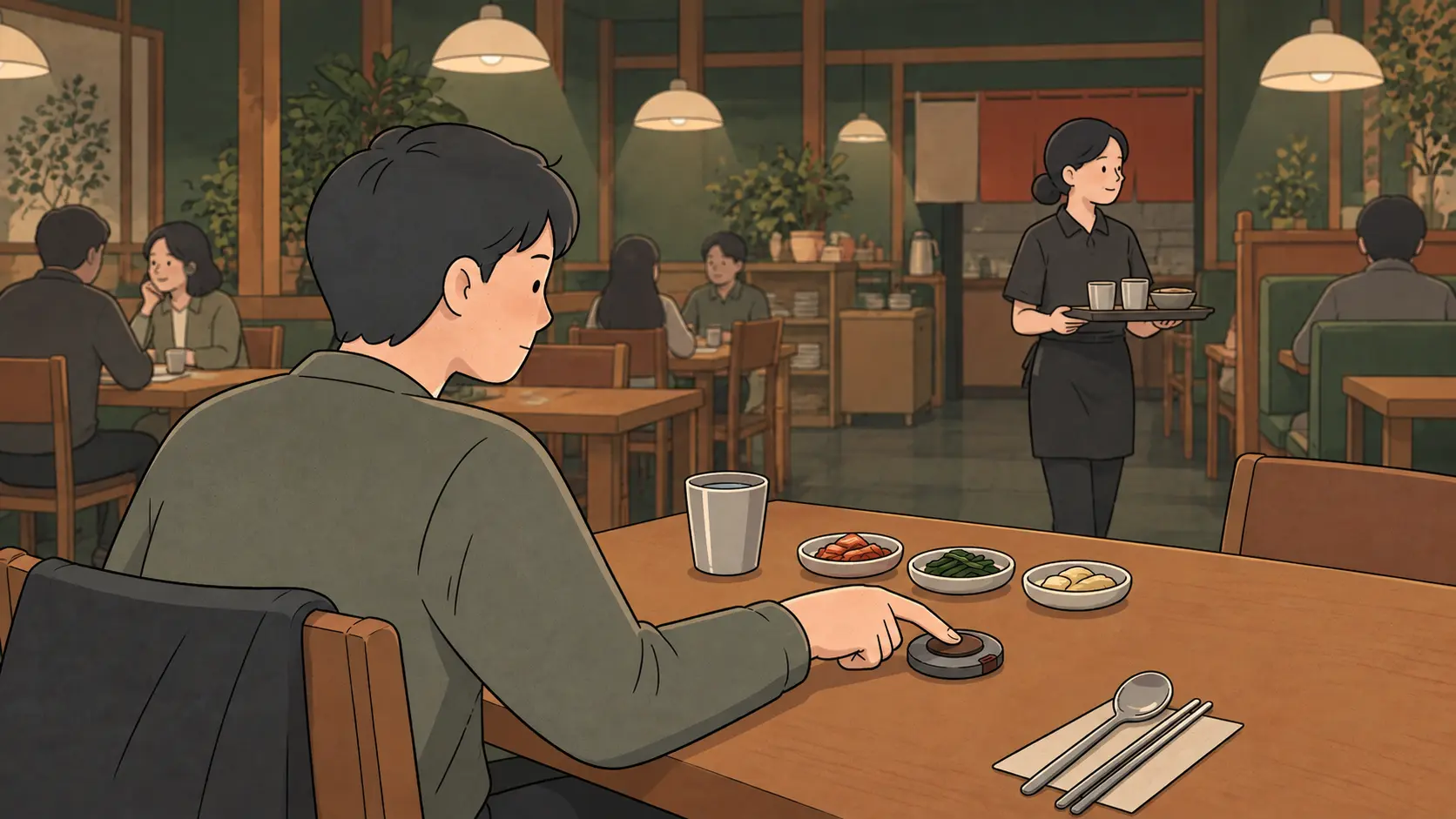
Have you ever sat down at a Korean restaurant and noticed a small button on the table? It may be built into the edge or resting beside the side dishes. If you have wondered whether you are allowed to press that Korean restaurant call button, the short answer is yes. Pressing it once is a normal way to ask for service.
Where the Korean Restaurant Call Button Came From
I am Korean, so the button itself has never felt mysterious to me. My own memory is that these systems became especially noticeable in loud bars in the early 2000s, where calling across the music did not work well. A press could put the table number on a display for staff.
That memory is not the same as the device’s first appearance. A history published by Korea Exposé traces wireless call bells in South Korea to a newspaper report from 1990 and says they were already gaining use in hospitals and restaurants. So I would not call the early-2000s bar scene the origin. It is the setting where I remember the system becoming familiar.
I Press It the Same Way Any Korean Does
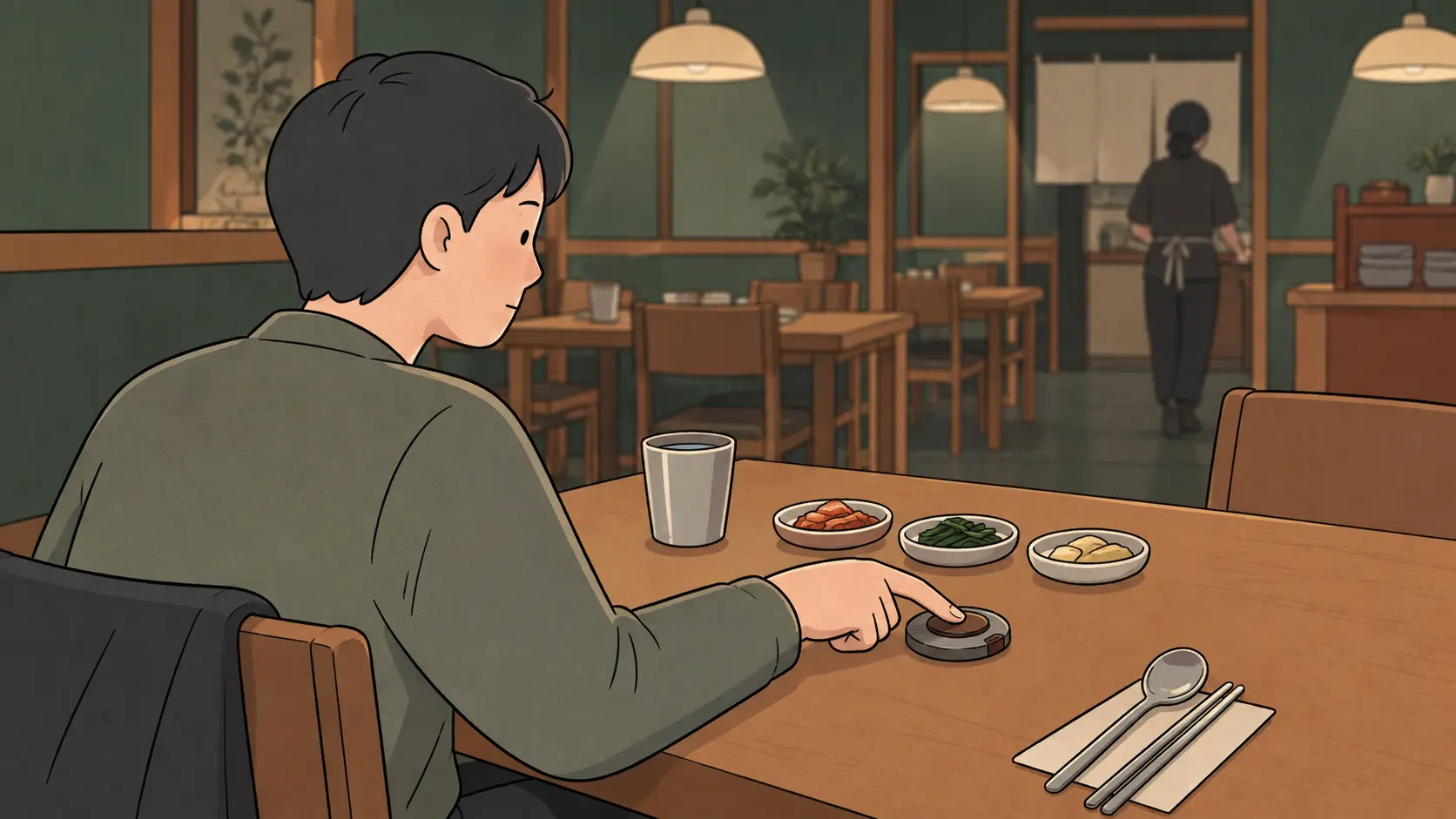
There is nothing dramatic about using it. At a bar, I might press it when I want another anju (안주, food served with drinks). At a restaurant, I press it after everyone at the table has decided what to order, or when we need to ask a staff member something.
If nobody comes immediately, the floor may simply be busy. I wait rather than assuming the signal failed. The button tells staff that the table needs attention; it does not promise that someone can appear at that exact second.
Tablets Are Taking Over Some of the Work
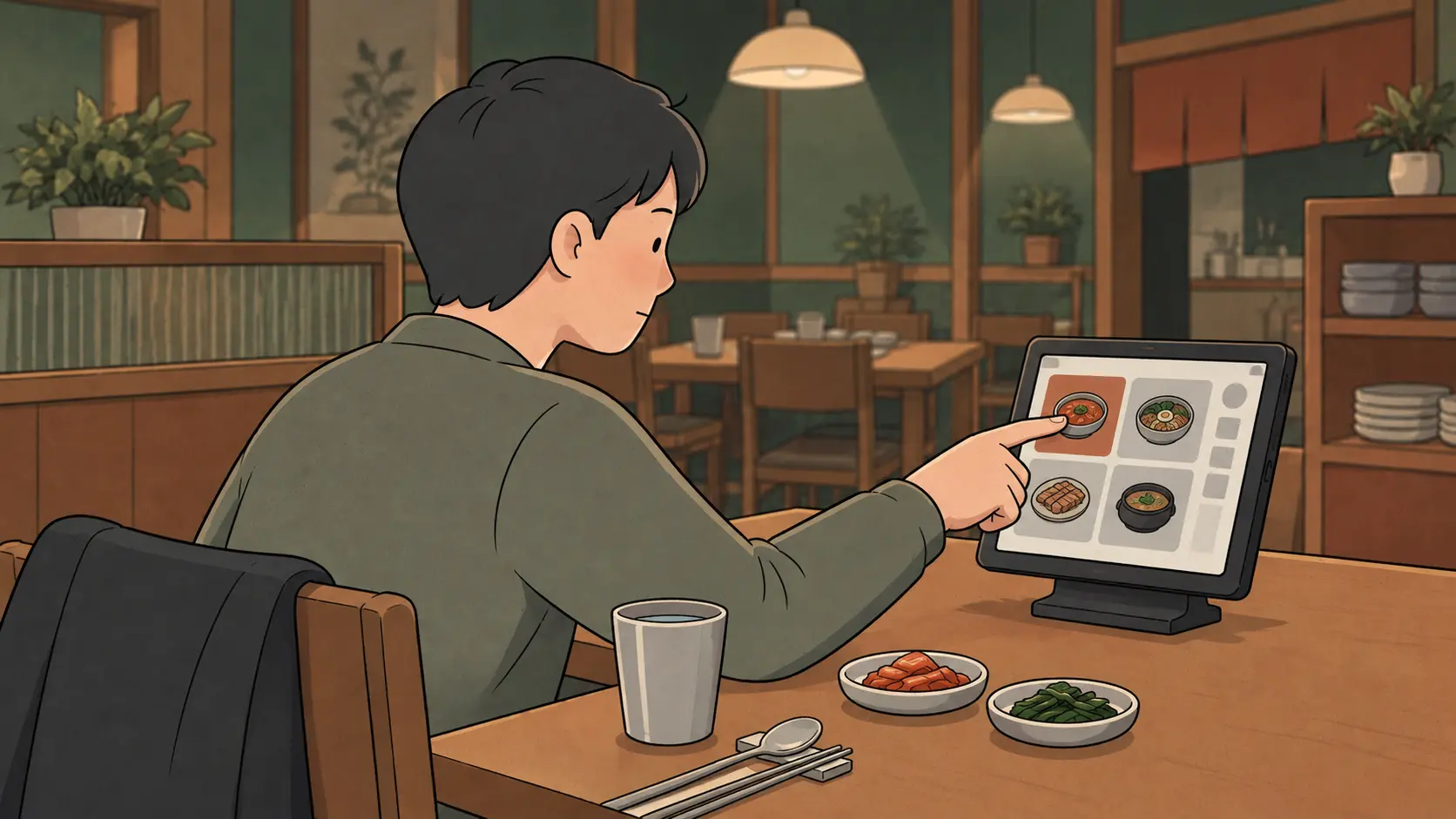
More restaurants seem to use table-ordering tablets now, at least in the places where I eat. That is an impression from regular dining, not a count of restaurants across Korea. Many tablet systems include a separate staff-call option for questions or requests that the ordering screen cannot handle.
Payment is not identical across all tablet systems. Some restaurants take payment as part of the table order, while others let you order on the tablet and pay later. Check the screen or the restaurant’s instructions instead of assuming that using a tablet means the bill is already settled.
No Button, No Tablet? Call Out
Smaller or older-style restaurants may have neither. In those places, jeogi-yo (저기요) or yeogi-yo (여기요) is a practical way to get attention. Sajangnim (사장님, owner or boss) is also common when you are addressing the person running the place.
You may also hear imo (이모) or ajumma (아줌마) used for a middle-aged woman in a casual restaurant. I have heard and used those forms in Korea, but they are familiar forms of address, and people do not all receive them the same way. For a visitor who is unsure, jeogi-yo or yeogi-yo avoids guessing about age or familiarity.
If a staff member seems hesitant, I cannot know the reason from the outside. Language may be one possibility, but it would be unfair to present that as the person’s motive.
Cafés and Upscale Restaurants Play by Different Rules
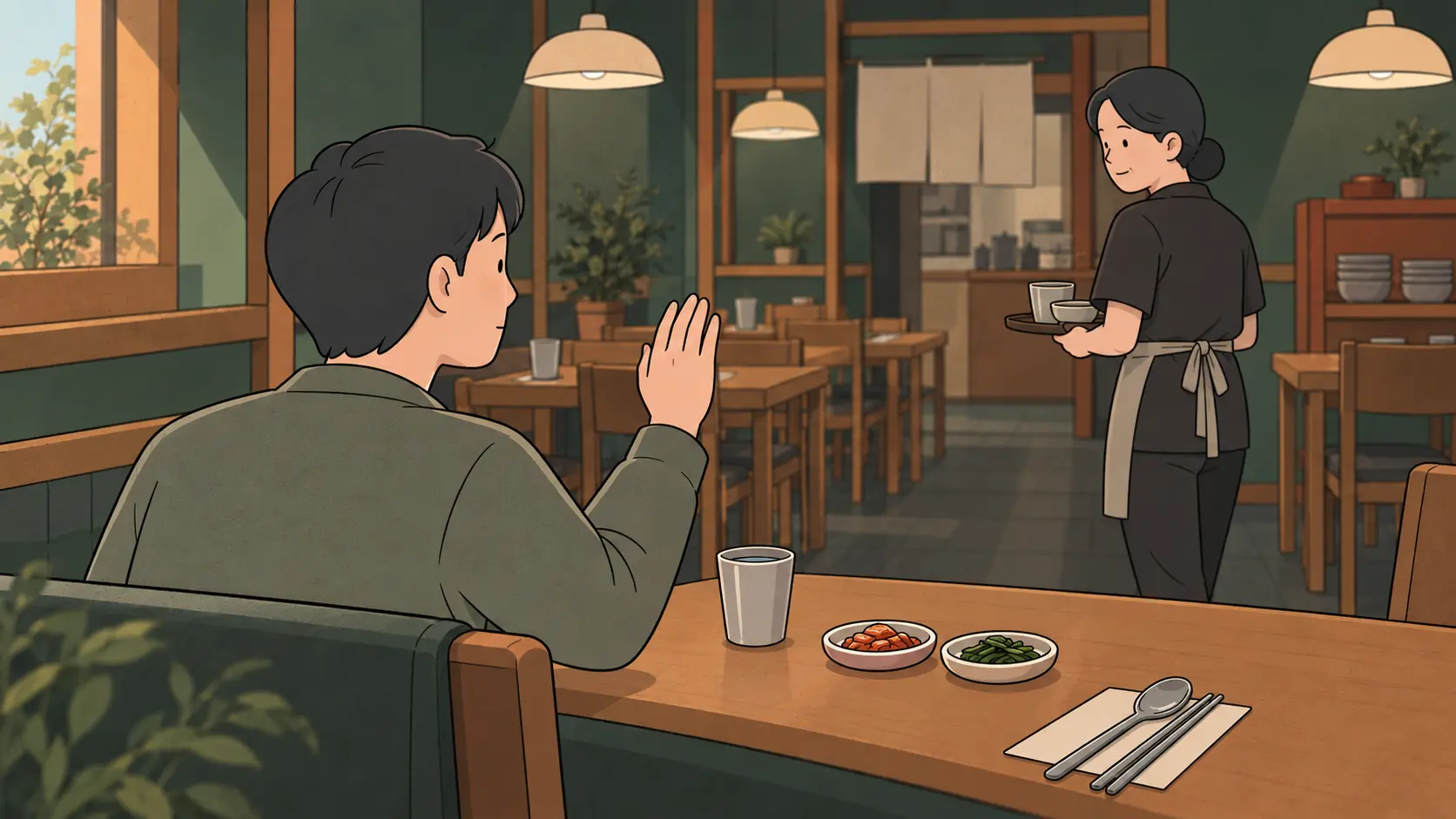
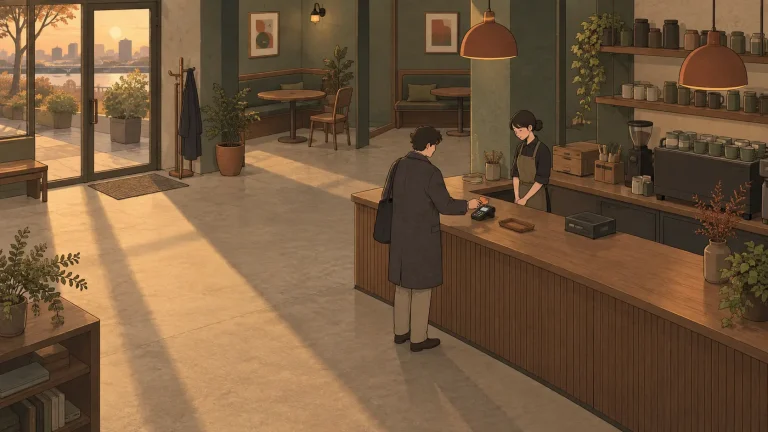
At many cafés, you order at the counter and collect the drink or food when it is ready, so there is usually no need for a table call button. At an upscale restaurant, I would make brief eye contact and raise a hand slightly rather than call loudly across the room.
Those are useful patterns, not laws for every business. The service setup in front of you is the best guide.
When to Press Again
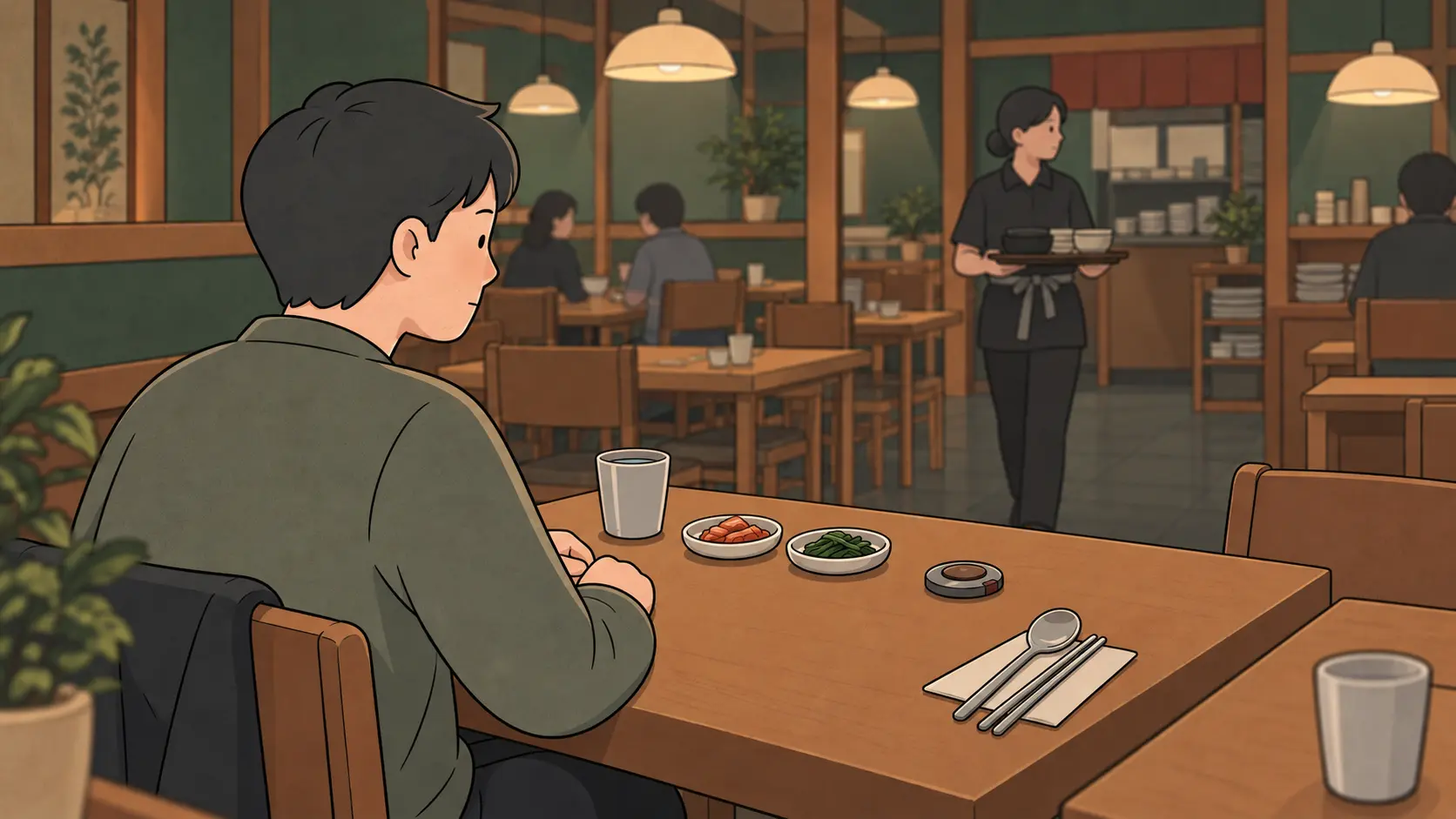
My rule is to press once and give the staff time to respond. If the restaurant is clearly busy and I have waited a reasonable while, I press once more or call jeogi-yo when someone passes nearby.
Ten minutes was the rough personal benchmark I gave when describing my own habits. It is not a universal Korean rule, and I cannot see what happened on the staff display. What I avoid is pressing two or three times within a minute or two. Repeated signals can add pressure without helping anyone move faster.
Paying Depends on the Restaurant
In many casual restaurants with a physical call button, I finish eating and pay at the counter on the way out. Table-ordering systems vary: some include payment during ordering, while others leave payment until later. Upscale restaurants may handle the bill at the table, but the safest approach anywhere is to follow the screen, a sign, or the staff’s direction.
A Canadian Reader’s Experience
I have never personally watched a foreign visitor freeze in front of a call button in Korea, so I will not invent that scene.
Peter Rukavina did write about call buttons in Korean-run restaurants in Charlottetown, Prince Edward Island. In his 2012 post, he said he seldom saw local diners use them and recalled his own family worrying that pressing one would disturb the staff. Once he got past that hesitation, he found the button helpful, especially because unclear social cues made him anxious.
His post is one Canadian family’s experience in Charlottetown, not evidence about how foreign tourists in Korea behave. It does, however, explain one real reason the button can feel unfamiliar before the first press.
What to Actually Do
Press the button once and wait. If there is no button, say jeogi-yo or yeogi-yo. If you ordered on a tablet, check whether it also handled payment. Those three checks are enough to remove most of the guesswork from the meal.
Frequently Asked Questions
Is it rude to press the call button at a Korean restaurant?
No. A Korean restaurant call button is provided so customers can ask for service. Press it once and give the staff time to respond.
Do all Korean restaurants use a call button?
No. Some use table-ordering tablets, some rely on a physical bell, and smaller restaurants may expect customers to call a staff member. Cafés and upscale restaurants often use different service patterns.
What do I say if there is no call button or tablet?
Say jeogi-yo (저기요) or yeogi-yo (여기요). Both are practical choices when you do not want to guess whether a familiar form such as imo or ajumma suits the situation.
Can I press the call button again if no one comes?
Yes, after giving the staff a reasonable amount of time. There is no universal ten-minute rule. Avoid pressing repeatedly within a minute or two; wait, press once more if needed, or call politely when someone passes.
How do I pay at a Korean restaurant?
It varies. Many casual restaurants take payment at the counter, while tablet systems may use either payment during ordering or payment later. Follow the tablet, posted instructions, or ask the staff.