kdrama historical accuracy: Why Koreans Take It So Seriously
If you follow K-dramas from outside Korea, you may have noticed that kdrama historical accuracy is not treated as a minor production detail. It is treated as something closer to a cultural obligation — and when it is violated, the response can be swift and national in scale.
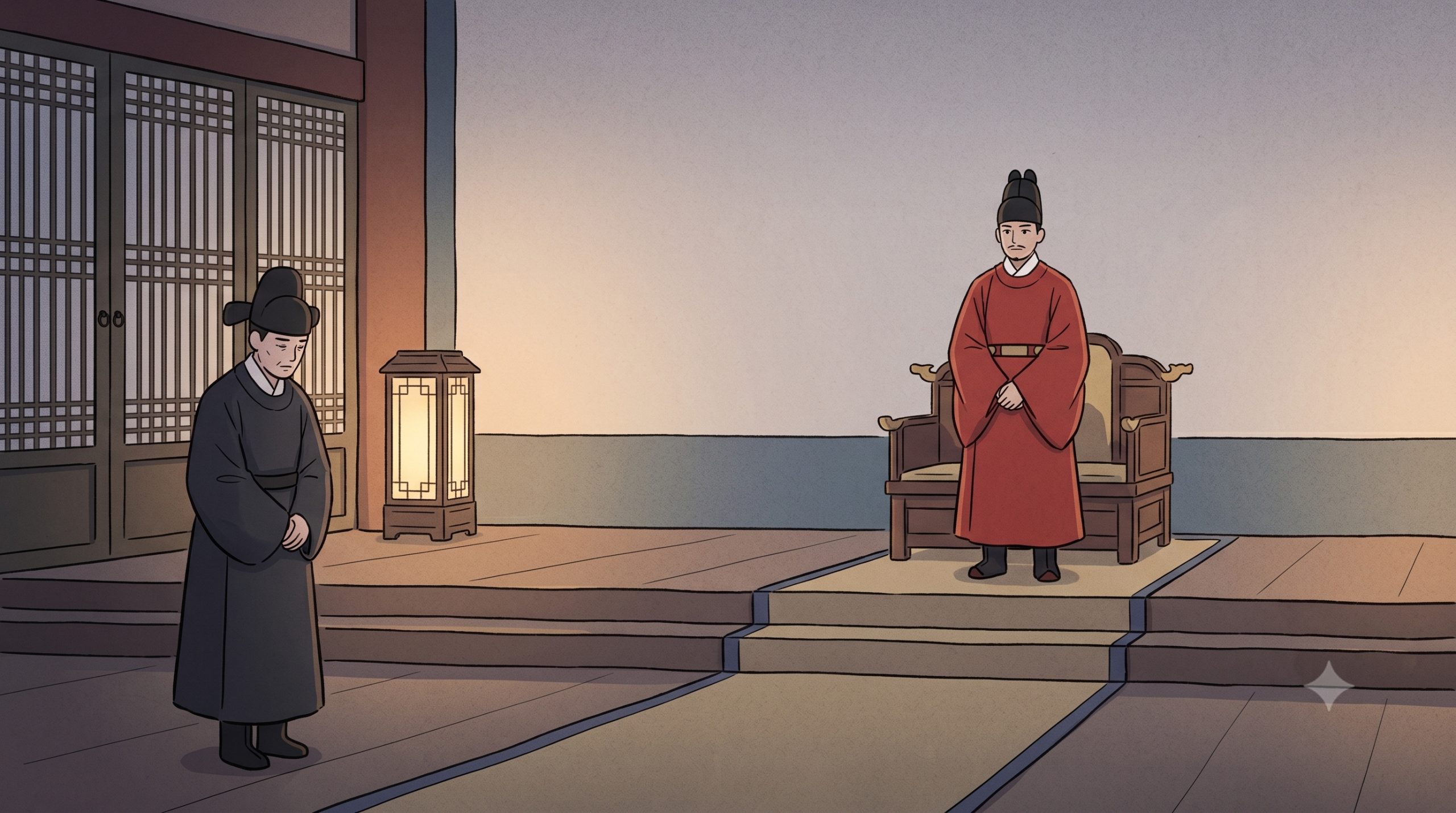
In May 2026, episode eleven of the MBC drama 21st Century Grand Prince’s Wife — known internationally as Perfect Crown — aired a coronation scene. The drama itself is a fantasy romance set in a fictional twenty-first-century Korea that still operates as a constitutional monarchy. The leads were IU and Byeon Woo-seok, and expectations for the series had been high. What came after that coronation scene was not a discussion about the storyline. It was a national conversation about a single word that the royal attendants cried out — not manse, but cheonse — and what that word implied about Korea’s place in history.
To understand why that matters, you need to understand what Korean history has actually felt like. Not the textbook version. The version that still shapes how many Koreans watch television.
kdrama historical accuracy begins with a single word — cheonse versus manse
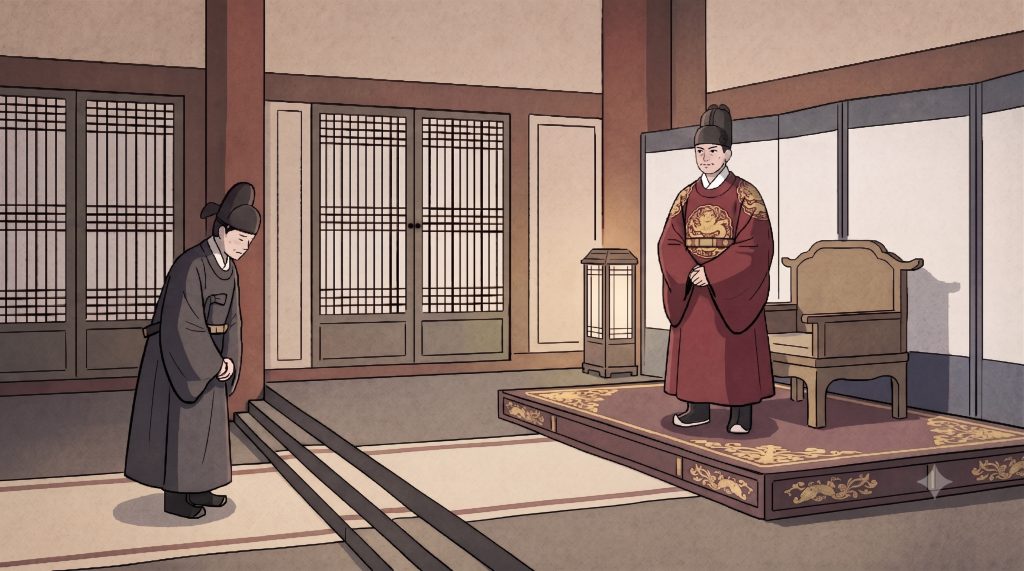
In Korean, cheonse (천세) means a thousand years and manse (만세) means ten thousand years. Both were expressions of longing for a ruler’s long reign. But in the hierarchical diplomatic order of East Asian dynasties, viewers and critics pointed out that these two words were not interchangeable. Manse, they argued, was the cry reserved for an emperor of a fully independent sovereign state. Cheonse, by contrast, was associated with rulers of a lower status — those who operated within the tributary order of a larger power, not as fully sovereign monarchs in their own right.
The setting of Perfect Crown is twenty-first-century Korea. Even within the drama’s own fictional framework, Korea is an independent nation. And yet the coronation ceremony used cheonse. Critics argued that this placed the Korean monarch, within the internal logic of the drama’s world, in the position of a subordinate ruler rather than a fully sovereign one. The crown worn by the actor in the ceremony was also noted by viewers to be inconsistent with traditional Korean royal court attire — another instance of historical distortion in Korea’s mainstream media that many viewers found difficult to overlook.
Perfect Crown was not a low-budget production. MBC is one of Korea’s major terrestrial broadcasters. The frustration that came through in viewer responses was not only about the specific errors. It was about why a production of this scale had not caught them before broadcast.
Why a fictional setting does not make kdrama historical accuracy optional
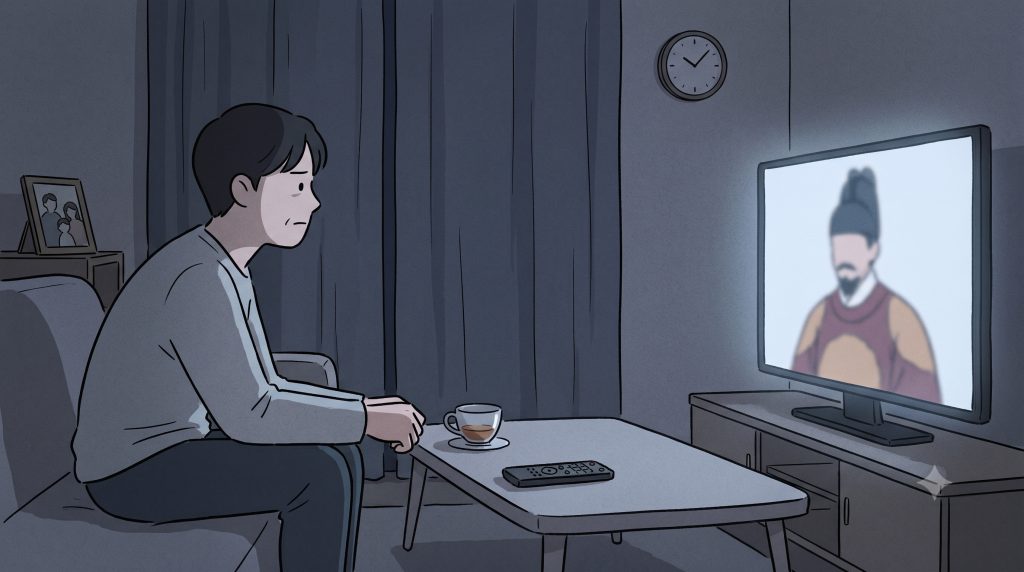
The natural question from outside Korea is: why does it matter if it is fiction? If the story is invented, why apply the standards of actual history? For many international viewers encountering Korean historical drama controversy for the first time, this is often the first point of confusion.
That question is reasonable. The answer requires going back about a century.
From 1910 to 1945, Korea was under Japanese colonial rule. What happened during those thirty-five years went far beyond political administration. In 1895, Japanese agents entered Gyeongbokgung Palace and assassinated Queen Myeongseong, the Korean queen consort, in what was later documented as a deliberate political operation. After formal annexation in 1910, the suppression of Korean identity became systematic. Korean-language instruction was banned in schools. Korean history was removed from the curriculum or rewritten to serve the colonial narrative. Koreans were required to adopt Japanese-style names under a policy designed to sever the connection between people and their own cultural inheritance.
The suppression of a language is not an administrative decision. It is an attempt to dissolve a people’s sense of who they are. The fact that the Korean language and its writing system, hangeul, survived that period is something many Koreans understand not as a given, but as the result of deliberate, persistent effort by people who understood exactly what was at stake. Korea passed through the Joseon Dynasty, into the Korean Empire declared in 1897 — an assertion of full sovereign independence from the Chinese tributary system — and then into the brutal compression of colonial rule. That sequence of assertion, loss, and recovery is not distant history. It is within living memory for some, and within family memory for most.
This history left something that is still present in Korean public life. It is not simply sensitivity. It is a long-practiced awareness that language, symbols, and historical framing carry weight — that they are never entirely neutral, even inside a fictional story. Korean history in dramas is never just background. For many viewers, it is foreground.
Consider two comparisons that may help. If a drama produced in the United States depicted America as a subordinate state under British authority — even as an invented premise — it is unlikely that American audiences would receive it as harmless fiction. The War of Independence is not ancient mythology to Americans. It is the foundation of national identity, and a drama that casually inverted that foundation, even in fantasy form, would not pass without comment. Now consider a European parallel: imagine a German production that framed France as a historical extension of German territory — not as a period drama set during actual occupation, but as a normalized fictional reality. The reaction across France would not need explaining. Some histories are too close, and too unresolved, to be rearranged without consequence, even in entertainment.
For many Korean viewers, the coronation scene in Perfect Crown triggered the same kind of response. The drama is fiction. But the hierarchy embedded in cheonse is not a neutral creative choice. It echoes a framework that Korea spent centuries — and several generations of deliberate cultural resistance — refusing to accept as its permanent condition.
This is why many Koreans do not see language, royal titles, and historical symbols in dramas as neutral details. They can feel like part of a much older question: whether Korea’s identity is being respected or reduced.
The Northeast Project and why kdrama historical accuracy includes Chinese-style details
The controversy over Perfect Crown did not stop at the word cheonse. Viewers also pointed to scenes that appeared to draw on Chinese ceremonial aesthetics rather than Korean royal court traditions. For audiences outside Korea, this part of the reaction can be the hardest to understand. It requires knowing about a conflict that has been running for decades — one that directly shapes Korean cultural sensitivity around how Korean history is depicted in media.
Between 2002 and 2007, China’s Academy of Social Sciences conducted a state-sponsored research initiative known as the Northeast Project. The official scope of the project concerned the history of China’s northeastern border regions. But in Korea, it was received as something more pointed: an attempt to incorporate Korean historical kingdoms — particularly Goguryeo, one of the ancient Korean states — into the framework of Chinese history, positioning them as part of Chinese cultural and territorial heritage rather than Korean heritage.
The Northeast Project did not remain confined to academic publications. The disputes it reflected have surfaced repeatedly in public life. Some Chinese media outlets and online platforms have claimed that hanbok, the traditional Korean dress visible in historical dramas and national celebrations, derives from Chinese clothing traditions and therefore belongs within Chinese cultural heritage. Similar claims have been made about kimchi, about elements of Korean folk music, and about the cultural practices preserved within the Joseon-jok — the ethnic Korean minority living in northeastern China, whose ancestors migrated from the Korean peninsula during the Joseon era and the Japanese colonial period. Many Koreans perceive these claims not as cultural curiosity but as ongoing historical and cultural distortion: an effort to absorb Korean identity into a larger Chinese civilizational narrative.
Against this backdrop, a Korean drama produced by a major terrestrial broadcaster — depicting a Korean royal court with ceremonial details that evoke Chinese court traditions rather than Korean ones — does not read as a simple production oversight. It reads as carelessness about a boundary that many Koreans have spent considerable energy trying to make visible. Whether or not that was the production team’s intention, the effect is the same. The line between Korean royal culture and Chinese imperial aesthetics was blurred, in a drama that was already using a word associated with tributary subordination to greet its fictional Korean king.
Who is responsible for kdrama historical accuracy — actors or production
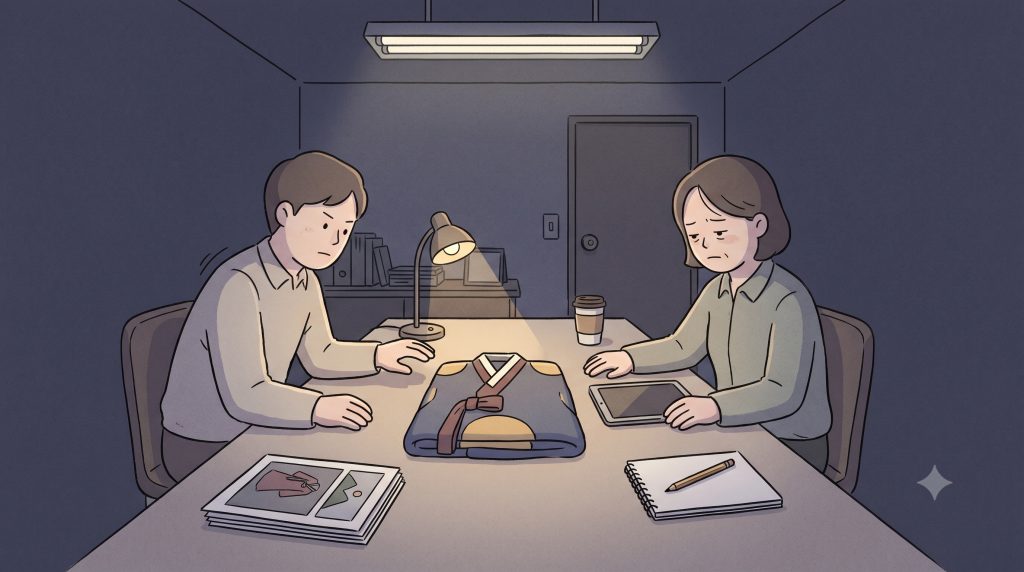
As the controversy grew, both IU and Byeon Woo-seok released public statements acknowledging that they had not given sufficient thought to the historical context of the scenes they performed. Some viewers directed criticism toward the actors directly. That response puzzled many international fans, and the puzzlement is understandable.
Actors perform the scripts, costumes, and staging that production teams prepare for them. Viewers did not expect actors to be historians. It would be unreasonable to assume that every performer is equipped to identify whether a ceremonial crown is consistent with Korean royal court records, or whether a specific form of address carries implications rooted in tributary diplomacy. If an actor playing a Lincoln-era White House aide appeared on screen in a modern winter jacket, the responsibility for that error would sit with the costume department, not with the performer wearing it.
The structural accountability in Perfect Crown belongs to the production. A broadcaster of MBC’s scale and resources has access to historical consultants. The decision about which words appear in a coronation ceremony, which costume designs are used for a royal investiture, and which ceremonial aesthetics frame a scene depicting Korean kingship — these are production decisions, made long before filming begins. The fact that multiple errors appeared in the same sequence suggests not an isolated oversight but a gap in the research and verification process.
When Korean viewers expressed frustration with the actors, what they were often expressing was something broader: a response to the drama as a whole, directed at the most visible faces of it. But the question that matters more — why a production of this budget and institutional backing did not catch these problems — is the one that points toward where the responsibility actually lies.
kdrama historical accuracy controversies — why this is not the first time
Perfect Crown is not the first Korean drama to face this kind of controversy, and understanding the pattern helps explain why the reaction was so immediate.
In 2021, the SBS drama Joseon Exorcist — set during the Joseon Dynasty — included scenes depicting Chinese-style food and props in what was presented as a Korean royal court setting. Items including mooncakes and century eggs appeared in scenes meant to represent Joseon palace life. Viewer backlash was immediate and intense. Advertisers withdrew. The drama was cancelled after two episodes. That same year, JTBC’s Snowdrop — set against the backdrop of Korea’s 1987 pro-democracy movement — faced a petition campaign and advertising boycott before it had even finished airing, on the grounds that its portrayal of the period distorted the historical record.
These three dramas were produced by different broadcasters, in different genres, with different specific complaints. But the reaction in each case followed a similar shape. Korean viewers identified what they saw as a misrepresentation of Korean history or Korean identity within a mainstream media production, and they responded publicly and persistently until the production acknowledged the problem. The consistency of that response across different years and different productions is itself part of the story. It reflects something that does not switch off between controversies.
As K-dramas reach global audiences through international streaming platforms, the historical images they carry travel with them. A drama watched by millions of people across dozens of countries is doing something more than telling a story. It is shaping, for many of those viewers, what they understand Korea to look like — its royal courts, its ceremonial language, its cultural forms. Korean viewers who raise questions about kdrama historical accuracy in that context are not being obstinate about entertainment. They are paying attention to how their history is being represented to the world.
The coronation scene in Perfect Crown has since been edited. The production team issued an apology and committed to correcting the sequence in VOD, rebroadcast, and global streaming versions. The drama continues. But the conversation it started is not really about one scene in one drama.
Cheonse instead of manse. A crown that did not belong. A ceremony that borrowed from the wrong court. To many Korean viewers, none of those details were decorative. They were part of a much longer question — one about whether the images that travel under the name of Korean culture actually reflect what Korea is, or quietly repeat old arguments about what it was supposed to be.
Why did the word cheonse cause such a strong reaction in Korea?
Critics and viewers pointed out that in the East Asian tributary system, cheonse was historically associated with rulers of subordinate states, while manse was used for fully independent sovereigns. In a drama set in a fictional twenty-first-century Korea — an independent nation — using cheonse in the royal coronation was seen by many as implying a subordinate status for the Korean monarch, even within the drama’s own fictional logic.
Why do Korean viewers react so strongly to historical inaccuracies in K-dramas, even fictional ones?
Korea’s experience of Japanese colonial rule from 1910 to 1945 included the systematic suppression of the Korean language, history, and cultural identity. That history has left many Koreans with a strong awareness that historical symbols and language are never entirely neutral. When those symbols appear distorted or misrepresented in mainstream media — even in fictional settings — it can feel connected to a longer pattern of having Korean identity questioned or minimized.
What is the Northeast Project and why does it matter for kdrama historical accuracy controversies?
The Northeast Project was a state-sponsored Chinese academic initiative conducted from 2002 to 2007. Many Koreans perceived it as an attempt to incorporate Korean historical kingdoms and cultural practices — including hanbok, kimchi, and ancient Korean states — into Chinese cultural heritage. Disputes connected to this project have continued in public discourse since then. When Korean dramas depict Korean royal court scenes using aesthetics that resemble Chinese imperial traditions, many Korean viewers see it as reinforcing claims they consider to be historical and cultural distortion.
Were IU and Byeon Woo-seok personally responsible for the historical errors in Perfect Crown?
Most viewers and commentators placed the structural responsibility with the production team rather than the actors. Viewers did not expect actors to be historians — actors perform within the costumes, scripts, and staging provided to them. The accountability for research and verification of historical details belongs to the broadcaster and production company. When viewers directed frustration toward the actors, it largely reflected their response to the drama as a whole.
Is kdrama historical accuracy controversy unique to Korea?
Historical accuracy controversies in television are not unique to Korea, but the specific sensitivities in the Korean context are shaped by particular historical experiences — colonial-era suppression of cultural identity, ongoing disputes over the origins of Korean cultural practices, and the global reach of K-drama as a medium. As Korean content reaches wider international audiences, questions about how Korean history and culture are represented carry more weight, which is part of why Korean viewers continue to raise them.