
Joining In at Korean Karaoke with Friends and Coworkers
My most recent Korean karaoke visit was about a year ago, during a company outing. I would like to begin with a happy memory, but that evening was not particularly enjoyable. I had already been thinking about leaving my job because of a coworker before the outing began.
That does not mean I dislike going to karaoke. I have gone with friends, and I have also gone after a drink with coworkers I get along with. Usually, I enjoy myself there. My latest company outing and the way I normally have fun at karaoke deserve separate accounts.
In my experience, the company mattered. Working for the same employer does not automatically make everyone a coworker you feel comfortable spending an evening with.
What actually happens inside the room?
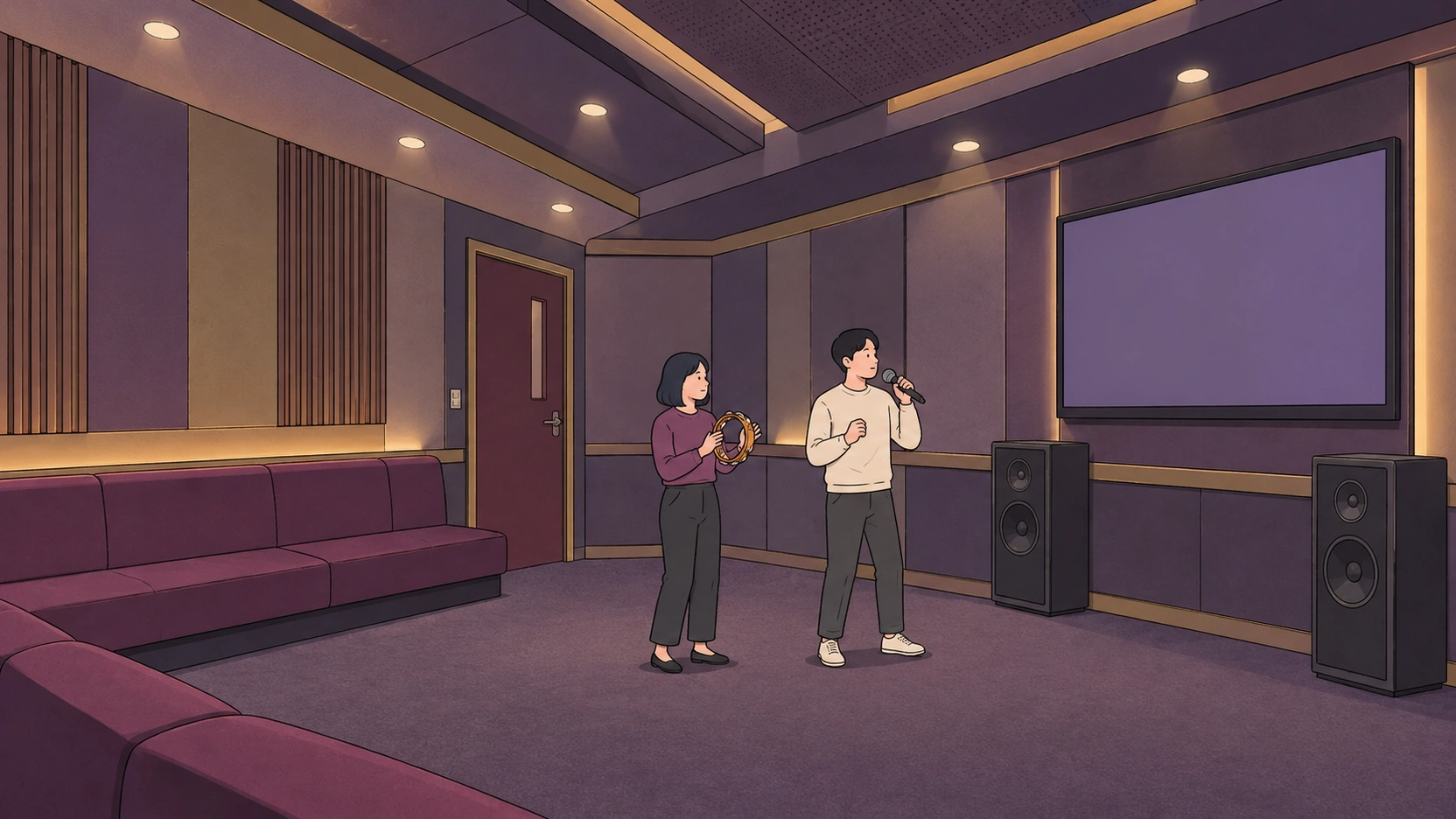
Noraebang (노래방, a room for singing) means exactly what the name suggests. You use a room equipped with microphones, a screen, and a karaoke machine, singing along with the lyrics on the screen. Your group shares the room, so you do not have to start by performing on a stage in front of strangers.
When I have gone with friends or coworkers I get along with, I usually shake a tambourine while someone in our group sings. Taking the microphone for my own turn is only one part of the evening. While another person is singing, I have a tambourine in my hand and join in with the song.
At the gatherings I enjoyed, we did not sit still and judge the singer until the song ended. I sometimes sang alongside the person holding the microphone, and when a familiar song came on, I added my voice.
The remote’s queue button fits into that flow, too. If a coworker queued a song I knew, I might sing along when it came on. I did not have to choose the song myself to take part. Someone else’s selection could become a song we sang together.
For your first visit, you do not need to think only about preparing one song of your own. You can listen to the group’s choices and join in with a part you know. First, though, pay attention to whether the person singing wants to sing alone.
You can sing together without being a good singer
If a coworker is not good at singing, I sing with them using a microphone. I join the song instead of simply watching them sing it alone from beginning to end. Sometimes I know the song a coworker has queued, so joining in happens naturally.
The others in the group sing along, too. Deciding who sang best is not the point of the scene I remember. Someone struggles with singing, someone beside them adds a voice, and the group sings together. My memory is as ordinary as that.
That is why I would say you do not need to rule yourself out just because you cannot sing well. In my experience, singing together was an option alongside taking the microphone alone. Asking, “Can I sing this one with you?” makes it easier to get started.
Of course, every gathering will not have the same atmosphere as my friends’ gatherings. How people encourage someone to sing, and how much they enjoy singing together, can vary from group to group. If someone does not want the microphone, leave room for them to participate by shaking a tambourine or listening.
Karaoke after a company dinner was not always fun
Going with friends or coworkers I get along with has been enjoyable for me. The occasions when we went after having a drink belong to that part of my experience, too. I do not want to leave those memories out when I talk about karaoke.
My latest company outing was different. Before the outing, I had already been considering leaving my job because of a coworker. Spending that evening with people from work was not particularly pleasant under those circumstances. Going to karaoke afterward does not give me a reason to rewrite the day as a happy experience.
I cannot apply my story to every company dinner in Korea. Nor does it mean I disliked going to karaoke with coworkers in itself, because I also have memories of enjoying myself with coworkers I got along with.
I would keep that distinction in mind when trying to understand the culture. Singing together in the same room does not erase everything that happened between people before they arrived. The equipment in the room and the relationships among the people using it are separate matters.
Your first Korean karaoke visit, step by step
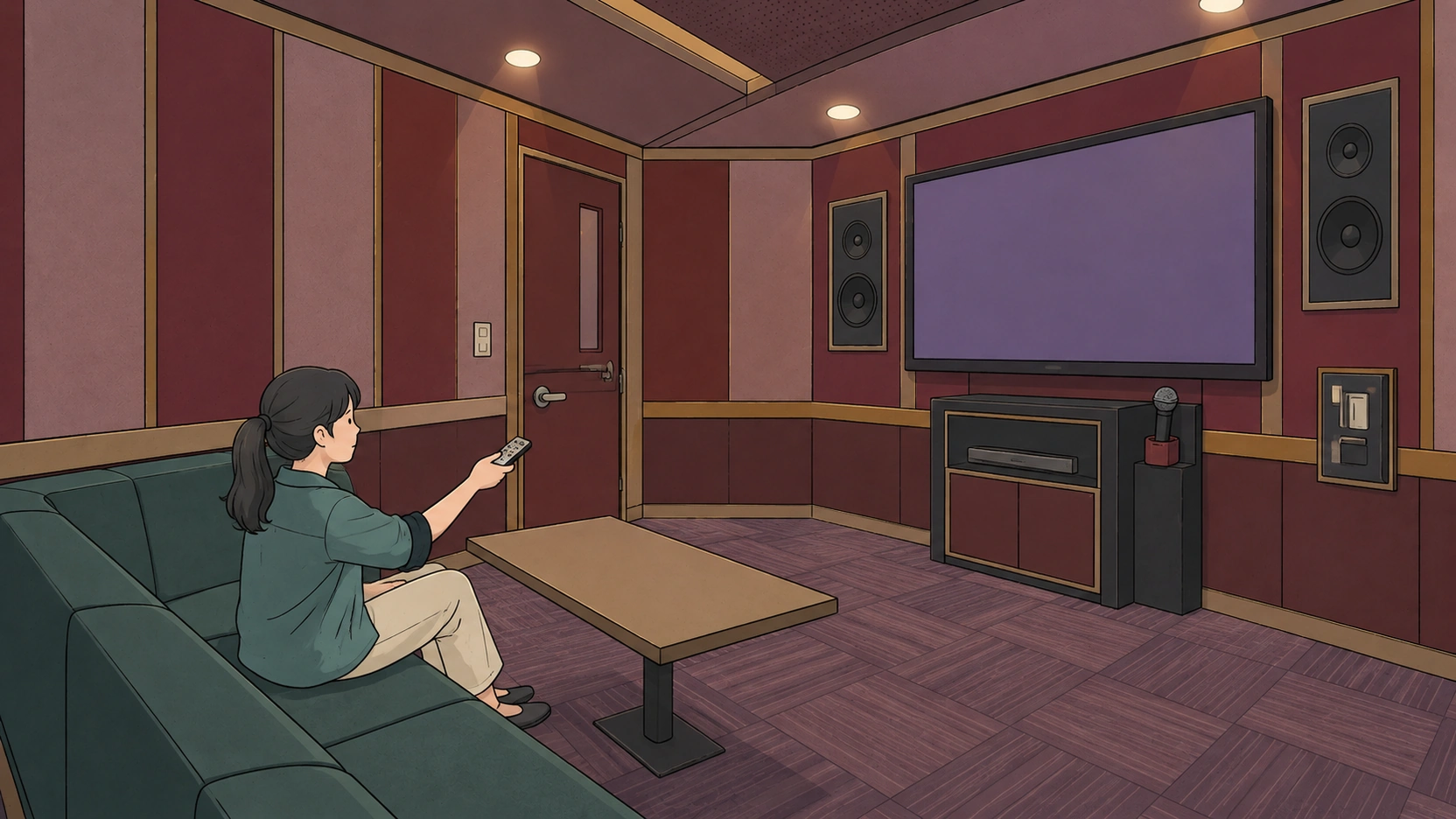
I will put the practical details for a first visit together here. Start by distinguishing a regular room rented by time from a coin karaoke room where you can pay by the song. That helps you understand what you are paying for. Check your chosen venue’s notices for its actual prices and payment methods.
- Check the charging unit and price. At a regular venue, you can ask at the entrance about renting a room by time. For coin karaoke, read the sign or payment screen to see how many songs you get and whether a timed option is available. You can ask, “How much is one hour?” or “How many songs do I get for this amount?” The name alone does not guarantee that a particular coin or card will be accepted.
- Go to your room and find a song. Check the manufacturer of the machine, then look for the title, artist, or song number on the search screen or in the songbook. The song number identifies your selection. If you found a number online beforehand, check that the list belongs to the same manufacturer as the machine in your room. Begin by finding one song you know.
- Enter the song number, then start it or add it to the queue. TJ’s machine manual explains that you select a song using its number, play it with the start button, and add it to the waiting list with the queue button. If someone is already singing, use the queue function. Button positions and search methods vary by machine, so ask a staff member or someone in your group, “Which button do I press to queue this song?” if you are unsure.
- Sing along with the lyrics on the screen. Once the backing track starts, take the microphone and follow the screen. If you want to sing with someone, ask them first. Avoid deciding on your own to press buttons that cancel another person’s song or move a song ahead in the queue.
- Check the time or songs remaining if you want to keep singing. In a timed room, ask staff before the session ends, “Can we add more time? How much does it cost?” Check the additional charge before extending the session. If you are paying by the song, follow the venue’s instructions to buy more songs. Adding a song to the queue and buying more time or songs are separate actions. Queuing several songs does not extend your session.
You may also wonder before your first visit whether English songs are available. In Reddit’s Seoul community, one poster asked about a karaoke venue with English songs in Gangnam because their fiancé could not read Korean. That question describes the poster’s travel situation; it does not mean every traveler has the same difficulty.
There are ways to find English songs. TJ’s karaoke product information lists pop songs, songs from several countries, and support for an English remote control. However, that does not guarantee every venue has the same model or your particular song. Write down the title and artist you want, then search on the machine at the venue. You do not have to know a Korean song to choose your first track.
Going alone to coin karaoke
If you want to sing without a group, coin noraebang (코인노래방, coin karaoke) is an option. Seoul’s official travel guide introduces coin karaoke charged by the song, and the Korea Tourism Organization also describes going alone to a coin karaoke room. You do not need to gather friends before you can go singing.
On your own, you do not have to coordinate your choices and turns with other people’s queued songs. Choose what you want to sing and use the songs or time you have paid for. If you only want a short session, check whether paying by the song suits your plans.
The personal experiences I have described here were with friends, people from my company, and coworkers I get along with. Keep the information about using a room alone separate from my memories of going as part of a group.
What a door gives your group
The room gives the people who arrived together a space of their own. It works differently from an open stage where all the other customers become the audience. Someone can sing alone in front of the screen, or people in the room can add their voices and sing together.
That is also where I shake a tambourine or join a coworker’s song. At the gatherings I enjoyed, one person did not have to remain the singer while everyone else remained the audience throughout.
A door does not mean everyone will feel comfortable, though. Strangers watching me were not the reason I felt unhappy at the latest company outing. A problem with a coworker already in the room was on my mind.
For your first visit, check the price and how to select songs, then choose a familiar song you can sing with your group. If holding the microphone alone feels intimidating, you can begin by saying, “Let’s sing together.”
FAQ
What is a karaoke venue in Korea like?
It is a place where you sing in a room equipped with microphones, a screen, and a karaoke machine. At a typical venue, your group uses its own room, so you are not performing in front of all the other customers. Check how your chosen venue operates, including timed room rental or payment by the song at coin karaoke.
Can I go even if I cannot sing well?
At the gatherings I attended, if a coworker was not good at singing, I sang with them using a microphone, and the group sang along, too. You do not have to assume that you must take an entire song alone from the start. Ask your group first if you want to sing together. You can also participate by listening or using a tambourine.
Can I choose English songs if I cannot read Korean?
Some karaoke machines support English songs. TJ’s product information lists pop songs and support for an English remote control, but you need to check the model and song selection at the venue. Prepare the title and artist you want and try searching. If you have trouble finding it, ask staff or someone in your group how to search for and queue a song.
Should I use coin karaoke if I want to go alone?
Coin karaoke is an option to consider for singing alone. Before entering, check whether you pay by the song or by time, along with the price and payment methods. Queuing songs and buying additional songs or time are separate functions, so check how much of your session remains if you want to keep singing.