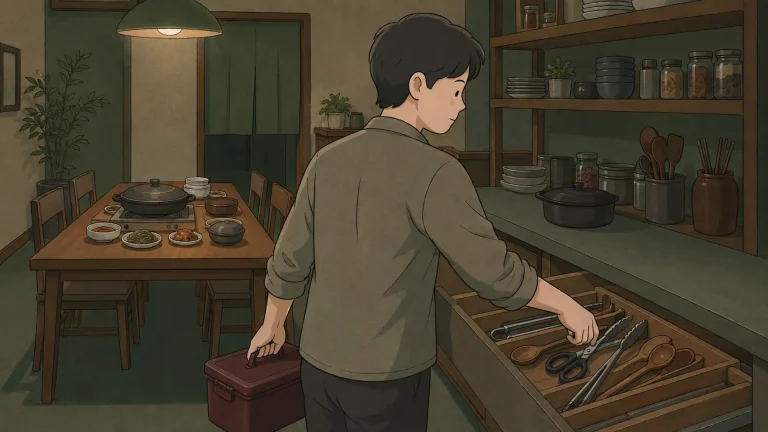
Korean Convenience Store Food from 11 P.M. to Lunch
My experience with Korean convenience store food begins at 11 p.m., when my academy classes ended and I still had three hours of studying ahead of me.
There was a convenience store on the way to the study room. When my friend and I opened the door, the clerk would look up and tell us, “Do not make a mess. Eat cleanly.” We each picked up a triangle gimbap, then stopped at the cup noodle shelf. My friend usually chose yukgaejang, a spicy beef soup flavor. I chose Saewootang, the shrimp-flavored noodles.
I peeled the plastic from the cup, added the soup powder, and filled it from the hot-water dispenser. The lid said to wait three minutes. Three minutes is short on a clock, but it stretches when you are hungry and can smell noodles getting ready.
The study room closed at 2 a.m., and we knew we had to work until then. During those three minutes, however, I did not think about returning to my books. Triangle gimbap and cup noodles did not make an impressive dinner. At 11 p.m., they were warm food in one of the few places still open to us.
Online videos show foreign visitors treating Korean convenience stores as an attraction. British university students are invited to choose anything they want, while other videos combine several products into a new dish. I knew the same store as a place for hungry students and office workers short on time. On someone else’s screen, it becomes a place to browse and experiment. Seeing that difference made me look again at something I had stopped noticing.
When Triangle Gimbap and Cup Noodles Were Dinner
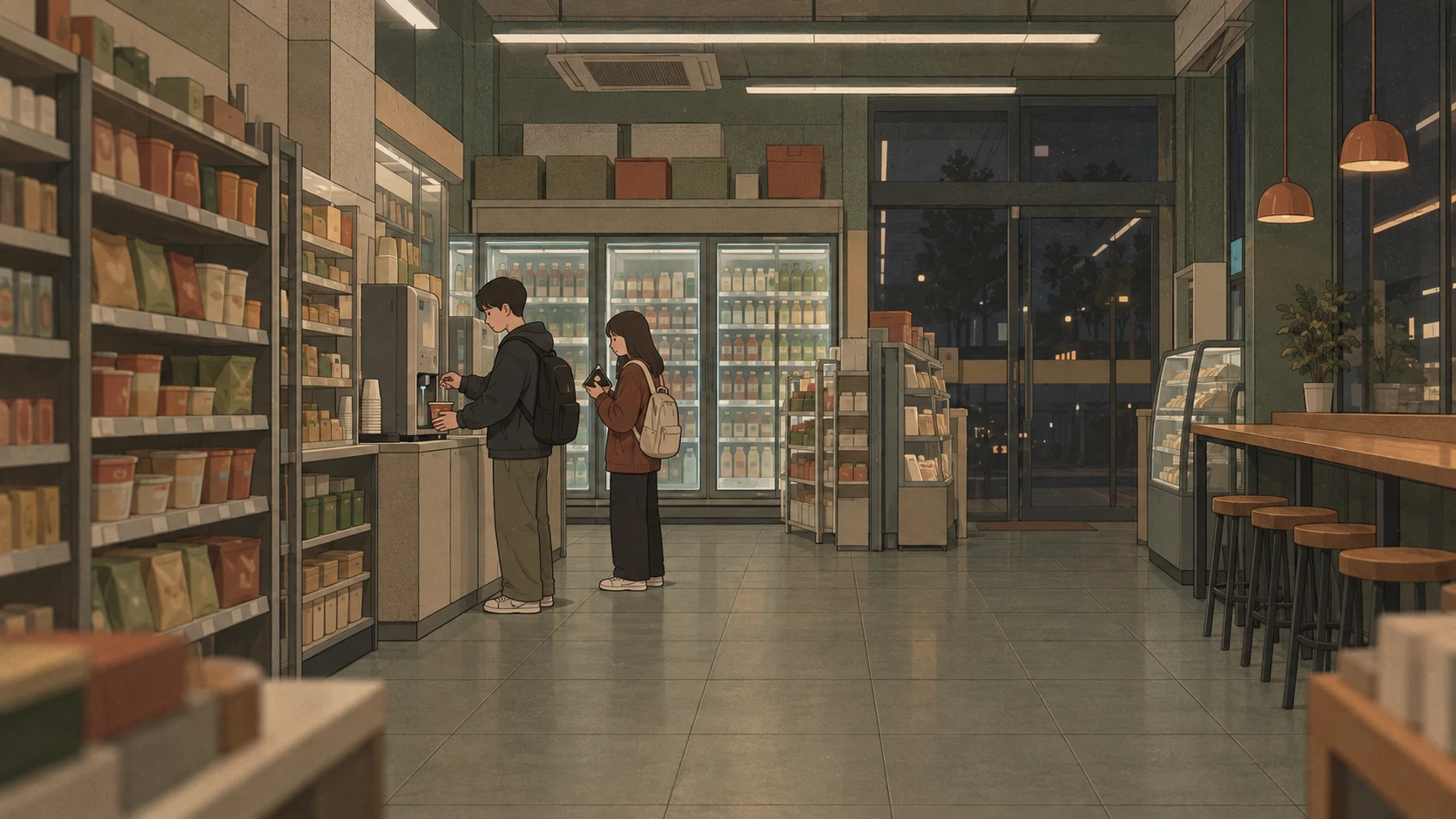
The convenience store mattered to us because it stayed open. By late evening, neighborhood restaurants and small shops had closed. The convenience store’s fluorescent lights were still bright.
Inside, I heard the low hum of the refrigerators and the rush of water from the dispenser. We ate at one of the few seats or along a narrow counter, careful not to spill soup or leave grains of rice behind. The clerk’s warning about eating neatly was practical. Somebody had to clean whatever we left there.
After enough late-night meals, the routine became automatic. I knew how to pull the numbered strips on a triangle-gimbap wrapper so that the dry sheet of seaweed folded around the rice. I knew where the fill line sat inside the noodle cup and how long to wait before lifting the lid.
The routine became so familiar to me that I have never personally seen a foreign visitor struggle with convenience-store food. Still, a first visit can make simple equipment less obvious. Some lunchboxes need part of the film removed before heating, and cooking times differ. Cup noodles also have different instructions, even when the containers look similar.
Read the package before pressing buttons. If the Korean instructions are unclear, show the product to the clerk and point to the microwave or hot-water dispenser. Waiting three minutes for noodles can feel long, but it is still shorter than replacing a lunchbox heated the wrong way.
My Office Lunch Changed to Jeyuk Deopbap
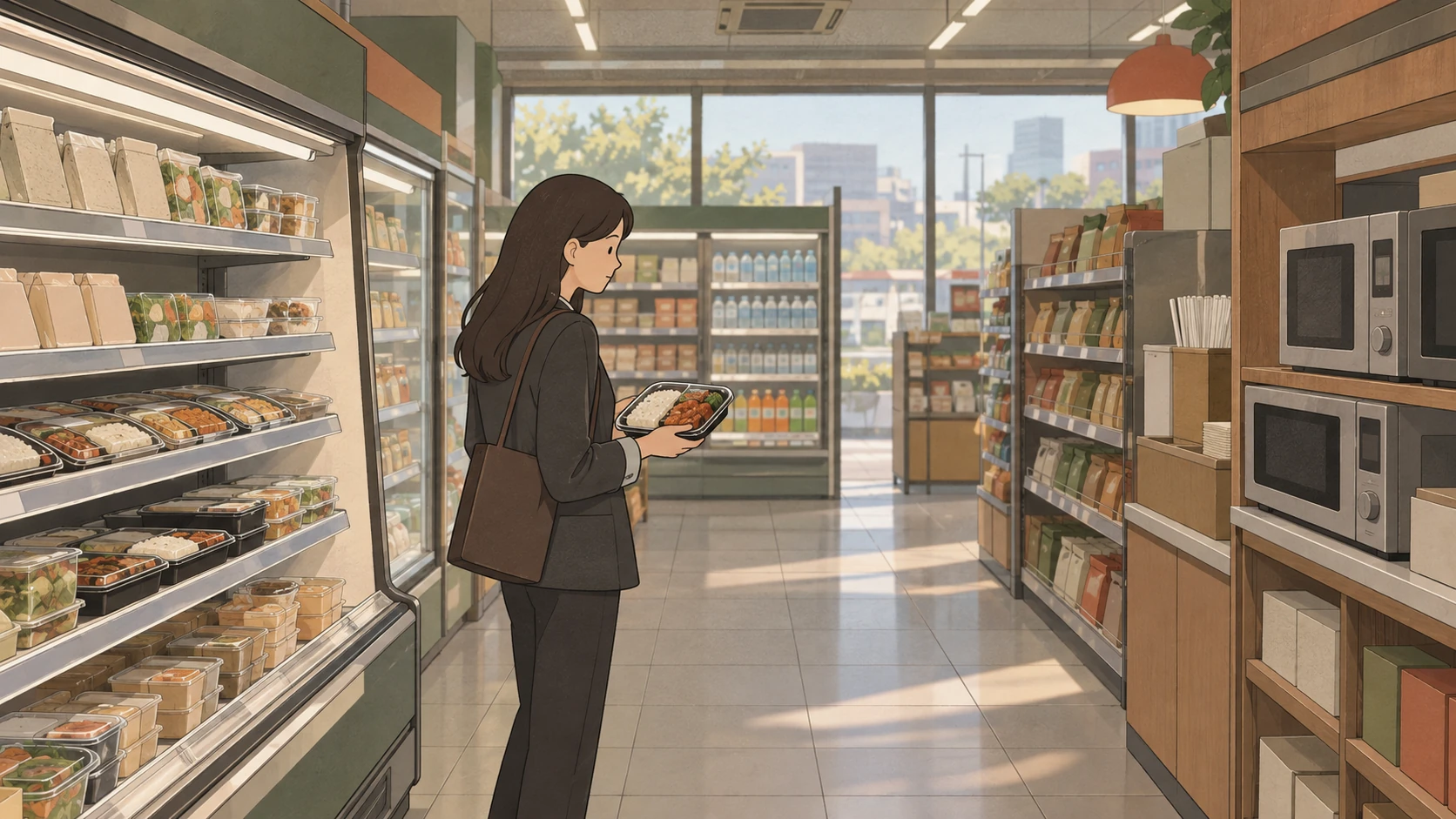
The convenience store continued to feed me after I became an office worker. The time and menu changed. Cup noodles at 11 p.m. became a jeyuk deopbap (spicy pork over rice) lunchbox at noon.
Packing lunch every morning felt tedious. I had to prepare rice and side dishes before leaving home, carry the container to work, and bring the empty box back again. I might have eaten out if there had been a restaurant near the office that I genuinely liked, but there was no obvious choice around me.
Delivery offered a larger menu. It also brought a timing problem. Orders piled up during lunch, and the wait could become long enough that the food would not arrive within my break. A dish may sound excellent, but it fails as lunch when it appears after lunch has ended.
On those days, I walked to the convenience store and stood in front of the refrigerated meal case. I usually chose jeyuk deopbap. Rice and spicy stir-fried pork came in one container, so I did not need to assemble side dishes or make another decision. I paid, followed the heating instructions, and ate it back at the office.
I would not describe that lunchbox as the best meal available. Some days I wanted food cooked to order in a restaurant. The lunchbox served a specific gap: I had packed nothing, nearby restaurants did not appeal to me, and delivery would take too long. It was a practical answer to an ordinary workday.
That memory also explains why convenience-store combination videos feel unusual to me. The people on screen choose several products, layer them, stir them together, and produce an entirely new menu. I usually picked one pork-and-rice box and hurried back to work. I have never made those elaborate combinations myself, although watching them has made me curious enough to try one someday. A store I used to get through lunch has become a small food laboratory for other people.
Korean Convenience Store Food: Eating Inside and Drinking Outside
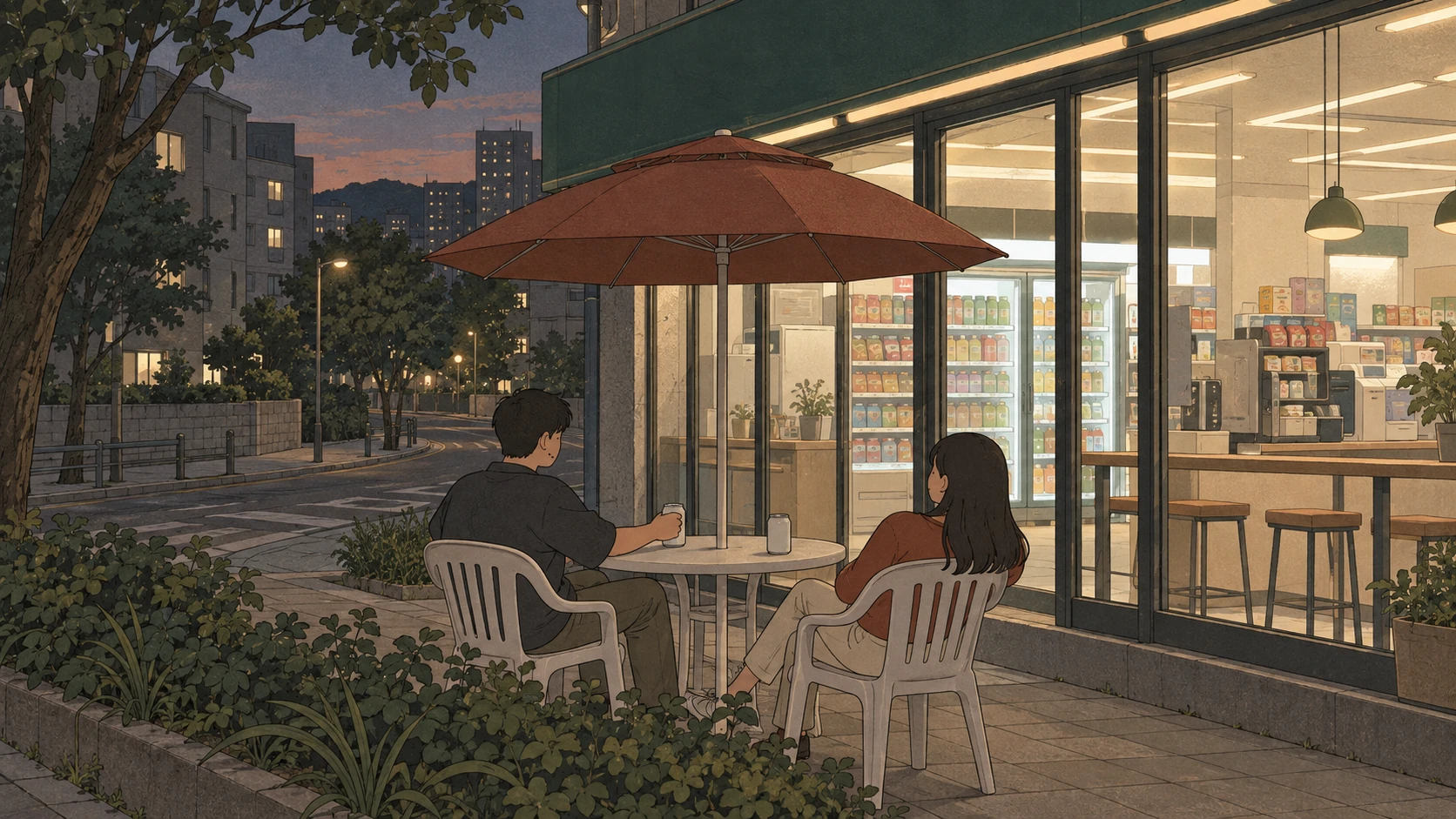
Some Korean convenience stores provide a place to eat. It may be a narrow counter fixed along one wall with several stools underneath. I never found those seats comfortable for a long stay. In a small shop, the counter sits close to the shelves and register, and balancing a full meal on the limited surface can feel awkward.
When the weather was pleasant, the outdoor tables were better. Plastic chairs and a table under a parasol are a familiar sight in front of Korean convenience stores. K-dramas also show people sitting there late at night with cans of beer.
There is a practical reason the drinking scene takes place outdoors. Convenience stores sell alcohol, but customers cannot drink it inside the shop. In the routine I know, you buy the alcohol indoors and move to an outdoor table if one is available. An empty indoor seat does not change that distinction.
I do not visit a convenience store specifically to drink beer. If drinking is the purpose, I find a proper bar more comfortable. Even so, the sight of people sitting at tables outside convenience stores has stayed with me. On a night when someone does not want to remain at home but also does not want the crowd of a bar, that small table offers a pause between the two. You are outside your room without committing to a full night out.
Do not assume every store has seating or that indoor and outdoor tables follow identical rules. Check whether the shop provides an eating area, clean the space after using it, and follow any posted notice. Keep alcohol outside even when an indoor chair happens to be free.
Roasted Sweet Potatoes Moved in from the Street
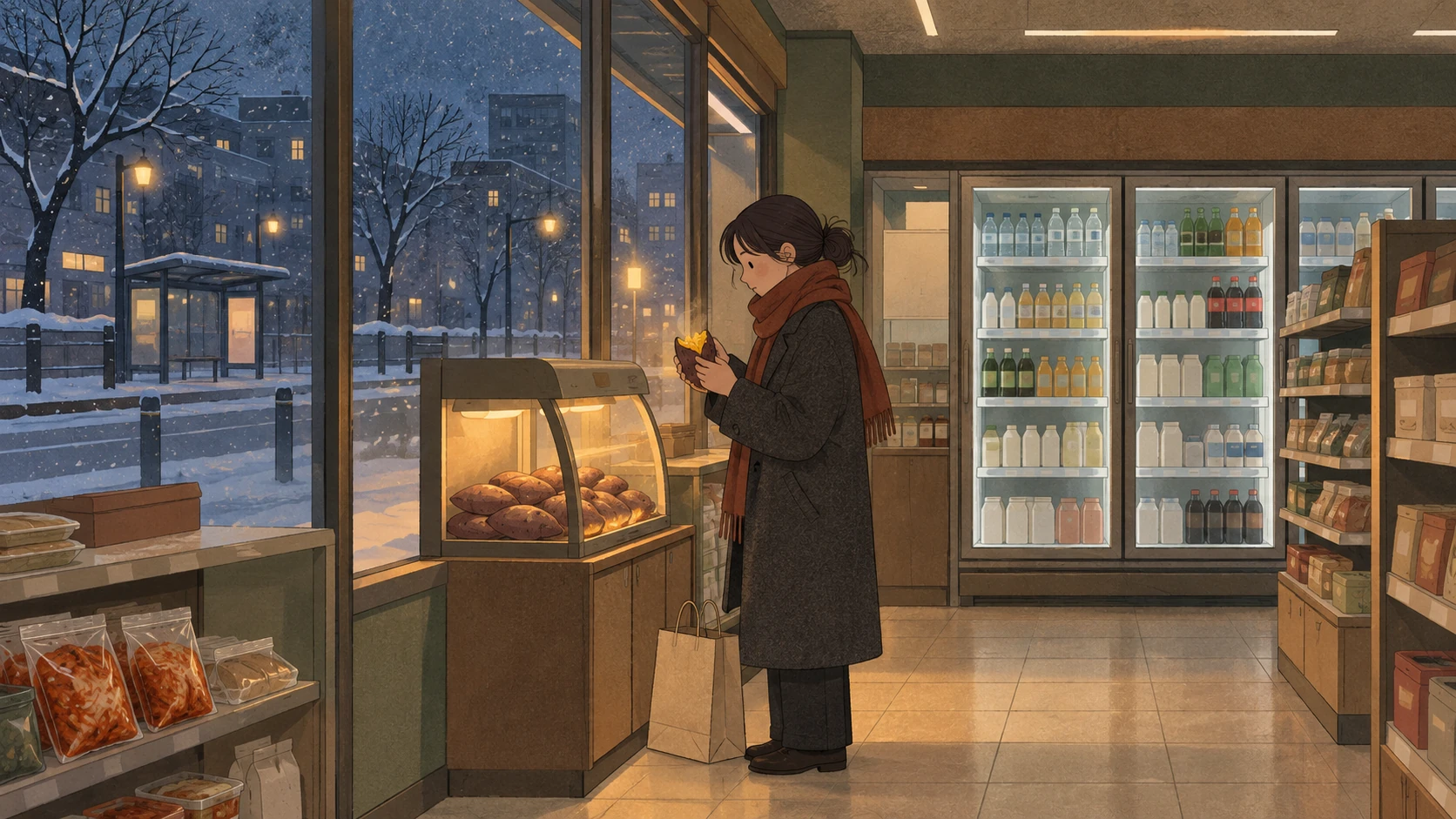
Winter streets once had carts selling roasted sweet potatoes. A fire burned inside the cart, and the smell of sweet potato caramelizing drifted through the cold air. The paper bag warmed my hands. When I peeled one open, the flesh was yellow, soft, and sweet.
Those carts became less common in the places I knew. Then convenience stores began selling roasted sweet potatoes indoors. The first time I noticed one, the placement felt strange. I associated the food with a cart, a fire, and winter air, yet there it was under fluorescent lights. I did not dislike the change. I was noticing that something from the street had crossed into the store.
Korean convenience stores absorb foods this way. Seasonal products arrive and later disappear. Collaboration products occupy a shelf for a short period, sometimes attracting people who came specifically to find them. The shell of the shop stays familiar while the contents keep changing. Even a person who enters only to buy water may glance across the shelves to see what has appeared.
If I took a foreign friend to a convenience store, I would choose a roasted sweet potato before a fashionable noodle combination. I would add stir-fried kimchi and plain milk. I would suggest alternating the warm sweetness of the potato with the spicy, sour kimchi, then taking a drink of milk.
This is not an elaborate convenience-store hack. I have never been a person who builds complicated dishes from several packaged foods. I would still recommend trying those three items together because their flavors are different from one another. A combination chosen by a Korean friend may remain in someone’s memory longer than whatever product happened to rank first online that week.
Why I Visit a Convenience Store Now
I rarely enter convenience stores for snacks these days. I usually go when I need bottled water. Even when I discover that I have run out late at night, a convenience-store sign is likely to be glowing nearby. I take a bottle from the refrigerator, pay, and leave.
The store has not played one fixed role across my life. As a student, it fed me before I studied until 2 a.m. As an office worker, it provided a jeyuk deopbap lunch when delivery could not fit into my break. Now it is often the place where I can get one bottle of water without planning ahead.
That is why I hesitate to describe a Korean convenience store only as a miniature food attraction. Browsing unfamiliar snacks can be enjoyable, and the combinations in online videos may give you ideas. Its everyday value appears when other businesses have closed or when a person has no time to spare. My 11 p.m. triangle gimbap, rushed office lunch, and late-night bottle of water all belong to that story.
For your first visit, do not feel obliged to buy everything currently popular. Choose one thing that fits what you need. If you are hungry, try triangle gimbap with cup noodles. If you want a warm winter snack, look for a roasted sweet potato. When the preparation instructions are unclear, show the package to the clerk. You do not have to conquer the entire shelf on your first trip.
Frequently Asked Questions
Can You Eat a Full Meal at a Korean Convenience Store?
Yes. As a student, I ate triangle gimbap and cup noodles at 11 p.m. Later, I ate jeyuk deopbap lunchboxes during office breaks. You can choose a simple pairing such as gimbap and noodles or a lunchbox containing rice and side dishes. During a trip, I would use convenience-store meals when time is short or when I need food late at night, rather than replacing every restaurant meal with them.
How Do You Prepare Triangle Gimbap and Cup Noodles?
Pull the numbered sections of a triangle-gimbap wrapper in the printed order so that the seaweed folds around the rice. For cup noodles, open the lid, add the soup powder, and pour hot water to the line inside the cup. Instructions and waiting times vary by product, so check the package first. If you are unsure, show the item to the clerk and ask for help.
Can You Eat and Drink Inside a Korean Convenience Store?
Some stores have a narrow counter and stools, but seating is not available at every location. Check that the shop has a designated eating area and clean your place afterward. You can buy alcohol at a convenience store, but you cannot drink it inside. Follow posted instructions when using an outdoor table as well.
What Convenience-Store Food Would You Recommend for a First Visit?
For a simple meal, try triangle gimbap and cup noodles. I ate Saewootang shrimp-flavored noodles with triangle gimbap as a student. If I were personally choosing for a foreign friend, I would suggest a roasted sweet potato, stir-fried kimchi, and plain milk. Take bites of the warm, sweet potato with the kimchi and drink the milk alongside them.