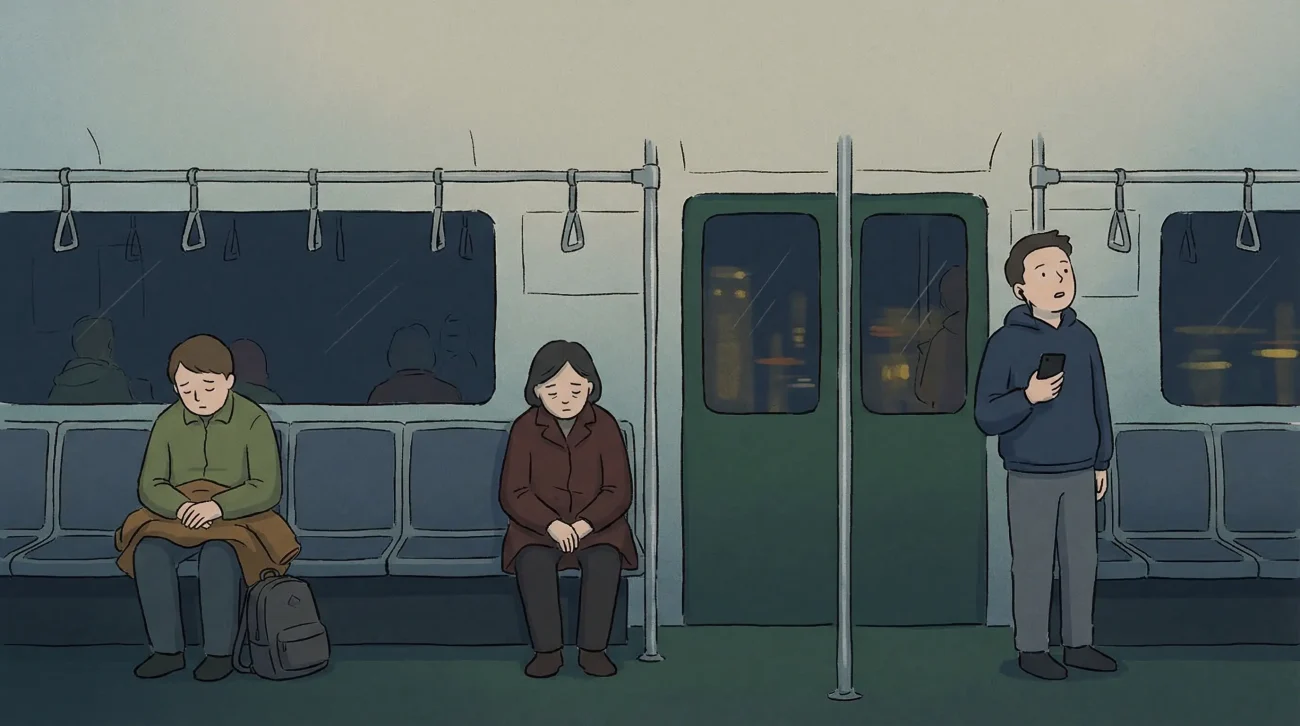
It stands out almost immediately when someone plays a video out loud on the subway without earphones. In an elevator, when you end up standing alone with a stranger, your eyes drift to the floor indicator without thinking. On KakaoTalk, when a message is clearly read but no reply comes, that silence begins to feel like something more than nothing.
These spaces are completely different, but the feeling that moves through them is strangely similar. In Korea, silence doesn’t always end as the absence of sound. It often feels like a response. Sometimes, even like a stance.
In a previous piece, “When Do Koreans Stay Silent Instead of Speaking?”, I explored how silence can function almost like a language. This time, the focus shifts to something more ordinary. Not dramatic moments of conflict, but the quiet patterns inside a subway ride, a short elevator trip, and a daily KakaoTalk exchange. At first glance, these places don’t seem connected. But living here, they start to feel like variations of the same question: how much should be said right now, and when does saying less feel more natural?
Once you begin to notice that pattern, silence in Korea stops feeling vague and starts to feel specific.
The Subway Feels Quiet Not Because of Rules, but Because Something Slowly Changed
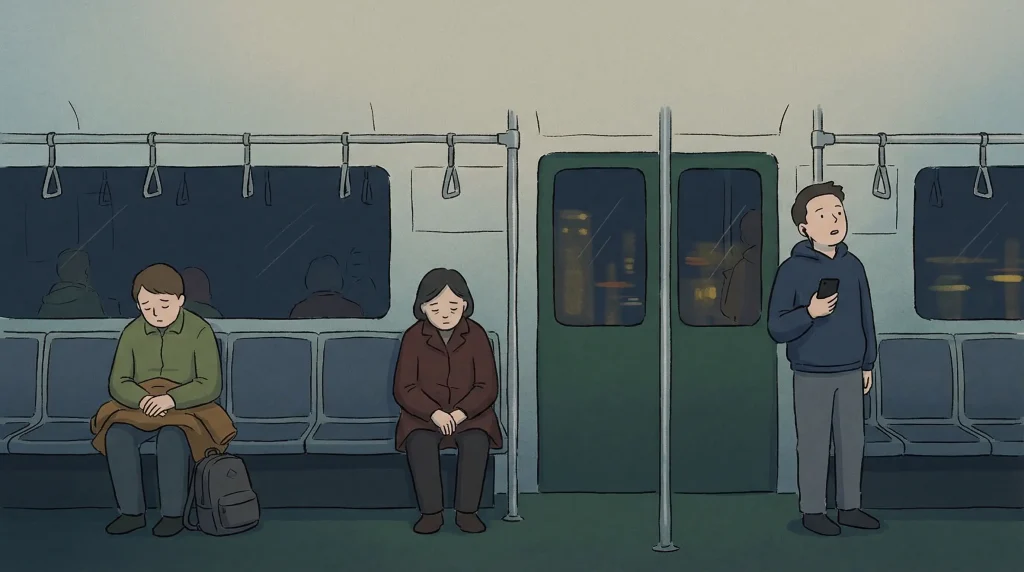
When people think of Korean subways today, “quiet” is often the first word that comes up. But I don’t remember it always feeling this way.
Looking back, it feels like there was a time when some older passengers, at least, would more naturally start small conversations with each other. Or perhaps, compared to now, people were simply a bit more willing to speak. I can’t say this with certainty, but that’s how it stays in my memory. What feels clear is that the current atmosphere didn’t appear overnight because of strict rules. It settled gradually, almost without anyone noticing.
To me, this shift doesn’t feel like people suddenly became more polite. It feels more like the way we spend time while moving has changed. As smartphones became part of daily life and earphones became almost default, the reason to speak to strangers naturally faded. Time that used to be spent looking out the window or simply sitting quietly became time spent inside personal screens. The subway stopped being a shared moment and became a collection of individual ones.
And the silence followed that change.
That said, I don’t experience this quietness as something purely cold.
I’ve used Korean subways my whole life, almost every day, and that probably shapes how I read this atmosphere. From the outside, it might look like people are just indifferent to each other. But from where I stand, it often feels closer to a shared understanding not to disturb someone who might be tired. On a morning or evening commute, you see people dozing off, leaning against the wall, or closing their eyes for a few minutes of rest. In those moments, the quiet doesn’t feel like a rule. It feels like a small, unspoken agreement: let’s not wake each other up unnecessarily.
So describing subway silence only as public etiquette feels incomplete. It often works more like a way for tired people to interfere with each other a little less.
In that kind of atmosphere, when someone suddenly talks loudly or plays audio without headphones, it stands out immediately. But even then, people don’t always confront it directly. What comes first is usually a glance, a shift in posture, a small sigh. To someone unfamiliar, those reactions can feel ambiguous. But within this context, they already carry meaning. Direct confrontation tends to come only after that silent layer has built up long enough.
The silence here isn’t just about not speaking. It includes the way discomfort is expressed without words.
Elevator Silence Isn’t Coldness, It’s a Way of Sharing a Small Space
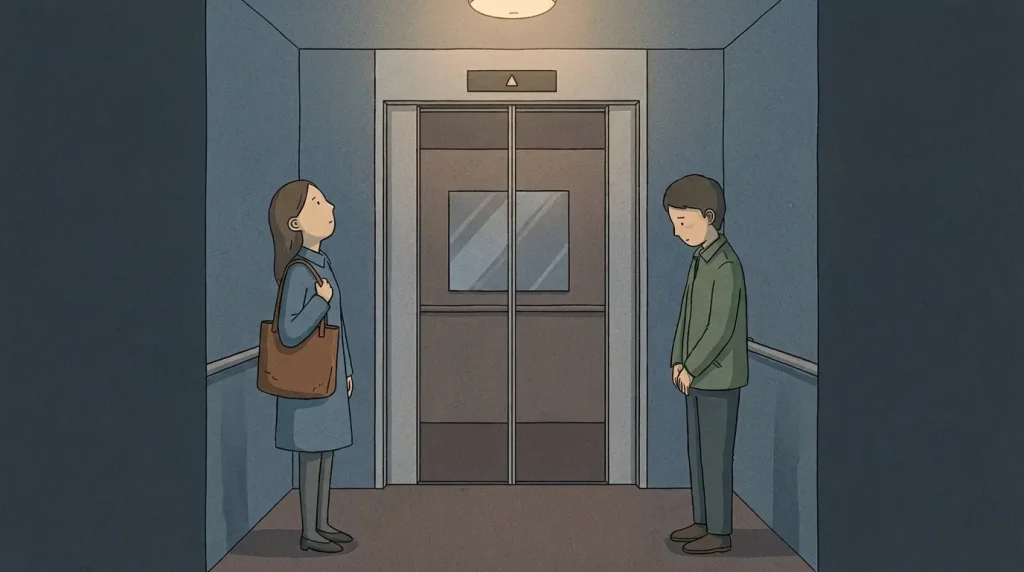
If the subway is about not disturbing tired bodies, the elevator feels more immediate. The space is smaller, the distance is closer, and the awareness of each other is sharper.
When I stand alone with a stranger in an elevator, I notice myself doing the same things almost automatically. Looking forward. Watching the floor numbers. Waiting for the door to open. Not making eye contact longer than necessary, not creating a conversation that doesn’t need to exist.
To me, this doesn’t feel like avoiding people. It feels more like trying not to make that short shared moment unnecessarily uncomfortable.
What I find interesting is how this changes depending on who’s there. If it’s just me and someone I know, we might exchange a few words. But if even one stranger is present, I naturally reduce how much I say. Sometimes just a quick greeting, sometimes nothing until we step out.
From my perspective, this doesn’t come from a lack of friendliness. It comes from a sense of not wanting to fill a small shared space with my voice for too long.
But I’m also aware that this is how it feels to me, shaped by having grown up and lived within this environment.
I’ve also seen situations where people who have lived here for a long time, but come from different cultural backgrounds, meet each other in an elevator and talk freely, even loudly. Those moments don’t necessarily feel wrong, but they do feel slightly surprising to me. That reaction probably says more about my own habits than about what is objectively appropriate.
Someone who has spent years going through school, university, and work life in Korea might read this quietness as natural or considerate. Someone else might experience the same situation as unnecessarily restrained.
The silence in an elevator isn’t a universal rule. It’s a way of adjusting presence within a small, shared space. And how that feels depends very much on where you’re standing from.
A Read Message Without a Reply Isn’t Empty, It’s Filled by the Relationship
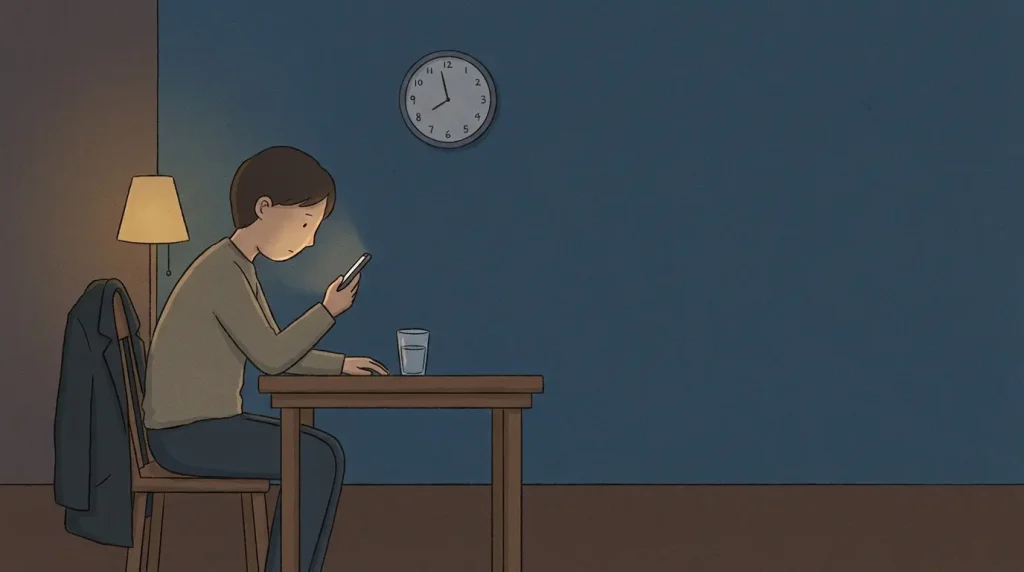
On KakaoTalk, silence becomes more complicated.
In physical spaces like subways or elevators, you can at least sense the mood through expressions or posture. But on a screen, what remains is often just a read receipt and a timestamp. Because of that, it’s easy to interpret a “read but no reply” situation in a very simple way at first.
If someone reads your message and doesn’t respond, it can feel like being ignored.
But from my perspective, this kind of silence in Korea tends to be highly dependent on context. The same situation can feel completely different depending on timing and relationship. Late at night, it might just mean the person fell asleep. Between close friends, it might pass without much thought. I also feel that younger people tend to be more sensitive to these gaps, while adults are sometimes more willing to assume there’s a reason behind the delay.
That said, this is still my own way of reading it.
If I’m having a conversation with someone I’m close to, and the exchange becomes emotional or tense, and then the other person reads my message and doesn’t reply, it’s hard for me not to take that differently. If a full day passes after they’ve clearly seen what I said, I would probably feel uneasy too.
You could argue that this isn’t specific to Korea, that anyone might feel the same. And that’s true to some extent. But I do get the sense that, in Korea, people often read more meaning into that silence. In some other contexts, a delayed reply might not carry as much weight, and the conversation can continue normally the next day. Here, it can linger a bit more.
That difference isn’t absolute, but it shows up often enough to notice.
Korean dramas capture this well. There’s a clear difference between a late reply to a casual message and a silence that follows an emotional one. That’s why something as small as a read receipt can suddenly feel heavy.
Sometimes, when I’m busy, I leave a short line like, “I’ll get back to you later.” That single sentence changes how the silence is read. Without it, the empty space invites interpretation. With it, the silence becomes a postponed response.
In that sense, KakaoTalk silence works on a similar principle as the other spaces. On the subway, people react through glances. In elevators, through distance and restraint. On KakaoTalk, through timing, gaps, and small signals.
The silence itself looks simple. But its meaning is built elsewhere.
If I go back to the beginning, to that moment when someone plays a video out loud on the subway, or when I find myself staring at the elevator numbers, or when a single unread reply sits longer than expected, those small moments start to feel connected.
In Korea, silence rarely stays empty for long. It gathers meaning quietly, and often, that meaning depends less on the sound itself and more on the space, the timing, and the relationship around it.
Why is the Korean subway so quiet?
It is not quiet because someone is strictly policing it. The atmosphere changed over time as smartphones, earphones, and more individualized commuting became part of daily life. Just as important, many people on Korean subways are tired, especially during morning and evening rush hours, so the silence often feels like a shared habit of not disturbing strangers any more than necessary.
Is it rude to talk in a Korean elevator?
Not automatically. The issue is less about formal rudeness and more about how people manage a very small shared space. Most Koreans tend to lower their voices or avoid starting conversation with strangers in an elevator, because filling that short ride with unnecessary noise can feel more awkward than simply staying quiet.
What does it mean when a Korean person reads your KakaoTalk message but does not reply?
It depends heavily on the relationship and the timing. Between close friends, a delayed reply may mean very little, especially late at night or during a busy day. But after an emotional conversation, silence can feel much heavier. In that case, a read message without a reply may be taken as a real signal, which is why even a short note like “I’ll reply later” can completely change how that silence is understood.
