When Do Koreans Stay Silent Instead of Speaking? 6 Quiet Korean Clues
The discomfort comes from the sentence that almost arrived and then disappeared. Nothing dramatic happens, but the room no longer feels the same.
There is a moment many people know before they have a word for it. Someone starts to say something, stops halfway, and lets the sentence die in the air. Nothing is solved. Nothing is exactly denied either. The room just shifts a little, and everyone seems to feel it except the person who was waiting for a clear answer. That small pause is often harder to deal with than a direct argument.
Then Korean dramas make that moment impossible to ignore. Someone is obviously hurt, and yet nobody says the thing that seems most necessary. One person lowers their head and lets the moment pass. Another simply leaves the room. For a first-time viewer, this can feel less like restraint and more like a missing scene. If speaking looks like the obvious solution, why does silence arrive first?
There Really Are Moments When Speaking Makes Things Worse
To understand that, it helps to start with one uncomfortable fact. Speaking does not always fix a tense situation. Sometimes it makes the whole thing expand. I have been in arguments where everything I said landed slightly wrong — not because it was untrue, but because the timing made even a fair explanation sound like a challenge. One sentence comes out sharper than intended. A small complaint picks up extra meaning. Before long, the conversation is no longer a conversation.
That is why some people go quiet in the middle of conflict. They are trying to avoid making the trouble larger than it already is. Others stay quiet because they do not trust themselves to explain what they feel cleanly — they already know the next sentence will sound clumsy, defensive, or harsher than they mean. Sometimes the thought comes first: what is the point of saying this now? Once that thought settles in, silence can feel easier than speech.
Not everyone responds this way. Some people feel better when everything is named out loud, and they push through the whole argument until it is finished. That is why silence is less a fixed personality trait than a choice people make under certain conditions.
Silence Is More Often Avoidance Than Consideration
From the outside, silence can look like consideration — as if someone is holding back to protect the other person or keep the conflict from getting bigger. But in my experience, it is more often closer to avoidance. Once someone is already upset, staying quiet is not always a graceful act of generosity. More often, it means they do not want to make the situation larger, or they do not want the emotional labor of talking it through.
There is, however, another kind of silence that feels heavier. Sometimes a person is simply too angry to deal with the other person at all. This kind is not calm. It comes from reaching a point where even opening the conversation feels unbearable — where speaking would almost certainly produce something crueler than intended. So instead of speaking, they create distance. From the outside it still looks quiet, but inside it is much closer to emotional boiling than peace.
That is also why silence can make the people around it more nervous than open argument. The quiet person may look controlled, but everyone else becomes more alert. What are they thinking? Is this over, or is it about to get worse? In moments like that, silence stops being the absence of speech and starts acting like pressure in the room.
Does “It’s Okay” Really Mean It’s Okay?
This is one of the questions that confuses people most, and it is one I have had to explain more than once to people who are close to Koreans. If someone says “it’s okay,” does that mean it is actually okay? Often, not quite. In many situations, “it’s okay” works less as a transparent emotional statement and more as a way of closing the scene. We say it when we are embarrassed, when we do not know how to explain ourselves, or when we simply do not want to keep going.
The phrase organizes the situation rather than reveals the feeling. The conversation ends there, but the feeling does not disappear. It has only been left where it is.
There is also something very specific to this that grew up inside the culture long before it became a question from outside. Koreans were already joking about that gap ourselves. One of the most recognizable references is the old Chungcheong-style gwaenchanh-ayu (괜찮아유) comedy tone — the phrase sounds calm, soft, and reassuring on the surface while carrying a very different emotional temperature underneath. The joke only works because everybody already understands the mismatch. The words say, “It’s fine.” The mood says, “It is not fine, but I am not going to unwrap all of that right now.” Growing up hearing that joke, and laughing at it, meant I had already learned the gap long before I could explain it.
If you try to translate this into English, it is probably closest to something like “let’s just leave it there.” Neither is exact. But the emotional logic is similar. The issue is not necessarily resolved. It has simply been covered over for the moment.
Why Do People Get Quieter at Work?
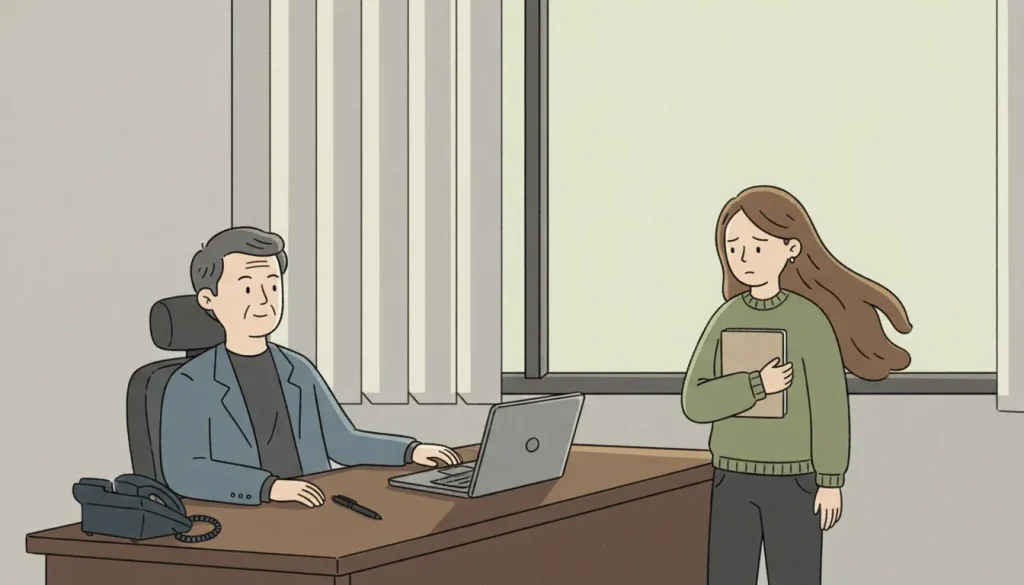
This kind of silence does not always look fearful. It often looks like someone measuring how much friction the room can tolerate.
Silence works differently depending on the relationship. Among friends, if people stop expressing how they feel, the friendship often cools down quickly. Silence creates distance almost immediately. At work, another standard often takes over. I have noticed that the person who does not react right away tends to be seen as steadier, more manageable, easier to be around — and that reputation matters in ways that friendship does not always require.
That is why people sometimes hold back even when they want to push back. In workplaces with clear hierarchy, this becomes even more visible. Responding too directly to a superior is not always judged as morally wrong. More often, it is judged as too sharp, too visible, too disruptive to the group rhythm. So the silence in those moments is often not about fear. It is about reading the space and deciding what kind of response will create the least friction there.
Why Does a Situation Sometimes Pass Without Words?
Sometimes a conflict seems to pass even though nobody really talked about it. From the outside, that can feel stranger than a direct fight. How did that get settled if nobody said anything?
In many cases, it was not settled. It was simply covered over. Both sides may think they are sparing the other person by not bringing it up again, while also leaving their own feelings untouched. I have done this, and I have been on the receiving end of it too. Outwardly the moment looks calm. Inwardly it remains unfinished. Later, it often returns in another form — a sharper response to something small, a silence that lasts longer than expected, a warmth that used to be there and quietly isn’t anymore.
That is the trade-off. Silence may stop a conflict from exploding immediately, but it can also let tension pile up quietly in the background.
When Does Silence Feel Like Consideration, and When Does It Feel Like Disregard?
The same silence can feel completely different depending on the situation. When I know I made a mistake and the other person lets it pass without pressing me, I experience that as consideration. They are giving me room instead of pinning me down. But when I am the one waiting for an answer and the other person says nothing, that same silence can feel like disregard.
That is why context matters more than silence itself.
Silence does not come with a built-in meaning. The meaning is made by the relationship, the timing, the emotional state of both people, and what the other person is still waiting to hear. That is also why it is so hard to turn this into a neat rule. The same behavior can land as kindness in one scene and contempt in another.
Why Silence Feels Bigger in Korean Dramas
Korean dramas stretch silence because silence looks powerful on screen. The longer a character delays the important sentence, the more pressure the scene can carry. That is why dramas are full of moments where the truth is held until the last minute, or never spoken at all.
Real life, in my experience, is usually less patient. If someone keeps refusing to answer during an actual conflict, the other person often reacts much sooner and much more bluntly. They ask why nothing is being said. They take the silence as disrespect. The silence itself becomes the next fight.
That difference matters. Dramas use silence to deepen emotion. In real life, that same silence often turns into a fresh source of friction much faster than any drama would allow.
The Scene Does Not End When Nobody Speaks
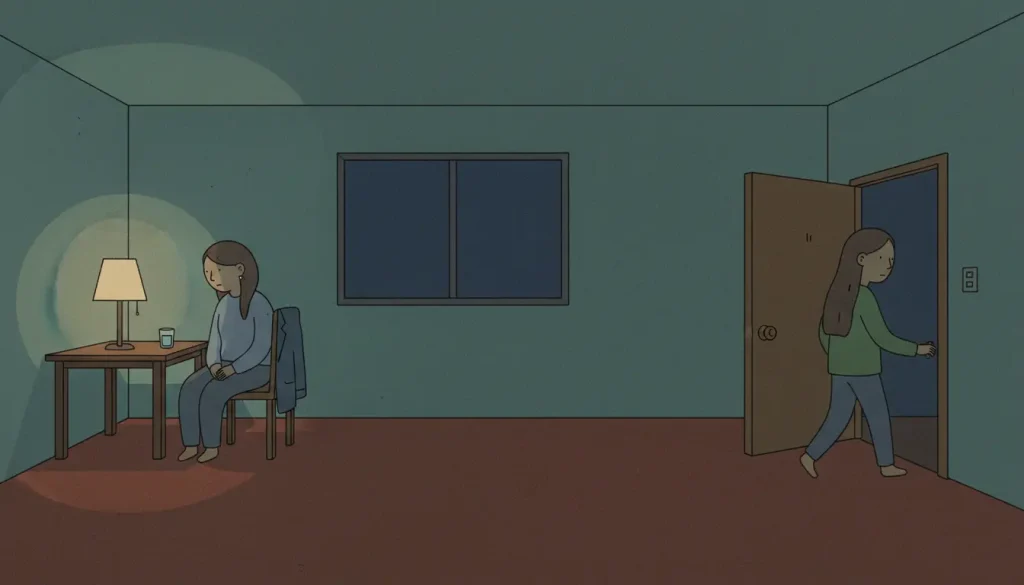
The scene looks finished only because one person has already left. The feeling stays behind, still hanging in the room.
That is probably why these scenes stay in people’s heads. Not because nobody talks, but because everybody feels that something has already happened anyway. A sentence was stopped. An answer was covered over. Someone left the room before the room was ready.
And once you start noticing that detail, those Korean drama scenes look different. The silence is no longer empty. It is a choice, a delay, a shield, a refusal, a pressure, or sometimes just a way of pushing the emotion one room farther down the hall.
Why do Koreans go silent instead of speaking during conflict?
Silence during conflict is often less about patience than about control. When I am already upset, going quiet is sometimes the only way I know to keep the situation from growing larger than it already is. There is also the calculation that whatever comes out next might be sharper than I actually intend — and once something that sharp is said, it cannot be taken back. Sometimes the silence is not calm at all. It comes from being too angry to keep talking without making things worse.
When someone says “it’s okay,” does it actually mean they are okay?
Not always. When I say “it’s okay” in the middle of something tense, I am often not describing how I feel. I am closing the moment. The conversation stops, but the emotion does not. It sits where it is, covered over rather than resolved. The closest translation I can offer in English is something like “let’s leave it here for now” — not genuine relief, just a way of putting a lid on it until the moment passes.
Why does silence feel more intense in Korean dramas than in real life?
Because dramas stretch silence on purpose. On screen, a long pause can hold tension beautifully and make a scene feel heavier. In my experience, real conflict does not stay that composed for very long. When I go quiet during an actual argument, the other person usually pushes back faster than any drama would show — asking why I am not saying anything, or reading the silence as disrespect and making that the next issue. What feels meaningful on screen tends to turn into fresh friction in ordinary life much sooner.