What Is Nunchi? A Question That Starts in Korean Dramas
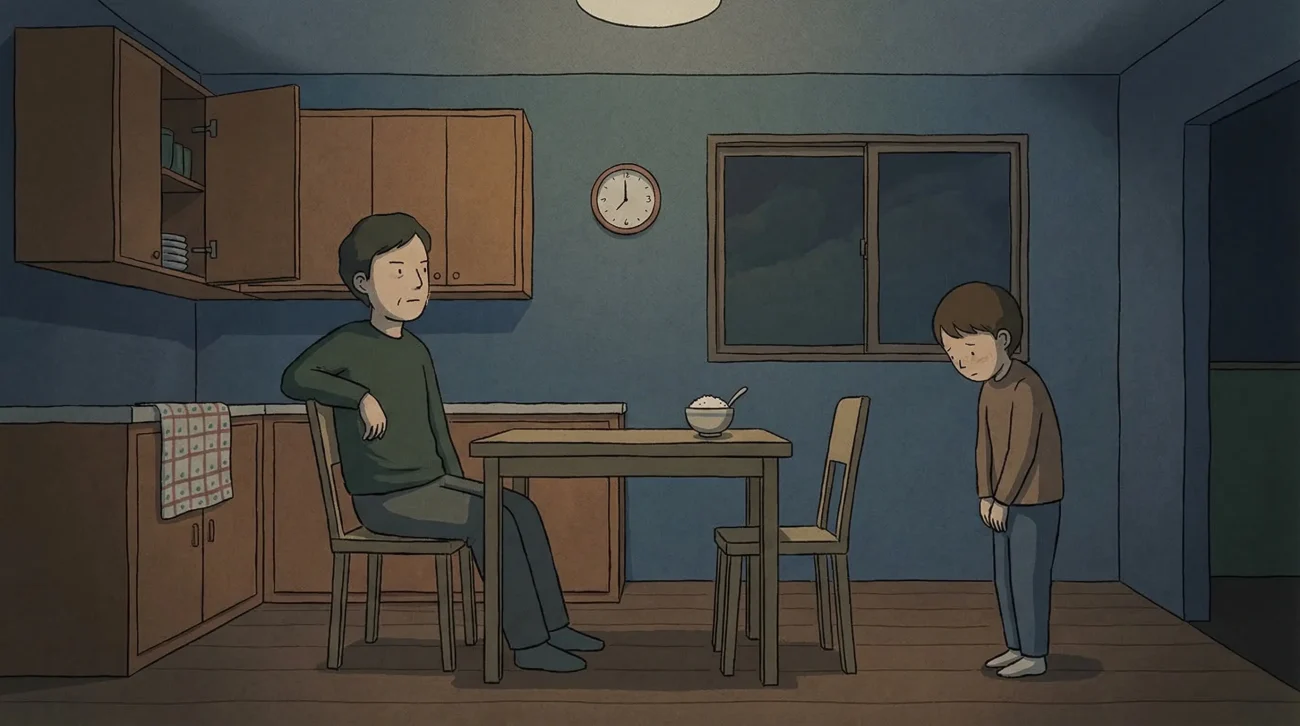
There is a strange kind of scene that shows up in Korean dramas again and again. Nunchi (눈치) is a Korean concept for sensing the mood of a room — and then adjusting what you do next, before the moment needs words. It is often translated as reading the room, but that stops halfway. The reading is just the first part. What follows it is nunchi. Nobody explains much, but one person suddenly stops talking, someone quietly leaves the room, and someone else decides not to ask the next question. Then there is the opposite kind of person, the one who keeps acting the same way and somehow makes the whole room feel off. People who notice this for the first time usually end up asking the same thing: how did they know?
That is often where the question begins. One character reads the situation without a word, while another misses it completely and creates tension without meaning to. After a while, people get curious about the word itself. What does it mean to have nunchi, or to have none at all? Many people try “reading the room” as a translation, and it is not wrong, but it never feels complete. Something is still missing. Nunchi is not just about sensing the mood. It is also about adjusting yourself once you sense it. The word itself holds a clue that most translations quietly drop. Nunchi splits into two parts: nun, meaning eye, and chi, meaning measure. Eye-measure. Not empathy, not gut feeling, not instinct — measuring with your eyes. That framing already sets it apart from most ideas about social awareness. And the way Koreans actually talk about it reinforces that difference. Nobody says someone has good nunchi. They say someone has fast nunchi. The compliment is not depth. It is speed. The person who reads the room before it needs to be explained, and moves accordingly before the moment tips into discomfort — that is the person Koreans describe as quick with nunchi.
What Does It Mean to Have No Nunchi?
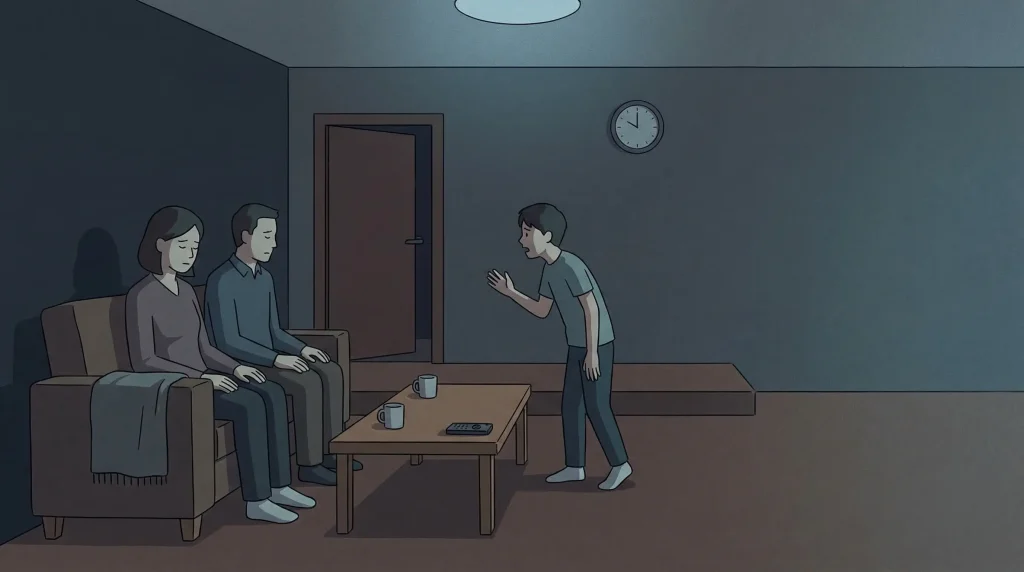
When Koreans say someone has no nunchi, they do not simply mean that person is slow or clueless. It usually means the person failed to notice the direction of the air in the room, the emotional current that everyone else has already felt. A simple family example explains it better than a formal definition ever could. Imagine coming home right after your parents have had a serious argument. Nobody says, “The mood is bad right now,” but the house feels different. Their voices are shorter. The silence is heavier. A person with nunchi notices that almost immediately and becomes quieter, moves carefully, or simply goes into their room without adding more noise.
A person without nunchi does not catch that shift and keeps acting normally. It is not that they committed some terrible offense. It is that their normal behavior crashes into a room that is no longer normal. That is why it stands out so much.
This is not limited to dramatic family moments.
The same thing happens at school, at work, and even during ordinary meals. Someone looks like they are about to say something important, then hesitates. Everyone else pauses for a second. One person ignores that hesitation and jumps into a completely unrelated story. Or everyone is quietly watching one person’s expression, while someone else keeps joking in a bright tone that no longer fits the room. When Koreans say, “That person has no nunchi,” they are not just talking about social awkwardness. They are saying the person missed the emotional center of the moment.
Why Does Nunchi Look Stronger in Dramas?
Part of the reason nunchi feels so mysterious is that many people meet it through drama first, where everything is sharpened for effect. One person notices everything and quietly steps aside. Another person misses all the signs and keeps talking until the discomfort becomes visible. That contrast is useful in drama because it creates tension fast.
That is one reason scenes from My Mister stay with people. A character does not make a speech about the mood in the room. He reads it, lowers himself into it, and moves accordingly. The power is in the restraint. The scene does not announce itself. It expects you to notice the tiny shift.
Extraordinary Attorney Woo works almost in the opposite direction. There, viewers often understand nunchi by seeing what happens when it fails. In the kimbap shop scenes, for example, the awkwardness becomes clear because one person does not respond to the social temperature in the expected way. For many first-time viewers, that is the moment when the idea clicks. They think, so this is what people mean when they say someone has no nunchi.
Still, drama exaggerates. In real life, people are usually less extreme than characters written to create conflict. Most adults who have spent years around other people have some basic level of nunchi, even if they are not especially graceful. So drama makes nunchi easier to spot, but also a little larger and sharper than daily life usually is.
Why Does This Feel So Natural in Korea?
Korea sits in what communication researchers describe as a high-context culture. That does not mean guarded or indirect in a suspicious way. It means a large share of what people actually mean travels through context rather than through the sentence itself — through timing, tone, silence, the order in which people speak, who goes slightly quieter than usual. In cultures built around lower-context communication, the expectation is that the sentence carries the meaning. In a high-context setting, the sentence is often just the surface. The message rides underneath, and everyone in the room is already expected to be reading it. That is not a secret code. It is simply how communication was shaped to work here, across generations of living closely together and sorting out hierarchy and harmony without constantly saying so out loud.
To understand that, it helps to ask a slightly different question. Not “Why don’t people just say it?” but “Why are there so many moments where saying it directly does not feel like the most natural move?”
Of course, speaking openly would sometimes be easier. But daily life is full of situations where direct language feels too blunt, too embarrassing, too heavy, or simply unnecessary. When that happens often enough, people begin to pay closer attention to other signals instead. Tone of voice. Timing. Silence. Facial expression. The order in which people move. Who speaks less than usual. Who is pretending everything is fine a little too hard.
That is why nunchi is not some magical ability to read minds. It is closer to noticing what is happening quickly and adjusting your own behavior before the room becomes more uncomfortable.
You can see this in very small moments.
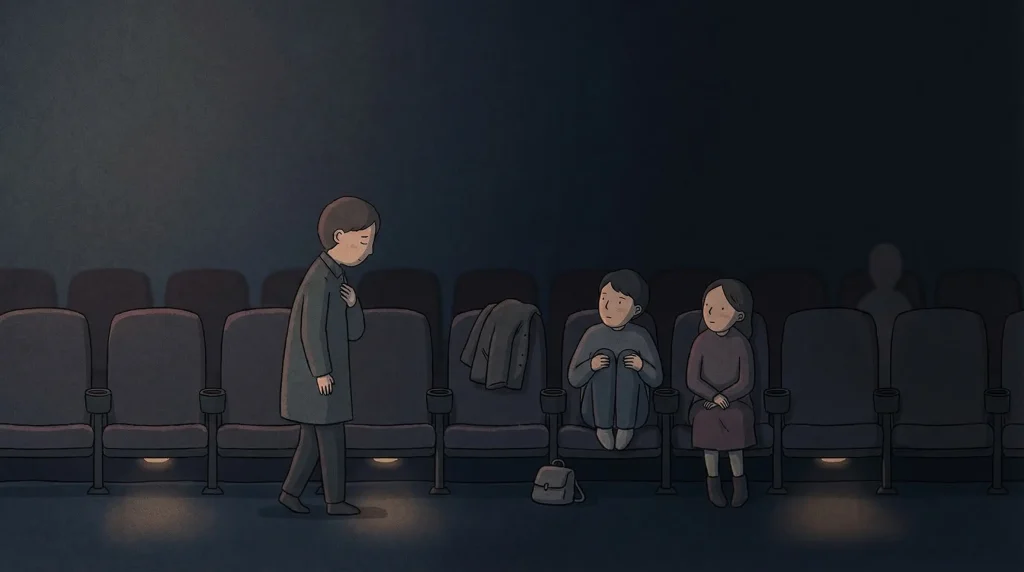
In a movie theater, for instance, one person stands up and softly says, “Excuse me.” Then not only the person right next to them moves, but the people farther down the row start folding their legs too, almost in sequence, opening a path before they are directly asked. Nobody organizes it. Nobody explains it. People just notice what is happening and make space. For someone seeing this for the first time, that tiny chain reaction can be more revealing than any textbook explanation. That is nunchi in motion.
Is Nunchi Something You Are Born With or Learn?
Most people would say it is learned, though not in a classroom way. Children grow up encountering the same kinds of moments over and over. This is not the time to be loud. This is not the moment to push a question. It is better to wait one second and see where the room is going. Over time, those repeated situations build instinct.
That is why people who meet the concept later often find it harder than Koreans themselves realize.
When you are new to it, you can become too self-conscious. Every silence starts to feel loaded. Every pause sounds like a warning. You begin checking yourself too much, and that can make you even more awkward. Nunchi is not really a puzzle you solve through perfect analysis. It is a feel for rhythm that grows through repetition. In many cases, the goal is not to decode everything. It is simply to avoid pushing against the flow harder than necessary.
Why Does “Watching Nunchi” Feel Different?
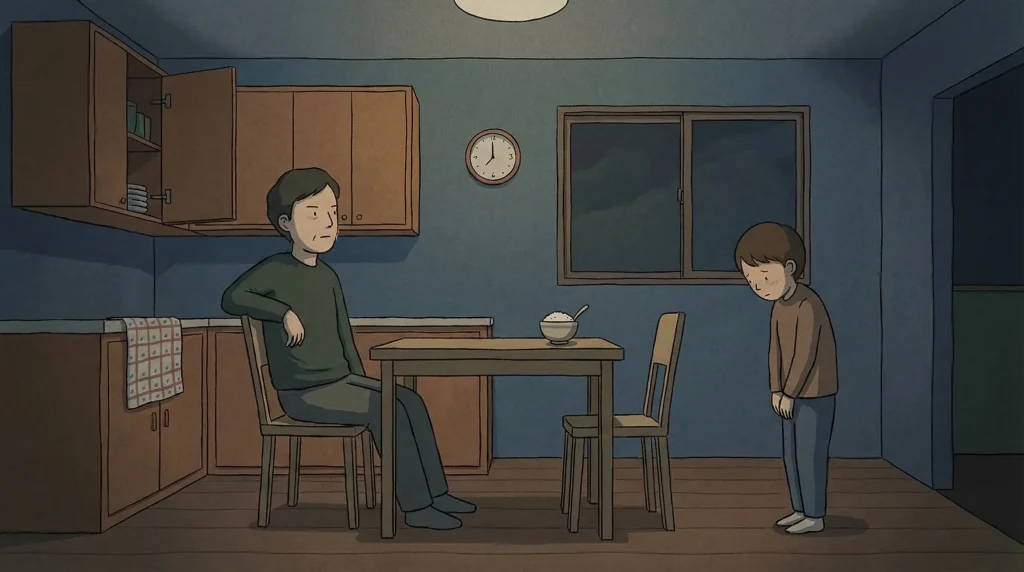
This is where things get more complicated. In Korean, saying that someone has nunchi and saying that someone is watching nunchi do not feel the same. The first usually sounds positive. It suggests quick social awareness, the ability to sense what is going on and move naturally within it. The second has a more pressed, cautious feeling. It can mean constantly checking another person’s mood, holding yourself back, and adjusting not because you want to, but because you feel you have to.
If you miss this difference, it is easy to misunderstand the whole idea.
You might think nunchi just means timidity, but that is too narrow. Good nunchi can look like social agility. Constantly watching nunchi can look like emotional caution learned over time. It helps to think of someone who grows up under a guardian whose mood has to be watched all the time. That is why Harry Potter works as a quick comparison here. He is not just observant. He is used to managing himself around unpredictable adults.
Korean has an expression that captures this darker side: eating nunchi for meals, which means living for a long time while constantly watching another person’s mood. That is why people sometimes bring up IU’s childhood story, about living with relatives when her family was struggling and becoming careful, quiet, and watchful in ways children should not have to be. The point of stories like that is not that nunchi itself is sad. It is that the word can stretch in two directions. One side is social sensitivity. The other is a form of self-protective caution.
That distinction matters. Nunchi as a whole is bigger than fear. But “watching nunchi” often carries the feeling of being pressed down by someone else’s emotional weather.
Silence Is Not Just Silence
People sometimes make nunchi sound mystical by treating silence as if it were a secret code. Real silence is messier than that. Sometimes people are just tired. Sometimes they are angry. Sometimes they are choosing words carefully. Sometimes they want the subject to disappear without having to formally end it.
A person with nunchi is not perfectly decoding silence like a machine. They are reading it roughly, with context. What happened a minute ago? Who looks uncomfortable? Who suddenly became too quiet? What kind of room is this? Family dinner, workplace meeting, friend group, customer situation? All of that matters.
This is another reason “reading the room” feels close but incomplete.
That English phrase leans toward perception. Nunchi includes perception, but it does not stop there. It also includes the next move. Do I keep talking or stop? Stay here or step away? Lighten the mood or leave it alone? Ask or not ask? In that sense, nunchi is not just noticing the room. It is noticing the room and then choosing your place inside it.
If You Are Visiting Korea
You do not need to arrive with nunchi already in place. But a few moments will land differently once you know what is quietly operating beneath them.
In a restaurant, a staff member may not rush over the moment you sit down. That is not indifference — it is a kind of timing, a held-back beat. Watching how people at nearby tables signal for attention usually tells you everything you need within a few minutes. In a market, a vendor who says take your time while still keeping an eye on you is not being cold. The attention has not left. The space is simply being offered without the pressure attached. And at a table with people you have just met, if someone’s answers start coming shorter and flatter than they were a few minutes ago, that is usually the room shifting — not a criticism, just a signal that the topic has run its natural course.
None of this requires treating every pause like a warning or overanalyzing silence until it becomes noise. It just helps to know that some silences in Korea are doing actual work, and that the people around you are already adjusting to them in ways that probably look effortless — because, for them, they mostly are.
What Actually Happens if You Have No Nunchi in Korea?
Usually, nothing dramatic happens right away. The room just becomes slightly more awkward. People answer more briefly. Their tone cools down. Someone tries to smooth over the moment, or everyone silently waits for it to pass. If the person is new to Korea or clearly unfamiliar with the culture, people often let it go. They understand that this kind of social reading is not universal.
But repetition changes the meaning.
What looks understandable the first time can start to feel inconsiderate the fifth time. That is why nunchi in Korea is more than a handy social skill. It is tied to the feeling of moving with other people rather than against them. If you see it only as pressure to guess unspoken rules, it can seem exhausting. If you see it as a way people reduce friction before it turns into open conflict, it starts to look different.
That is probably why the smallest scenes in Korean dramas stay in people’s heads. Not the shouting, but the moment when somebody quietly stops talking, or someone else leaves the room a second earlier than expected. Once you start noticing that detail, the scene looks different. And once the scene looks different, the whole idea of nunchi starts to feel less like a mysterious Korean word and more like a quiet social skill that has been there all along.
What is nunchi in Korean culture?
Nunchi is the Korean habit of noticing the mood first and adjusting yourself before anyone has to explain it. The word itself literally points to measuring with the eyes, but in everyday life it means something much broader than just looking carefully. In Korea, people often say the best kind of nunchi is fast nunchi, because the real skill is not simply noticing tension after it appears. It is noticing it early enough to change your behavior before the room becomes awkward.
Is nunchi the same as reading the room?
It is close, but not exactly the same. Reading the room usually ends with noticing what kind of mood is already there. Nunchi includes what comes after that. Once you sense the atmosphere, you are also expected to decide what to do with that knowledge. Do you stay quiet, change the subject, leave a little earlier, or make the mood lighter? That extra step is what makes nunchi feel more active than a simple social observation.
Can someone learn nunchi, or is it something Koreans are born with?
Most Koreans would probably say it is learned, but not in any formal way. Nobody really sits children down and gives them a lesson on it. Instead, it builds through repetition. People grow up in situations where timing, mood, and unspoken signals matter, and after enough of those moments, the reading starts to feel instinctive. That is also why people who meet the concept later often find it harder at first. They try to analyze it like a rule, when in practice it is usually felt before it is explained.
