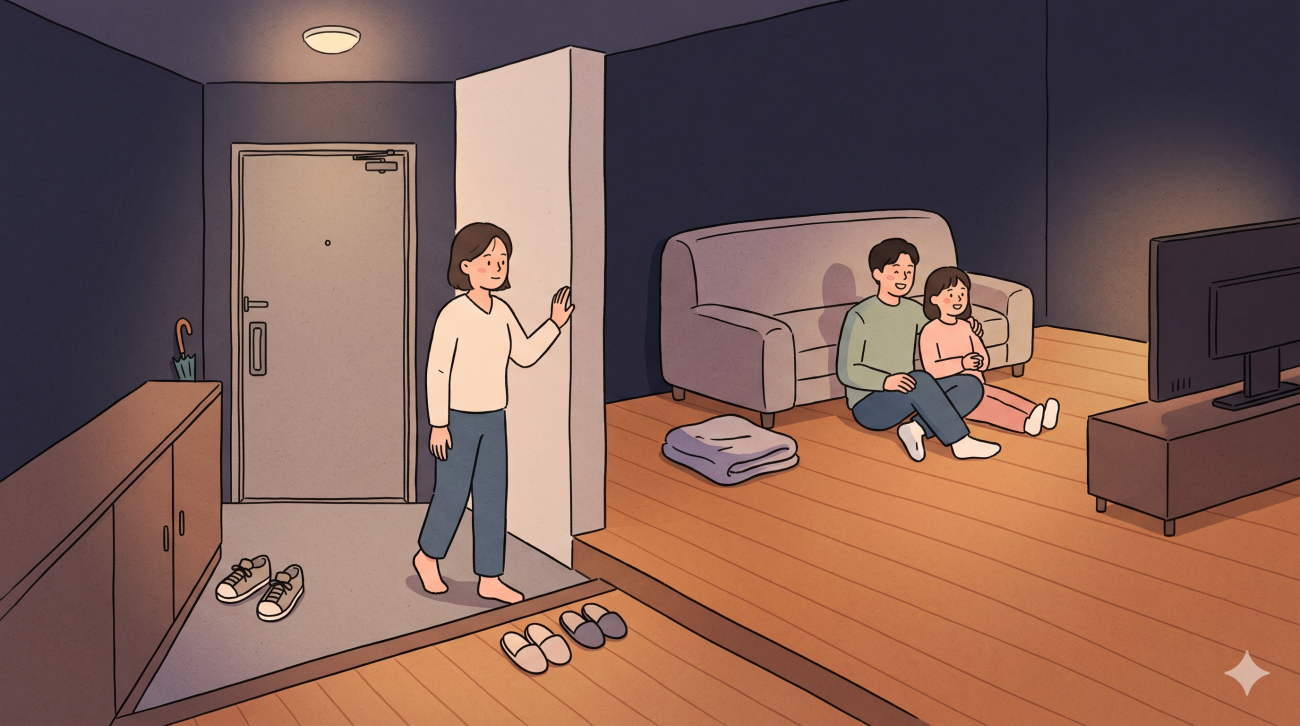
If you’ve ever watched a Korean drama and noticed the camera linger on a pile of shoes just inside the front door, you’ve already seen it without realizing it. A pair of sneakers dropped sideways. Dress shoes lined up carefully beside the wall. Nobody comments on them. Nobody makes a scene about it. The characters just step out of their shoes and walk in, the way you’d step through any door. That image is so ordinary in Korean homes that most dramas don’t bother to explain it. But if you’re watching from outside Korea, that small detail raises a surprisingly large question: why do Koreans take off shoes indoors, and what exactly is going on in that entrance?
The short answer — hygiene — is true but incomplete. The longer answer involves the way Koreans have used floors for centuries, a heating system that made the ground warm enough to sleep on, and a sense of where outside ends and inside begins.
The Entrance That Divides Two Worlds
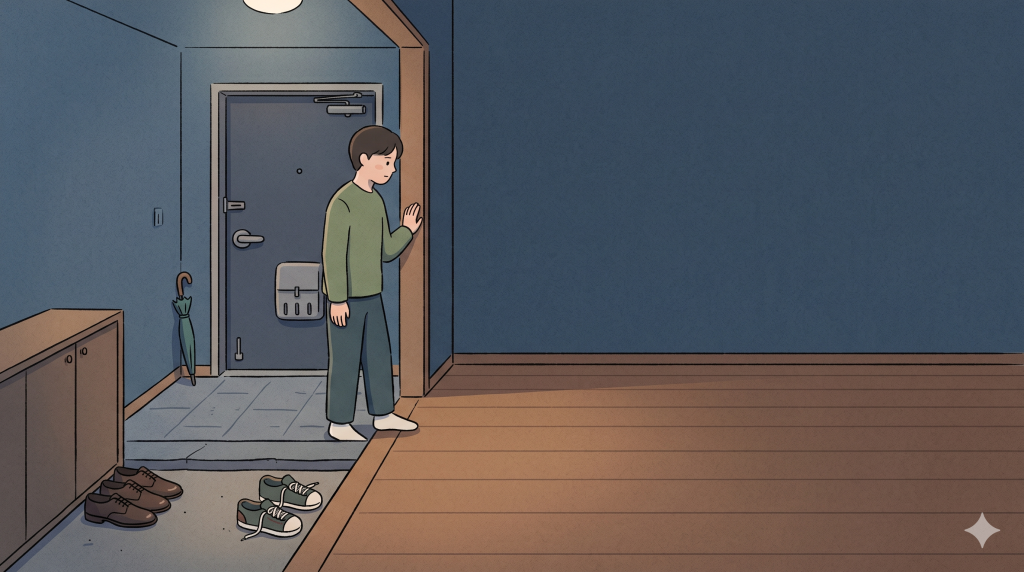
In traditional Korean homes, the structure itself made the separation clear. Before entering, you removed your shoes at a low stone step outside the door. The shoes stayed out there. You crossed the threshold in socks or bare feet. The boundary between outside and inside was physical, built into the architecture.
Modern apartments have replaced the stone step with a front door, but the feeling has not entirely disappeared. Hyeon-gwan (현관) — the entrance area just inside the door — is still where Korean home etiquette begins. The moment you cross that threshold, you are no longer outside. Shoes belong on the other side of that line. Wearing shoes past the hyeon-gwan doesn’t just track in dirt; it reads as ignoring the boundary between the two spaces altogether.
That distinction matters more in Korea than it might seem from the outside. The hyeon-gwan is where you leave the street behind — the noise, the dust, the day. Coming home in Korea has a slightly ceremonial quality to it. You don’t just walk in. You take off your shoes, and then you’re home. What that means in practice depends on the floor waiting on the other side.
Why Do Koreans Take Off Shoes Indoors — It’s About the Floor
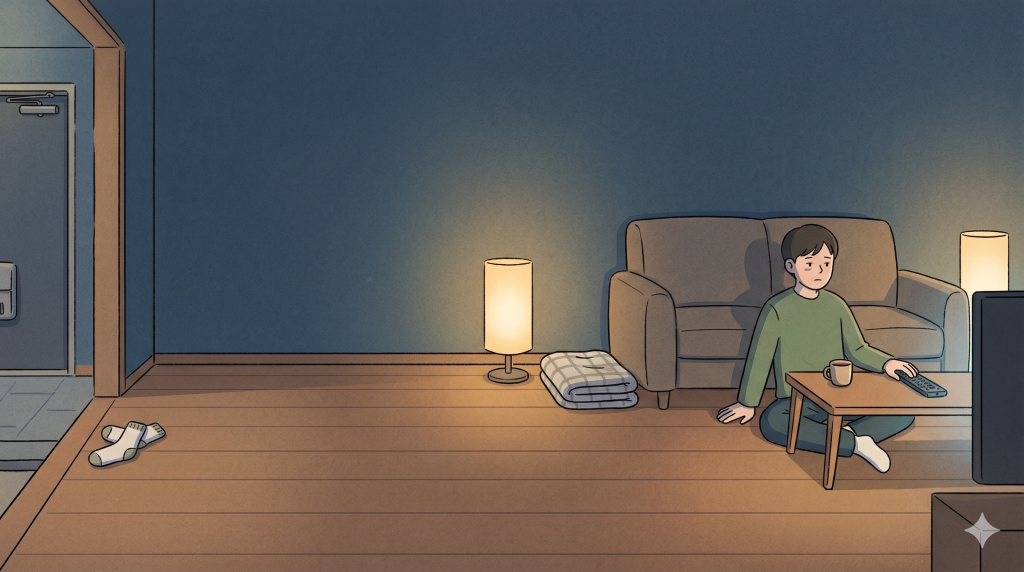
Here is something that surprises a lot of first-time visitors to Korea: in a Korean home, the floor is not just a surface to walk across. It is where people sit. Where people eat. Where people stretch out flat after a long day at work.
The image that gets passed around most often among people who’ve watched Korean dramas is this one: a sofa sitting perfectly usable in the living room, and someone sitting on the floor right next to it, leaning against it, watching television. From a Western perspective this looks strange. Why buy a sofa and then sit on the ground? From a Korean perspective, there is nothing strange about it at all. I come home exhausted and lie flat on the living room floor. Sometimes I watch TV from there, on the floor, the same way other people might sink into a couch. It is not a habit that needs to be explained from the inside. It is just how you use the space.
This floor-centered way of living didn’t develop randomly. For a long time in Korean homes, the floor was where almost everything happened — meals, sleep, rest, conversation. Korean floor culture grew out of that. And once you understand that the floor is a living space and not just a walking surface, the logic of removing shoes at the door becomes obvious. You don’t wear shoes on a space where you’re going to sit down and eat dinner.
Ondol — The Warmth That Made the Floor Worth Living On
None of this would have made quite as much sense without ondol (온돌), Korea’s traditional underfloor heating system. The original version worked by running fire underneath flat stones beneath the floor, letting heat radiate upward into the room from below. In winter, the floor itself became warm — not just heated air floating near the ceiling, but warmth coming up from the ground underneath you.
In modern Korean apartments, the traditional construction is gone, but the principle lives on through underfloor heating systems widely used today, which circulate warm water through pipes beneath the surface. On a cold day, the floor warms up. And when the floor is warm, something shifts in how you want to use it.
I don’t come from a household that runs the boiler all winter, but on particularly cold nights, when the floor is properly heated, there are nights I’ll pull a blanket down from the bed and sleep there instead. In some households, a warm floor on a cold night simply feels like the better option. It is not something every Korean does every winter — but it is a familiar enough feeling that it needs no explanation between Koreans.
What I still remember is a childhood visit to my grandmother’s house in the countryside, where the floor heating was the old kind — fired from below with real heat. The room in winter was so hot we had to open a window. I ran outside in the middle of a cold night because the floor was simply too warm to sleep on. That heat came from underneath. It was alive in a way that central heating from a vent never quite is. When you understand that a floor can feel like that, it starts to make sense that generations of people chose to live on it.
Socks, Bare Feet, and What to Do About the Bathroom Slippers
Once the shoes are off, what comes next depends entirely on the household.
In my family, my father and I go barefoot. My mother keeps her socks on all day — she finds bare feet on the floor uncomfortable, and that is entirely a personal preference. Some Korean homes provide indoor slippers for family and guests alike. Others, like mine, don’t bother. There is no single correct answer. When visiting a Korean home, it’s worth paying attention to what the host does or whether slippers are set out near the entrance. If slippers are offered, put them on. If not, socks or bare feet are both fine.
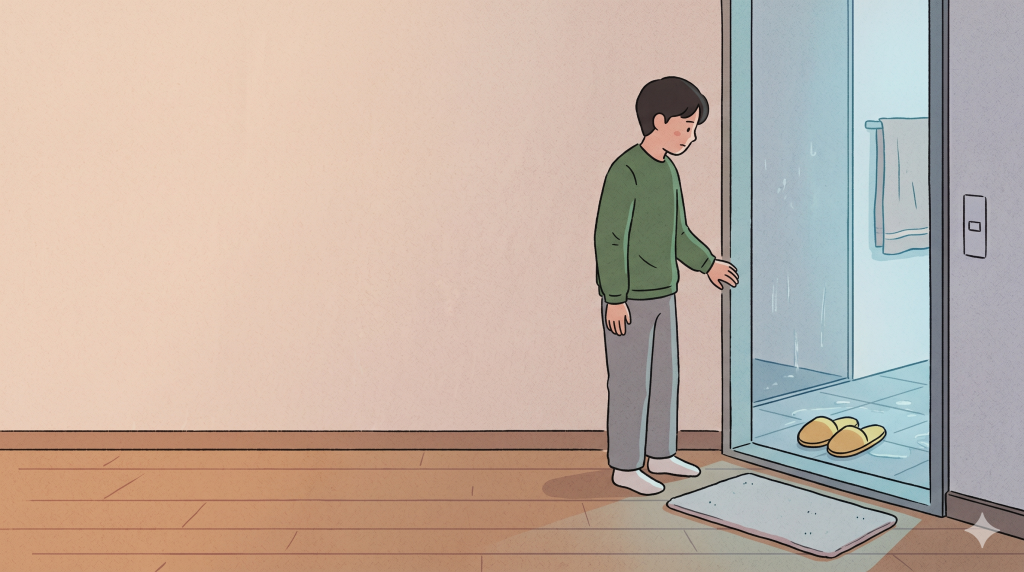
The one thing worth knowing separately: the bathroom slippers. In most Korean homes, the toilet and shower share the same room. After showering, the bathroom floor is often wet. So many households keep a dedicated pair of water-resistant slippers just inside the bathroom door — material that drains well, designed for that surface. You put them on when you go in, and you leave them at the bathroom door when you come out. They do not travel into the rest of the house.
This is the detail that trips up foreign visitors the most. If you see a pair of slippers near the bathroom door, they are almost certainly bathroom-only. Wearing bathroom slippers out into the living room will get you a look, or at least a quiet correction. It is one of those things that seems like an unusually specific rule until you understand the reason, and then it seems completely obvious.
Visiting a Korean Home — and a Few Places That Follow the Same Logic
If you are visiting a Korean home for the first time, the practical summary is simple. Take your shoes off at the hyeon-gwan. Follow the host’s lead on slippers. Treat the floor like the living surface it is, not just a walking surface. And if there are slippers near the bathroom, those stay in the bathroom.
Outside of private homes, there are a few places in Korea where the same rule applies. Floor-seating restaurants, called jwasik sikdang (좌식 식당) — where diners sit on cushions at low tables on the floor — require you to remove your shoes before stepping onto the seating area. Traditional hanok guesthouses often have the same expectation. The signs are usually clear enough: a step up to a floor-level platform, or shoes already arranged near the entrance.
Interestingly, even some Koreans find jwasik sikdang less comfortable now than they used to. As chair-and-table dining, called ipsik (입식), has become standard in daily life, sitting cross-legged on the floor for a full meal feels unfamiliar to a growing number of younger Koreans. The floor culture is shifting, slowly, at least when it comes to restaurants. In Korean homes, though, the shoes stay at the door. That part has not really changed.
The next time you watch a Korean drama and the camera catches that cluster of shoes in the hyeon-gwan, you’ll know what you’re looking at. Not a quirk. Not just a hygiene habit. A line on the floor that has been there for a very long time, marking where the outside ends and where the inside begins. The shoes go there. Everything else comes in.
Do I have to take off my shoes when visiting a Korean home?
Yes. Removing shoes at the entrance is standard in Korean homes, regardless of whether the home is traditional or a modern apartment. It’s one of the most consistent expectations in Korean home etiquette.
What should I wear on my feet inside a Korean home?
It depends on the household. Some provide indoor slippers for guests, others don’t. Socks or bare feet are both acceptable. Follow the host’s lead.
Why do Korean bathrooms have separate slippers?
Korean bathrooms typically combine the toilet and shower in one space, so the floor is often wet. Dedicated water-resistant slippers are kept at the bathroom door — they go on when you enter and come off when you leave. They are not worn anywhere else in the home.
Do you have to take off your shoes in Korean restaurants?
Not in most Korean restaurants. However, floor-seating restaurants (jwasik sikdang) and traditional hanok spaces require guests to remove shoes before stepping onto the seating area.
What is ondol and why does it matter for Korean floor culture?
Ondol is Korea’s traditional underfloor heating system, which warms the floor itself from below. Because the floor was warm enough to sit and sleep on, it became a central living space — which is a key reason why keeping it clean by removing shoes at the door became so deeply embedded in Korean home culture.
