Aegyo Meaning in Korea: What Cute Behavior Really Means
The aegyo meaning I know from Korean life begins with a former partner who was naturally good at it. I am not an affectionate or playful person, and my first instinct is usually to wonder why someone is behaving a certain way. Yet when she smiled with her eyes and asked for something in a cute voice, my careful thinking did not last very long. I usually ended up doing what she wanted.
The same thing happened when I was angry. Once that smile and tone appeared, staying angry became difficult. She had not defeated my argument or produced better evidence. Her warmth and expression changed the air between us before either of us settled the disagreement.
That memory is how I understand everyday aegyo (애교). It combines affectionate behavior with a small display of cuteness. It does not describe a person’s appearance, and it does not work like a joke with a clever punchline. A look, a softer voice, or a modest gesture can make someone close to you relax. In my case, it also made my ability to refuse a request disappear rather quickly.
The Aegyo Meaning on TV Is Not the Whole Story
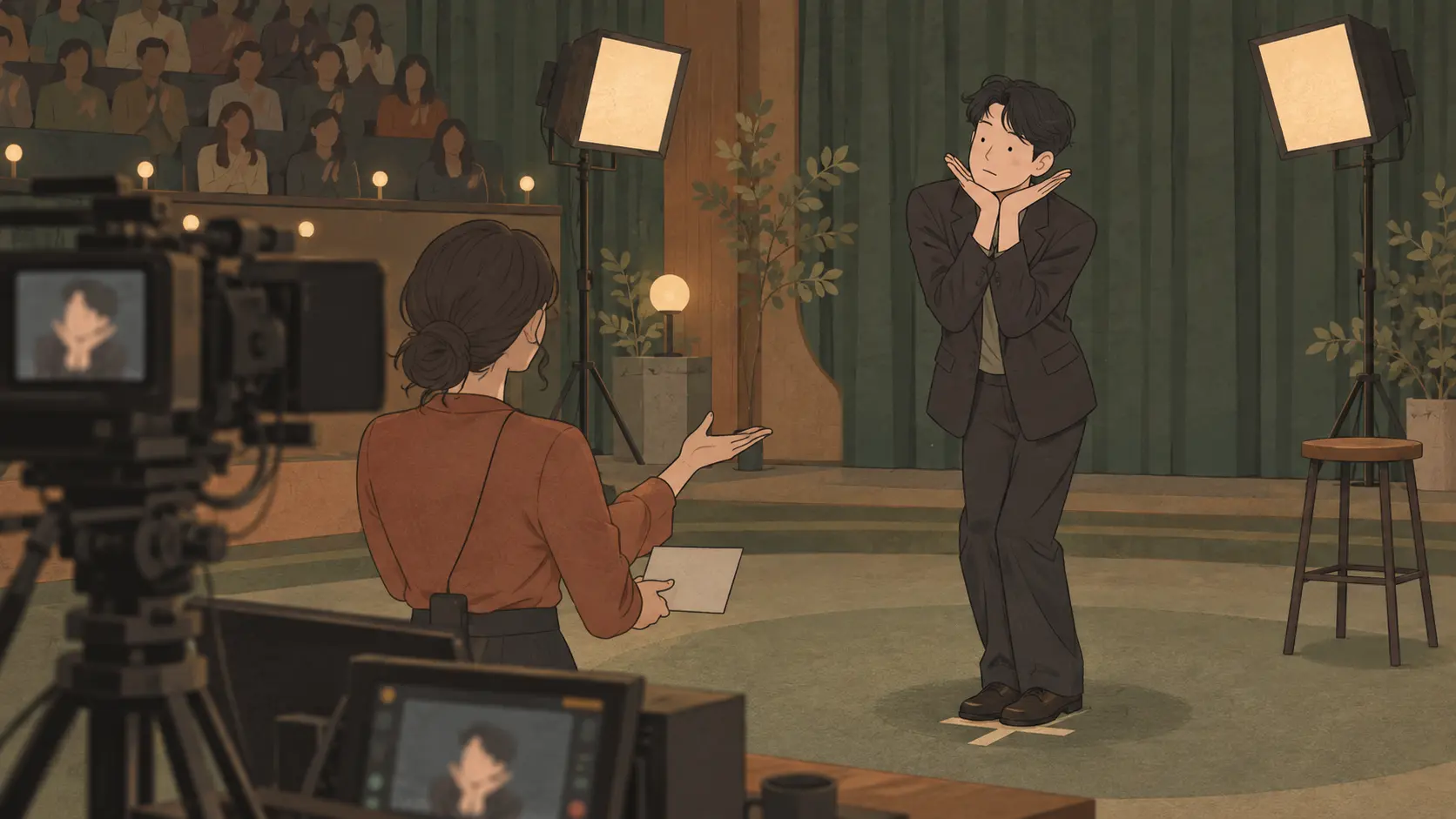
Foreign viewers ask online whether the behavior they see in K-dramas, variety shows, and K-pop clips happens in ordinary Korean life. They wonder whether it is a performance for the camera, something Koreans really do, or an act that Koreans also find embarrassing.
No foreign visitor has asked me that question in person. I have seen it in online discussions, however, and I understand why television can make the word confusing. An idol puffs out their cheeks, raises their voice, places both hands under their chin like a flower, and looks directly into the camera. Every part of the gesture has to be large enough for an audience to recognize immediately.
Everyday aegyo is usually much smaller. Someone may keep their normal speaking voice but add a faint nasal tone while saying, Ai, wae geurae? (아이, 왜 그래?; “Oh, why are you like that?”). The change can be so slight that the people involved do not stop to label it. Broadcast aegyo has to reach the back row; everyday aegyo may be intended for one person sitting beside you.
This distinction also explains why a clip can be culturally real without showing normal daily behavior. Koreans recognize the expression as aegyo, but most people do not walk through a convenience store performing a full variety-show routine. The camera version turns up the volume on gestures that may appear in quieter forms between people who already know each other well.
Natural Aegyo and Forced Aegyo Feel Different
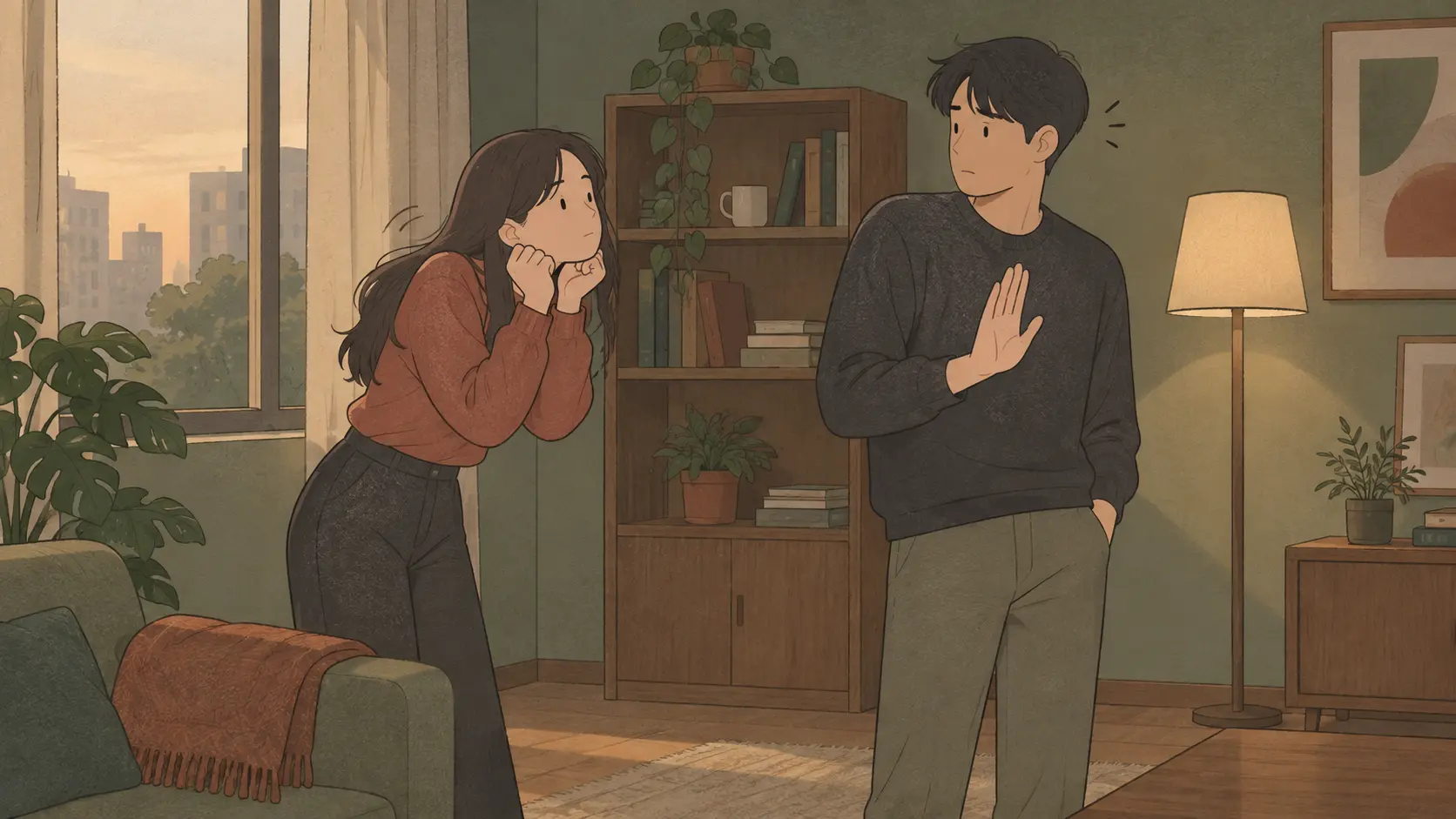
I dislike it when an adult repeatedly blinks to look pretty or suddenly speaks like a small child. A phrase such as hwanatjyeoyom? (화났져욤?; roughly, “Are you angwy?”) uses deliberately childish pronunciation. When the voice, expression, and blinking all feel constructed, the result makes me uncomfortable. That is my personal reaction, not a verdict shared by every Korean.
The boundary I notice depends on whether the behavior fits the person. A little nasal warmth added to their usual voice can feel natural. An invented baby voice that bears no resemblance to how they normally speak feels staged. Both may aim to look cute, but one grows out of an existing intimacy while the other appears to have been assembled for display.
Online reactions from foreigners also split along this line. Some commenters find it uncomfortable when adults use baby talk or when performers are ordered to produce aegyo for a camera. Other commenters enjoy expressions that emerge naturally between close people, and some point out that their own cultures have comparable habits. Couples elsewhere also soften their voices or speak playfully when asking for something. The response often depends on the relationship, the setting, and whether anyone was pressured to perform.
Korean has a useful phrase for the uncomfortable version: eokji aegyo (억지 애교), or forced aegyo. Calling something by that name already shows that Koreans do not automatically welcome every cute gesture. The question is not simply whether the speaker raised their voice or changed an ending. People notice whether the moment leaves room for the gesture and whether the other person is comfortable receiving it.
Closeness Changes the Intensity

From what I have seen, aegyo among family members and friends tends to be restrained. A person might stretch the final sound of a sentence or make a request with a warmer tone than usual. If nobody stopped to call it aegyo, it could pass as ordinary friendliness.
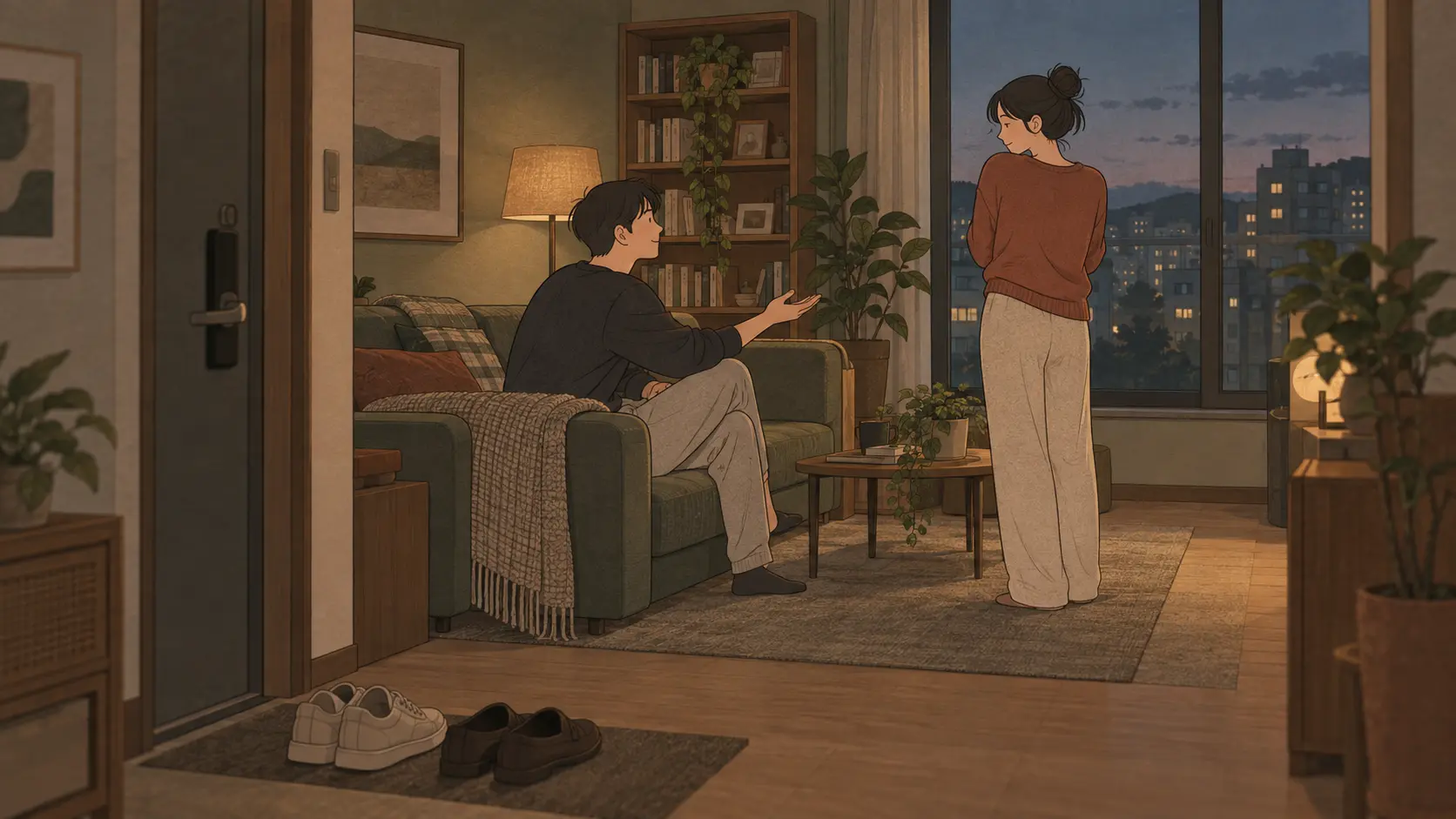
Between romantic partners, the expression can become more concentrated. The eyes, face, and voice may change together, and the gesture can act as a request or an invitation to make peace. My former partner’s aegyo worked because her smile and voice belonged to a language that existed inside our relationship. I would not have reacted the same way if a stranger had copied the movements.
Foreign residents discussing the subject online have made a similar distinction. Some said they rarely saw the exaggerated television version in Korean daily life, while they did notice higher voices and cute speech among couples. Their observations place everyday aegyo in intimate relationships rather than in exchanges with strangers at markets or convenience stores.
This is also why the same gesture can feel warm in one situation and awkward in another. A drawn-out syllable between two people who know each other’s habits carries a history. When the relationship is absent, the gesture has to stand alone, and its artificial parts become much easier to notice.
Why Male Aegyo Feels Less Unusual Now
When I was young, many boys were raised with little room for open emotion. “Boys don’t cry” and “A man has to endure it” were familiar messages. When a child repeatedly hears those rules, cute self-expression becomes difficult, but so does the simple act of explaining how he feels.
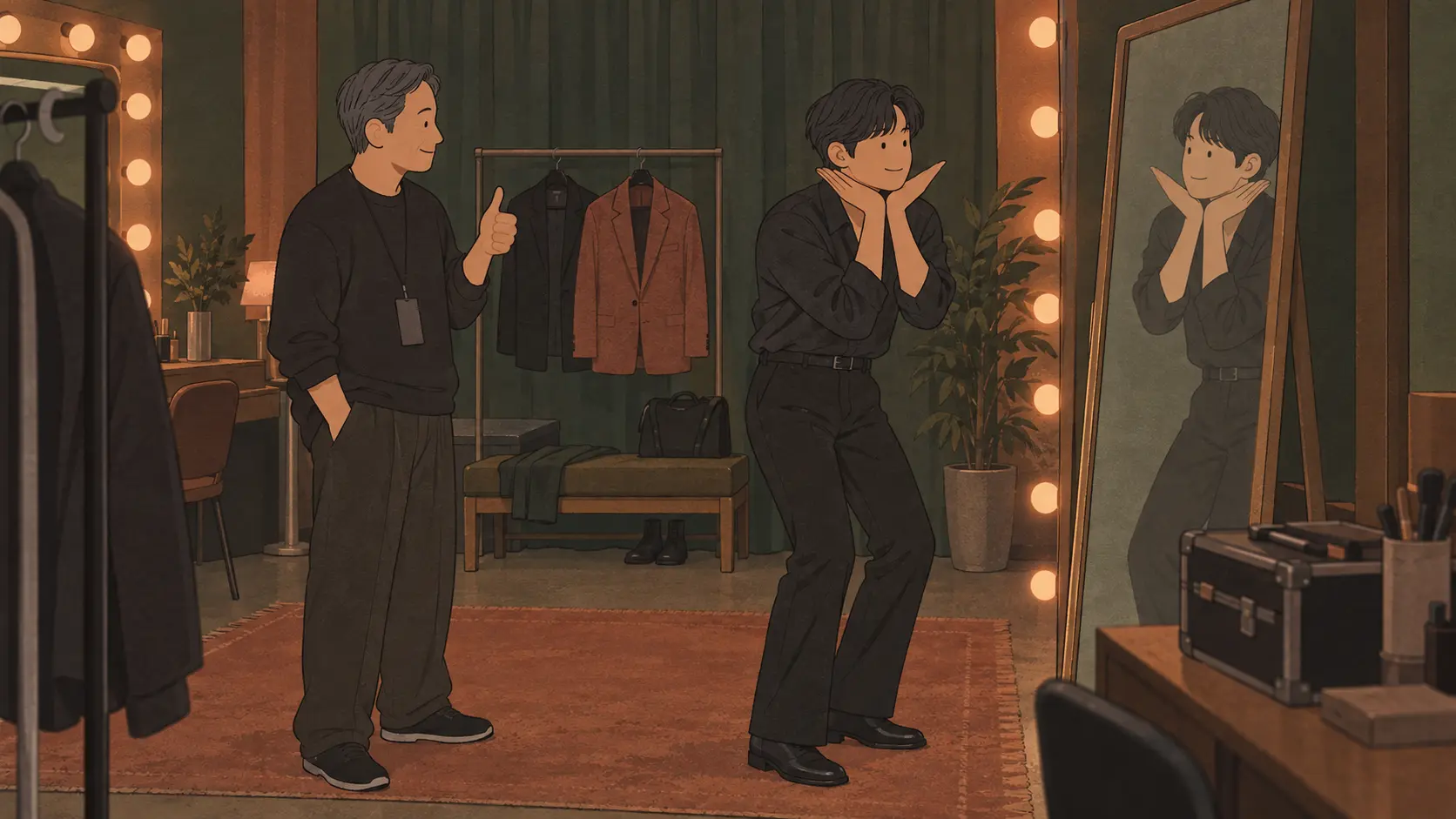
Photos of male idols from the 1990s often emphasized a strong, warrior-like image. Men around me also lived in a social atmosphere that rewarded a reserved manner. Today, a male celebrity can place both hands under his chin in a kkotbatchim (꽃받침; flower pose) and make a pretty face as part of an ordinary entertainment appearance. When I see that, I feel that men have gained more freedom in how they present themselves.
That change does not make aegyo an obligation for any gender. Expecting a woman to act cute or ordering a man to do it can still create forced aegyo when the person does not want to participate. A wider range of acceptable expression gives people choices. A demand removes the choice, even if the audience calls it harmless fun.
Why Foreign Viewers Disagree About Aegyo
Some foreign viewers interpret aegyo as adults being infantilized. Others compare it to the softer voices and playful manners couples use when they want affection or a favor. There is no need to declare one reaction universally correct. The two groups may be picturing entirely different scenes while using the same word.
The aegyo I experienced was my partner’s eye-smile and cute voice easing my anger. The version I strongly dislike is an adult baby voice accompanied by an expression that seems detached from the person’s normal self. Both fit under a broad idea of cute behavior, yet they do not feel remotely identical to me.
The next time you see an idol perform aegyo, look at three things before treating the clip as evidence of Korean daily life: who requested it, what relationship the people have, and how far the behavior moves away from the person’s normal voice. Those clues will tell you whether you are watching a large gesture for an audience or a small expression meant for someone close.
FAQ
What does aegyo mean in Korean?
In everyday Korean, aegyo describes affectionate behavior combined with cute expression. It concerns the way someone uses their voice, face, and small gestures to show warmth to a close person, rather than how cute that person looks.
Do Koreans actually use aegyo in real life?
Yes. Everyday aegyo is often quieter and smaller than the behavior shown on K-pop variety programs. It may appear as a slight nasal tone added to a normal voice or a softened facial expression.
Why does K-pop aegyo look so exaggerated?
Television enlarges the expression so that cameras and a large audience can recognize it immediately. Aegyo requested by a host can function as a performance rather than a spontaneous piece of daily behavior.
Is aegyo only for women?
No. Men use aegyo too. Korean society once placed stronger limits on men’s emotional expression, but male entertainers today commonly show cute gestures such as the flower pose.
Is aegyo the same as flirting?
No. Aegyo can appear between romantic partners, but it also occurs among family members and friends. The important factors are the closeness of the relationship and whether both people are comfortable with the expression, rather than a romantic intention.