Korean Honorifics: Why Koreans Call Strangers Oppa and Unnie
Someone once posted on Reddit asking why the female lead in a Korean drama kept calling her boyfriend oppa (오빠). He wasn’t her brother. The comment section filled with hundreds of replies. Most of them landed somewhere around “it’s just a Korean thing.” I kept reading, waiting for someone to explain the why. Nobody did. That felt like the wrong place to stop.
We Don’t Say “My Country.” We Say “Our Country.”
To understand korean honorifics, you need something more basic than a language rule. In Korean, when we refer to our country, we don’t say “my country.” We say uri nara (우리나라) — “our country.” The same goes for home. Not “my house” but “our house.” Not “my husband” but “our husband.” The first time a foreigner hears a Korean woman refer to her spouse as “our husband,” the confusion is understandable. It sounds like some kind of shared arrangement. But that’s not what’s happening. In Korean, uri — “our” — isn’t really about quantity. It’s a way of seeing the world.
Where this sense came from is hard to pin down exactly. A long history of living together on a small peninsula, of enduring hardships as one — these things accumulate. Somewhere in that accumulation, the feeling of uri settled in below conscious thought. It’s why, when something difficult happens to the country, people who spent the week arguing with each other will suddenly face the same direction and pull together. Nobody taught this explicitly. It’s just felt.
The Lesson Nobody Taught You — But Everyone Learned
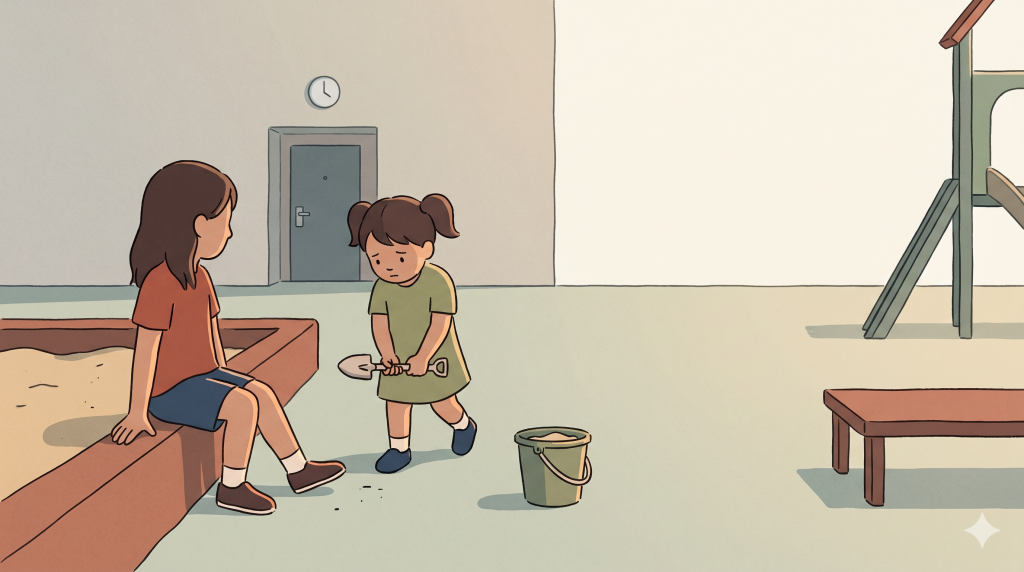
The classroom where Korean children first learn oppa and unnie (언니) isn’t a school. It’s a playground.
A mother takes her young child to the apartment complex playground. They encounter a slightly older child. The mother leans down and whispers, “Go ask that unnie if she wants to play.” The child shuffles over. “Unnie, can we play together?” Whether or not that child is actually anyone’s sister is beside the point. From that moment, she is unnie.
This scene repeats thousands of times. At playgrounds, in elevators, in front of supermarket checkout counters. Parents aren’t sitting down to explain “Korean honorific culture.” The situation itself is the lesson. At some point, the child simply begins to feel that calling an older person oppa or unnie is the natural order of things. It’s absorbed as instinct, not memorized as a rule. That’s why it doesn’t disappear in adulthood. When it feels like something written into your DNA, this is probably why.
Korean Honorifics List — Oppa, Unnie, Hyung, Noona
The structure, once you see it, is simpler than it looks.
Oppa — used by a woman addressing an older male. Unnie — used by a woman addressing an older female. Hyung (형) — used by a man addressing an older male. Noona (누나) — used by a man addressing an older female.
Three things determine which word to use: the speaker’s gender, the other person’s gender, and who is older. Whether you share blood has nothing to do with it. At school, one year’s difference is enough to make someone a sunbae (선배), a senior. Grow a little closer, and that sunbae becomes oppa or unnie. The transition rarely happens with any formal announcement. One day you’re just already calling them that.
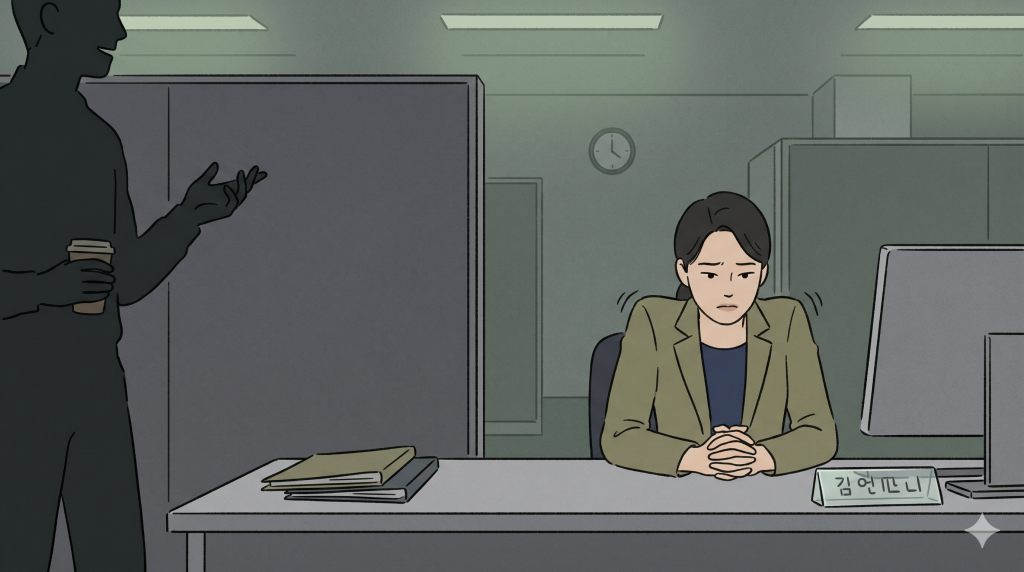
The workplace is a different world entirely. Oppa and unnie don’t belong there. In an office, it’s “Deputy Kim” or “Team Leader Park.” A foreign colleague who calls a Korean coworker by their first name — just the name, dropped plainly into conversation — will be met with a particular kind of expression. Not quite offense. More like the feeling that something has gone subtly wrong. That discomfort has a name. It’s what honorifics meaning points to, when you look it up and can’t quite find the right answer in English.
“Eemo!” — What Happens When a Foreigner Tries
To order food in a Korean restaurant, you have to get someone’s attention. The most common way to do that is eemo (이모) — literally, “aunt,” as in your mother’s sister. The woman working behind the counter has no blood connection to you whatsoever, but eemo is what you call her. That isn’t strange. If anything, it’s warmer than shouting “excuse me” at a stranger.
One thing worth knowing first: eemo is a term for a middle-aged woman. If the person working that shift happens to be in their twenties, calling them eemo is going to land awkwardly — and the expression on their face will tell you immediately that something went wrong. A quick glance before you call out is good practice.
Now imagine a foreigner walking into a Korean restaurant, catching the server’s eye, and calling out “Eemo!” in imperfect but unmistakable Korean, then placing an order. She will probably stop. She’ll look over with an expression that says: that was unexpected. And then, in all likelihood, she’ll feel something like pride — the particular warmth Koreans extend toward foreigners who make the effort. Koreans find it remarkable when a foreigner speaks Korean well at all. A foreigner who also gets the honorific right? That might earn you something extra. An additional side dish that wasn’t on the table before. A portion of rice that seems somehow more generous than what went to the next table. I’ve never personally seen a foreigner call out eemo in a restaurant. Which is exactly why I’m curious what would happen if someone tried.
The One Honorific That Can Start a Fight
Ajumma (아줌마) and ajeossi (아저씨) are the general terms for middle-aged women and men. On the surface they’re straightforward. In practice, the same word can be perfectly neutral or genuinely offensive, depending entirely on who is saying it and to whom.
I’m in my forties. If a teenager calls me ajumma, I accept that without a second thought. It’s accurate. But if someone my own age — late thirties, early forties — says it to me, that’s a different situation. At that point it isn’t a neutral descriptor. It’s a verdict. It means: in my eyes, you look old. When the age gap is large, ajumma is a statement of fact. When the gap is small, it becomes an opinion. The same word, operating by completely different rules depending on where you’re standing. That gap between the two is where most of the misunderstanding happens — and it’s also why korean honorifics can’t be reduced to a simple chart of who calls whom what.
Why Men Love Being Called Oppa — Even Foreigners
Between romantic partners, oppa carries a different weight. When a younger woman calls her older boyfriend oppa, that’s common in Korea. And men, broadly speaking, like it. There was a Korean variety program called Abnormal Summit (비정상 회담), where men from different countries gathered to talk about Korean culture. One of the things that came up, across guests from multiple countries, was this: being called oppa by a Korean girlfriend felt unexpectedly good. It wasn’t a reaction specific to Korean men. It landed the same way regardless of where the man was from.
The reverse situation works differently. A younger man calling an older girlfriend noona is rare. The feeling it creates — of the man leaning on the woman — tends to be something men resist. So in romantic relationships, noona almost never appears. Oppa suggests intimacy and a kind of comfortable reliance. Noona tips the hierarchy in a direction that most men find uncomfortable. The same age difference, pointing in opposite directions, producing entirely different dynamics. I’m a woman, so I can’t claim to fully understand why oppa lands the way it does for men. I just know that it does.
The Moment You Stop Being a Stranger
It makes sense that all of this feels strange at first. Calling a restaurant worker eemo. Calling a man you just met oppa. Referring to a country of fifty million people as “ours.” These aren’t separate habits. They come from the same place.
That place is hard to name clearly. Nobody handed it down in a formal lesson. It arrived quietly, at a playground, when a mother leaned down and said “go ask that unnie if she wants to play.” Spend enough time in Korea and something shifts at some point. You notice that you’ve called someone oppa or unnie without stopping to think about it. When that happens, you’re probably not an outsider anymore.
What does oppa mean in Korean?
Oppa (오빠) is a term used by women to address an older male — whether a brother, a close friend, or a romantic partner. Outside of family, it carries a sense of emotional closeness and is only used when there’s genuine familiarity between the two people.
Why do Koreans use family words for strangers?
It reflects a deeply rooted collective identity in Korean culture. Koreans tend to see their community as an extension of family — which is why the country itself is called uri nara (우리나라), “our country,” rather than “my country.” Calling a stranger unnie or oppa is a way of bringing them into that circle.
Is it okay for foreigners to use Korean honorifics like oppa or eemo?
Using these terms as a foreigner will likely be met with surprise and warmth rather than offense. Koreans tend to find it charming when foreigners make the effort to use culturally appropriate language, even imperfectly. The key is reading the situation first: eemo works for a middle-aged woman, not a twenty-year-old server.
What is the difference between oppa and hyung in Korean?
Both words mean “older brother,” but they’re used by different speakers. Oppa is used by women when addressing an older male. Hyung is used by men when addressing an older male. The relationship described is the same — the word changes depending on who is speaking.
Do Koreans use honorifics at work?
Yes, but differently from social settings. In the workplace, Koreans address colleagues by job title rather than by oppa or unnie. Calling a coworker by their first name alone — without a title — tends to feel out of place, even among people who are close in age.