Korean Age System: Why I Still Correct My Own Answer
When I explain the Korean age system, I first think of answering an age question and then correcting myself. Since the change to international age in 2023, the way I talk about my age in everyday life has not changed much. Someone asks, the old number comes out, and then I realize I have not given my international age.
I grew up counting myself as one at birth and adding another year at the start of each new year. I know how to calculate international age. The familiar answer simply comes first.
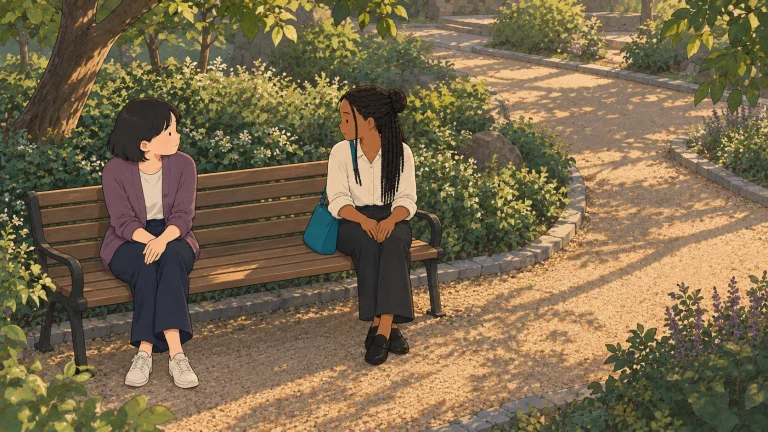
I have not had an awkward encounter after asking a foreigner their age, either. The foreigners I have met had already spent years living in Korea. Some asked my age first and then announced, “I’m the unnie!” Before I started explaining the numbers, the other person was already using them to describe our relationship.
After the Number Comes a Way to Address Someone
In that conversation, unnie (언니, an older-sister form of address) conveyed both being older and a way of describing the relationship. I cannot use that encounter to claim that every foreigner feels comfortable with Korean forms of address. The people I met were already familiar with life in Korea, and that matters.
Nor does the remark mean that I, as a man, actually addressed that person as unnie. I am repeating what she said to me. The appropriate term depends on the relationship between the speaker and the person being addressed.
That relationship is hard to leave out when explaining why someone in Korea might ask your age. In some situations, knowing whether the other person is older helps people choose a form of address or a level of politeness. An age question early in a conversation can have that practical purpose.
Age does not determine every choice in Korean speech, however. Workplace position, closeness, and the formality of the occasion also matter. Being the same age does not automatically mean using casual speech immediately. Being older does not require someone to speak casually to a younger stranger, either.
If you are visiting from abroad, an age question alone does not tell you everything about the person’s intentions. They may be trying to work out how to address you. You can decide how much to share if the question makes you uncomfortable, and begin with polite speech while you are still getting acquainted.
One Year Already Felt Significant in Middle and High School
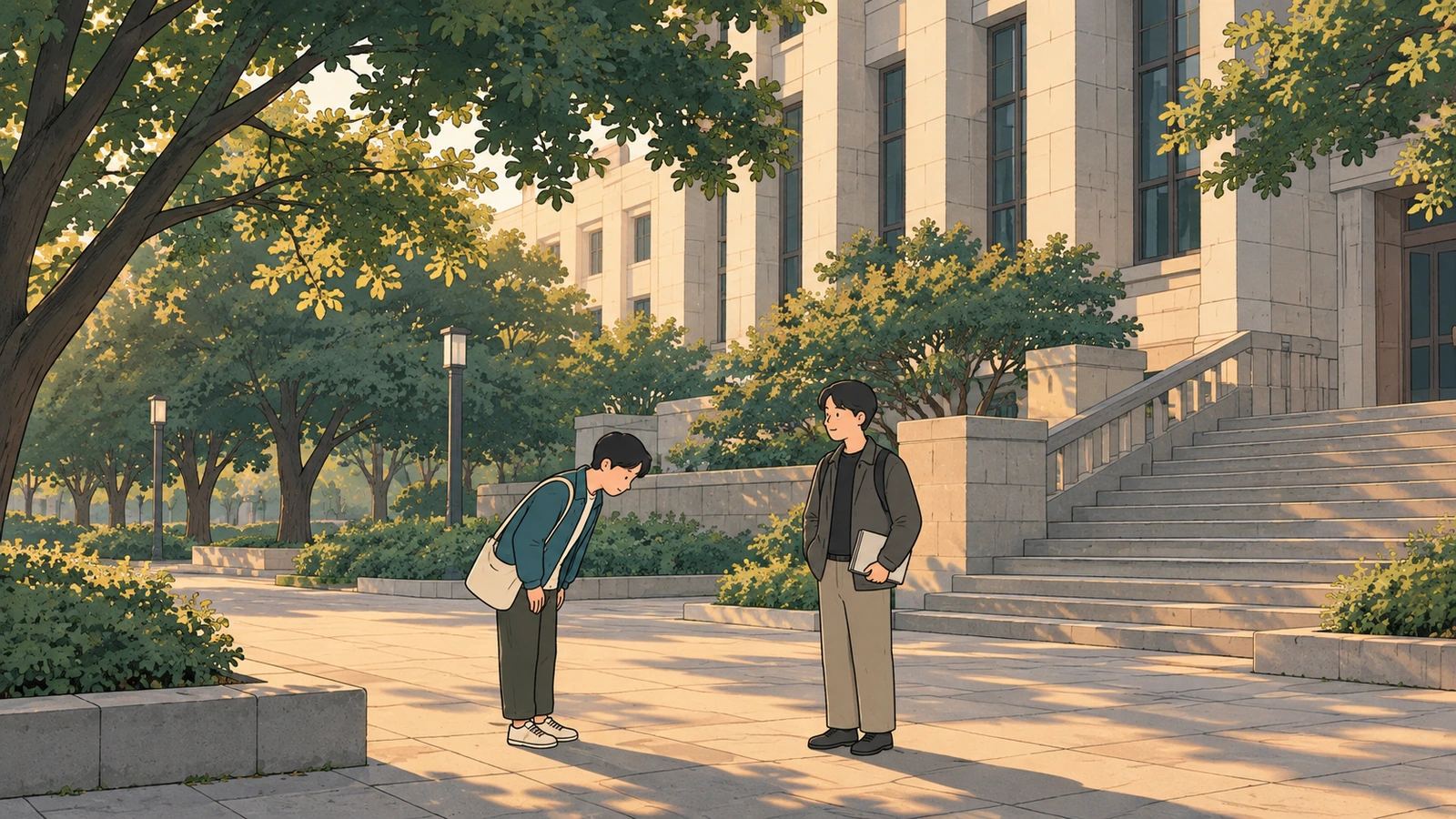
For me, a one-year difference did not start to feel significant when I entered university. In middle school and high school, the gap between me and a student one year above already felt large. At university, that relationship also showed up in everyday behavior. Whenever I saw a senior on campus, I greeted them loudly, wherever I happened to be. Knowing the other person’s age was followed by adjusting my actions and speech to the relationship.
That is why an explanation limited to adding one or two years leaves out something I experienced. The numbers may look close, but how I greeted a senior and how I spoke to them remained a separate matter.
Age and university entry year need to be distinguished, too. Someone who entered earlier is a senior by entry year, but was not necessarily born earlier. Birth year and admission year can differ. Trying to calculate a university relationship from age alone can make the explanation confusing.
These are memories from when I was at school. I cannot say that every middle school, high school, or university works the same way today. To explain why age has never felt like a simple number to me, I need to include the one-year gap I felt before university, as well as my habit of greeting seniors on campus.
Why Does Ppareun Nyeonsaeng Make the Relationships Complicated?
The expression ppareun nyeonsaeng (빠른년생, someone born early in the year who joined an earlier school cohort) brings another layer into the discussion. Under the former elementary-school entry system, a cohort ran from March births through the following February. Some children born in January or February therefore attended the same grade as children born in the previous calendar year. That background is what the expression describes.
Imagine the following arrangement. I become friends with someone born in the same year as me, but they attended school a year earlier because they were ppareun nyeonsaeng. One of their school friends is someone I treat as a senior. I might speak politely to that senior while my friend speaks casually to the same person.
Nobody has given an incorrect birth year. Relationships formed at school and relationships formed around age have connected in different directions. People describe this as jokbo ga kkoyeotda (족보가 꼬였다, the genealogy has become tangled). They are not rewriting an actual family record. They mean that who treats whom as a senior or an equal has become difficult to arrange neatly.
You should not apply that old school grouping to everyone born in January or February today. Starting with the 2009 school year, the entry grouping changed to children born from January through December of the same calendar year. The school relationships associated with the former system should also be distinguished from early admission requested separately.
If someone says they are ppareun nyeonsaeng, listen to the school relationship they are explaining rather than simply recalculating their age. Birth year and school entry year may be giving you different information.
Korean Age System Calculations and the Official Standard Since 2023
Here are the calculations and official rules together in one place, based on official information checked on October 2, 2026.
Traditional counting age: A person starts at one when born and gains a year on January 1. The calculation is the current year minus the birth year, plus one. This is the traditional method commonly called Korean age.
International age: A person starts at zero when born and gains a year on each birthday. If your birthday has passed this year, subtract your birth year from the current year. If it has not, subtract one more year.
Year age: Subtract the birth year from the current year. This method does not account for whether the birthday has passed, and it differs from traditional counting age.
For example, someone born on December 1, 2000, is 25 in international age, 26 in year age, and 27 in traditional counting age on October 2, 2026. The same person can give different numbers, which is why the method matters.
On June 28, 2023, the principle of calculating and displaying age in international age was made explicit for administrative and civil matters, except where other legislation provides a specific rule. That does not mean every system began using international age for the first time that day. Systems that already used it continued to do so.
There are also separate rules in areas such as school entry, alcohol and tobacco purchases, and military service. It would be incorrect to assume that every age-based rule in Korea now changes on your birthday. For an actual eligibility question, check the standard used by the relevant system.
The Law Changed, but I Still Revise My Answer

This is where the official explanation and my everyday life part ways. I know that international age is the official standard. Yet I sometimes answer using the old method and then correct myself, because I spent so long giving an age that began at one when I was born.
I think younger people may find their international age comes to mind more readily. That is my impression, not evidence that every young person answers that way. My experience cannot establish how often an entire generation uses one method.
There is also the fact that a longtime senior remains my senior and a longtime friend remains my friend after a legal change. A different calculated age does not restart the relationships I have formed. My memories of greeting university seniors, and of hearing someone’s age and choosing a form of address, exist alongside the task of correcting a number.
When I explain this to someone from abroad, I do not want to say that Korea still uses only the old age method. The official standard has changed, while an old habit remains in my speech. I need to explain both to describe my life and the rules accurately.
How Should You Answer an Age Question in Korea?
You can give your familiar international age and add your birth year when needed. Saying “I’m 25 in international age, and I was born in 2000” makes the basis of your answer clear. You do not have to arrive with a Korean counting age calculated before you can begin a conversation.
On Reddit, one Korean learner asked whether to give Korean age or their usual age when a Korean person asked. The writer later added that their Korean teacher had said they could use the age they were accustomed to giving. Comments on the discussion also suggested giving a birth year to reduce confusion.
In another Reddit discussion about Korean age, a commenter said people returned to birth years when the numbers were ambiguous. Such advice does not automatically determine an appropriate form of address for everyone. It helps the other person understand what number you mean.
If someone gives an unexpected number, as I sometimes do, ask whether they mean international age. If you are unsure how to address them, ask what they would like to be called. Before concentrating on the calculation, check that you are both discussing age on the same basis.
Frequently Asked Questions
How does Korean age differ from international age?
Traditional counting age starts at one at birth and increases at the start of each new year. International age starts at zero at birth and increases on each birthday. Traditional counting age is therefore one or two years higher, depending on whether your birthday has passed.
Was the Korean age system completely removed in 2023?
From June 28, 2023, international age was made explicit as the general principle for calculating and displaying age in administrative and civil matters. Systems with separate standards are exceptions, and the change does not mean every everyday habit disappeared. I still sometimes give the old number and then correct myself.
How should foreigners answer when a Korean person asks their age?
Give your international age and add your birth year if needed. Make the basis clear, as in “I’m 25 in international age, and I was born in 2000.” If the other person’s answer is confusing, ask whether it is international age. You can also ask what they would like to be called.
Should you still add a year if you are ppareun nyeonsaeng?
Ppareun nyeonsaeng describes an older school-entry grouping and the relationships formed within it. It is not a rule for adding a year when calculating international age. Birth year and school seniority can differ, so understanding the relationship’s background is more useful than adding to the number.