Miyeokguk: Why Koreans Eat Seaweed Soup on Their Birthday
Did you ever notice that no one in a Korean drama just says “happy birthday” and moves on?
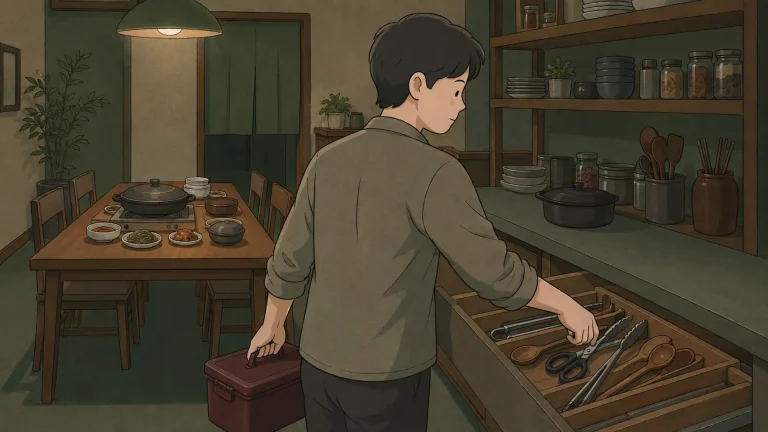
When a birthday morning scene appears, there is almost always a pot on the stove. Not a cake. Not an elaborate breakfast spread. A steaming bowl of miyeokguk (미역국) — seaweed soup. Foreign viewers seeing this for the first time tend to have the same reaction: why soup on a birthday? That question is actually quite accurate. I didn’t know the answer either, growing up. My body knew before I did. On birthdays, there was seaweed soup. That was all there was to it.
Miyeokguk is a soup made with rehydrated seaweed as its main ingredient. The seaweed is first stir-fried in sesame oil, then simmered for a long time with beef or mussels until the broth turns milky and rich. It’s a common enough dish in Korean households — not reserved for special occasions. But the bowl of miyeokguk on a birthday carries a different weight from any other bowl. Same ingredients, same pot. Something else is in it on that day.
What Comes Before the Cake
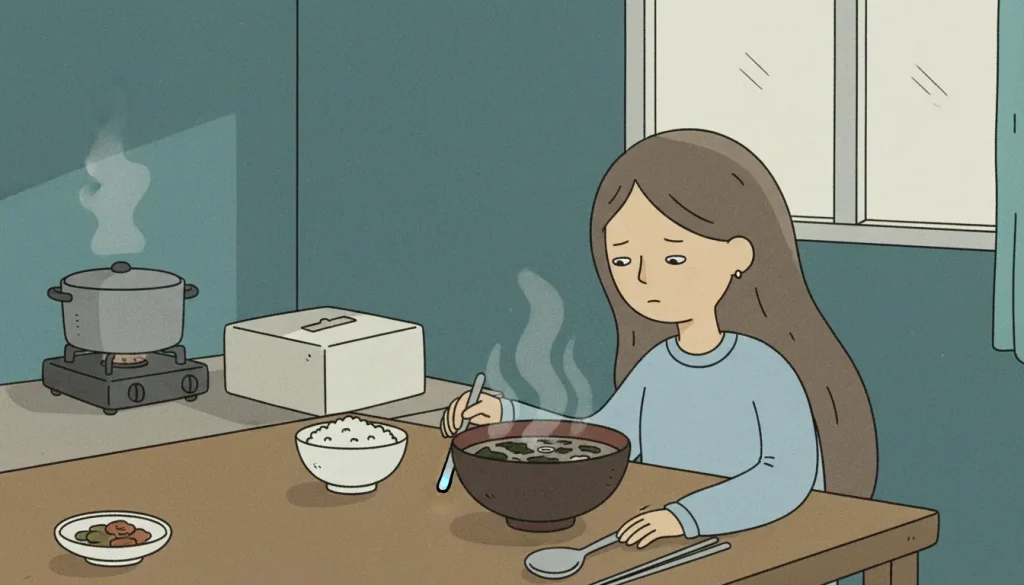
When I was young, birthdays meant friends coming over. My mother would prepare a cake and make food for everyone who visited. But all of that happened in the afternoon. Before the friends arrived, before the candles were lit, before the day properly began — there was always miyeokguk on the morning table first.
The strange thing is how natural that felt. I never asked why it was seaweed soup. Never needed an explanation. Going back to the earliest birthday I can remember, the soup was already there. I didn’t learn the reason and then accept the habit. The habit came first. The idea that birthday mornings meant miyeokguk was stamped into me before any explanation could have reached me.
There was one rule that came with it. My parents said that on birthday mornings, you should not eat red soup. I asked why. They didn’t explain. Just said you shouldn’t. So I didn’t. I still don’t know the exact reason. Like many food rules in Korea, the rule arrived before the reasoning did. I’ll come back to this.
Birthdays sometimes meant eating out. Sometimes meant receiving a cake. But mornings were different. Growing up in the same house as my parents, I have no memory of a birthday morning without miyeokguk on the table. No matter how elaborate the dinner plans were for that evening, the soup came first. If a cake is the front side of a Korean birthday, miyeokguk is the way the day begins.
“You Haven’t Even Had Miyeokguk on Your Birthday”

The first birthday I spent away from home was during university. My mother called. “It’s your birthday and you haven’t even had miyeokguk — what are you going to do?” Her voice carried real concern.
It wasn’t worry about whether I had eaten. It wasn’t a question about hunger. The concern was specifically about the soup not being there.
At the time I didn’t think much of it. What could possibly change because of one bowl of soup? But looking back, that phone call held quite a lot inside it. Miyeokguk requires someone to make it for you. Someone who is alone, someone far from home, someone with no one to look after them — they simply go without. So when a Korean says they didn’t have miyeokguk on their birthday, it doesn’t just mean a dish was skipped. It means no one was there to make it. It means the birthday was spent alone.
That’s why the words land the way they do in Korean. “생일에 미역국도 못 먹었어” — couldn’t even have miyeokguk on my birthday. Any Korean hearing that will pause. Not because food was missing, but because what it signals is that no one was there that day. In Korea, a birthday is not only a day to grow one year older. It is a day to be acknowledged by the people around you. A single bowl of seaweed soup is the quietest, most basic form of that acknowledgment.
At that time, there was almost nowhere to buy it either. Restaurants serving miyeokguk have only started appearing recently, and even now they are uncommon. This was never a dish you went out to order. It was made at home. Which meant that a birthday away from home was a birthday without the soup, from the start.
Younger generations have shifted somewhat. Celebrating with cake and a meal out has become entirely normal, and missing the soup doesn’t carry quite the same weight for everyone anymore. But for the generation above them, it remains different. Not making miyeokguk for a child’s birthday still feels, to many parents, like something left undone.
When a Birthday and an Exam Fall on the Same Day
There is a strange superstition that follows miyeokguk around. Eating it on the day of an exam means you will slip — the logic being that the slippery texture of the seaweed translates into slipping up on the test. In Korean, the expression “미역국 먹었다” — ate miyeokguk — is used to mean you failed an exam or were let go from a job. A birthday food whose name doubles as slang for failure. Both meanings live inside the same dish.
My birthday and an exam actually fell on the same day once. That morning, I didn’t eat the soup. I wasn’t seriously convinced the superstition was true. But there was no reason to do something considered unlucky. I thought of it as an amusing rule and still followed it. Something else went on the table that morning.
After the exam was done, I had the soup. The birthday dish had been pushed back a day by a test. That is strange, if you think about it. A food tied to the occasion of your birth, postponed because of a school exam. But this is how it works in Korea. No one taught me to do it that way. No one insisted. The habits in your body move faster than logic. I just did it.
The One Who Eats This Soup on Their Birthday — But the First to Eat It Was Their Mother
Foreign readers encountering birthday miyeokguk for the first time almost always ask the same thing: why soup instead of cake? Answering that properly means looking at the question of who a birthday actually belongs to.
Seaweed is considered beneficial for women who have just given birth. After delivering a child, mothers in Korea have long eaten miyeokguk during recovery. Rich in calcium and iodine and easy to digest, it was the food a body depleted by childbirth could take in. This tradition of eating miyeokguk during postnatal care has been passed down for a very long time. There is even a record in a Chinese historical text noting that the people of Goryeo began feeding seaweed to new mothers after observing whales eating it following birth.
So when a mother makes miyeokguk for her child’s birthday, it is for the child — but it is also the exact same food she herself ate on that day. The child’s birthday was the day the mother was eating this soup to recover. On the morning the child came into the world, this was what sat on the mother’s table. That soup reappears on the birthday table every year.
Now back to the red soup rule. Why shouldn’t you eat red soup on a birthday morning? I still have no official answer. There is no settled explanation. But placing that rule next to the story of miyeokguk, a thought occurred to me. Mothers who had just given birth were advised to avoid strongly seasoned food. What a nursing mother eats affects her milk, so heavily spiced dishes — especially those with a lot of chili — were to be avoided. The mother’s table during that period was plain and mild. Miyeokguk was the central dish of that table. Perhaps the rule against red soup on birthday mornings is a way of saying: on this day, eat what your mother ate when she brought you into the world. A way of remembering, through the body, what her table looked like on the day you arrived. This is only my interpretation. It is not a confirmed fact. But seeing the soup and the rule sitting next to each other, I find it difficult to believe they come from entirely different places.
The one who eats this soup on their birthday is the child. But the first person to eat it was the mother. The child is eating what the mother ate on the day they were born. In making the soup and placing it on the table, the mother is already remembering that day without saying a word. No grand statement is needed. A hot bowl of soup makes the connection quietly.
There is a reason K-Drama scenes of a mother making miyeokguk in the early hours of a birthday morning are so difficult to pass over. It isn’t a cooking scene. It carries the memory of the day she gave birth, the recovery she went through, and the silent instruction: start this day with this. All of it transmitted through a single bowl, without translation, without ceremony.
I don’t sit down to eat my birthday soup with my mother consciously in mind. I just eat it. It is only afterward, sometimes, that the thought surfaces. The soup that was simply there from the beginning of my memory — it turns out it was the soup my mother was eating the day I was born. That is why the scene in the drama is hard to move past.
Why do Koreans eat seaweed soup on their birthday?
Seaweed soup has long been eaten by Korean mothers during postnatal recovery after giving birth. Because a child’s birthday is the same day the mother first ate this soup, the dish became connected to birthdays as a way of remembering and honoring that moment.
What does it mean when a Korean says they didn’t have miyeokguk on their birthday?
In Korea, miyeokguk is a soup someone else makes for you. Saying you didn’t have it on your birthday often signals that no one was there to make it — meaning the birthday was spent alone or without someone to look after you. Among older generations in particular, this carries a note of sadness.
Is it true that Koreans avoid seaweed soup before an exam?
Yes, this superstition is real and widely known. Because seaweed has a slippery texture, eating it before an exam is considered bad luck — the association being that you might “slip up” on the test. The Korean expression for failing an exam or losing a job is literally “ate miyeokguk.”