
Someone posted on Reddit asking why the word “jeong” keeps appearing in Korean dramas but never seems to translate cleanly into English.
The replies tried. “Love,” someone said. “Attachment,” said another. “A kind of bond.” None of them were wrong, exactly. But none of them were quite right either. Jeong (정) doesn’t align precisely with any of them. Even as a Korean, when I try to explain what jeong is, the words don’t come easily. I know what it is. Explaining it is a different thing.
What It Feels Like When Jeong Forms
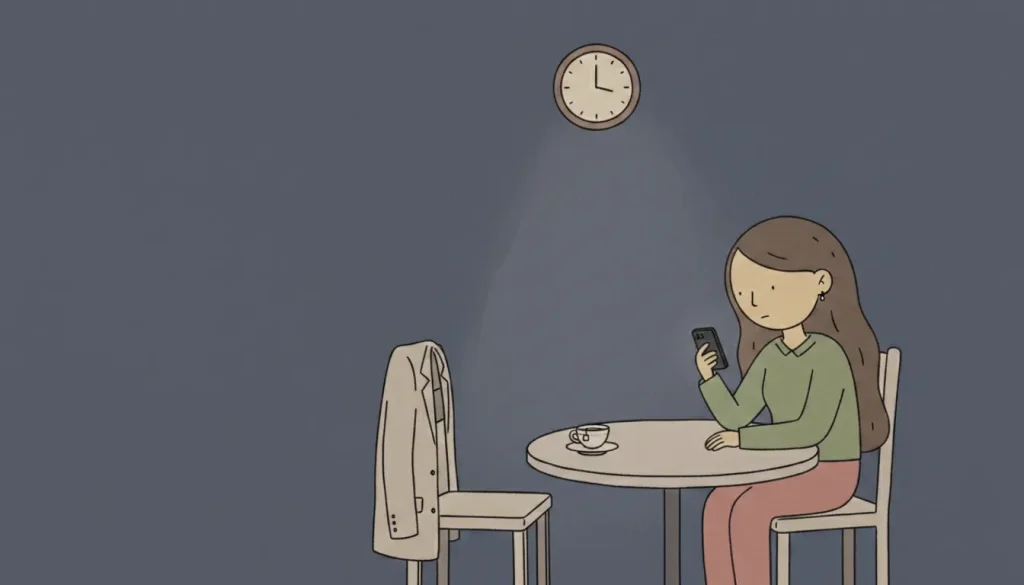
When I decided to leave my job, one person kept coming to mind in a way I hadn’t expected.
We had worked at the same company for about a year. Different departments, different hours. Our work didn’t overlap. But in the months before I left, we ended up eating together several times and talking through the harder parts of the job. At some point, without me noticing when it happened, this person started occupying space in my thoughts. When I made the decision to leave, what I felt wasn’t just relief. There was something that felt close to guilt — I was leaving, and this person was staying behind in a place that wasn’t easy. That’s not a feeling I expected to have about a colleague.
After I left, I kept calling. Not because I had anything particular to say. I just wanted to know how they were doing. I still call sometimes, even now. That was when I understood: I had developed jeong for this person.
The difference between someone you have jeong for and someone you’re simply close to is something like this. A close friend — you’re glad to see them, the conversation is enjoyable. But the person you have jeong for occupies your thoughts even when they’re not there. You find yourself wondering what they’re doing, whether they’ve eaten. You call them for no real reason. When the call happens, nothing important gets said — a few small jokes, some ordinary talk, and then goodbye. But that’s enough. You heard their voice. Something settles.
It’s Not About Time
It would be easy to assume that jeong requires a long history. It doesn’t, necessarily.
An hour of conversation can be enough, if the emotional exchange goes deep enough. Conversely, years of proximity without genuine emotional contact won’t produce it. Jeong is made by the quality of the exchange, not the length of time.
There is a particular way Koreans build jeong: eating together. Within the same team at a workplace, the people you’ve sat across from at a meal are different from those you haven’t. When leaving a job, the farewells that feel heaviest tend to be with the people you’ve shared a table with, even once. A shared meal isn’t just food. It’s a way of opening a door between people.
The Kind of Jeong That Comes From Dislike

Korean has an expression — miun jeong (미운 정). Literally, “hateful jeong.” It describes the state of having jeong for someone you also find irritating or difficult.
The relationship it fits most naturally is siblings. After that, a long-term partner. Living alongside someone day after day means that frustration accumulates. But so does jeong. The result is that you can feel genuinely annoyed by someone and also find yourself worrying about them. You can be tired of a person and still notice when they’re absent. These two things coexist, and that coexistence is miun jeong.
It’s also why ending a long relationship can be so difficult even when the feelings have clearly changed. The emotional logic says it’s time to move on. But the jeong that has built up over years doesn’t dissolve on a schedule. Koreans say jeong ttaemune mot kkeunda — “can’t cut it off because of jeong.” That’s the condition: knowing it should end, but being held in place by everything that accumulated between two people.
The childhood friends from the same neighborhood, the person you were with for years — even after those connections break, they surface unexpectedly. That surfacing is what jeong leaves behind.
The Neighbor Who Called Me In for Dinner
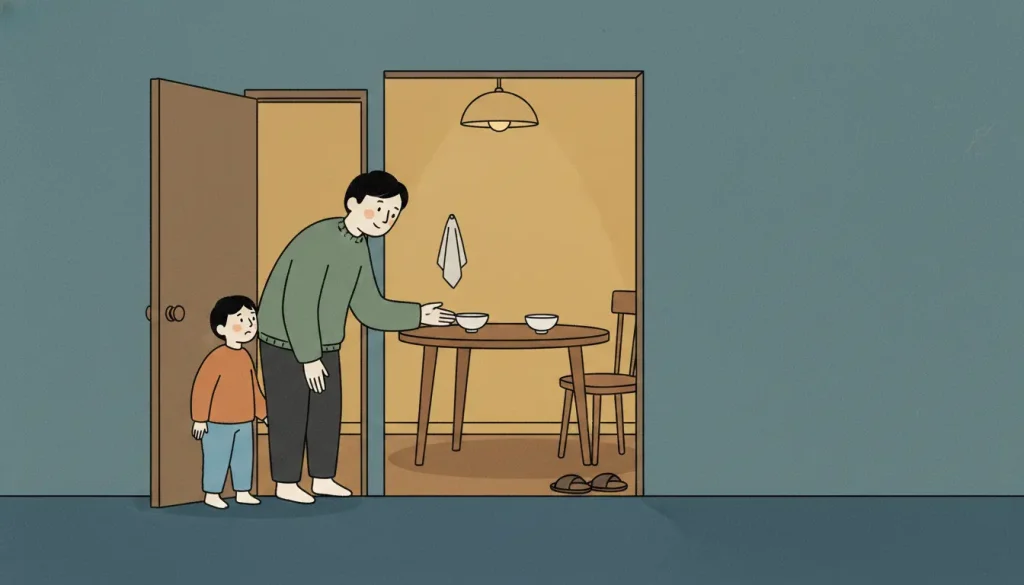
There is a memory from my childhood that I think about when I try to explain what jeong actually looks like in practice.
It was dinner time, and my parents were arguing badly. The argument went on, and the meal never got made. About thirty minutes in, the woman from next door came quietly to our door and called me out. “Your mom and dad will make up soon,” she said. “Come eat at our house.” She took me to her home and fed me alongside her own children. While I was eating there, the elderly couple from another neighboring house went to my parents and told them firmly that they shouldn’t be fighting in front of their child.
None of these people were relatives. They were neighbors — people my family had come to know after moving to that neighborhood. But through years of living alongside each other, jeong had formed. And when jeong is there, a child going without dinner because her parents are arguing feels like something that requires a response.
That is jeong in its most direct form. Not obligation. Not duty. A neighbor’s child is hungry and that is not acceptable, so you do something about it.
What’s Being Lost
Jeong is less common now than it used to be. I think that’s true.
Korean society has become more individualized. The habit of watching out for others — for their meals, their moods, the state of their day — has become less automatic. The neighbor who would quietly take in a child during a difficult evening, the older couple who felt entitled to tell parents to stop fighting in front of their kids — these things happen less now. People stay in their own spaces more.
Jeong begins with attention. Wondering whether someone has eaten today. Noticing that someone seems off and thinking: are they alright? These small attentions, repeated over time, are what jeong is made of. In Korea, the traditional form of expressing that attention has always been food — sharing a meal, asking about hunger, calling for no particular reason except to check in.
If you want to explain jeong to someone who has never encountered the concept, this is one way to try. If a Korean person keeps track of whether you’ve eaten, notices small things about your day, and reaches out not because something important happened but simply because you came to mind — that person has developed jeong for you. And if you find yourself calling someone with nothing to say, having a conversation about nothing, and feeling somehow satisfied by it — if that keeps happening with the same person — what you’re describing is jeong forming in you too.
It doesn’t require a label. It doesn’t require a ceremony. It just shows up, the way it showed up for a neighbor who decided a child shouldn’t eat dinner alone.
What does jeong mean in Korean?
Jeong is a Korean concept that describes a deep emotional bond that forms between people over time through shared experiences, shared meals, and genuine attention to each other’s daily lives. It doesn’t translate cleanly into English — it’s not exactly love, friendship, or attachment, but something that sits between and beyond all of these.
How is jeong different from just being close to someone?
Someone you’re close to makes you happy when you’re together. Someone you have jeong for occupies your thoughts even when they’re apart from you — you find yourself wondering about them, calling without a specific reason, feeling settled just from hearing their voice. Jeong tends to create a sense of responsibility and care that goes beyond typical friendship.
What is miun jeong in Korean?
Miun jeong, or “hateful jeong,” describes the state of having jeong for someone you also find difficult or irritating. It’s most commonly felt toward siblings or long-term partners — people you’ve lived alongside long enough that frustration and affection have built up at the same time. It explains why some relationships are hard to end even when they’re clearly difficult.
