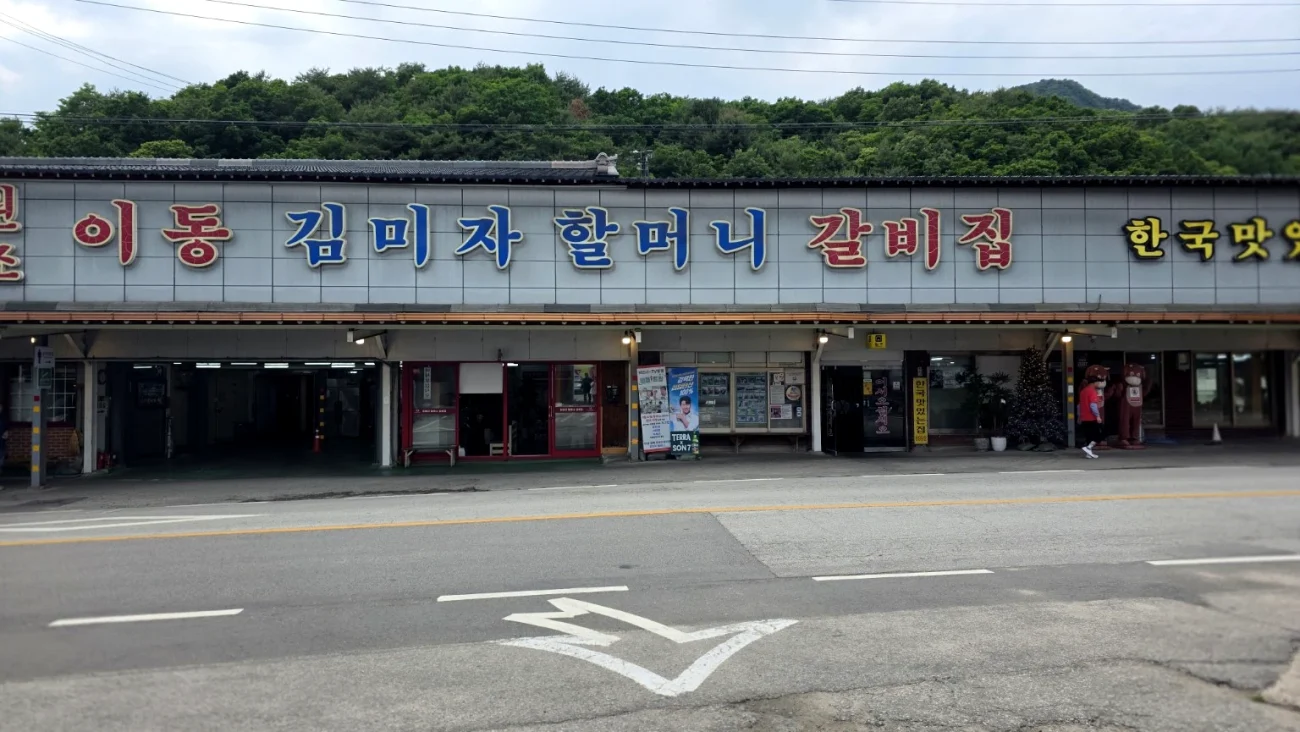
Idong galbi (이동갈비). If you know a little Korean, this name might make you pause for a second. Idong means “to move” in Korean, so could this be “moving galbi”? Let me answer right away: no. Here, Idong is the name of an area in Pocheon. A galbi restaurant became famous in a neighborhood called Idong, and so it became Idong galbi.
That day I had left home early, made my way through Pocheon Art Valley and Hantangang Sky Bridge, and stopped at this Idong Galbi Village as the last thing before heading home. The two things that come to mind first when you say Pocheon are galbi and makgeolli (막걸리, a traditional Korean rice wine), so nothing suited the close of the day better than this.
Why Pocheon Is Famous for Idong Galbi
There’s an interesting pattern you see in Korea. When a restaurant becomes a big hit with one particular dish, similar places spring up one after another around it. And each insists that it is the “original.” “The Original Galbi,” and then next door, “The Original Among the Originals.” One restaurant’s success can color a whole street with the same dish.
Idong Galbi Village came to be in much the same way. The story usually told traces it back to the 1960s. Back then, the Idong area of Pocheon had many Korean army units nearby. It’s often said that parents who had sent their children off to the military would come during visits or leave, looking to feed their sons a warm meal, and would seek out galbi. Word of the taste spread, carried far along the memories of military families.
So this place isn’t a restaurant you simply drop into while passing by. It has become somewhere people travel to on purpose, from as far as Seoul or the Chungcheong region, just to eat this galbi. The fact that it sits well away from any busy thoroughfare says something about its character. As one restaurant’s reputation spread outward, galbi places gathered around it until they formed a village of their own.
Walking Into the Restaurant: A Dead Tree and Winter Dongchimi
I arrived around four in the afternoon, an odd hour, so the restaurant was fairly quiet. Even so, people were grilling galbi at about four of the tables.
In Korean restaurants, it’s common to make yourself a cup of instant coffee right at your seat after a meal. This place was different. Perhaps because lingering over coffee at the table would slow down how quickly seats turned over, the coffee was set up in a separate space you moved to. In that free-coffee corner stood something curious: a dead tree wrapped in a straw mat, with thousand-won bills tucked here and there into it. I found myself imagining that people saw the tree as some source of the restaurant’s good fortune, and made small wishes in front of it.
We sat at a table. Many of the staff were foreign workers, and among them was one older Korean employee. The foreign staff didn’t say much to us, perhaps because they weren’t comfortable with the language, but that Korean employee struck up warm little conversations.
As soon as we sat down, dongchimi (동치미) arrived. It’s a kind of Korean kimchi, but one that can surprise anyone who pictures spicy cabbage kimchi: it’s a watery radish kimchi, fermented in brine. Koreans traditionally made it in winter and ate it with a thin film of ice still floating on top. These days, with refrigerators, it’s made year-round, but honestly the old taste rarely comes through anymore. The dongchimi here, though, was close to the one I remember eating on winter days as a child. Before the galbi had even arrived, I’d come to trust the place a little.
What Idong Galbi Actually Tastes Like (And How It’s Different)
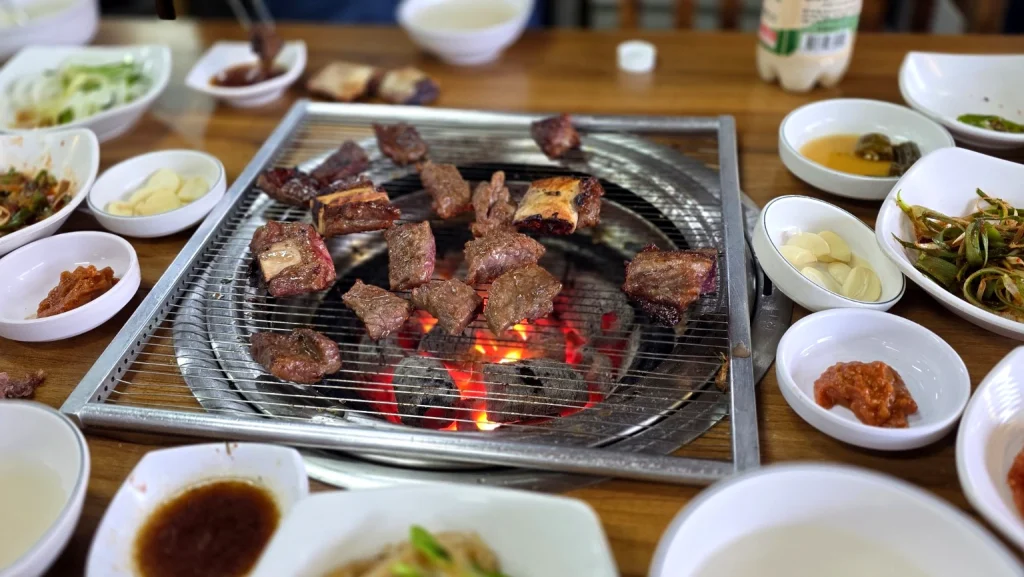
Idong galbi is made from Korean beef short ribs. What came out was meat still attached to the bone. Honestly, the marinade on the galbi itself was ordinary. What was really good was the dipping sauce. Dipped in that sauce and put in the mouth, the meat was tender. Of course, beef is only tender when you don’t grill it too long, so half of that tenderness is a matter of timing on the grill.
Here’s something worth saying plainly. On taste alone, I can’t claim Idong galbi is dramatically different from an ordinary galbi house or a typical Korean BBQ. The marinade, the side dishes, the way it’s grilled, none of it strays far from galbi elsewhere. The real specialness of Idong galbi isn’t on the tongue. It’s in the place.
A galbi house in central Seoul mostly draws people dropping by or meeting up by appointment. This place, though, still doesn’t sit on a path people pass along easily. And yet people travel from far away just to eat this galbi. Even if it’s the same beef short ribs, the fact that it’s “galbi you came all this way to eat” adds a layer to the flavor. That’s the taste of Idong galbi that isn’t written on the menu.
Eating Idong Galbi With Parents: What to Expect and Order
It was a comfortable spot to eat with my parents, too. We grilled the meat ourselves, but a staff member looked in often and cut the meat at the right moment. Thanks to that, the elders could eat without any fuss, and the meat was tender enough to be easy for older diners.
If any foreign reader visits Idong Galbi Village after reading this, let me leave a few tips drawn from experience. First, the menu. Marinated galbi was cheaper than unseasoned galbi, and to my taste, more delicious. Prices may change down the line, but at the time of my visit, marinated galbi was 47,000 won per portion and unseasoned galbi was 57,000 won, making the marinated one about 10,000 won cheaper. I couldn’t confirm whether a single portion can be ordered on its own, so if your group is small, it’s safer to ask in advance.
How to Get to Idong Galbi Village From Seoul
I drove there myself, but if you’re coming by public transport, the good news is that all roads here lead to the same place, wherever you start. The catch is that buses out this way run infrequently and usually require a transfer, so it’s worth checking real-time arrivals on the Gyeonggi Bus Information System (GBIS) before you set out.
If you’re heading straight from Seoul, take the 3006 express bus from Gate 25 at the Jamsil Wide-Area Transfer Center, get off near Daejin University or Pocheon City Hall, then transfer to a local bus such as the 138-5 or 138-6 and get off at Dopyeong-ri (Idong Terminal), a five-to-ten-minute walk from the village. Counting the wait, set aside roughly two and a half to three hours.
If you’re coming after Pocheon Art Valley, take bus 73 from the Art Valley entrance to Pocheon City Hall, then transfer to the 10, 138-5, or 138-6 toward Idong. Bus 73 runs only about every two hours, so if the timing doesn’t line up, a taxi to the city hall saves a lot of waiting. The whole trip takes about an hour and a half to two hours.
And if you’re finishing the day at Hantangang Sky Bridge, catch bus 53 from the bridge’s parking lot to Yangmun-1-ri Terminal, then transfer to the 138-6 or 138-7 toward Idong. Be warned that bus 53 runs only about five times a day, so this is the route that most rewards checking the schedule in advance, or splitting the difference with a short taxi ride to the transfer point.
Why Idong Galbi Is the Right Way to End a Pocheon Day
You set out after breakfast, get by on nothing but snacks along the way, and then, before heading home, seek out a famous galbi house for a proper meal. As a way to close the day, nothing could have been better.
Let me come back to that name once more. The Idong in Idong galbi isn’t movement; it’s the name of a place. Galbi that parents once fed their children on military visits became, over sixty years, a food people travel to seek out from far away. The two things Pocheon brings to mind: galbi and makgeolli. I had to drive, so in the end I never got to drink the makgeolli. And that’s exactly why, if there’s anyone reading this and picturing a trip to Pocheon, I’d like to suggest it: find the most famous galbi house in Pocheon, and pair a bite of galbi with a glass of makgeolli. That one glass I set aside for the steering wheel, I hope you’ll empty in my place.
What is Idong galbi?
Idong galbi is a style of Korean beef short ribs associated with the Idong area of Pocheon, north of Seoul. Despite the name, Idong doesn’t mean “moving”; it’s a place name. The galbi is typically served on the bone, grilled at the table, and eaten with a dipping sauce, much like other Korean BBQ but tied to a specific local identity.
Why is Pocheon famous for galbi?
The story usually told is that galbi restaurants in Pocheon’s Idong area grew popular in the 1960s, when many army units were nearby and visiting military families came to eat. Word of the taste spread, and over time more galbi restaurants gathered in the area until they formed what’s now known as Idong Galbi Village.
Is Idong galbi different from regular Korean BBQ?
On taste alone, not dramatically. The marinade, side dishes, and grilling are similar to other galbi houses. What sets Idong galbi apart is its location and history: it sits away from busy areas, yet people travel from Seoul and beyond just to eat it, which adds meaning to the meal beyond the flavor itself.
How much does Idong galbi cost?
Prices change over time, but at the time of my visit, marinated galbi was about 47,000 won per portion and unseasoned galbi about 57,000 won, so the marinated version was roughly 10,000 won cheaper, and to my taste, better. If your group is small, ask in advance whether a single portion can be ordered on its own.
Is Idong Galbi Village worth visiting after sightseeing?
Yes, especially as the final meal of a Pocheon day trip. After visiting spots like Pocheon Art Valley or Hantangang Sky Bridge, a proper galbi dinner makes a satisfying close. Just note the locations aren’t clustered together, so allow enough travel time between them.
