Pocheon Art Valley: How an Abandoned Quarry Became a K-Drama Lake
My visit to Pocheon Art Valley began when a family plan disappeared. My parents and I were already in Pocheon, so the former quarry and its lake became our first unplanned stop. I had seen Cheonjuho on screen, but I wanted to know what the cliffs felt like when they were no longer a drama backdrop.
I also saw this place on a screen first. Cheonjuho is the lake where the character played by IU falls into the water in Moon Lovers: Scarlet Heart Ryeo. Yet I did not visit on a filming-location pilgrimage. I went because our original plan suddenly disappeared.
In early summer 2026, my parents and I drove to Pocheon to visit a distant relative. An unexpected hospital visit made our meeting impossible. We were already in Pocheon, so instead of going straight home, we decided to explore nearby. The resulting route began at Pocheon Art Valley, continued to Hantangang Sky Bridge and Bidulginang Falls, and ended with Idong galbi.
The purpose of our trip vanished, but the day did not. Travel itineraries can be surprisingly good at turning blank spaces into destinations.
An Abandoned Quarry Can Become This Beautiful
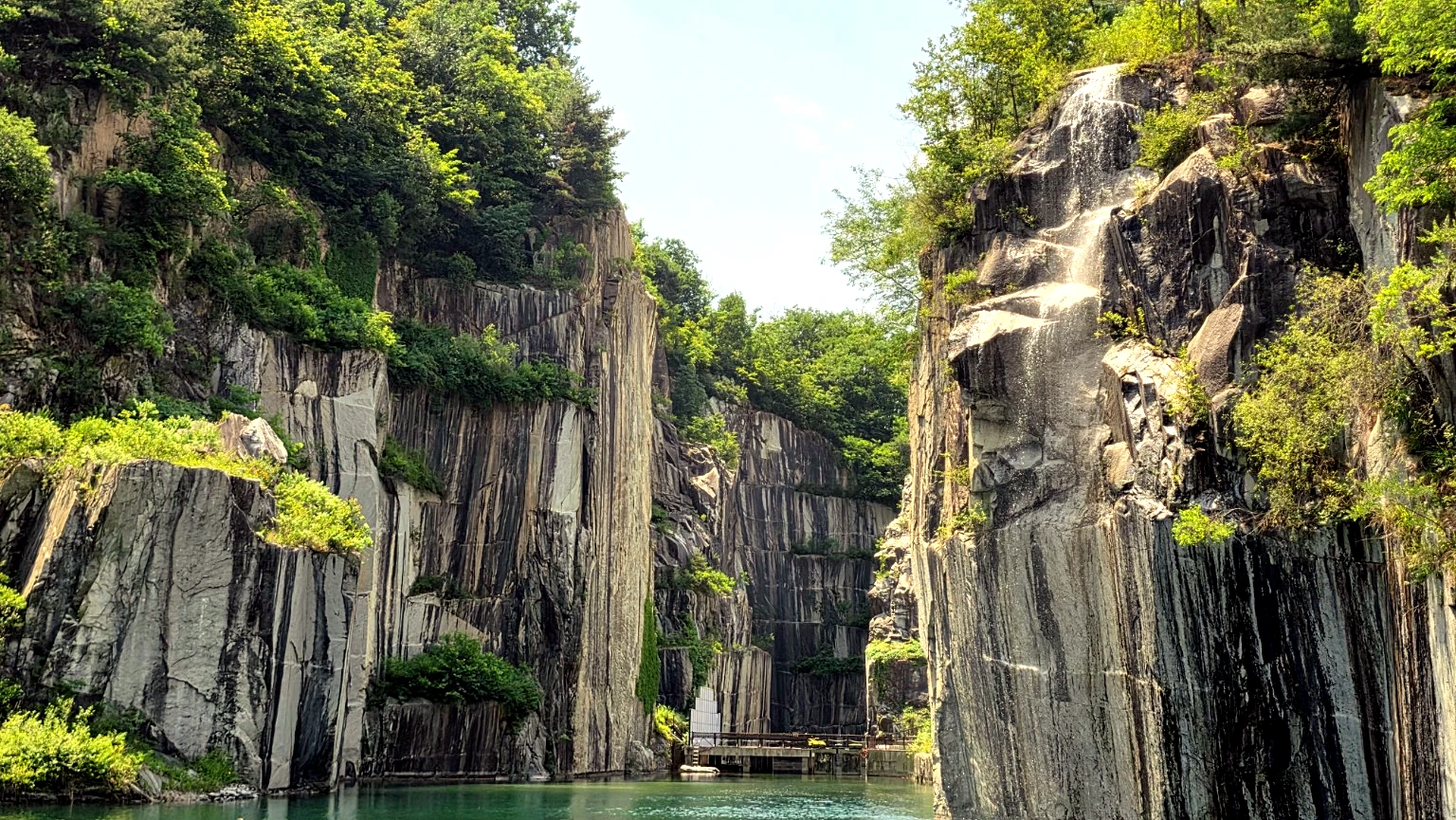
Pocheon Art Valley was once a granite quarry. After quarrying stopped, the abandoned site was restored as a cultural and arts space. Spring water and rainwater collected in the excavated hollow and formed Cheonjuho Lake. The Korea Tourism Organization also identifies the astronomical observatory and sculpture garden as major attractions.
My first thought, however, had little to do with a facility list.
“So an abandoned quarry can be made this beautiful.”
I remember an art museum near the entrance, but we did not go inside. I saw a few outdoor installations, yet they were not the main attraction for me. The cut granite walls and the lake beneath them felt like the largest artwork on the grounds.
Anyone hearing the name “Art Valley” might imagine an outdoor museum packed with exhibitions. My experience was different. It felt less like a museum explaining nature and more like a place where nature had rewritten the wound left by quarrying. The installations had their place, but the scenery itself was already doing most of the artistic work.
I Took the Monorail Because I Was With My Parents
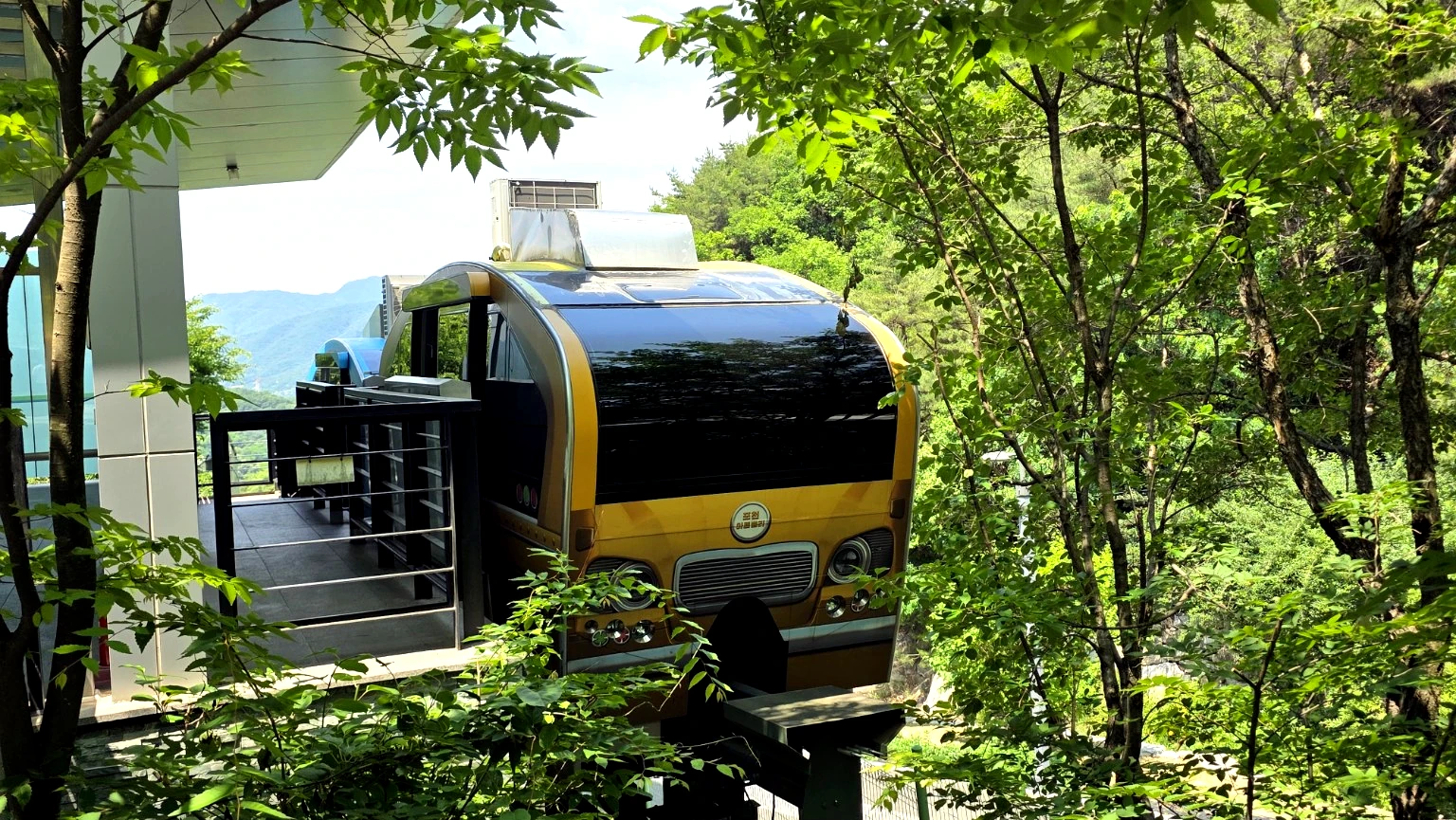
After buying admission tickets, we headed to the monorail platform. Walking uphill was possible, but I bought monorail tickets because I was traveling with my parents. According to the official visitor guidance, the entrance slope is about 400 meters long with an average gradient of 22 degrees. Walking takes roughly 15 minutes, while the monorail ride takes about six minutes each way. Cheonjuho and the upper park still have to be explored on foot.
Convenient, but the View Was Not What I Expected
The ride was short. It certainly helped conserve my parents’ energy, especially because we planned to visit the Sky Bridge and Bidulginang Falls afterward. Saving our legs at the beginning of the day was a sensible choice.
I was disappointed, though, because I could not properly enjoy the surrounding scenery during the ascent. I had expected the view from a vehicle climbing a mountain to be part of the attraction. From my seat and under the conditions that day, it was mainly transportation rather than a sightseeing ride.
Other visitors have reported different experiences. One international traveler loved watching the forest gradually give way to the cliffs through the large windows. A family visitor found the car too crowded to appreciate the view. Where you sit and how busy the car is apparently make a real difference.
I would not describe the monorail as an essential scenic ride. It is more useful as a way to preserve energy for parents, young children, or anyone who finds slopes difficult. If the weather is cool and everyone walks comfortably, going uphill on foot is a reasonable alternative. Just remember that the walking continues after the monorail. Buying a ticket does not automatically give your legs the day off.
Cheonjuho Looked Better in Person Than on Screen
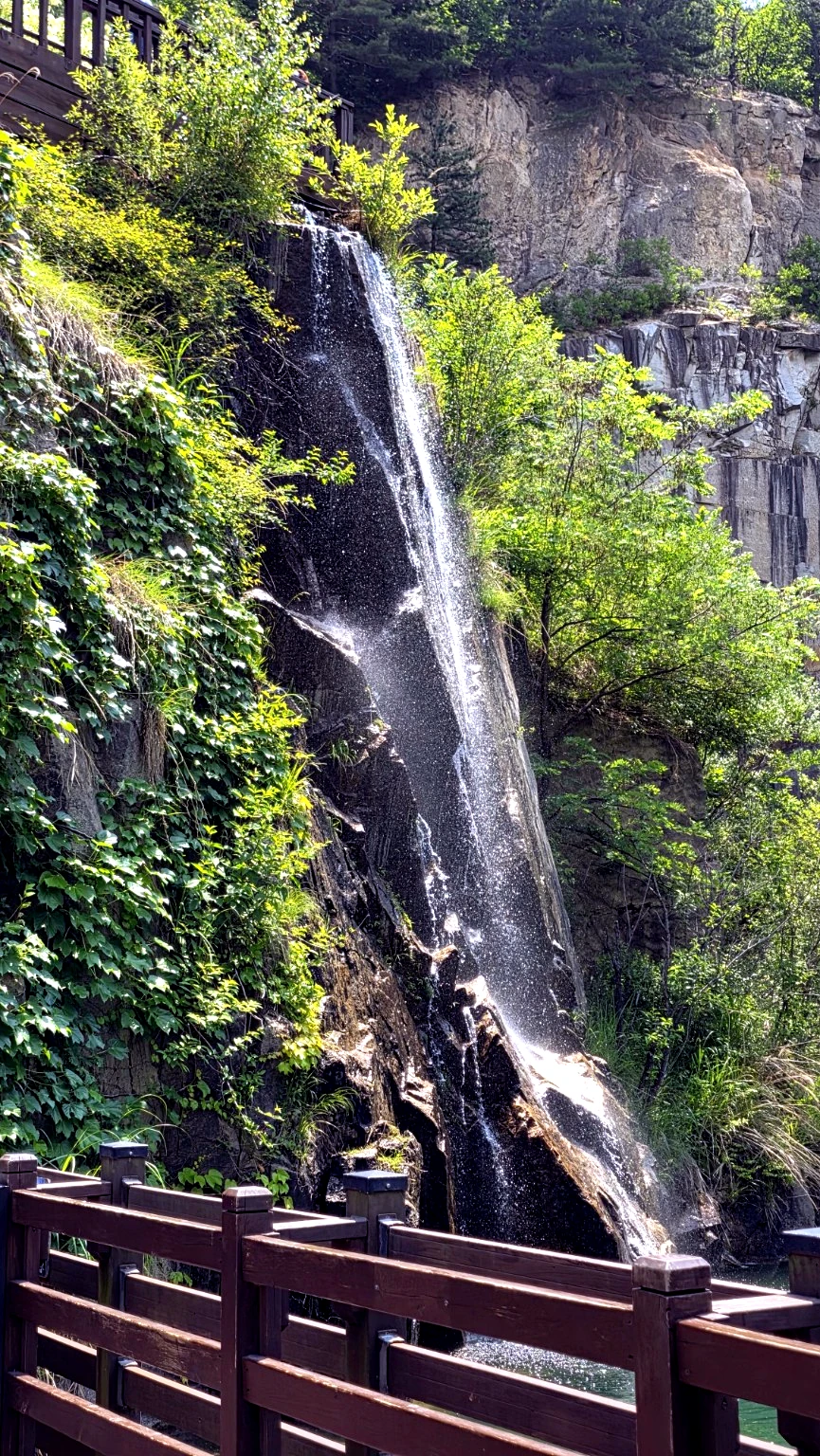
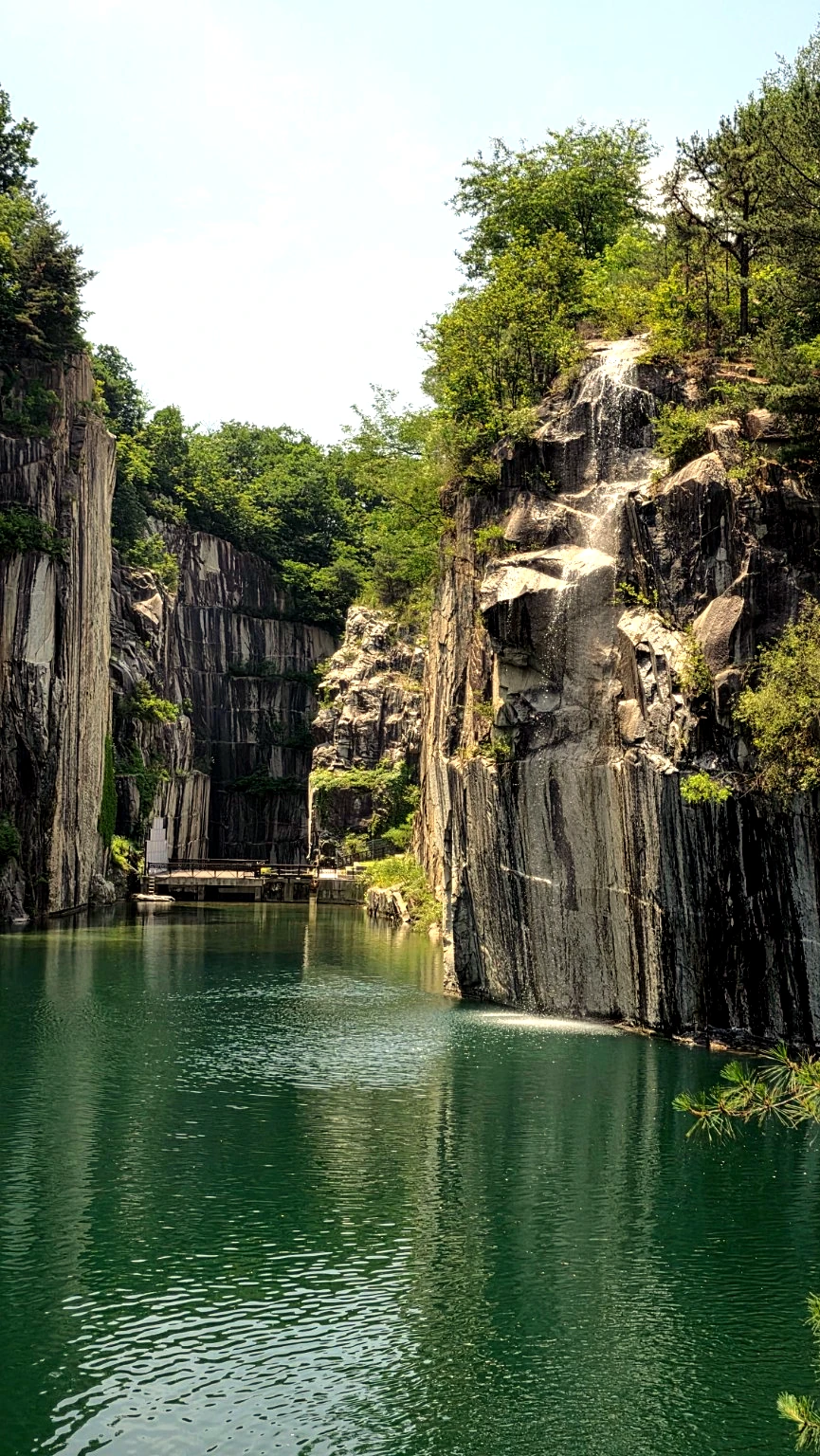
After leaving the monorail and walking farther inside, we reached Cheonjuho and its granite cliffs. I already knew the setting from television, but it looked more beautiful in person. On screen, the lake and cliffs had been a backdrop. Standing there, I could experience them as one broad space.
The artificial waterfall beside the lake was prettier than I expected too. It was not huge, but its movement softened the hard cliff and still water around it. The phrase “abandoned quarry” suggests something dry and scarred. Instead, rock and water now share the same view. Seeing the industrial past and the quiet present at once is what makes this place distinctive.
Other visitors remember the same scene for different details. Public reviews describe the lake changing color between sunlight and shade and the cliffs reflecting on the surface. One traveler said they spent over an hour taking photographs beside a lake used in several dramas. The heat prevented me from lingering that long, but I understood why others did.
The Pretty View Comes With More Walking Than Expected
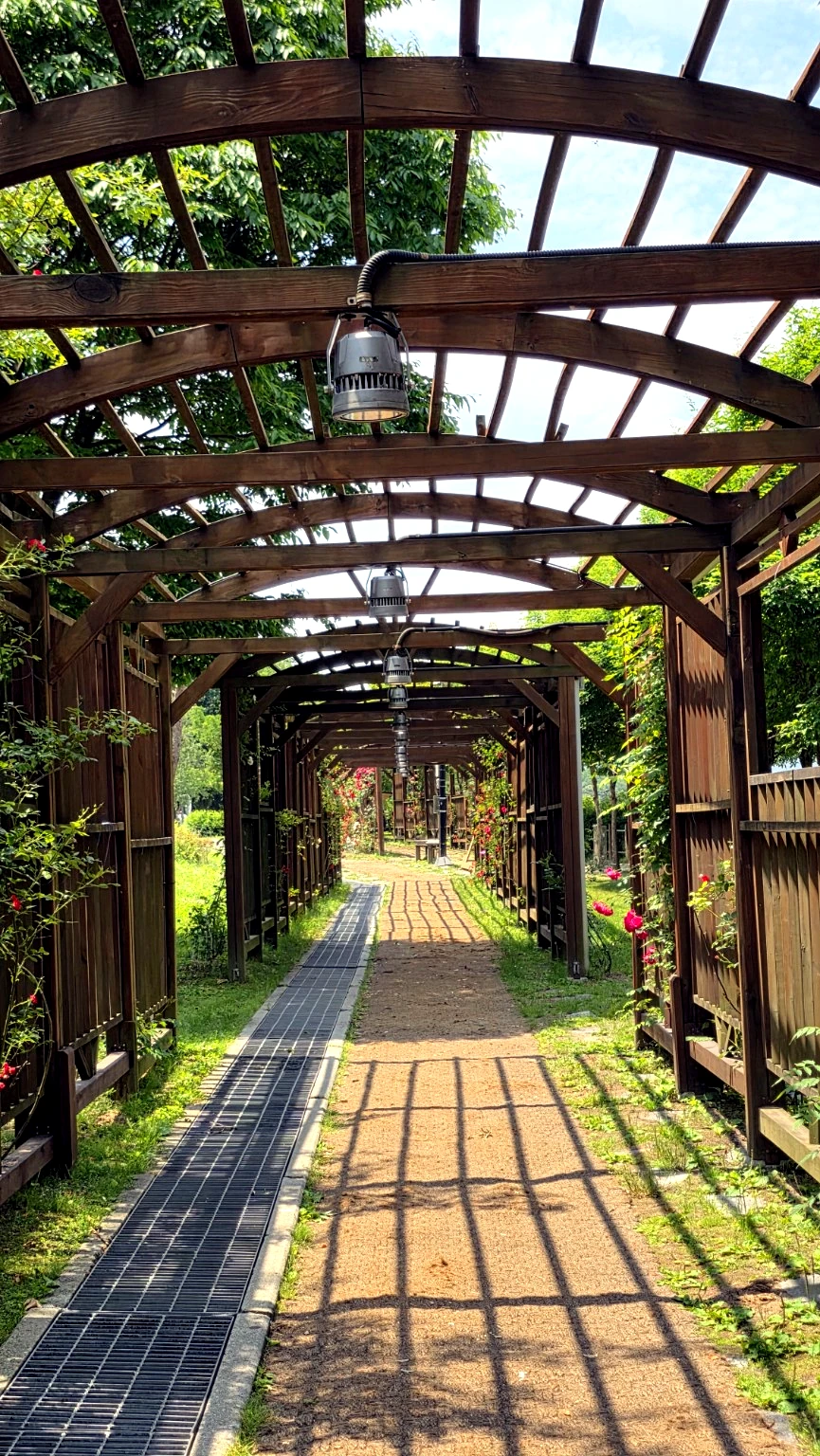
It was extremely hot when we visited. The park was not crowded on a weekday afternoon, and many of the visitors appeared to be older adults. Several escaped into a shop to buy ice cream. I was looking at cool water, but sadly, the scenery did not lower my body temperature.
The Path I Could Not Finish
I tried to climb toward the beginning of the lake, where the water drops down. At first it seemed as if the viewpoint must be only a little farther ahead. The combination of heat and incline gradually made each step heavier, and I eventually turned around. I cannot say whether low stamina or high temperature deserves more blame. They probably worked together very efficiently.
Even without reaching the top, looking down from partway up felt wonderful. The valley opened all at once below me, and the stuffed, heavy feeling I had carried up the slope simply drained out of my chest. I still wanted to continue, but turning back was wiser than pushing everyone too far on a hot day with my parents.
Other visitors also describe Pocheon Art Valley as more of a walk than they expected. One reviewer joked that the outing felt closer to hiking despite the photogenic lake and cliffs. Another climbed the stairs to the Sky Garden and felt that the panoramic view over the lake and surrounding mountains justified the effort. The openness I felt halfway up must be much stronger from the top.
Those are other people’s experiences of places I did not reach. I did not thoroughly explore the sculpture park, observatory, performance areas, or every lookout, so I cannot recommend them as if I personally completed the route. I can say that anyone with limited mobility should not assume the monorail eliminates all walking. Slopes and stairs remain in the upper park.
Weekday Quiet Was Both a Benefit and a Disappointment
Pocheon Art Valley was peaceful on our weekday visit. We did not have to squeeze through crowds, wait for a clear photograph, or stand in a long monorail line. That quiet may be ideal for travelers who mainly want to see the lake and cliffs. International reviews likewise mention arriving to find the place uncrowded, with room to look around and take photographs at their own pace.
At the same time, the attraction did not feel especially full beyond the lake that day. There was no performance, and the heat discouraged us from seeking out the museum and every other facility. The “valley” in Art Valley stayed with me much more clearly than the “art.”
I got the impression that weekends bring outdoor performances, but I did not see one myself, and the official schedule is the only reliable place to check. Evening lighting and events vary by date and season, however, so they should not be treated as guaranteed. Check the official Pocheon Art Valley website for that day’s hours, last admission, and events before leaving.
I Would Return on an Autumn Weekend Near Sunset
If I return, I would choose a cool autumn weekend. Arriving in the late afternoon, walking slowly, and staying long enough to see the early evening lights could reveal a very different Art Valley from the one I saw in the summer heat. A performance would make the spaces that felt quiet on my visit more lively as well.
That is a hope, not something I have already experienced. Schedules and evening programs can change. The official information also distinguishes between last admission and closing time, so anyone planning a sunset visit should check the entry cutoff first.
For a full Pocheon day trip, Art Valley works well with nearby destinations. My family continued to Hantangang Sky Bridge and Bidulginang Falls, then ate Idong galbi before driving home. Combining all three also creates more walking than the itinerary may suggest. With parents, it is better to shorten one stop according to the weather and everyone’s condition than to complete every route and exhaust the whole family.
Our day began because a planned meeting could not happen. I never reached the upper lake viewpoint, entered the museum, or watched a performance. Still, the lake beneath the cliffs looked better in person than it had on screen.
If you visit Pocheon Art Valley, check the weather and the last admission time before you leave. Use the monorail when you need to save energy, but expect more slopes and stairs after you get off. I would allow about two hours, carry water, and shorten another stop if your companions are already tired.
FAQ
Is Pocheon Art Valley worth visiting?
Yes, if you enjoy unusual landscapes or want to see a K-drama filming location. Think of it as a former quarry transformed into a lake and cultural park rather than a huge outdoor art exhibition. For me, Cheonjuho and the granite cliffs were far more memorable than the individual artworks.
Do you need to take the monorail at Pocheon Art Valley?
No. Official guidance says the uphill walk takes about 15 minutes, while the monorail takes about six minutes. I used it to conserve energy because I was with my parents, although I could not enjoy much of a view during my ride. Decide based on the weather and your companions’ mobility. The monorail fare is separate from admission.
How long do you need at Pocheon Art Valley?
The official site suggests roughly one to two hours. The real time depends on whether you see only Cheonjuho or also walk to the sculpture park, lookouts, and astronomical science center. I shortened our visit because of the heat and did not complete the upper path. Allowing around two hours is safer if you want to explore several facilities.
Is Pocheon Art Valley suitable for elderly parents?
It can be, but the monorail does not remove every slope or stair. We used it to avoid the entrance incline and shortened our walking route in the heat. Judge the visit by your parents’ usual walking distance and the temperature rather than age alone. Water, a hat, and comfortable shoes are useful.