Hantangang Sky Bridge and Bidulginang Falls: A Rained-Out Walk I’d Still Recommend
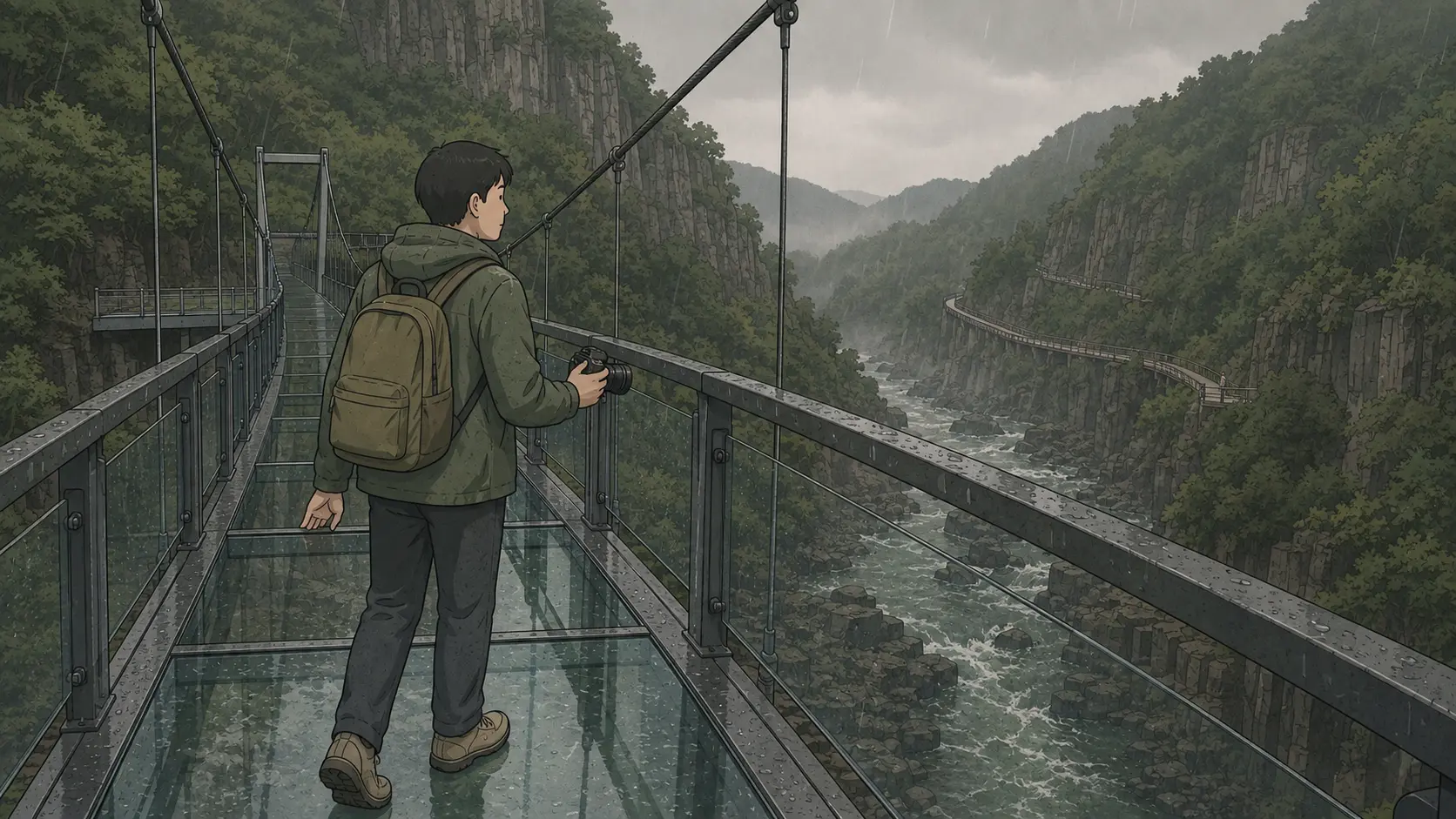
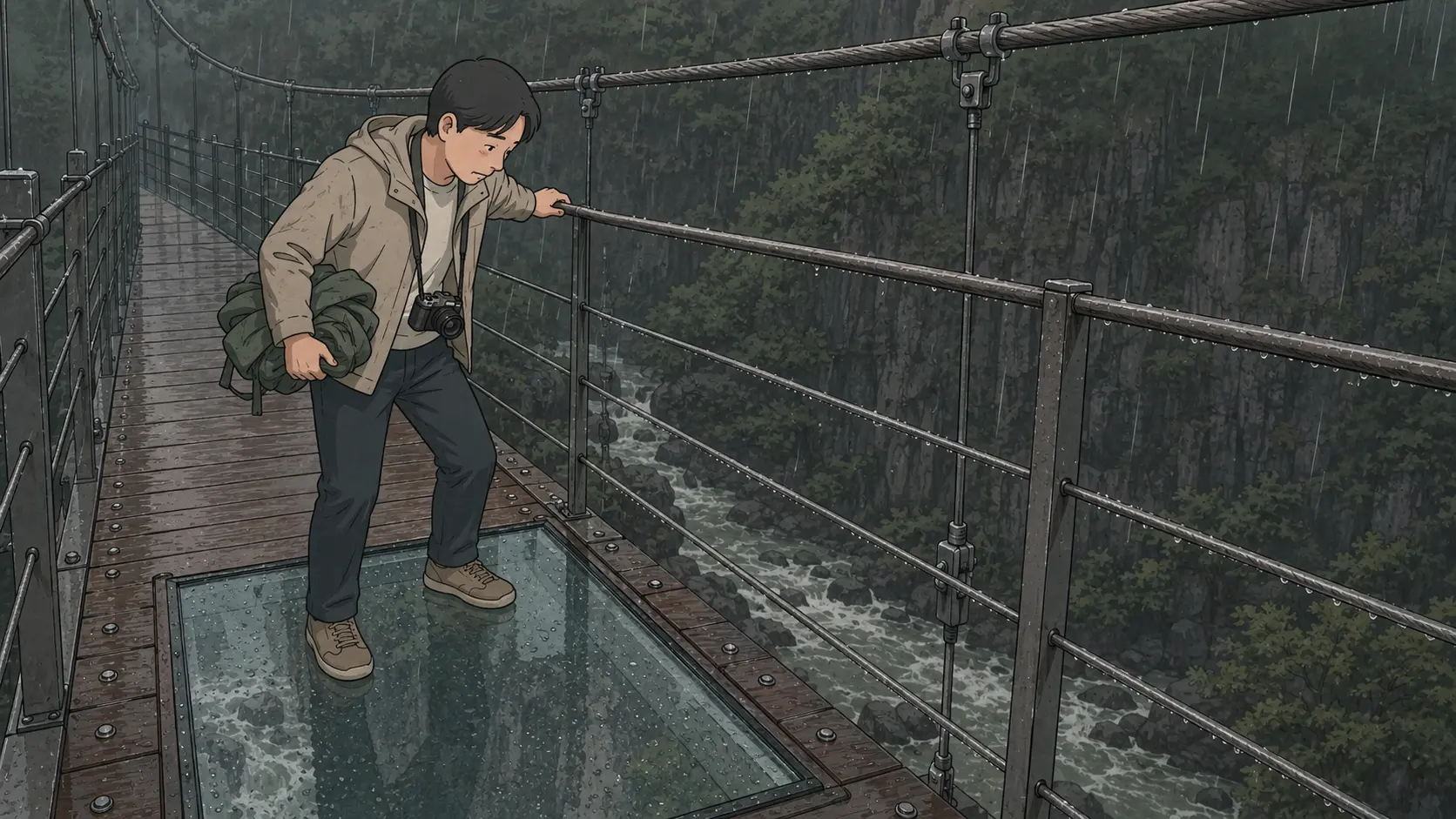
The rain had just begun to fall while I was standing in the middle of Hantangang Sky Bridge in Pocheon. A deep gorge opened beneath my feet, with the fast-moving Hantangang River running through it. When I looked through one of the glass floor panels, the chill seemed to start at the soles of my feet.
I’ll be honest. Heights are not my thing. I held the railing a little tighter.
Travelers looking up this place tend to ask similar questions: How frightening is the glass floor? Can you walk from the bridge to Bidulginang Falls? Is the whole area feasible as a day trip from Seoul? My answer is slightly complicated but clear. Rain kept me from completing even half of the walk I had planned, yet that unfinished route is exactly why I want to return.
I was traveling with my parents that day. We visited Pocheon Art Valley first, then continued to Hantangang Sky Bridge and Bidulginang Falls. Our final stop was dinner: Idong galbi, Pocheon’s famous grilled beef ribs, before driving home. It was a satisfying combination for a day trip—Art Valley’s lake, the gorge, and the meat—but travel plans become surprisingly flexible when rain and a parent’s tired legs enter the discussion. Ours certainly did.
I Crossed the Original Hantangang Sky Bridge
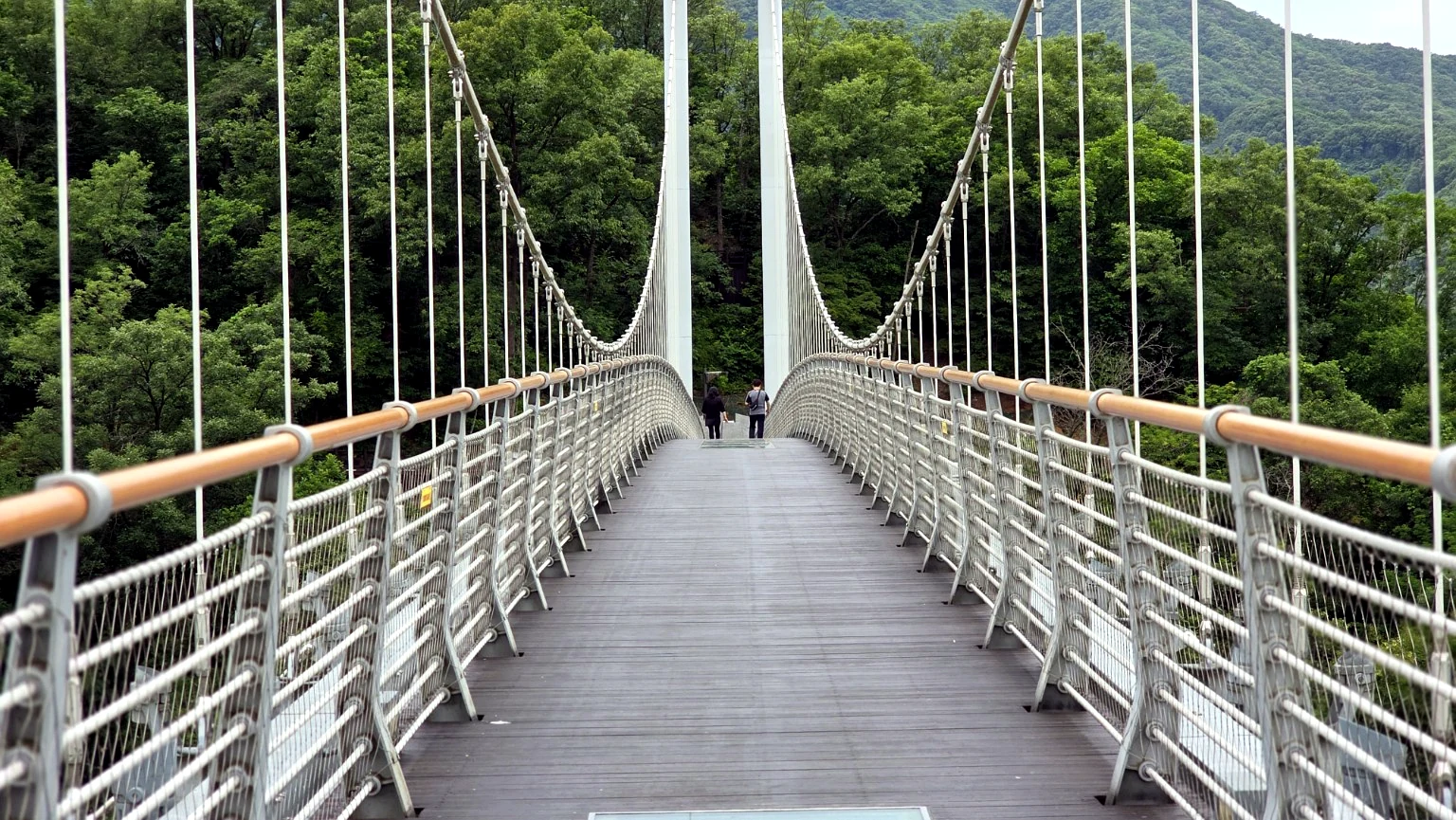
The name needs a little clarification. The bridge I actually crossed was the original Hantangang Haneul Dali (한탄강 하늘다리, Hantangang Sky Bridge). It is a straight pedestrian suspension bridge spanning the gorge, and it is not the newer Hantangang Y-Shaped Suspension Bridge.
The newer bridge is easy to recognize in photographs because its three arms meet over the gorge. I did not reach it myself. I had heard that the trail beyond the original Sky Bridge would take us toward it, but my father was already having trouble walking, and the rain made continuing less appealing. I remember hearing that it was around 500 meters farther, but I did not verify that distance. Anyone planning to connect both bridges should follow the latest signs on site rather than my uncertain memory.
The entrance to the original bridge was also under construction when I visited. Equipment and materials interrupted part of the view, and it looked to me as if workers might have been installing lights, although I cannot say exactly what they were building. Every time I took a photograph, I shifted sideways to keep the construction out of the frame. Somehow, a trace of it still found its way in. Travel photography occasionally requires more obstacle avoidance than artistic vision.
Even so, the bridge and gorge were beautiful. I could already imagine how much cleaner the scene would look once the work was finished.
The Fast Hantangang River Beneath the Glass Floor
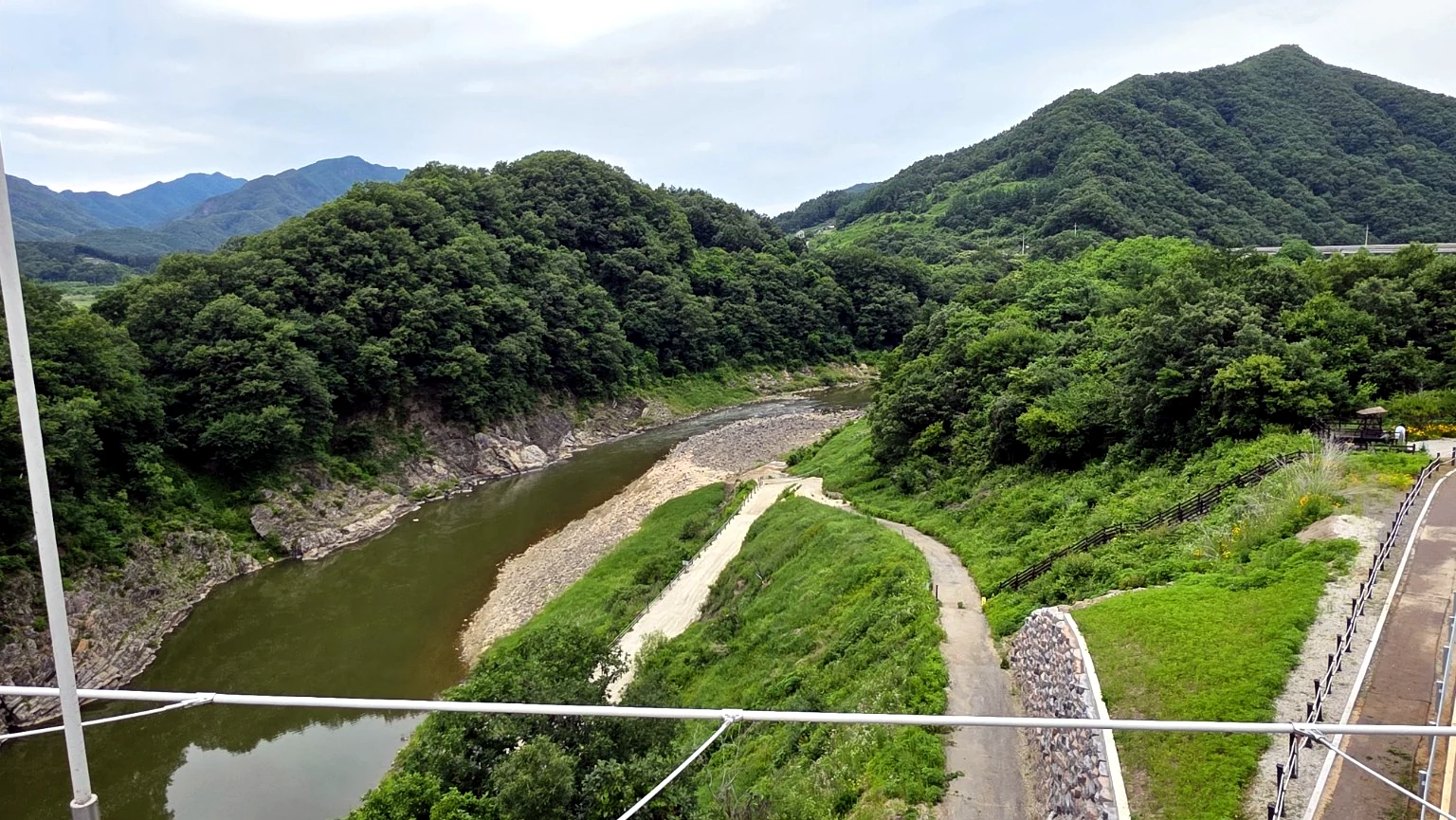
From a distance, Hantangang Sky Bridge can look like an ordinary footbridge joining two sides of the gorge. The view changes once you step onto it. Looking down made it impossible to forget that I was crossing through the open air above a gorge rather than walking on ordinary ground.
The glass sections made that realization much sharper. I could have crossed without looking down, but after coming all that way, pretending the glass was not there felt ridiculous. I placed a foot on it and looked through. The gorge and river appeared together below me, and the Hantangang’s naturally quick current seemed even more severe from that height.
It was dizzying.
That feeling came from seeing the open space and fast-moving river beneath my feet. If you are afraid of heights, do not force yourself to stare through the glass for long. If you enjoy high places, that transparent view may be one of the best reasons to come.
Crossing the bridge, however, is different from continuing onto a long walking trail. My father was already tired after our earlier visit to Pocheon Art Valley, so for our family, the ambitious part of the walk effectively ended after the crossing.
We crossed. Then we came back.
The Trail We Missed Because of Rain and Tired Legs
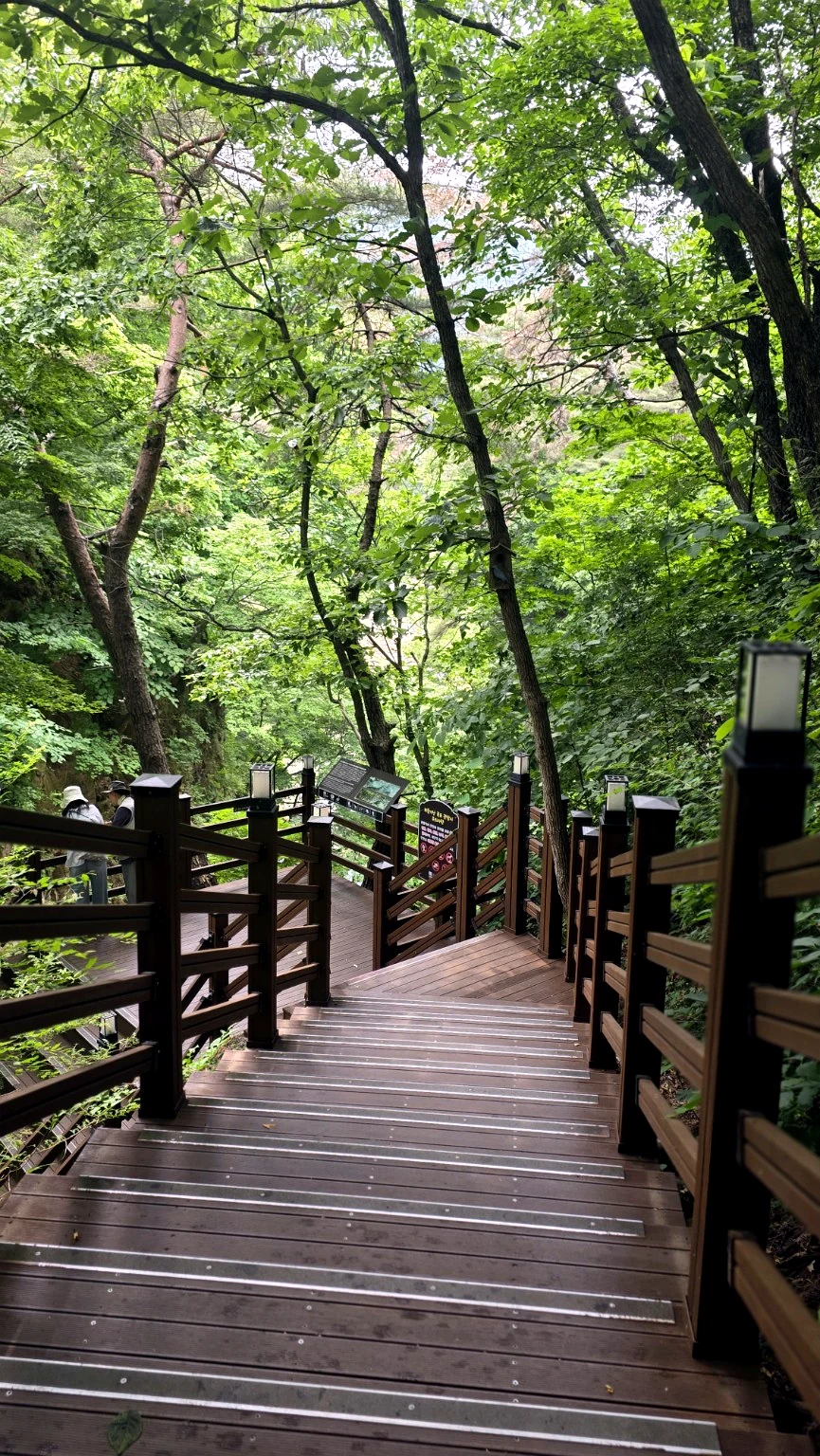
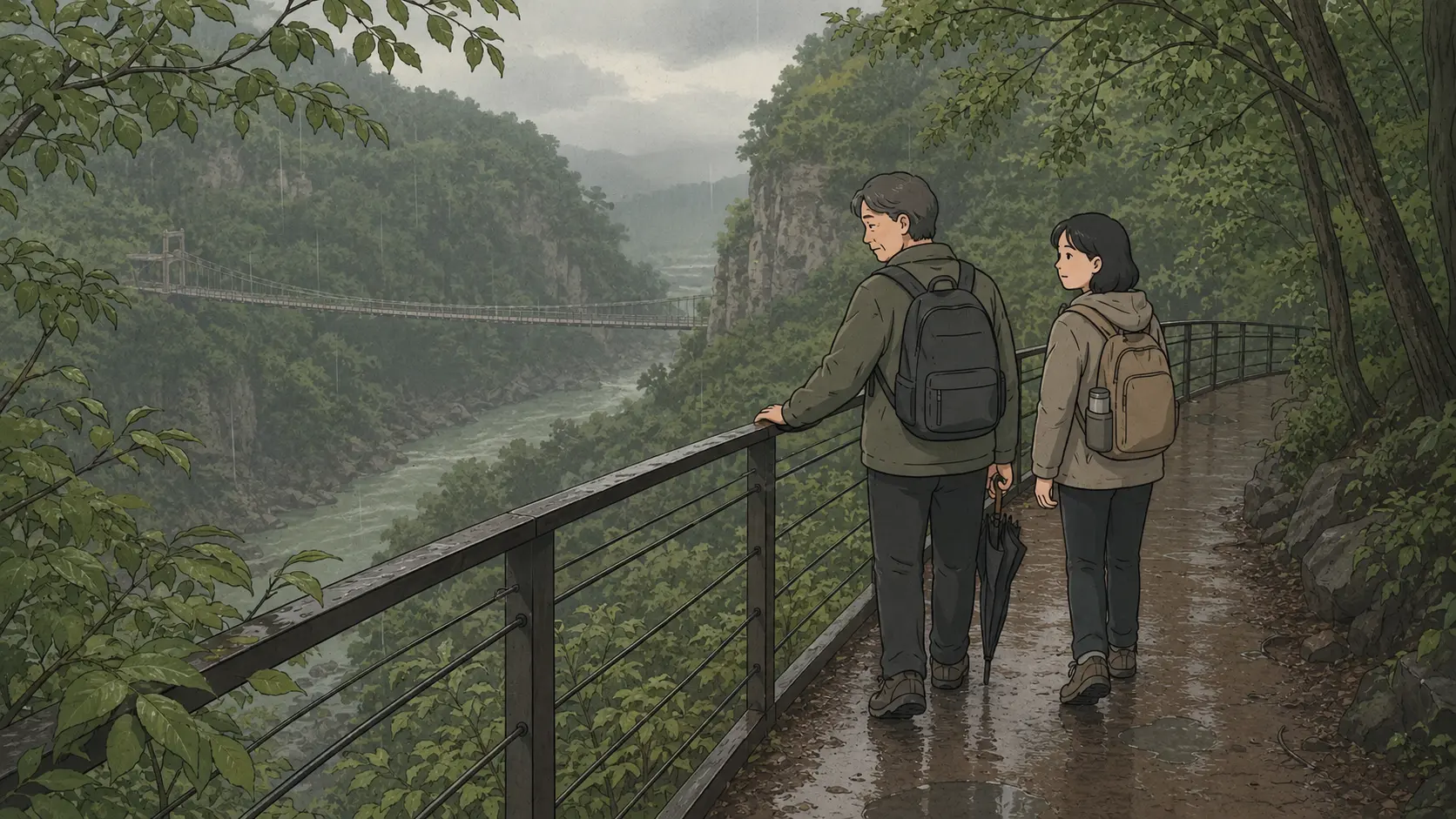
My original plan treated the bridge as the beginning rather than the destination. Beyond it, deck paths and trails follow the mountainside, allowing visitors to see the Hantangang gorge and connect several nearby attractions. The newer Y-shaped bridge now makes it possible to combine multiple bridges in one walking route when the weather and your legs cooperate.
That day, neither did. Light rain began to fall, and my parents had already spent the morning walking around Pocheon Art Valley. My father was especially tired, so we stopped. This was not proof that the Hantangang area itself was too difficult for a day trip. We had simply added another walking-heavy attraction before it. On a family outing, finishing a route alone sometimes matters less than turning back together.
I was still disappointed. The wet trail curved along the mountain, and I kept wondering what was waiting farther ahead. Current route information describes everything from short sightseeing walks to longer courses requiring several hours. It makes sense to treat a quick bridge visit and a full trail walk as two different plans. After heavy rain or snow, connecting paths may also close, so check the latest local notice before setting out.
If I return, I want to begin at Hantangang Sky Bridge, walk through the Y-shaped bridge area and Bidulginang Falls, and eventually return to my starting point. I would allow two or three hours and walk without rushing. I would also take far more photographs and video. During my first crossing, my hand spent more time on the railing than on the camera; next time, I hope to rearrange those duties.
Bidulginang Falls Was Smaller Than the Screen, but It Stayed With Me
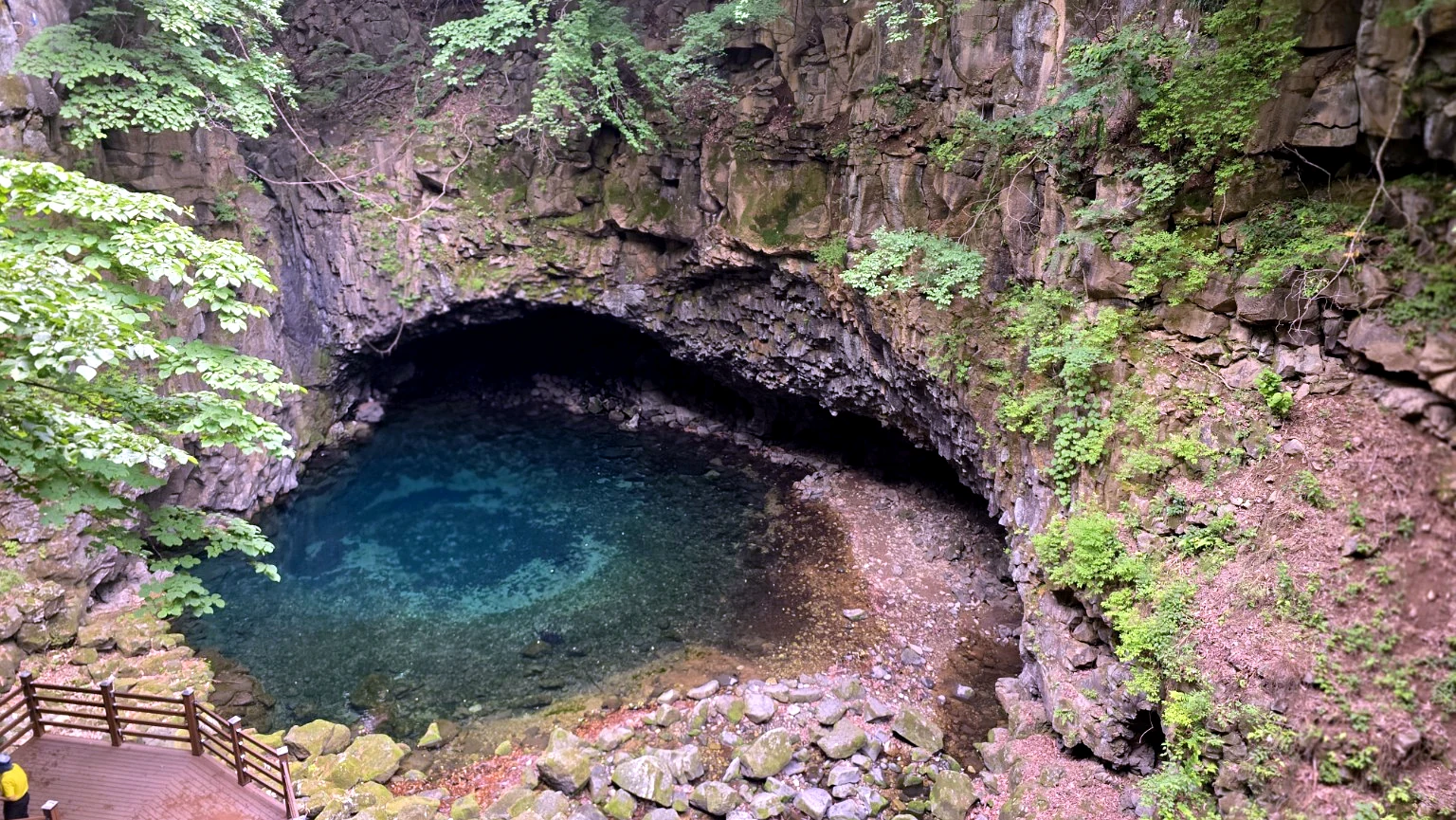
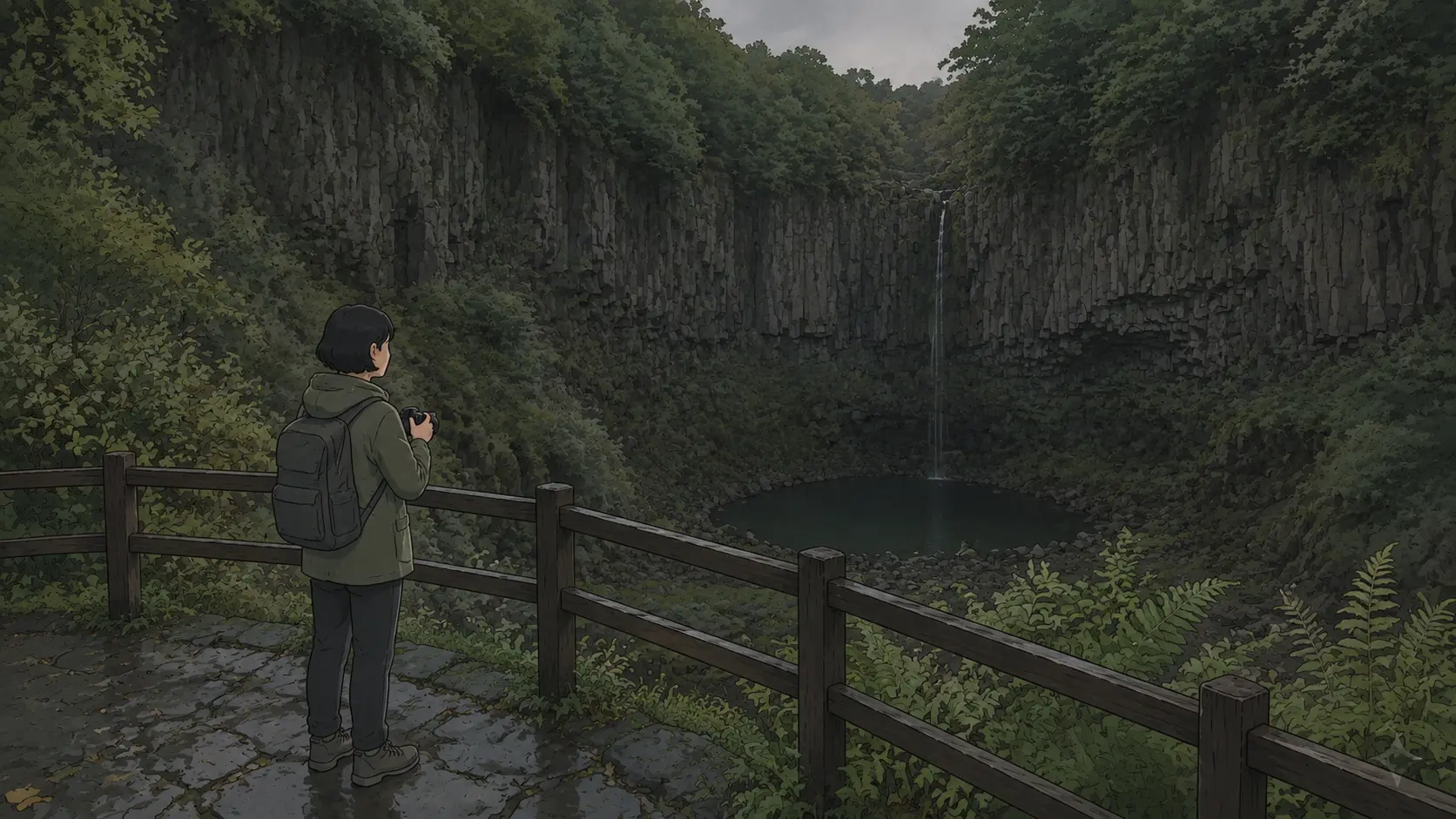
Bidulginang Falls has appeared in many Korean films and television dramas. The scene I remember most is Seo-bi gathering medicinal herbs there in the Netflix series Kingdom. On screen, the surrounding rock, water, and forest made it look like a deep place beyond ordinary reach. I expected it to feel much larger and more imposing in person.
The actual space was smaller than I had imagined. When I visited, I also did not see a strong stream of water that I would confidently call a waterfall. I do not know the exact reason. It may have been a period of low water, or the construction near the lower area may have affected what we could see. Traveling to a famous waterfall and finding very little water was admittedly strange.
Still, the hidden space beneath the cliffs was remarkable. Dark basalt curved inward, and the layered rock enclosed the hollow like a small secret room. It did not overwhelm me with size, but it made me wonder how anyone first discovered it. My first impression—that it looked smaller than it did on television—could exist alongside my fascination with the landscape itself.
Ordinary visitors cannot wander around the bottom of the gorge like characters in a drama. You view it from designated areas instead. Because my parents were tired, we did not complete the surrounding trail. We drove from the Sky Bridge to Bidulginang Falls, a trip that took less than five minutes, and mostly took in the scenery with our eyes before leaving. I cannot describe a trail I did not personally walk as if I completed it.
Even so, Bidulginang Falls was worth combining with the bridge. If you arrive expecting only a huge curtain of water, you may be disappointed. If you want to see the atmosphere of a filming location hidden inside a basalt gorge, the experience is different.
A Landscape I Want to See With Spring Leaves or Autumn Color
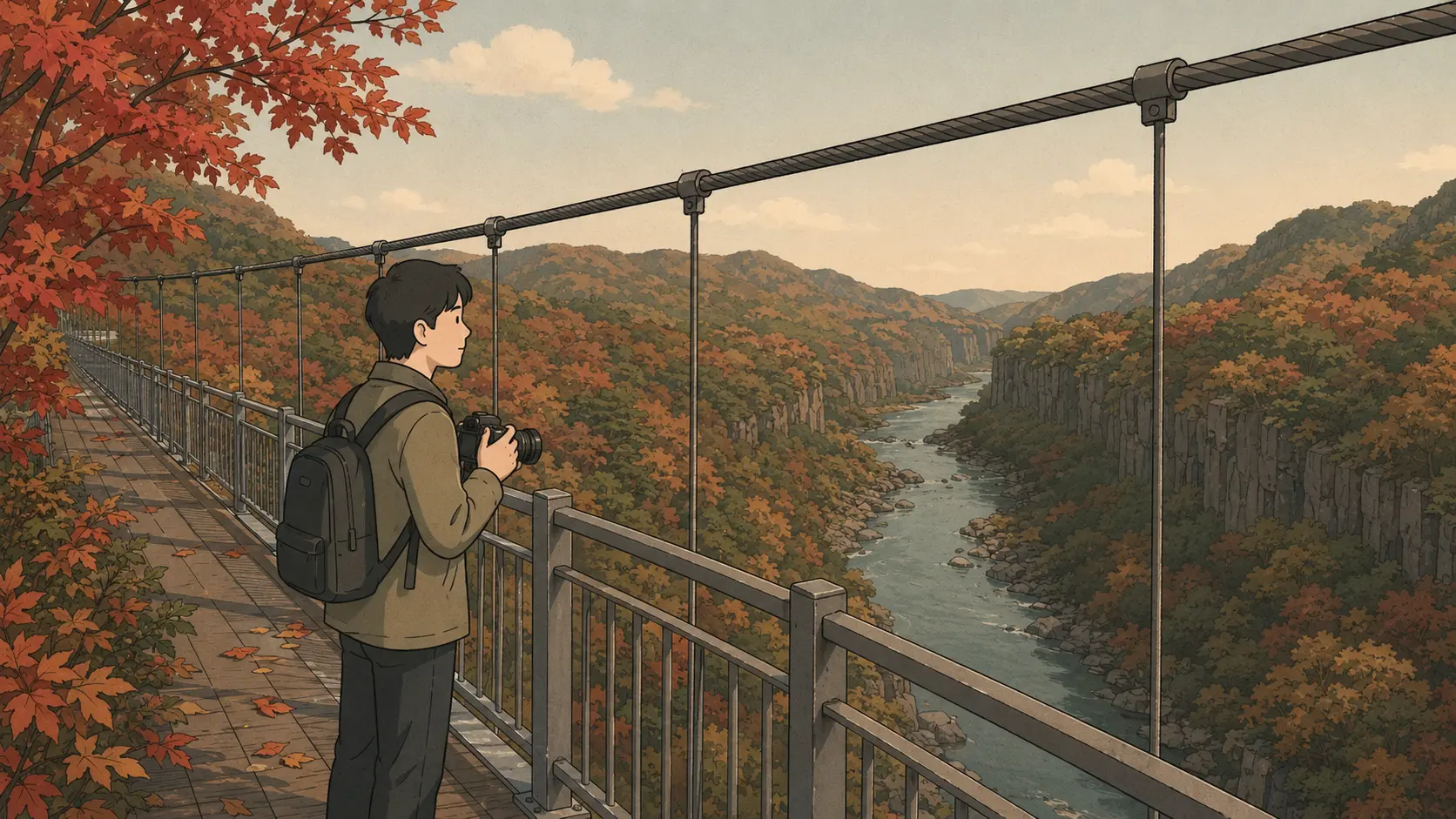
My version of the Hantangang landscape came with light rain and ongoing construction. Those were hardly ideal conditions. Yet the broad view from the bridge made me imagine immediately how different the gorge would look in another season.
I would like to return around April, when pale green leaves have just begun to appear. Their fresh color would stand out against the dark basalt cliffs. Autumn should be equally rewarding. From the bridge, you can see widely in every direction, so the river winding between red and yellow trees would fill the whole view rather than one small corner of it.
I cannot claim which season is best because I have not seen them all. What I do know is that the gorge remained beautiful despite construction equipment entering my view and rain interrupting our plans. That seems like a good reason to return when the spring leaves or autumn colors are at their strongest.
Visiting With Parents or as a Day Trip From Seoul
It is entirely possible to combine Hantangang Sky Bridge, Bidulginang Falls, and the Y-shaped suspension bridge on a Pocheon day trip. Parents who are comfortable walking should be able to take their time, rest as needed, and enjoy the trail along the mountainside. If I returned with no other attraction competing for our energy, I would reserve two or three hours for this area and walk slowly.
My parents struggled not because the Hantangang course was unusually difficult, but because we had already explored Pocheon Art Valley that morning. If your parents normally find walking difficult, I would avoid adding another Pocheon attraction on the same day. If they regularly enjoy long walks, I would do the opposite: allow enough time to continue beyond the first bridge and enjoy the trail rather than turning around immediately.
A short crossing and a connected trail walk demand different amounts of time and energy. Public visitor information describes a gently sloped, accessible approach to Hantangang Sky Bridge, but viewing Bidulginang Falls involves stairs, and longer routes may descend toward the lower gorge. I did not walk the connecting trail myself, and I cannot confirm exactly where benches or shelters are located. Judge the route by your companions’ normal walking distance and their condition that day, not simply by their age.
Public transportation from Seoul is possible, but it takes time, and local buses may run infrequently. Routes and schedules change, so check a current map service and official Pocheon information shortly before departure. If I went again, I would use a rental car if possible. For an overseas visitor who is eligible and comfortable driving in Korea, a car also makes it much easier to combine several locations around Pocheon.
Plan your food as well. I did not see many appealing options for a full meal near the bridge. Food trucks sold simple snacks, but they did not feel inexpensive. Bringing a roll of gimbap (김밥, rice and fillings wrapped in seaweed) and some water would be practical before a longer walk.
Then save your proper meal for Idong galbi. That is what my family did: Pocheon Art Valley, Hantangang Sky Bridge and Bidulginang Falls, then beef ribs before heading home. The disappointment of missing the long trail became noticeably quieter once the grill was hot.
The Half-Finished Walk That Left Me a Reason to Return
I did not complete the route I had imagined. I crossed the original Hantangang Sky Bridge and returned without reaching the Y-shaped bridge. We saw Bidulginang Falls from the designated viewing area rather than spending hours exploring the surroundings. Construction kept slipping into my photographs, and the waterfall I had expected did not appear as a dramatic stream of water.
Strangely, seeing only half of the place did not make me like it less. It left a path waiting for me. I want to cross the bridge again when new spring leaves or autumn colors cover the gorge, this time carrying my camera all the way toward the Y-shaped bridge and Bidulginang Falls.
When I eventually stand on that glass floor again, the fast Hantangang River will probably still look dizzyingly far below. I will probably reach for the railing once more. This time, however, I intend to keep walking beyond it.
FAQ
Is Hantangang Sky Bridge worth visiting?
Yes, especially if you want to walk directly over a gorge instead of viewing it from a distant lookout. The glass floor creates a short but memorable experience. It is better planned together with Bidulginang Falls or a nearby walking route than treated as a hurried stand-alone stop.
Are Hantangang Sky Bridge and the Y-shaped suspension bridge the same place?
No. The original Hantangang Sky Bridge that I visited crosses the gorge in a straight line. The newer Y-shaped suspension bridge has three arms meeting in the middle and is a separate structure. I did not walk to the Y-shaped bridge because of the rain and my father’s tired legs, so check the latest signs for the current connecting route.
Can you walk from Hantangang Sky Bridge to Bidulginang Falls?
Yes. Trails in the area connect the attractions, although the time and distance depend on the route you choose. Some paths may close after rain or snow. When traveling with parents or children, decide in advance whether you want a short visit to the bridge and falls or a longer circuit through the surrounding trails.
Is Hantangang Sky Bridge suitable for elderly parents?
It can be. Parents who are comfortable walking can take a relaxed day trip through the Sky Bridge, Bidulginang Falls, and the Y-shaped bridge area. If they usually struggle with walking, avoid adding another walking-heavy attraction such as Pocheon Art Valley on the same day. My parents were tired after visiting Art Valley first, so we drove from Hantangang Sky Bridge to Bidulginang Falls in less than five minutes.