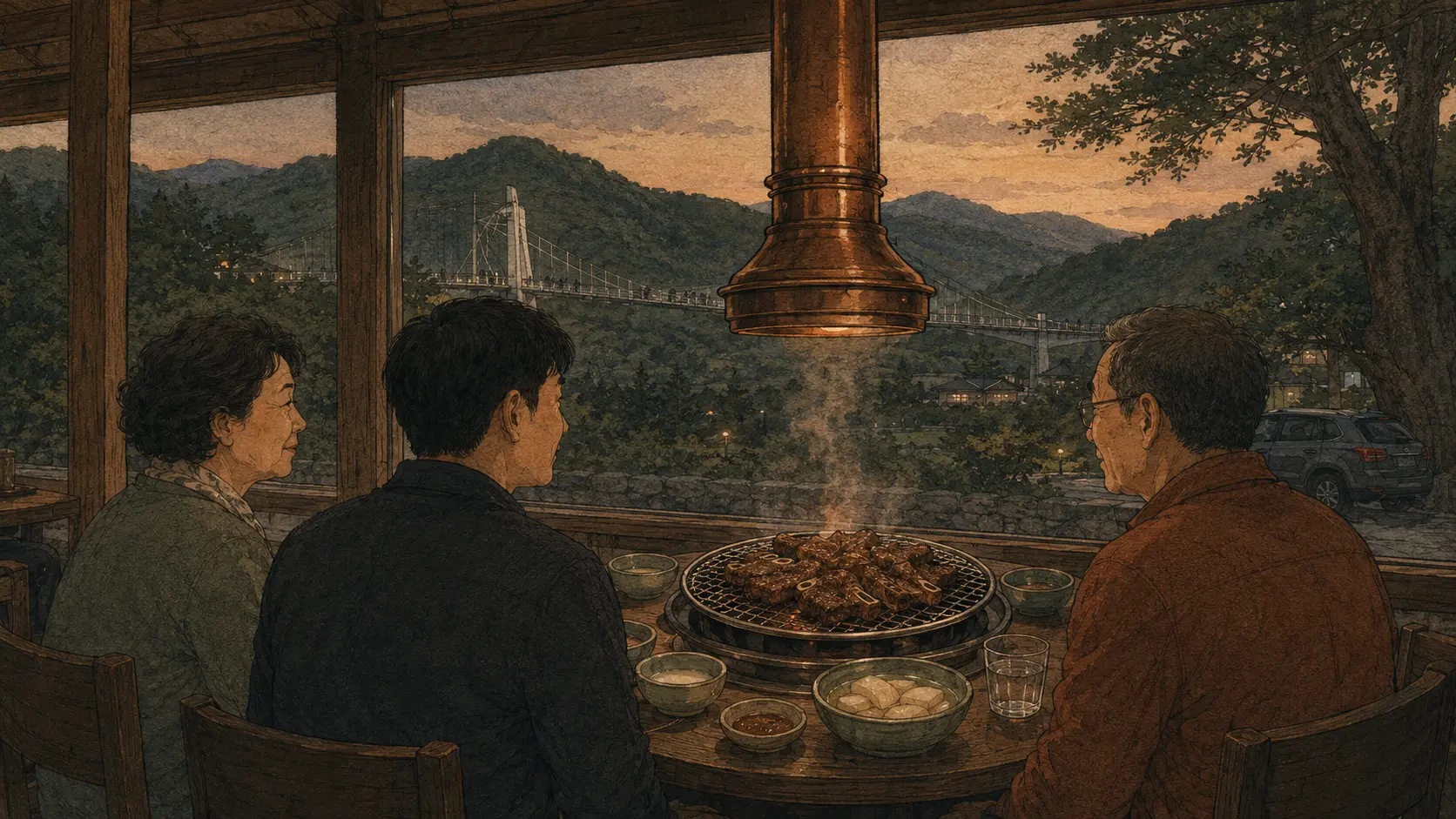
Idong Galbi: The Pocheon Beef Ribs That Aren’t “Moving”
I did not set out for Idong galbi that morning. I was driving my parents to visit a distant relative in Pocheon when we heard that our relative had to go to the hospital. Later, after an improvised route through two local sights, the name I had known for years became our last stop.
I had known the name Idong galbi for a long time. Pocheon is a small city in Gyeonggi Province, and Idong is a smaller community within it, yet its ribs were famous before I was born. That does not mean I set out that morning solely to eat them.
Our original destination was neither a restaurant nor a tourist attraction. In early summer, I was taking my parents to visit a distant relative in Pocheon. Then we heard that our relative suddenly had to go to the hospital.
We were already on the road together, so we decided to find somewhere else to go in Pocheon. A family visit unexpectedly turned into a day trip.
The Day a Family Visit Turned Into a Pocheon Trip
Our first stop was Pocheon Art Valley. After that, we went to the Hantangang Sky Bridge. Because none of this had been planned in advance, the day felt like an itinerary assembled one destination at a time.
Once we had seen both places, we needed somewhere to eat before driving home. Idong galbi came to mind. It had been known as one of Pocheon’s signature foods for so long that leaving the city without trying it seemed like a missed opportunity.
I searched online for a restaurant and drove us there. A canceled family visit had led us through Pocheon Art Valley and the Hantangang Sky Bridge, and then finally to Idong Galbi Village. At least the last stop of our improvised day would be unmistakably Pocheon.
The Parking Lot Surprised Me Before the Restaurant Did
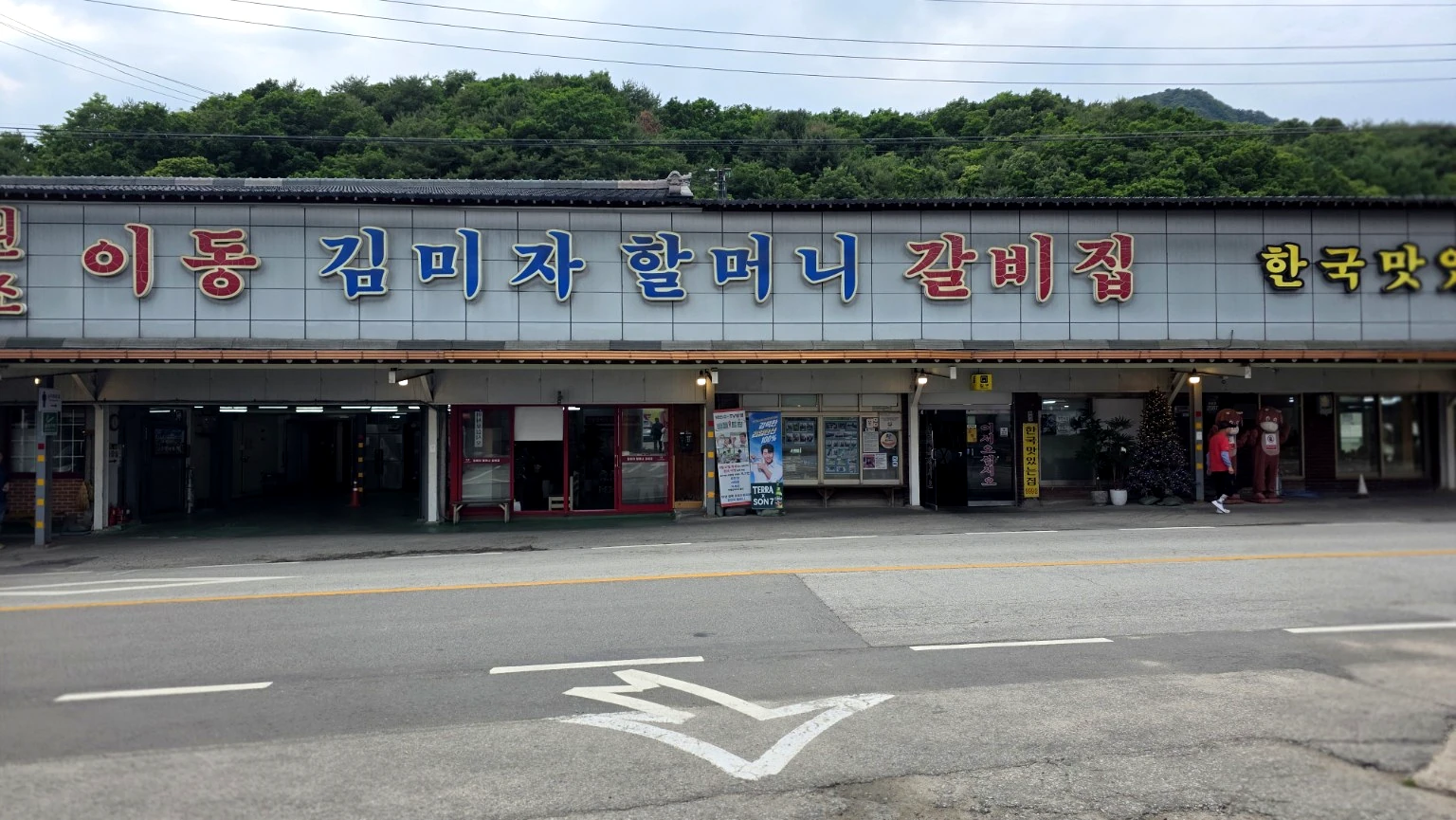
The restaurant building was larger than I expected, but the parking area made an even stronger impression. It did not have only a few spaces squeezed against the entrance. Other nearby plots were also being used as the restaurant’s own parking lots.
In cities, I often see restaurants build upward and fit cars into whatever narrow strip of land remains. This place did the opposite. Its wide grounds were designed for people arriving by car, which made it clear that this was not merely a neighborhood restaurant within walking distance of its customers.
The restaurant seemed to stand at the beginning of Idong Galbi Village, and its property was so extensive that I could not see the other restaurants when we first parked. The large building and its private parking areas filled the view. From where I sat in the car, it looked as though one enormous restaurant occupied the area by itself.
Only when I turned the car around to drive home and continued farther along the road did the other Idong galbi signs begin to appear. Restaurant after restaurant extended beyond the first property. The village was not smaller than expected; the restaurant at its entrance was simply large enough to hide the rest at first glance.
The Dead Tree Preserved Inside the Building
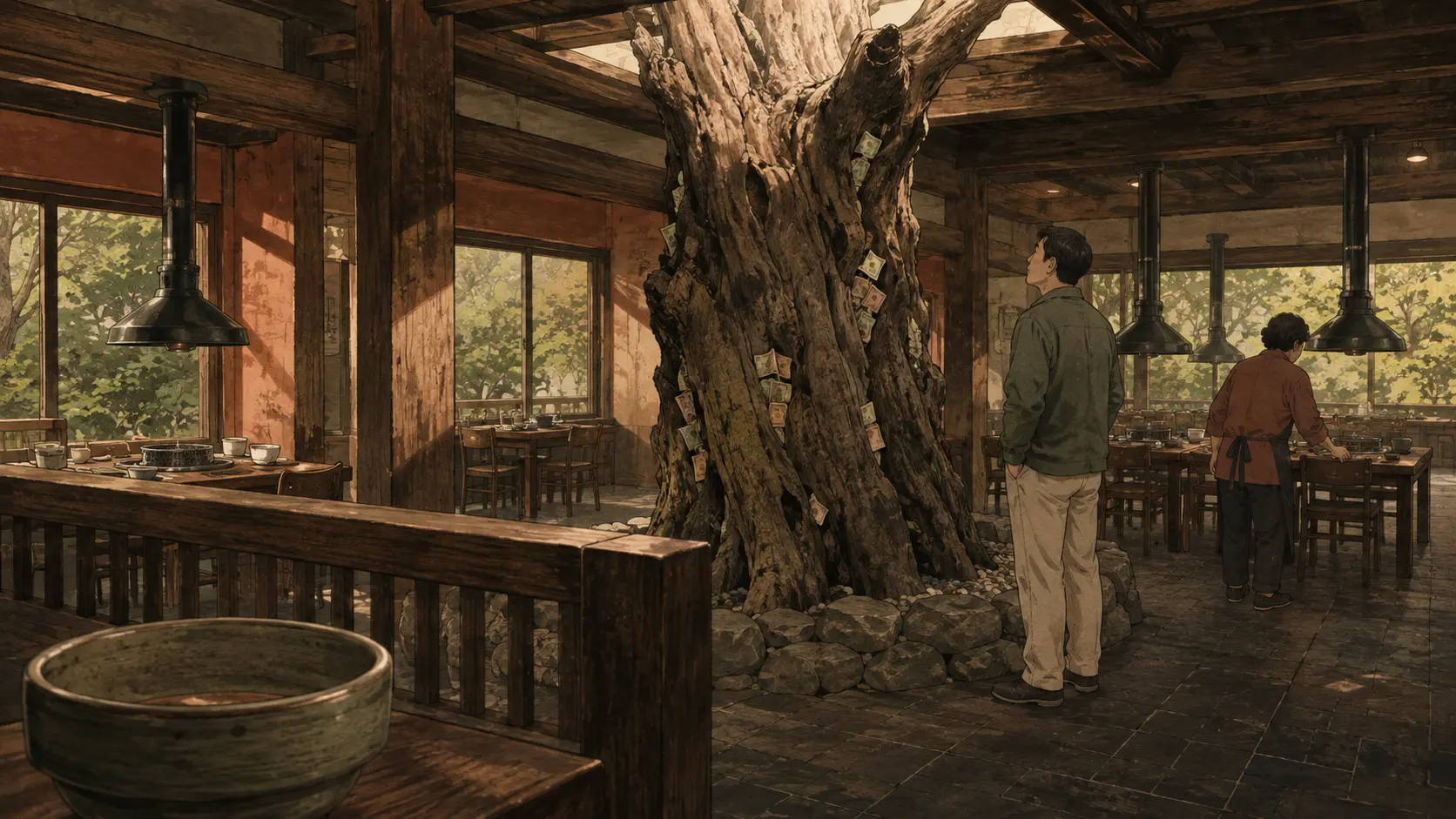
Inside the restaurant stood a dead tree, retained almost as part of the building. I heard that before the present restaurant was expanded, ribs had been sold from a small house beside that tree. When the larger structure was built, the owners apparently chose to build around it instead of clearing it away.
The Idong area has long had many military units. One widely told account says the local galbi restaurants became popular as soldiers and visiting families ate there together. Parents came to see sons serving in the military and bought them meat, while some former soldiers later returned because they remembered the taste.
That history overlapped with my own visit in an unexpected way. My parents and I were not there for a military visit, but we were another parent and child who had traveled a long way and ended up together around a grill. Decades earlier, another family may have eaten ribs beside the same tree.
People had tucked 1,000-won notes around its trunk. Some Koreans believe that a spirit or sacred energy can dwell in a very old tree. I cannot know what each person wished for when leaving the money, but the tree did not seem to be treated as an ordinary decoration.
The restaurant had grown, and the tree had died, yet its place had not been erased. Before the ribs arrived, it gave me a glimpse of the years the restaurant had passed through.
Dongchimi Won Me Over Before the Ribs Arrived
To be honest, I am not someone who carefully grades every side dish at a barbecue restaurant. I came for the meat, so the meat matters. If the grill is busy while I am assigning scores to each small plate, my attention will naturally return to the fire.
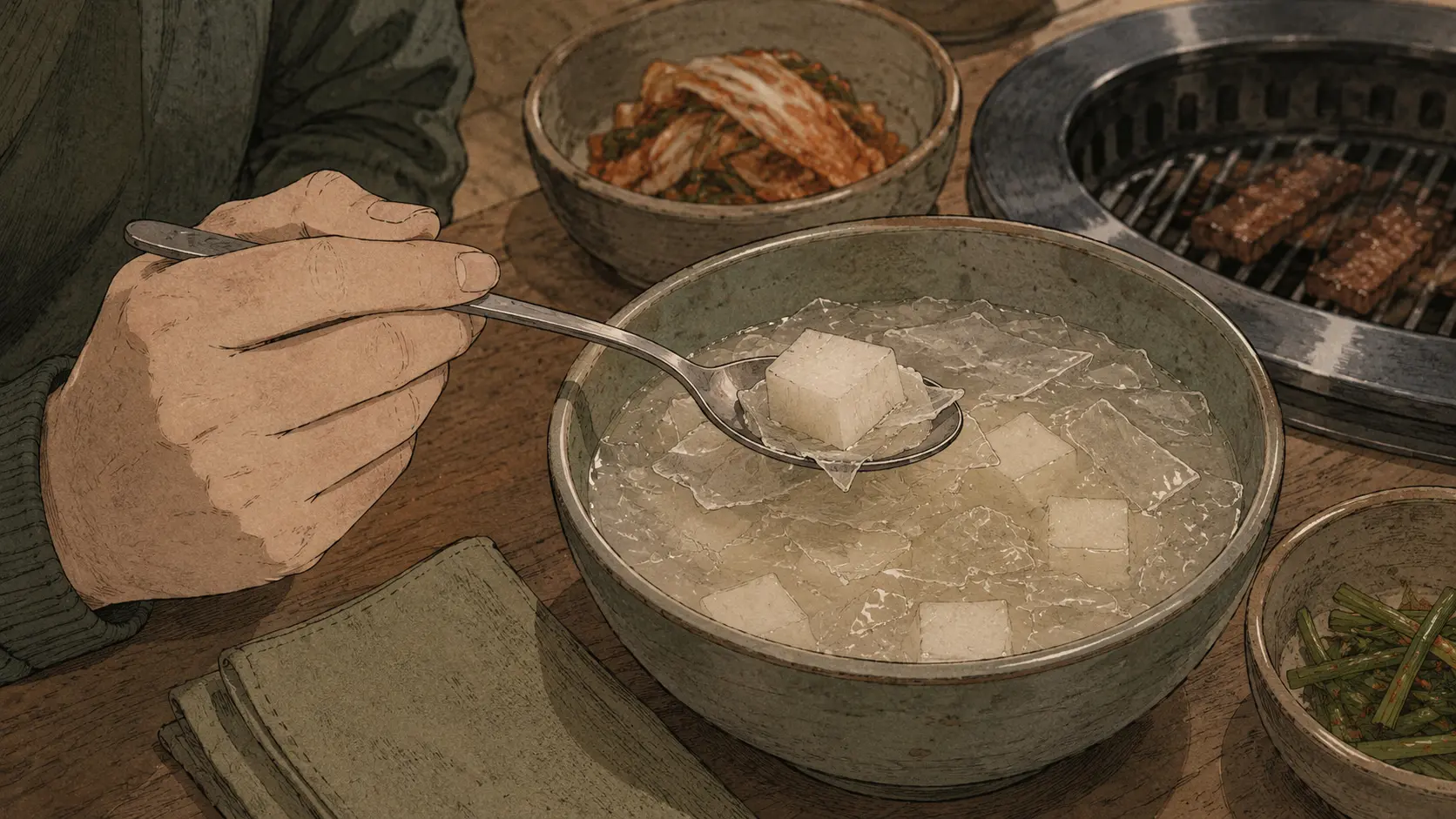
The dongchimi (동치미, radish kimchi fermented in a clear brine) was different. One spoonful brought back the flavor of winter when I was young. It was tart and lightly sweet, and the cold broth left a clean, vivid taste in my mouth.
In those winters, dongchimi sometimes froze, and we scooped the broth from between thin layers of ice. A spoon broke through the delicate frozen surface and came back with icy broth and radish beneath it. That tart sweetness is not something I find again merely because another dish has the same name.
My family now lives in an apartment. A refrigerator lets us keep dongchimi through every season, but we cannot easily recreate the taste of a container that froze and thawed in the old winter cold. Storage became more convenient while the flavor I remember somehow moved farther away.
I had spent years without finding dongchimi that tasted quite right, but the broth at this restaurant came close. After insisting that side dishes are not important, I have now spent several paragraphs talking about one. Apparently, I do care when a side dish knows how to bring back a winter.
The Galbi Was Different, Even If I Cannot Explain Exactly Why
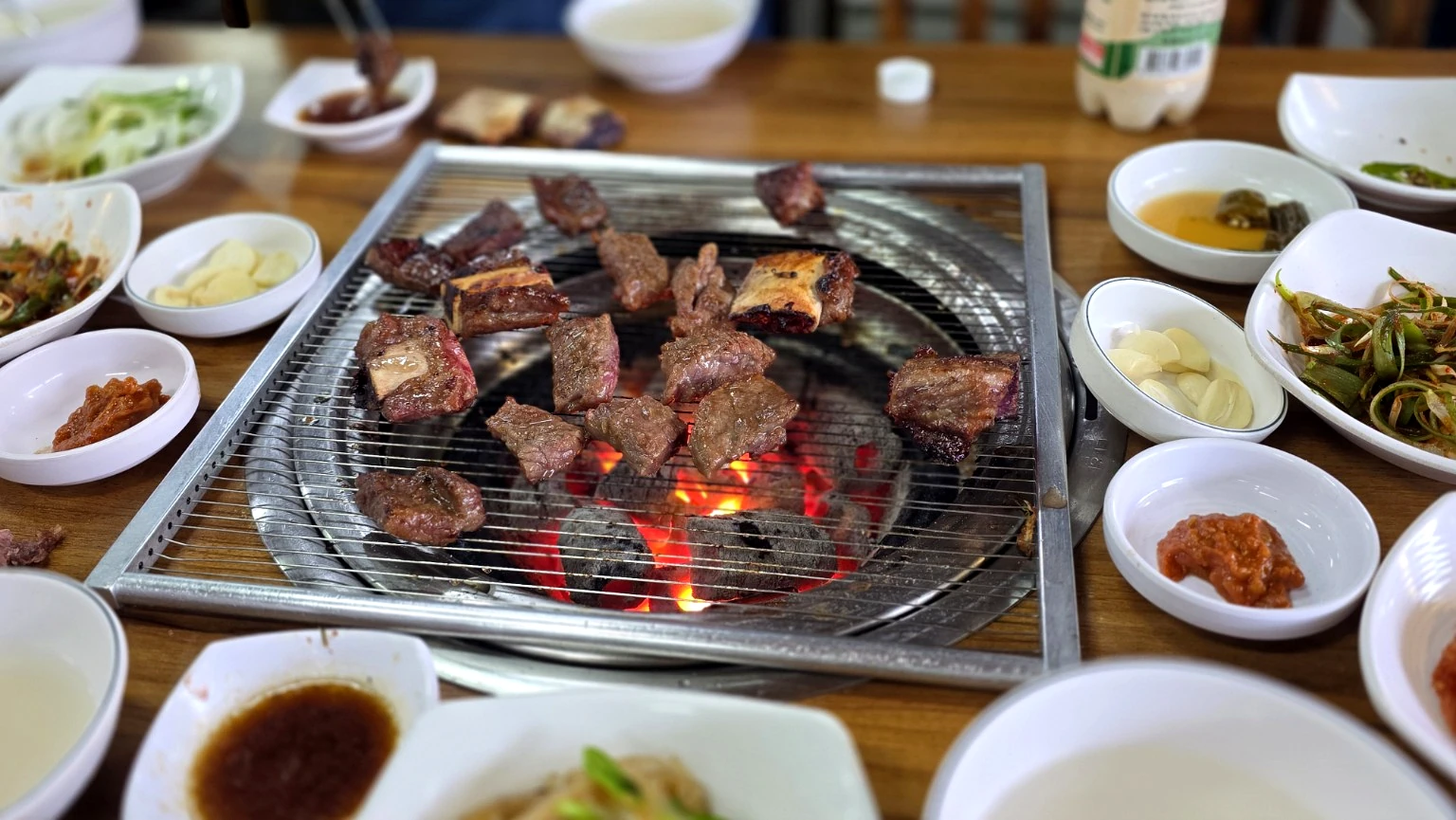
By the time I returned from parking the car, the meat was already on the grill. A staff member had begun cooking it for my parents. I therefore did not get a proper look at how the ribs first appeared on the plate.
I remember a charcoal fire. The meat seemed to be attached to bone, although it may have been wrapped around the bone after being cut. Since I missed its uncooked form, I cannot confidently explain exactly how it had been prepared.
The staff member cooked it for us and made sure it did not stay over the heat too long. The meat was much more tender than I expected. Its seasoning was not excessively salty, and neither the sweetness nor the soy flavor overwhelmed everything else.
Even compared with well-known galbi restaurants in Seoul and elsewhere in Gyeonggi Province, this meal tasted noticeably different. Ask me to identify one exact reason, however, and I struggle. The difference seemed to come from the tenderness, seasoning, fire, and dipping sauce working together rather than from one ingredient I could name.
The dipping sauce was especially good. Giving the already marinated beef a brief dip made the flavor feel clearer and more complete. I was not forcing myself to find something special simply because the restaurant was famous. Still, calling it ordinary galbi would not match what I tasted.
The Driver Could Only Look at the Pocheon Makgeolli
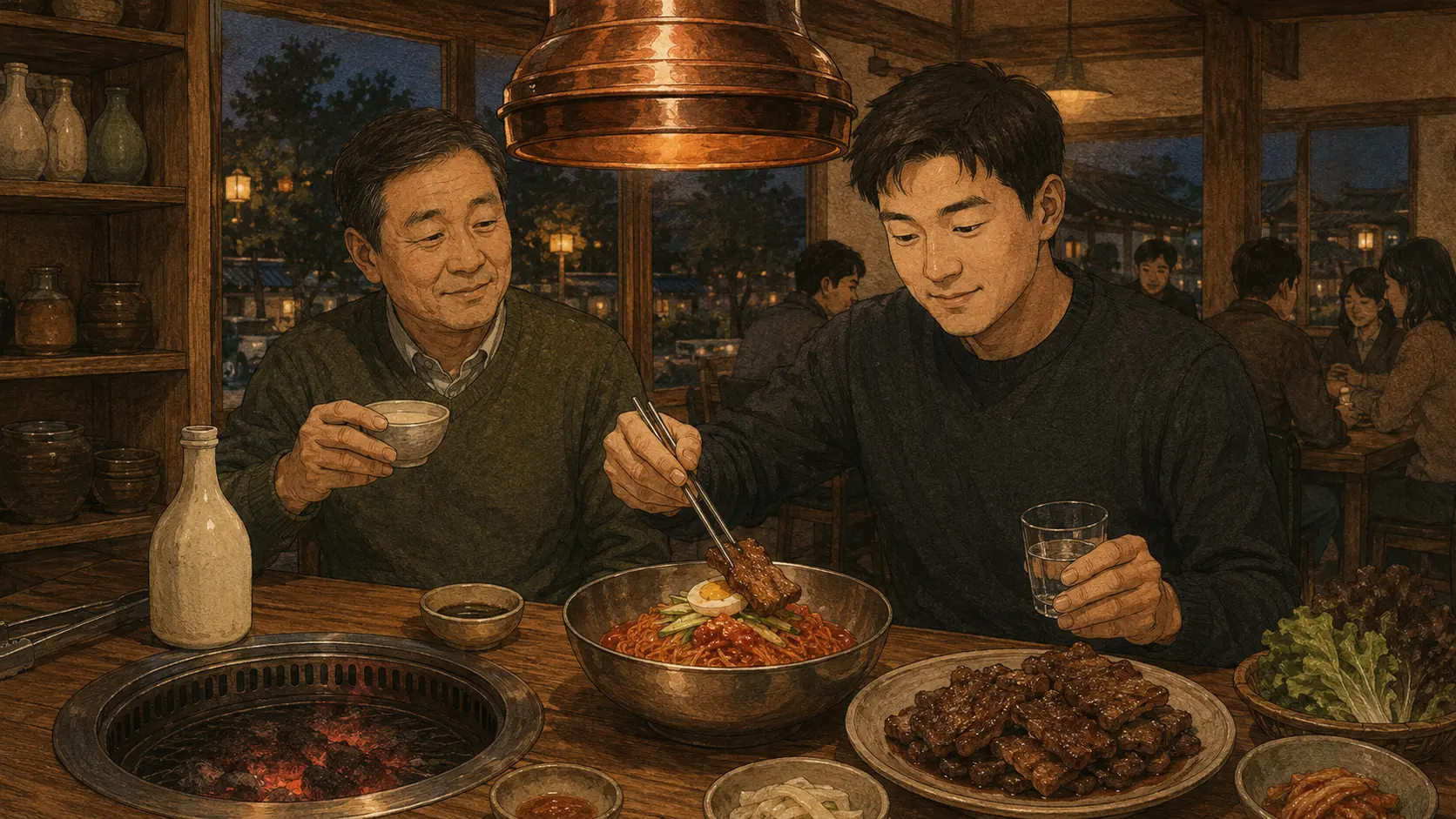
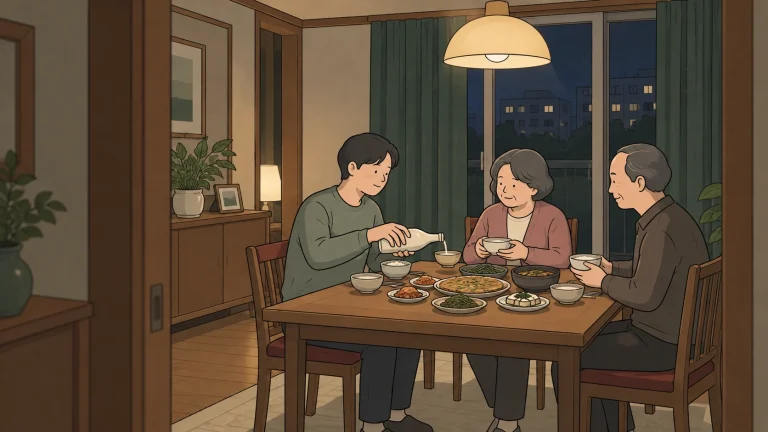
As the meat cooked, my father said that since we had come to a famous Idong galbi restaurant, he should have a drink. He ordered makgeolli (막걸리, a lightly sparkling Korean rice wine). Pocheon is known for its makgeolli as well as its ribs, so pairing the two seemed perfectly natural to him.
My mother and father drank it. I did not. I was the person driving us home.
Their glasses held one of Pocheon’s local specialties, while my place at the table held the reality of being the family driver. On a family trip, the driver sometimes gets the closest view of the regional alcohol while drinking only water. That was my role that day.
I consoled myself with bibim naengmyeon (비빔냉면, cold noodles mixed with a spicy sauce). In my mind, marinated galbi belongs with these noodles. I pick up a tangle coated in red seasoning, add a piece of warm beef, and eat them together so the cold, spicy noodles meet the soft, savory meat in one bite.
The makgeolli belonged to my parents, but I was not missing this combination. The driver can always compensate with one more piece of meat. At least that was my accounting system.
Idong Galbi Tastes Complete Only After the Trip to Pocheon
Seoul has many excellent galbi restaurants. Other cities in Gyeonggi Province serve tender, well-seasoned ribs too. It would be an exaggeration to claim that Idong galbi is an entirely different food from every other galbi.
But these ribs turned a small community in Pocheon into a place people deliberately travel to eat. Galbi shops grew around nearby military units, entered the memories of soldiers and their visiting families, and drew more visitors as the stories spread. The wide parking areas still wait for customers arriving from elsewhere by car.
I did not leave home with Idong galbi as my only goal either. A canceled visit led my parents and me to Pocheon Art Valley and the Hantangang Sky Bridge, and I searched for the restaurant only before we headed home. Yet that was exactly why Idong galbi suited the end of the day.
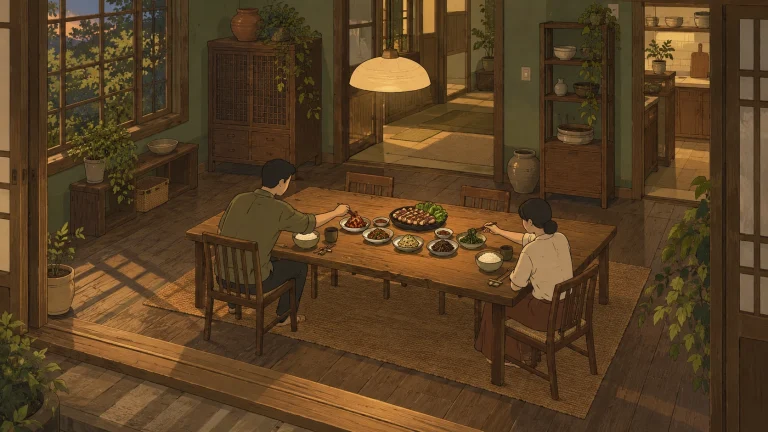
The journey becomes attached to the food. I drove a suddenly altered route with my parents, parked on the restaurant’s broad property, saw the old tree preserved inside, and sat down in front of the charcoal fire. My father ordered makgeolli while I remembered that I still had to drive home.
At first, “Idong” may look like the thing that is moving. That day, however, the ribs stayed where they were. My family did all the moving, traveling through an unplanned series of places until we finally ate the ribs named after this small Pocheon township.
If you make the trip for the ribs, do not judge them only against good galbi in Seoul. You can notice the broad grounds, the old restaurant stories, and the side dishes that arrive with the grill. You may still decide the flavor alone does not justify the drive, but you will understand why the journey matters. You can combine it with another Pocheon stop and let the meal finish the day, as I did.
FAQ
What Does Idong Mean in Idong Galbi?
Here, Idong does not mean moving. It is the name of Idong-myeon, a township in Pocheon, Gyeonggi Province. The ribs became famous in this area and took the place name, so Idong galbi essentially means galbi from the Idong area of Pocheon.
Why Is Pocheon Idong Galbi Famous?
The Idong area had many military units, and galbi restaurants became known among soldiers and families visiting them. Early restaurants were associated with generous portions and accessible prices. Former soldiers returned, new visitors followed the stories, and Idong galbi eventually became a signature food of Pocheon.
How Is Idong Galbi Different From Regular Galbi?
Published accounts describe Idong galbi as using comparatively short rib sections and a soy-based marinade. In the meal I remember, the strongest differences were the tenderness and balanced seasoning rather than one obvious ingredient. It tasted distinct from other famous galbi restaurants, although I cannot reduce that difference to a single flavor.
Is Idong Galbi Worth a Trip From Seoul?
You can eat excellent galbi in Seoul, so I would not claim that the ribs alone make the trip essential for everyone. If you go, combine the restaurant with Pocheon Art Valley or the Hantangang Sky Bridge and let the meal finish your day.