Ajumma Meaning (and Ahjussi): Why These Words Can Sound Rude
The real ajumma meaning goes beyond “aunt,” and ahjussi isn’t simple either. Call the wrong person one and it can sting — here’s when each actually works.
Korean isn’t just about vocabulary — it’s about who you’re talking to, how well you know them, and what the situation calls for. This section covers the speech levels, honorifics, titles, and everyday expressions that shift the meaning of a conversation in ways that don’t always translate directly.
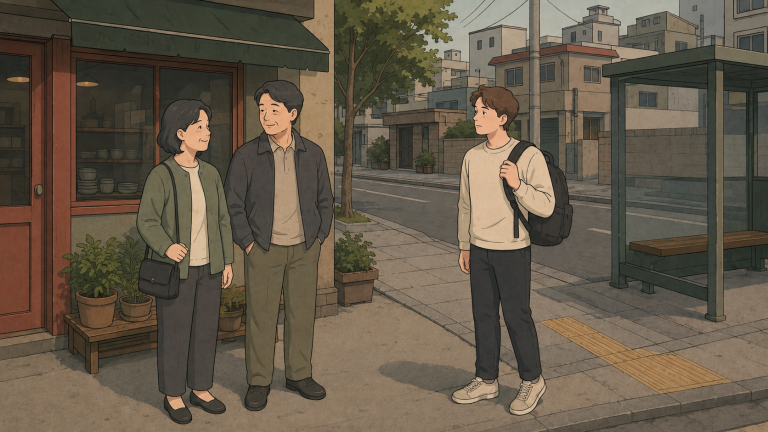
The real ajumma meaning goes beyond “aunt,” and ahjussi isn’t simple either. Call the wrong person one and it can sting — here’s when each actually works.
Ever heard a Korean say “our wife”? Learn the real uri meaning and why Koreans use “our” instead of “my” — even for things that belong to just one person.
You’ve heard it in every K-Drama — but what does hwaiting actually mean? A Korean explains the real feeling behind this word, when to use it, and why “fighting” isn’t really about fighting at all.

Understand Korean honorifics through a local experience: when oppa, unnie, hyung, and noona fit, and how to address restaurant workers politely in Korea.