Korea Bus Luggage Rules: Why Your Big Suitcase Gets Refused
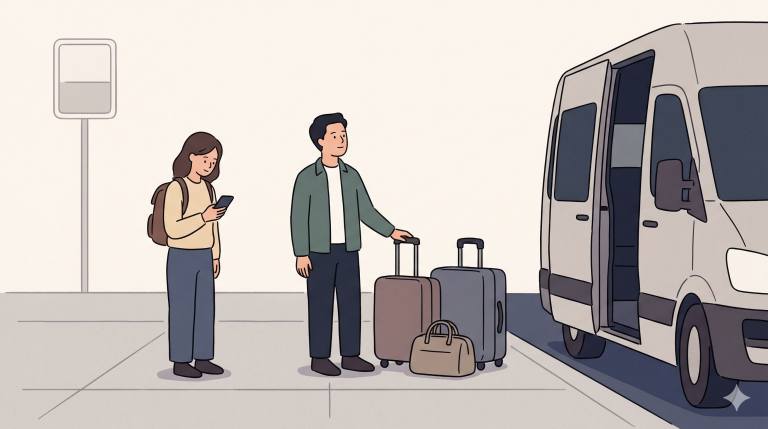
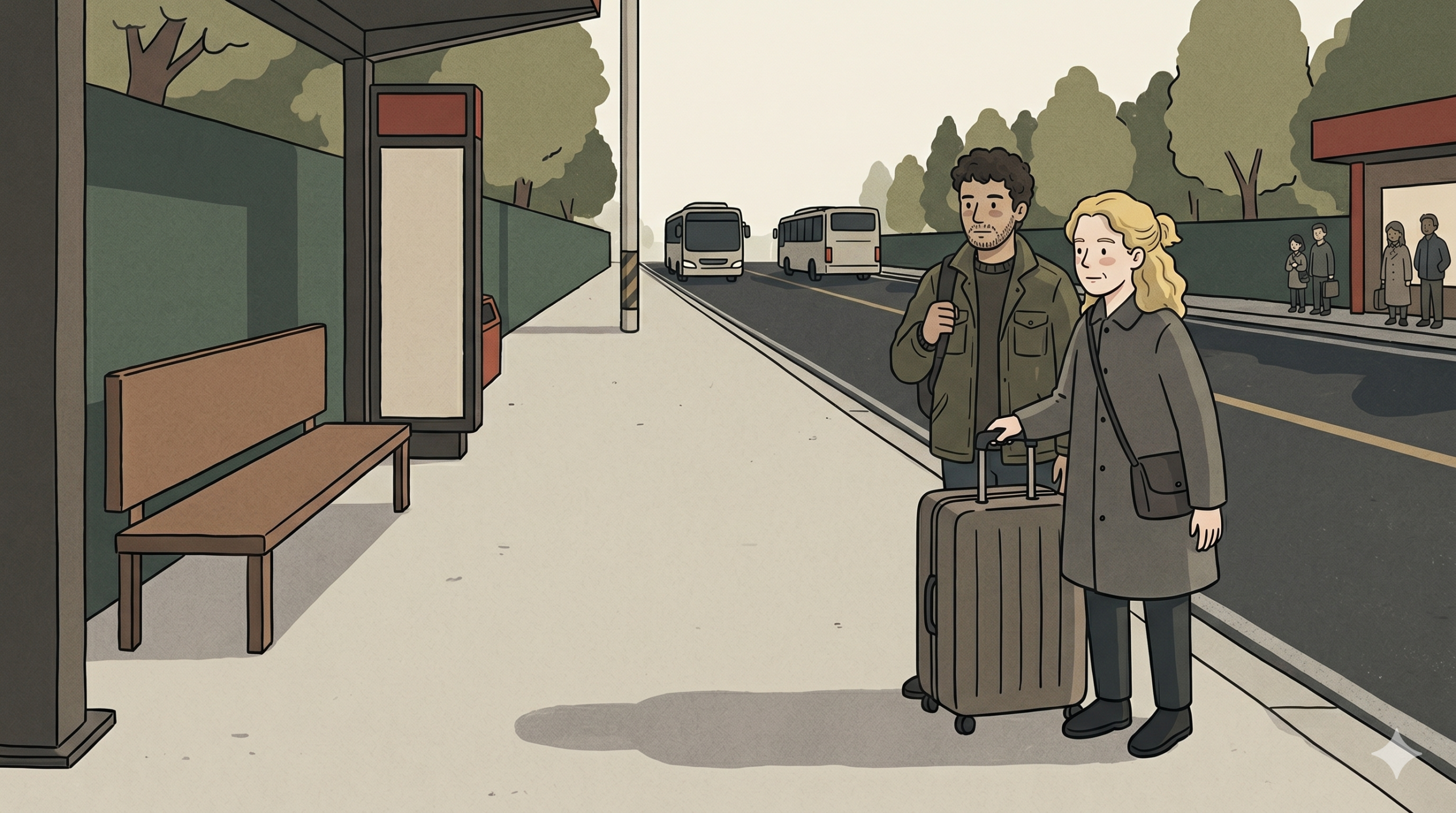
You’ve probably seen this scene without realizing it was a scene. Early morning, the streets still quiet, and someone standing at a bus stop with a big suitcase. Nine times out of ten, that person is heading to the airport, about to leave on a trip. I don’t live in a tourist area, so I don’t often see someone wheeling a large suitcase onto a city bus. But every now and then, I do. I’ve even seen it on a morning commute.
Nobody made a face about it, exactly. That kind of open reaction is rare on a Korean bus. But was it a little awkward? Honestly, yes. When one large suitcase enters a narrow aisle, the space it takes up is more than the size of the suitcase itself.
And this is where the first surprise hits a lot of travelers. In Korea, “bus” is not one single thing. Each kind of bus handles luggage in a completely different way. If you don’t know that and you show up at a city bus stop with a big suitcase, in a place like Busan you might actually be turned away. Understanding Korea bus luggage rules really starts with one idea: not every bus is the same bus.
Why a Big Suitcase Feels Different on a Korean City Bus
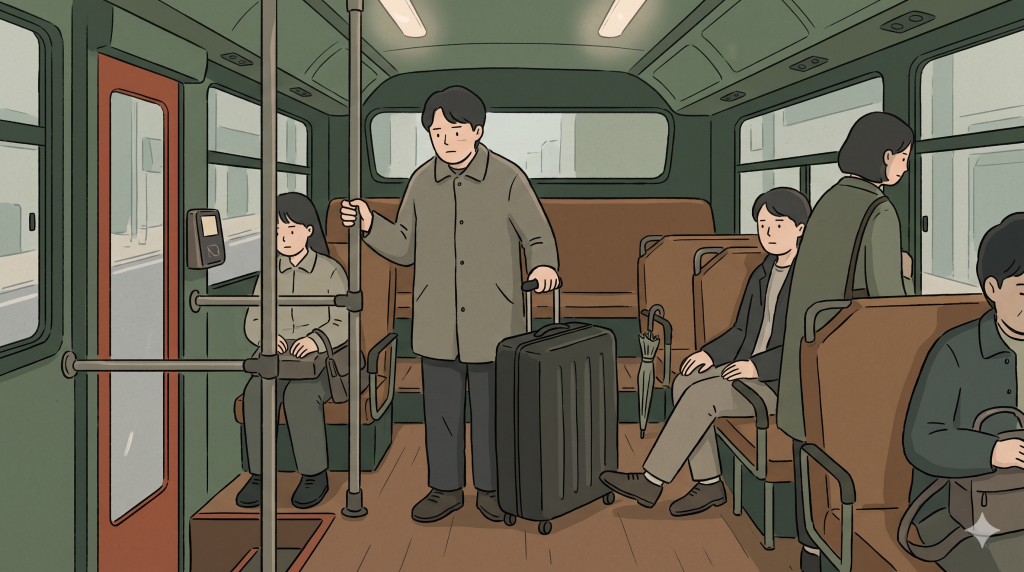
A city bus aisle is narrow. It’s barely wide enough for one person to pass through, so when a large suitcase moves into that space, everyone boarding behind you and everyone trying to get off has to work around it. If the bus brakes suddenly, a suitcase that isn’t secured can slide. So it isn’t only about taking up a seat’s worth of room. It quickly becomes a safety question.
There’s a related image that many people here know well. You hear fairly often about accidents on subway escalators when someone is hauling a suitcase. A heavy bag that slips on an escalator isn’t only that one traveler’s problem. So the relationship between big luggage and public transport, in everyday life here, tends to be felt less as “my personal bag” and more as “the safety of a space we all share.”
That’s the real reason a large suitcase isn’t an easy fit on a city bus, and it has nothing to do with anyone being fussy. A city bus isn’t designed as a way to move tourists around. It’s the everyday ride for people in that neighborhood heading to work or coming home with groceries. Drop a travel-sized suitcase into that tight space, and the balance tips.
Korean city bus luggage problems almost always trace back to this one structural fact: there’s simply nowhere to put the bag except the aisle. Keep that in mind and a lot of the confusion falls away before it starts.
The Kinds of Buses in Korea — and Why It Matters for Your Luggage
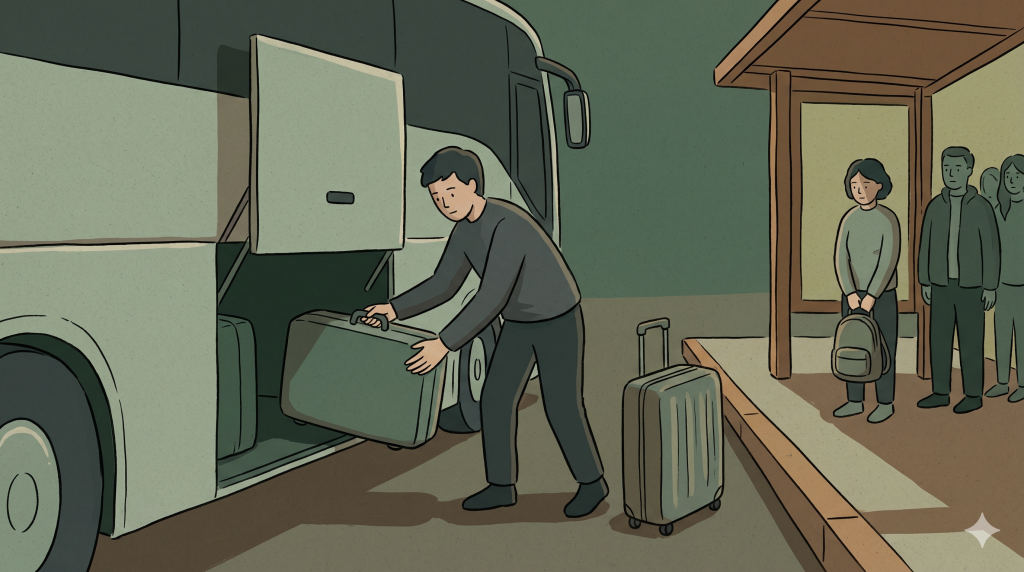
If I were explaining Korean buses to a friend, I’d point to one thing that separates them: whether the bus has a luggage compartment.
The airport bus, often called the airport limousine bus, is the most comfortable for big luggage. You board at a fixed stop, load your large suitcase into the compartment on the side of the bus, and then take your seat. With airport limousine bus Korea luggage, the heavy bag rides underneath, not next to you.
Express buses come in premium and standard types, and both have storage underneath. You catch them at a terminal, and they run long distances between cities, so they’re built around the assumption that you’ll stow a big suitcase below. Express bus Korea luggage is handled the same easy way: it goes in the compartment, not the aisle. Intercity buses, which you also board at a terminal, work the same — they connect one city to another and carry your bag in the compartment below.
Then there’s a bus that looks like it should follow that rule but doesn’t. The Gwangyeok (광역) bus, a wide-area commuter bus you’ll often spot in pale blue or red, runs longer routes that link a city with its surrounding region. Despite the distance it covers, it has no luggage compartment underneath. Like a city bus, it’s built for commuters, so your suitcase stays with you in the aisle, not stowed below. The color might make it look like a long-haul bus, but for your luggage it behaves like a city bus.
The real exception, the everyday one, is the city bus. City buses come in colors specific to each region, and they have no luggage compartment at all. So even with a large suitcase, there’s nowhere to put it. You carry it on yourself and stand it beside you or in the aisle. The problem that the compartment quietly solved on an airport or express bus lands right back in the walkway here. That single difference, compartment or no compartment, decides almost everything.
Here’s the short version. Buses with a compartment — airport buses, express buses, and intercity buses — have a place for a big suitcase. The buses without one — city buses and those pale blue or red Gwangyeok (광역) buses — leave that suitcase nowhere to go but the aisle. Remember just that distinction and the odds of getting caught off guard in Korea drop by half.
Why Busan Became the Place Where This Came Up
I haven’t personally watched a bus driver stop someone over a big bag. But the fact that it became a real policy matter in Busan suggests it happens there often enough to need addressing.
Busan is both a port city and a major tourist destination. When the KTX arrives at Busan Station, travelers with large suitcases spill out all at once. Busan also has narrow, steep hillside roads and winding routes, and city buses navigate them. So the aisle and safety concerns show up there more visibly than they might elsewhere. Worth noting: a Korean who mainly lives in or around Seoul might not even know about this. Busan’s city bus suitcase limits aren’t common knowledge for everyone here.
According to Busan’s own travel guidance, the luggage you can carry onto a city bus is generally about the size of a 20-inch carry-on suitcase. For anything larger, the city officially suggests the subway, the airport limousine, or a taxi. So it’s more accurate to read Busan bus suitcase rules as rules shaped by that city’s roads and bus design than as anyone being difficult.
Then, in 2026, Busan started an experiment. On part of Route 85, select buses now allow suitcases up to 30 inches under a pilot program. This isn’t a free-for-all, though. It excludes the busy morning and evening commute hours, limits each passenger to one bag, gives priority to passengers who need accessible space, and lets drivers restrict it when the bus is crowded. It reads as a middle ground between traveler convenience and resident safety. The pilot is scheduled to run through June 30, 2026, so if you’re planning a trip after that, it’s worth checking whether it’s still in effect.
What to Do Instead — A Calmer Way to Move with Big Luggage

So how should you move around if you’re traveling with a big suitcase? The honest answer is that it depends on how much you’re carrying.
If you’re a family or a group with several large suitcases, a taxi is often the easiest call. Korea has van-style taxis that can take two or three big suitcases without trouble. When there are a few of you and the bags pile up, loading people and luggage into one van taxi beats standing on a city bus watching your suitcases wobble in the aisle. It costs more, but weighed against the stress of muscling bags through a tight walkway, it can be well worth it. For a solo traveler with one bag, though, you may not need it at all.
If you’re crossing the city over a longer distance, the subway is a solid choice. Just remember that escalator caution from earlier, and look for an elevator when you’ve got a suitcase in tow. And when you’re traveling between cities, the airport bus, the express bus, or the KTX is the answer. Each of these has a dedicated place for your bags, so a large suitcase settles in like ordinary luggage instead of an obstacle. The whole art of Korea travel with luggage comes down to one sense: knowing which rides have a place for your bag and which don’t.
The point isn’t to avoid city buses. With a small bag, a city bus is perfectly comfortable. It’s only that, with a big suitcase, you want to choose the ride that has somewhere for that suitcase to go.
So picture that early-morning bus stop again, the one with the traveler and the big suitcase waiting for a bus. Now, when I see it, I find myself looking once more at which bus they’re waiting for. If it’s an airport bus with a compartment on the side, that suitcase is about to find a comfortable spot. If it’s a city bus with no compartment, then the traveler, the suitcase, and that narrow aisle are going to spend the next few stops quietly making room for one another. Knowing which bus you’re waiting for — when you’re moving through Korea with luggage, that’s very nearly the whole thing.
Can you bring luggage on Korean buses?
It depends on the type of bus. Airport buses, express buses, and intercity buses have luggage compartments, so large suitcases are easy to bring. City buses and pale blue or red Gwangyeok commuter buses have no compartment, so big suitcases stay in the aisle and, in some cities, may be refused.
Are Busan city buses stricter about suitcases?
Busan’s official travel guidance generally allows carry-on suitcases up to about 20 inches on ordinary city buses, and suggests the subway, airport limousine, or a taxi for anything larger. It’s tied to the city’s roads and bus design rather than to people being strict.
What is the Busan Route 85 luggage pilot?
From April 1 to June 30, 2026, select buses on Busan’s Route 85 allow suitcases up to 30 inches as a pilot program. It excludes commute hours, limits one bag per passenger, prioritizes accessible space, and can be restricted by the driver when crowded.
What’s the difference between a city bus and an airport bus for luggage?
An airport bus has a side compartment where you stow your suitcase before sitting down. A city bus has no compartment, so the bag stays with you in the aisle. That single difference decides how easy your luggage is to manage.
What should I use instead of a city bus with big luggage?
For longer distances between cities, take the airport bus, express bus, or KTX, all of which have storage. Within a city, the subway works well (use elevators with a suitcase). For families or groups with several large bags, a van-style taxi is often the easiest option.