Ajumma Meaning (and Ahjussi): Why These Words Can Sound Rude
I grew up hearing *ajumma* and *ahjussi* so often that I rarely stopped to consider the ajumma meaning. I notice it most when I need to call an adult stranger whose name I do not know.
In my experience, even Koreans do not have one answer that works every time. The same word can sound perfectly ordinary or surprisingly rude depending on the other person’s age, your own age, the situation, and the tone of your voice.
Two of the most common terms are ajumma and ahjussi. I hear and use them so routinely that I struggle to recall one memorable occasion. It is a little like asking which particular step they remember from a pair of shoes they wear every day.
When I try to explain these words to an international visitor, I realize how unfamiliar an age- and gender-based form of address can feel. But once you know how ajumma and ahjussi work in everyday life, many small interactions in Korea become easier to understand.
Ajumma Meaning and What Ahjussi Means
When I use ajumma (아줌마, a common way to address an adult woman), the ajumma meaning is usually an adult woman I do not know, especially a middle-aged woman. Ahjussi (아저씨, a common way to address an adult man) generally refers to an adult man you do not know, particularly someone who appears older than you.
I have never used an exact birthday to decide when someone becomes an ajumma or an ahjussi. That uncertainty makes more sense when you see how strongly age shapes everyday speech in Korea. Marriage is not a reliable dividing line either.
Children and teenagers often use these terms when they need to address an unfamiliar adult. For relatives, Korean has specific titles such as imo for a maternal aunt, gomo for a paternal aunt, and samchon for an uncle. Children may also call close friends of their parents imo or samchon even when they are not related.
A stranger on the street is different. When I do not know the person’s name, I have no family or social relationship to give me a ready-made title. In that situation, a woman may be called ajumma and a man may be called ahjussi.
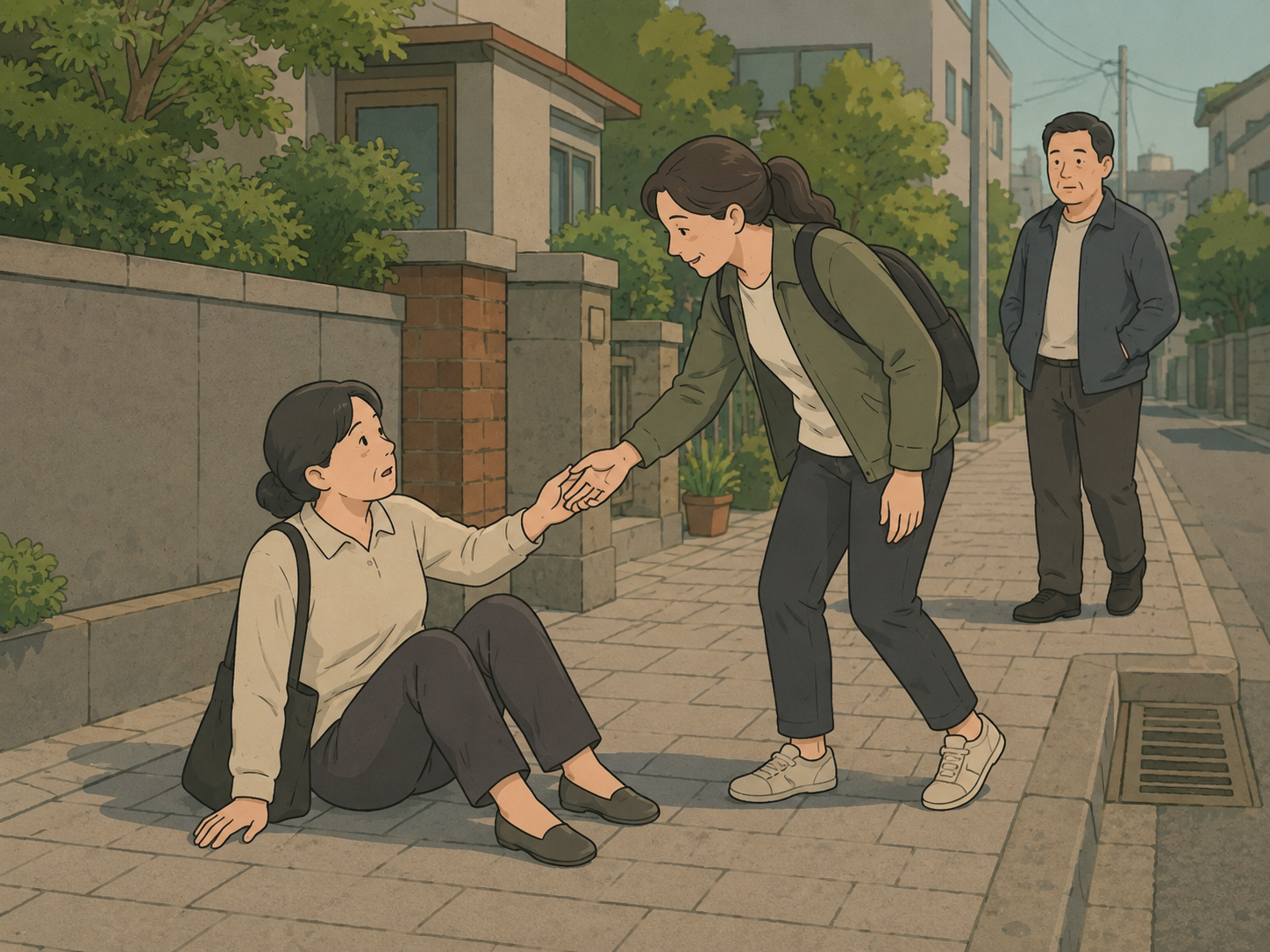
Imagine that an unfamiliar middle-aged woman trips and falls in front of you. You do not know her name, but saying nothing before stepping in to help can feel awkward. You might approach her and say, “Ajumma, are you okay?”
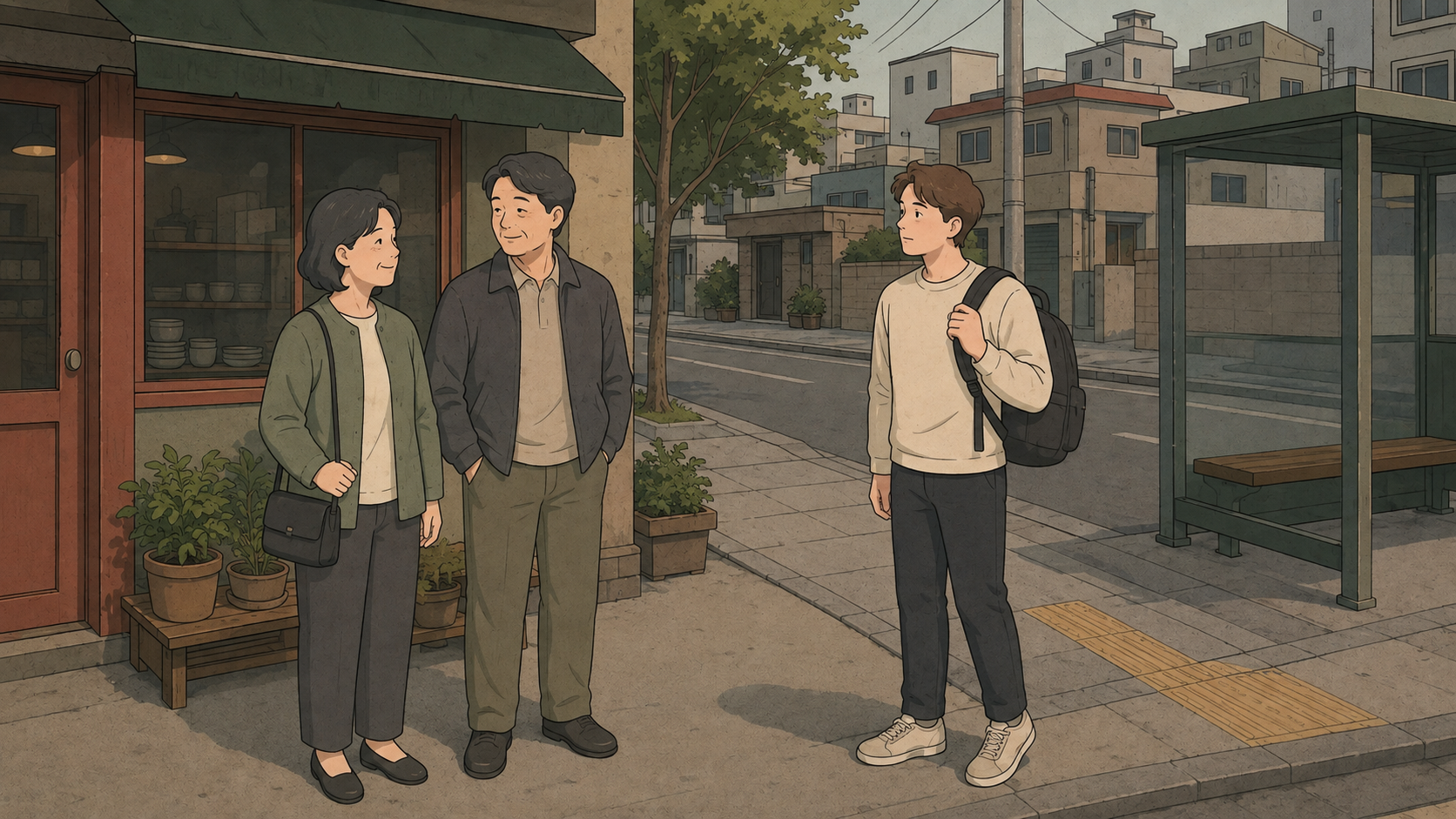
People may also call a friend’s mother ajumma or a friend’s father ahjussi. The relationship is closer than it would be with a stranger on the street, but these are still not precise family titles.
How Often Do Koreans Actually Say These Words?
I do not associate ajumma and ahjussi only with unusual or dramatic moments. They are everyday ways to get someone’s attention, ask a question, or warn a stranger about something.
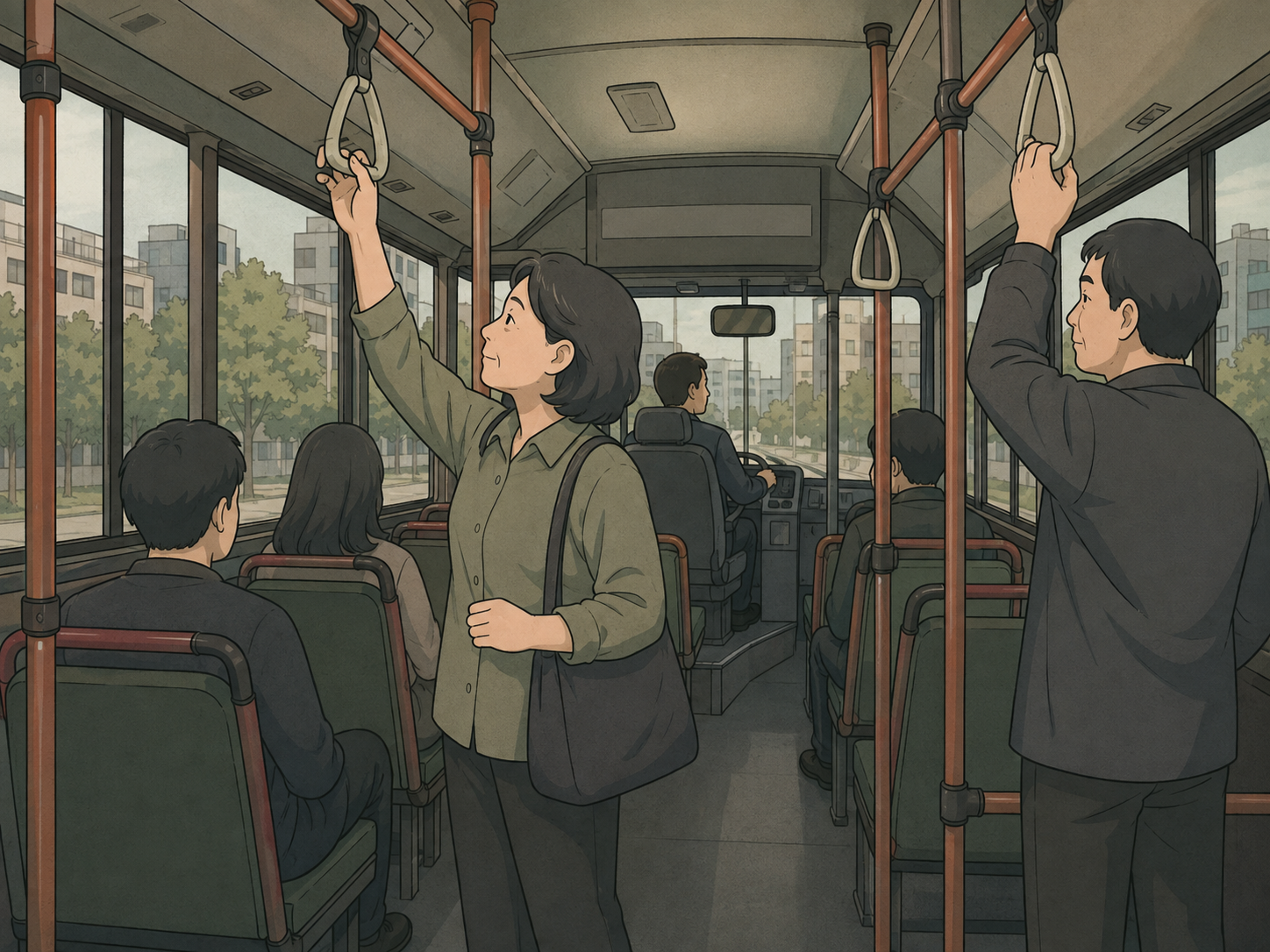
On a bus, for example, a passenger may be standing without holding a strap or handrail. The driver might call out while watching the road:
“Ajumma, please hold on to the handrail!”
“Ahjussi, please hold on to the handrail!”
The driver does not know the passenger’s name and has no time for a long explanation. The bus is about to move, so the driver uses a quick description that makes it clear who needs to hold on. The passenger usually realizes that the warning is meant for them and grabs the rail.
I use the same kind of address in a neighborhood store. If I have checked the shelves several times and still cannot find what I came to buy, I turn toward the counter. You might turn toward the checkout counter and ask, “Ajumma, where is this?” or “Ahjussi, where can I find this?” Here, the term works less like a description of the person and more like a way to signal who you are speaking to.
You might also use it to stop someone who has dropped a banknote or to confront someone who has cut in line. The same terms can appear when you are helping a stranger or objecting to their behavior.
That is why I find it hard to name one special occasion when I heard ajumma or ahjussi. These words pass through buses, stores, and streets so frequently that most instances disappear from memory almost immediately.
Do Koreans Call Themselves Ajumma or Ahjussi?
Adults sometimes refer to themselves as ajumma or ahjussi when speaking to a young child.
If a child appears to need help, a woman might say, “Ajumma will help you.” A man could say, “Ahjussi will do it for you.” They are not carefully judging how old they look before choosing the word. From the child’s point of view, they are unfamiliar adults, so the terms make the relationship easy for the child to understand.
It is much less common for adults to introduce themselves to other adults by saying, “I am an ajumma” or “I am an ahjussi.” A phrase that sounds natural around a child can suddenly feel awkward in an adult conversation. It may sound as if you are formally announcing your own age category.
Is Ajumma Rude?
I do not hear the word ajumma as automatically rude. Many women hear it as an ordinary form of address and respond without giving it much thought.
However, I understand why a woman who still sees herself as young may dislike it. Ajumma can feel as if it carries not only the meaning of “adult woman” but also an unsolicited judgment that she looks older.
Koreans often talk about people in their forties looking as though they are still in their twenties or thirties. Clothing, styling, and attitudes toward age have changed, and the age someone feels does not always match the age a stranger guesses. In that setting, an unexpected “ajumma” may sound completely routine to the speaker but land like a sudden age assessment for the listener.
I have heard women immediately respond, “Why am I an ajumma?” One moment they are simply going about their day; the next, a stranger’s choice of address has made them reconsider how old they appear. Guessing ages in Korea is already difficult. Calling someone ajumma can feel like submitting your answer before anyone asked you to take the test.
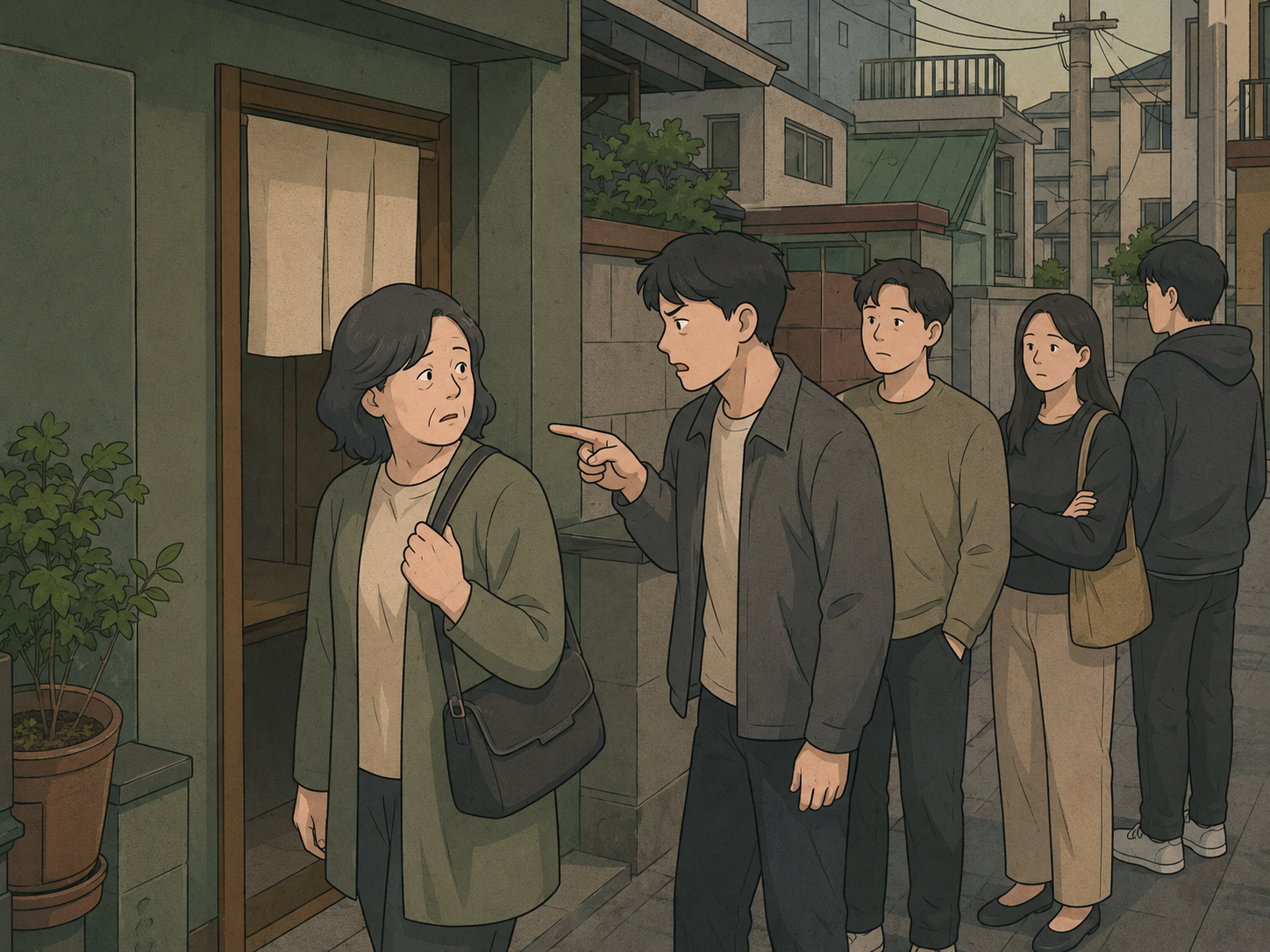
To my ear, tone matters just as much as the word itself. In an ordinary interaction, “ajumma” may pass almost unnoticed. During an argument, however, the speaker may draw the word out or press down on every syllable. The other person immediately understands that it is no longer just a practical way to get her attention.
A sharp “Ajumma!” during a dispute over someone cutting in line sounds very different from “Ajumma, are you okay?” spoken to a woman who has fallen. It is difficult to identify one precise intonation at which the word becomes offensive. Korean speakers pick up the difference through the pace, facial expression, and surrounding situation.
Is Ahjussi Also Sensitive About Age?
Men may start hearing ahjussi at a younger age than women start hearing ajumma.
Many Korean men complete their military service in their twenties. A man may be only in his early twenties, but when a child sees him walking by in uniform, he can instantly become a gunin ahjussi, or “soldier mister.”
The child is not calculating the soldier’s exact age. He is no longer a student in a school uniform but an adult man in a military uniform, so gunin ahjussi feels natural from the child’s perspective. The soldier may still think of himself as very young, but the child’s system of titles has already placed him firmly in the ahjussi category.
This is one reason Korean men can hear ahjussi surprisingly soon after becoming adults. It may be startling the first time, but familiar expressions such as gunin ahjussi also show that ahjussi does not refer exclusively to middle-aged men.
A man who considers himself young can still dislike being called ahjussi. In general, though, age sensitivity tends to be more noticeable when a woman is called ajumma.
What Should Foreigners Call Strangers in Korea?
If someone appears to be around my age, or I am unsure how old they are, I usually reach for jeogiyo (저기요, a polite way to say "excuse me") to get their attention. It works much like “excuse me.”
In a shop or restaurant, you can say:
“Jeogiyo!”
“Yeogiyo!”
“Jumunhalgeyo.” — “I’d like to order.”
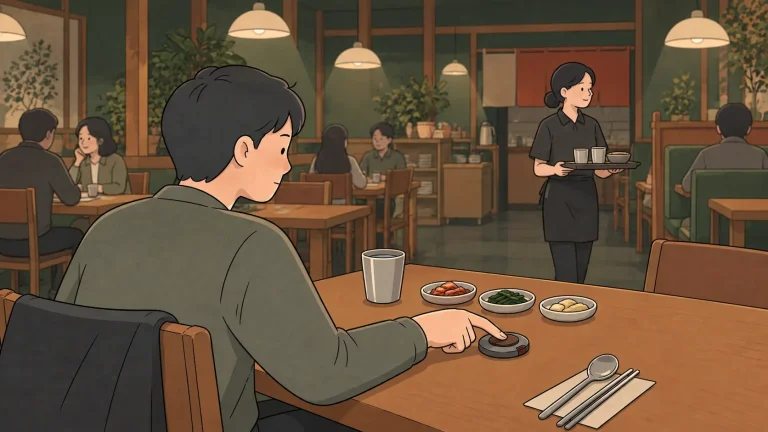
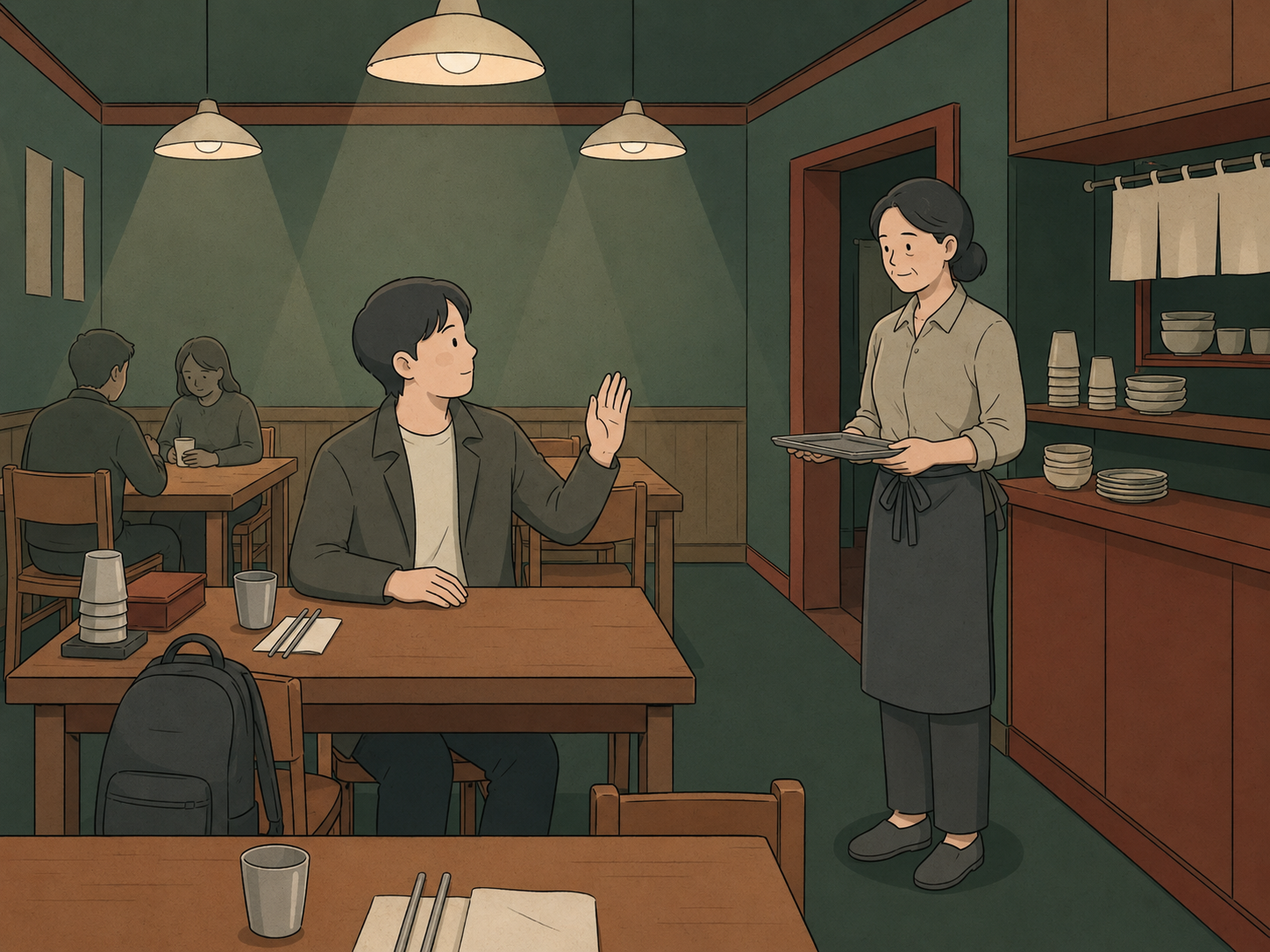
I sometimes hear customers call a female restaurant worker imo (이모, a warm way to address a restaurant worker, literally meaning "maternal aunt"). They do not mean that she is their actual aunt. Saying “Imo, we’d like to order” gives the interaction a familiar, friendly feeling.
Not every Korean addresses restaurant workers this way. In a restaurant they have never visited before, many people simply say jeogiyo or yeogiyo. If they have already made eye contact with the server, they may skip a title altogether and say, “We’d like to order.”
Some customers use ajumma, but you cannot know how the other person will receive it. There is no need to take a small age-guessing exam before you have even ordered your food. When I am in doubt, I use yeogiyo. It does the job.
For a woman who is clearly much older than you, ajumeoni (아주머니, a more formal version of ajumma) or ajumma may be used. Ahjussi can be used for an older adult man. eoreusin (어르신, a respectful way to address an elderly person) is appropriate.
These choices do not change dramatically between a restaurant, a market, and the street. Still, because guessing someone’s age can make them uncomfortable, the gender- and age-neutral jeogiyo is usually the safest option.
Hearing the Words Again on a Bus
If you ride a bus in Korea, you may hear the driver call out to a passenger who is not holding on:
“Ajumma, please hold on to the handrail!”
“Ahjussi, please hold on to the handrail!”
Nobody asks the passenger’s name. Nobody checks whether the person is married or calculates their exact age. The driver says what needs to be said, the passenger understands that the warning is directed at them, and they grab the handrail. Most of the time, everyone simply continues on their way.
That is how I hear ajumma and ahjussi appear and disappear throughout an ordinary day. If you need to call an unfamiliar adult, start with *jeogiyo* or *yeogiyo* instead of guessing their age. I use the neutral option when I am unsure, and it saves both people an unnecessary age test.
What does ajumma mean in Korean?
Ajumma is an everyday Korean term used to address an unfamiliar adult woman, especially a middle-aged woman. There is no exact age requirement, and it may be used when the speaker does not know the woman’s name or relationship to them.
Does ajumma mean only a married woman?
Not necessarily. People often associate ajumma with married or middle-aged women, but in everyday life, someone may use it based on a woman’s apparent age without knowing whether she is married.
Is it rude to call someone ajumma in Korea?
Not always, but some women may find it offensive. A woman who considers herself young may hear ajumma as a comment that she looks older. The speaker’s tone also matters: an ordinary call for attention sounds very different from ajumma used sarcastically during an argument.
How old is an ahjussi?
There is no exact age. Ahjussi generally refers to an unfamiliar adult or middle-aged man, but children may call men in their twenties ahjussi. A common example is gunin ahjussi, meaning an adult male soldier as addressed by a child.