What to Bring to the Rental Counter for Driving in Korea
Could you rent a car in Korea with just a US driver’s license? A traveler on Reddit asked whether an international driving permit was really necessary, because her husband thought his US license would be enough. If you are preparing for driving in Korea, that is a question to settle before opening a booking page. The rental counter checks original documents, including your passport and international driving permit, along with your age and eligibility for the vehicle.
As a Korean, I have never gone through the process of collecting a rental car as a foreign visitor. I will use official guidance for that part. My own travel experience does help me explain where a car is useful and where I would leave it behind. My answer for Pocheon is different from my answer for sightseeing in Seoul.
Documents and rental conditions for driving in Korea

Start by separating permission to drive in Korea from eligibility to rent from a particular company. Even with a valid international driving permit, you may be unable to collect a vehicle if you do not meet the company’s age, experience, or vehicle requirements. A booking confirmation does not necessarily settle those checks.
The checklist below concerns short-term visitors using an international driving permit with a foreign license. The rental process for someone who already has a Korean license is a separate situation.
- Your original, officially issued international driving permit: The Korea Road Traffic Authority says a valid permit issued by a Geneva Convention country allows driving for up to one year from entry into Korea. It also recognizes valid permits issued by Vienna Convention countries. That does not extend a permit beyond its own expiry date. An unofficial translation certificate sold online is no substitute.
- Your original passport and home-country driver’s license: Check that the English names on your passport and permit match, and pack your home license too. The Korea Tourism Organization notes that some rental companies require it. Do not leave home with only photographs on your phone.
- Age and driving experience: Lotte Rent-a-Car’s guidance for foreign customers gives a minimum age of 21. Its separate short-term rental guidance requires at least one year of driving experience for ordinary small and midsize cars and seven- or nine-seat vehicles. These are company requirements, not a legal minimum that applies identically to every company and vehicle. Tell your rental branch when you first obtained your license and which vehicle you want.
- The permitted vehicle category: Your international permit shows which categories you can drive. Lotte’s guidance requires category B or above for vehicles with up to nine seats. Check that category before booking a larger vehicle for your group.
- Your payment card and contract: Lotte’s foreign-customer FAQ lists credit or debit cards. Ask the branch about the cardholder name and whether your particular card can be used for the overseas payment. Read the coverage included in the rental fee separately from the collision damage waiver covering damage to the rental vehicle itself.
The experience requirement can be confused with a requirement to have obtained your international permit a year ago. If a recently renewed home license does not show your original licensing date, ask the branch which supporting documents it accepts. Before departure, get an answer to this specific question: can I collect this vehicle with these documents and this licensing history?
Replies to the Reddit traveler advised getting an international permit. That is a conversation on one forum, rather than evidence of every visitor’s experience. Use official guidance and the conditions of your actual rental branch to establish what you need.
What should you check before leaving the rental lot?
Once the paperwork is settled, check the vehicle and its return conditions. For this part, I am drawing on the company’s inspection guidance, rather than a personal story about collecting a car as a foreign customer.
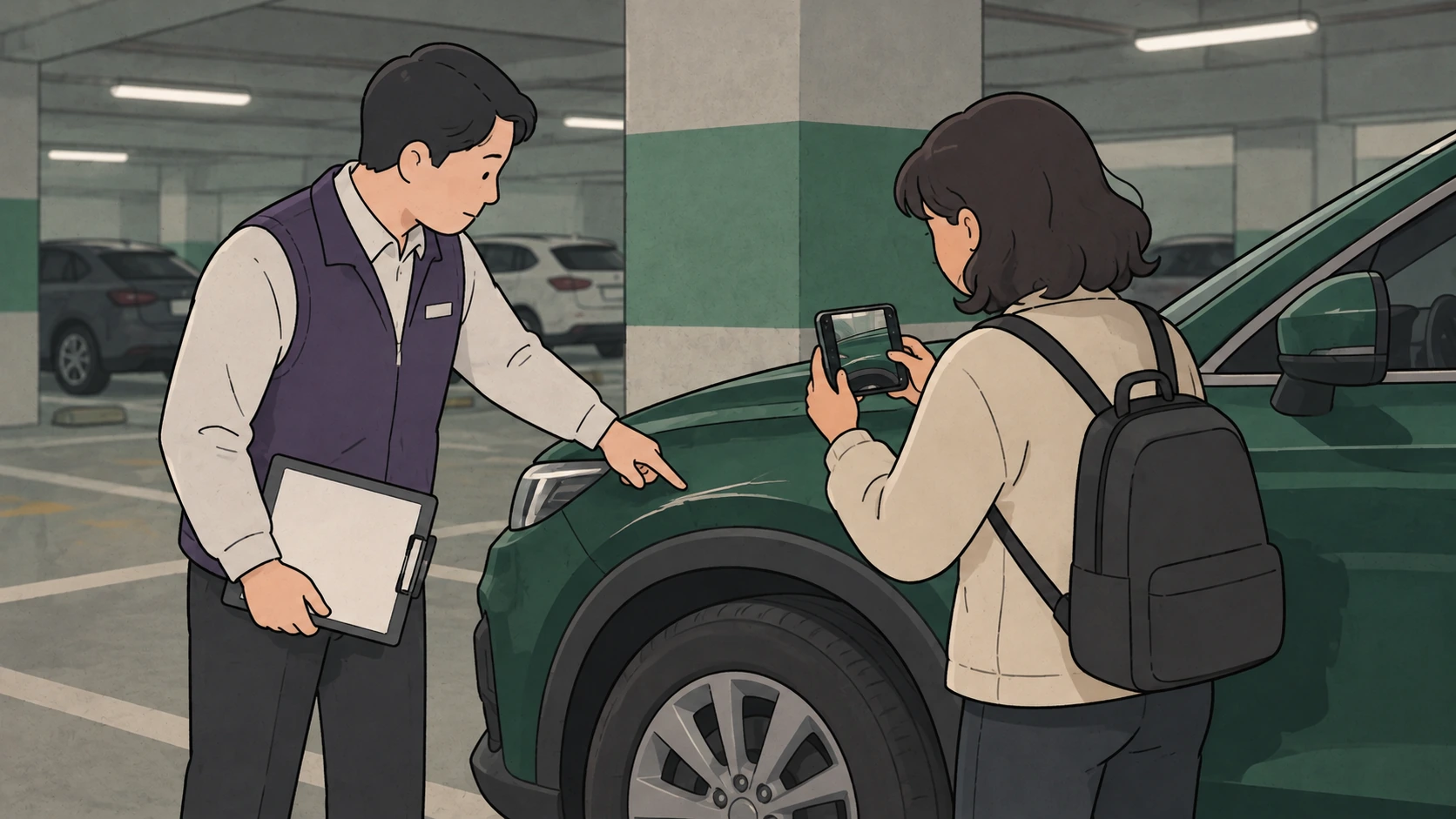
Lotte’s rental terms provide for checking the exterior and fuel level with the customer. Walk around the car with a staff member and check that existing scratches and dents appear on the inspection record. Take photographs or video, and point out visible damage before you drive away.
Check the fuel gauge too, then compare it with the contract’s required return level. While you are there, confirm the return location, return time, and number to call after an accident.
Do not stop reading an insurance explanation at the word “included.” Basic coverage does not necessarily pay for all damage to the car you rented. Check the collision damage waiver’s deductible and exclusions, along with how the contract handles charges for the time the vehicle cannot be rented out during repairs. What you might have to pay matters more than the coverage’s name.
Watch the blue lane markings and speed limits
Bus lanes are something I particularly tell people to watch when driving here. City streets can have separate lanes for buses, marked with blue lines. Navigation systems give guidance too, but you still need to look at the lanes around you while listening to directions.
A blue line does not mean the same operating schedule applies everywhere in Korea. Seoul’s guidance distinguishes between median bus lanes and curbside lanes, with different operating hours. Read the roadside signs for permitted vehicles and operating times, and avoid driving an ordinary rental car in a bus lane while its restrictions are in force. Entering incorrectly can lead to enforcement action.
Speed deserves separate attention. The Korea Tourism Organization’s driving guidance describes speed cameras on expressways and city roads and advises following the posted limits. This is practical information for a first drive here; I do not have a personal camera-related mishap to add. Speeds are shown in kilometers per hour, so if you are accustomed to miles, check how you are reading the dashboard from the start.
I also strongly advise against driving after drinking. If you take a car to your destination, decide how you will get back before you go.
Why I recommended a car in Pocheon
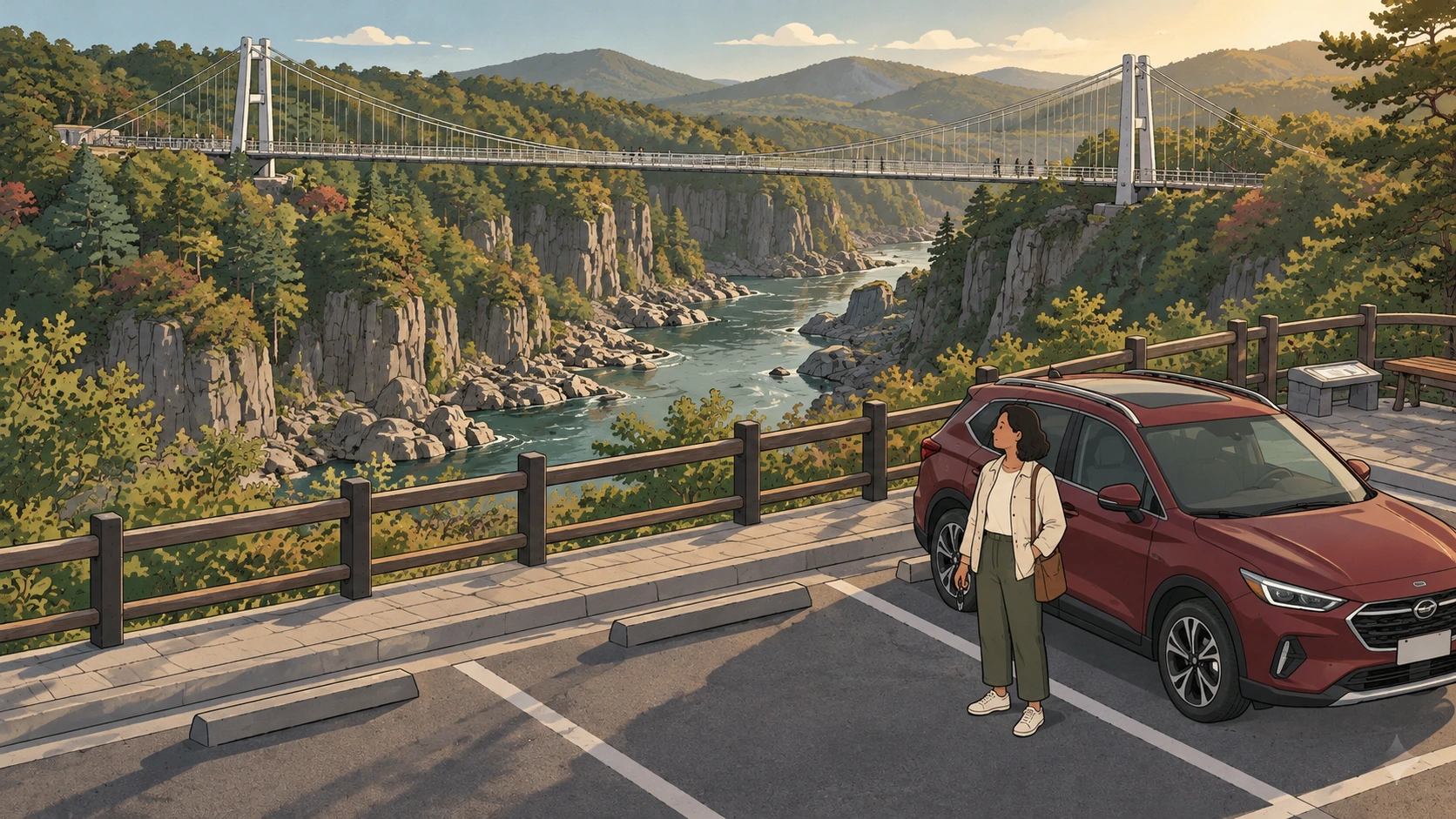
The places that came to mind when I thought about recommending a car were Hantangang Sky Bridge, Pocheon Art Valley, and restaurants serving Idong galbi. I have visited all of them and introduced them in earlier articles. For those trips, I found public transport inconvenient for moving between the places I wanted to see.
Taxis could cover the journeys, but the fares would add to the expense. That is why I recommended a rental car or your own car for this kind of trip. Having somewhere worth visiting and having a convenient way to reach it were two separate considerations.
I would not extend that recommendation to every trip outside Seoul. A car had advantages at these particular places I visited. Mark your own destinations on a map, then check how you would travel each leg by public transport. Finding a connection between cities does not automatically solve the journey to the attraction’s entrance.
For a Seoul itinerary, start with public transport

In Seoul, I find public transport more convenient. The subway connects to most of the sightseeing places I want to visit, while driving means paying attention to bus lanes. Parking fees can be substantial too.
My recommendation for Pocheon does not mean I would tell you to keep a rental car throughout a Seoul holiday. Separate your Seoul sightseeing from trips farther out, and match the rental period to the days when a car helps. Work out whether paying to park a car on days you can travel by subway makes sense for your itinerary.
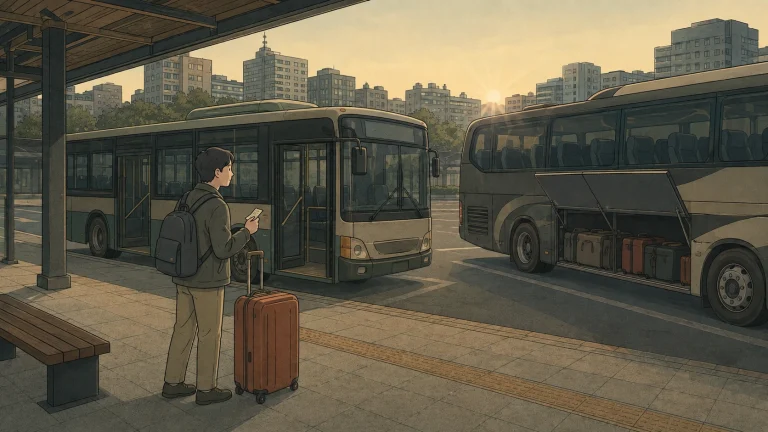
If luggage makes you hesitate about taking a bus, check what luggage the bus allows as well. Start by comparing public transport within Seoul with renting a car only for the days you visit places with inconvenient transport connections.
Frequently Asked Questions
Do I need an international driving permit if my home license is in English?
If you are a short-term visitor planning to drive with an international permit rather than a Korean license, do not assume English wording on your home license is a substitute. Prepare your official international driving permit, passport, and original home license, and confirm your rental branch’s document requirements.
Does Korea recognize only Geneva Convention international driving permits?
The Korea Road Traffic Authority says it also recognizes valid international driving permits issued by Vienna Convention countries. Check that yours was issued by an authorized organization, remains valid, and covers the vehicle category you need.
Can I rent any car if I am 21 and have an international driving permit?
You cannot assume that. Age, driving experience, and license-category requirements depend on the company and vehicle. The Lotte conditions discussed above are a company example, so tell your booking branch which vehicle you want and when you first obtained your license to confirm whether you can collect it.
Does rental insurance cover every vehicle damage cost?
Coverage and exclusions vary by product. Distinguish basic insurance from the collision damage waiver, and check the contract for deductibles, exclusions, and how costs arising during repairs are handled.
Should I rent a car if I am only sightseeing in Seoul?
I recommend public transport in Seoul. You can use the subway to reach sightseeing destinations and reduce the burden of watching bus lanes and paying parking fees. Compare that with renting only for the time you need to visit places where I found transport inconvenient, such as those in Pocheon.