Korean Cafe Culture: Why a Coffee Hater Still Goes
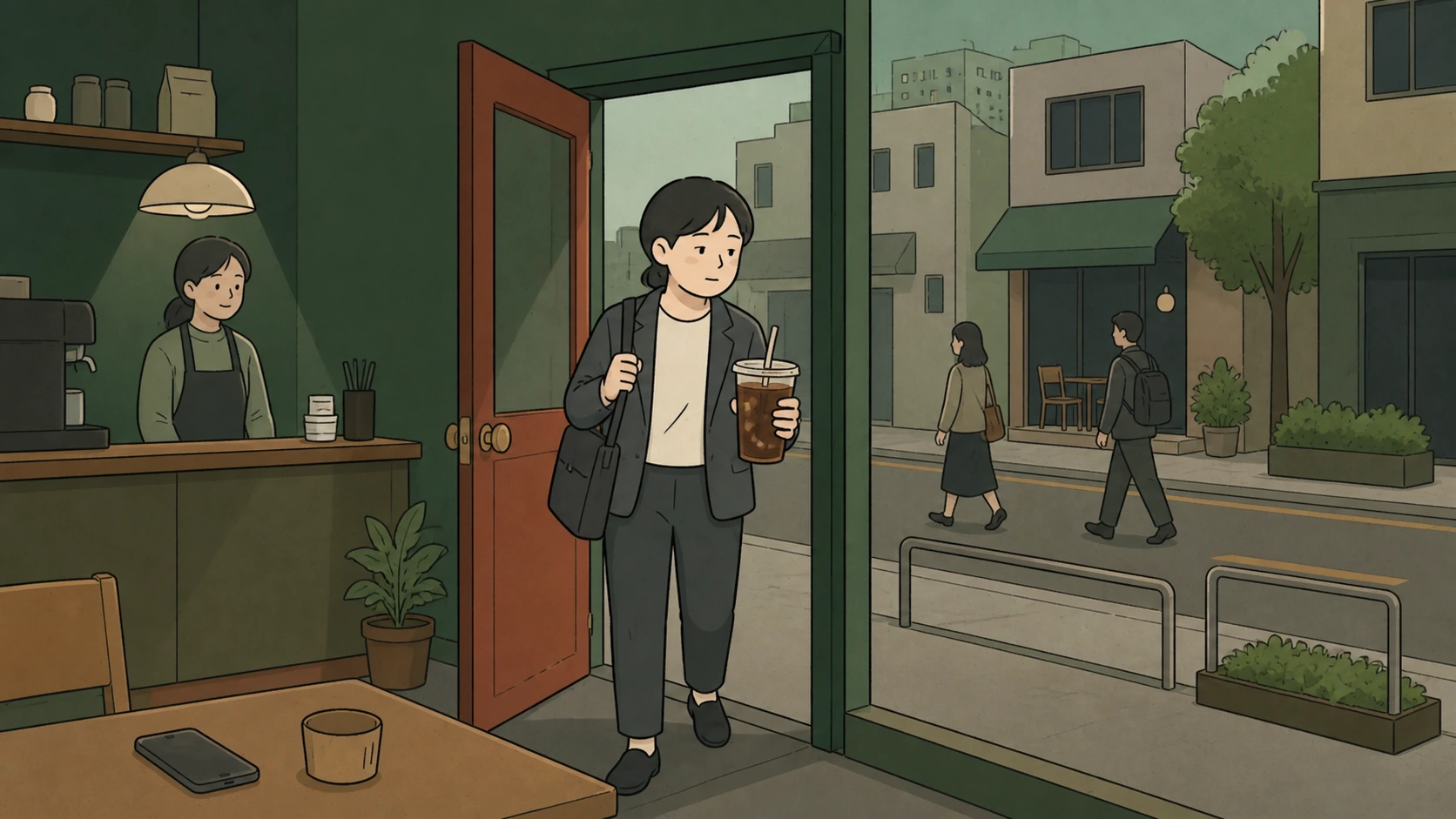
I usually enter a cafe already thinking about where I need to go next. I order takeout, collect a cup that can look larger than a small water bottle, and keep moving. That routine is the side of korean cafe culture I know best.
A cafe can certainly be a place to talk, take a short break, or sit across from someone on a date. People order drinks, settle around a table, and continue a conversation without rushing out. That is part of Korean cafe culture too.
At least in my own life, however, the cafe has rarely worked that way. I do not go there to rest over coffee. I go there to buy coffee so I can keep moving.
For me, the important part has never been the cafe. It has been the coffee.
A Cafe Is Not Where I Go to Relax
I feel awkward sitting at a cafe table and talking over coffee. Once I sit down, I start noticing small things that other people probably do not think about: where to put the cup, what to do with my hands while we talk, and how long I am supposed to stay just because there is still coffee left.
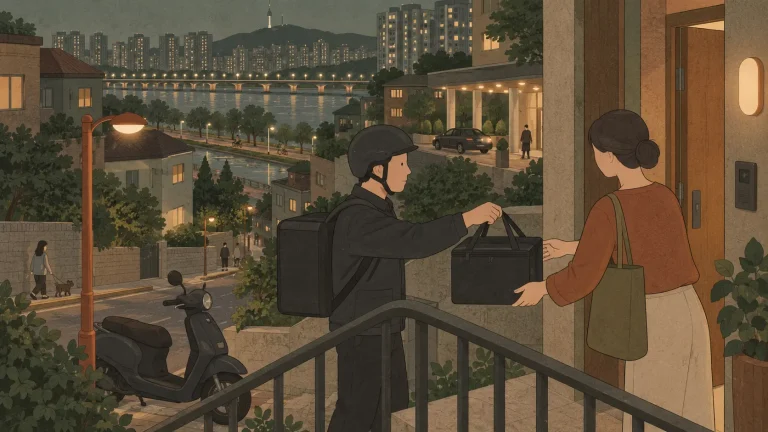
That is why I do not look for an empty seat when I enter a cafe. I decide what to order, choose takeout, and wait just long enough for the drink to be made. As soon as the cup reaches my hand, I head for the door.
My route is short.
Carrying the coffee back to the office or home feels far more natural to me than settling into the cafe itself. I am used to returning to wherever I was going and drinking it there. The cup in my hand does not signal the beginning of a break. It tells me I am ready to start moving again.
The reason is simple. I have never been someone who drinks coffee slowly to study its flavor and aroma. I drink it because I want the fatigue to ease, even a little. When my body feels heavy and my eyelids start lowering, a cold sip at least gives me the sense that I have done something about it.
I cannot say exactly how long that effect lasts. I still buy another cup.
How Coffee Fits Into a Korean Workday
Korea was once criticized as a country obsessed with work. Younger people now talk much more about work-life balance and prefer protecting time for themselves, but coffee has not suddenly disappeared from the working day.
A cup on the way to work can be followed by another in the afternoon. If the work is still not finished, there may be one more during overtime. Coffee is often treated less like a leisurely drink and more like fuel added before the next stretch of the day.
That habit makes sense inside Korea’s familiar culture of moving quickly and pushing ahead, although I would not claim every worker drinks coffee for exactly the same reason.
The First Coffee on the Way to Work
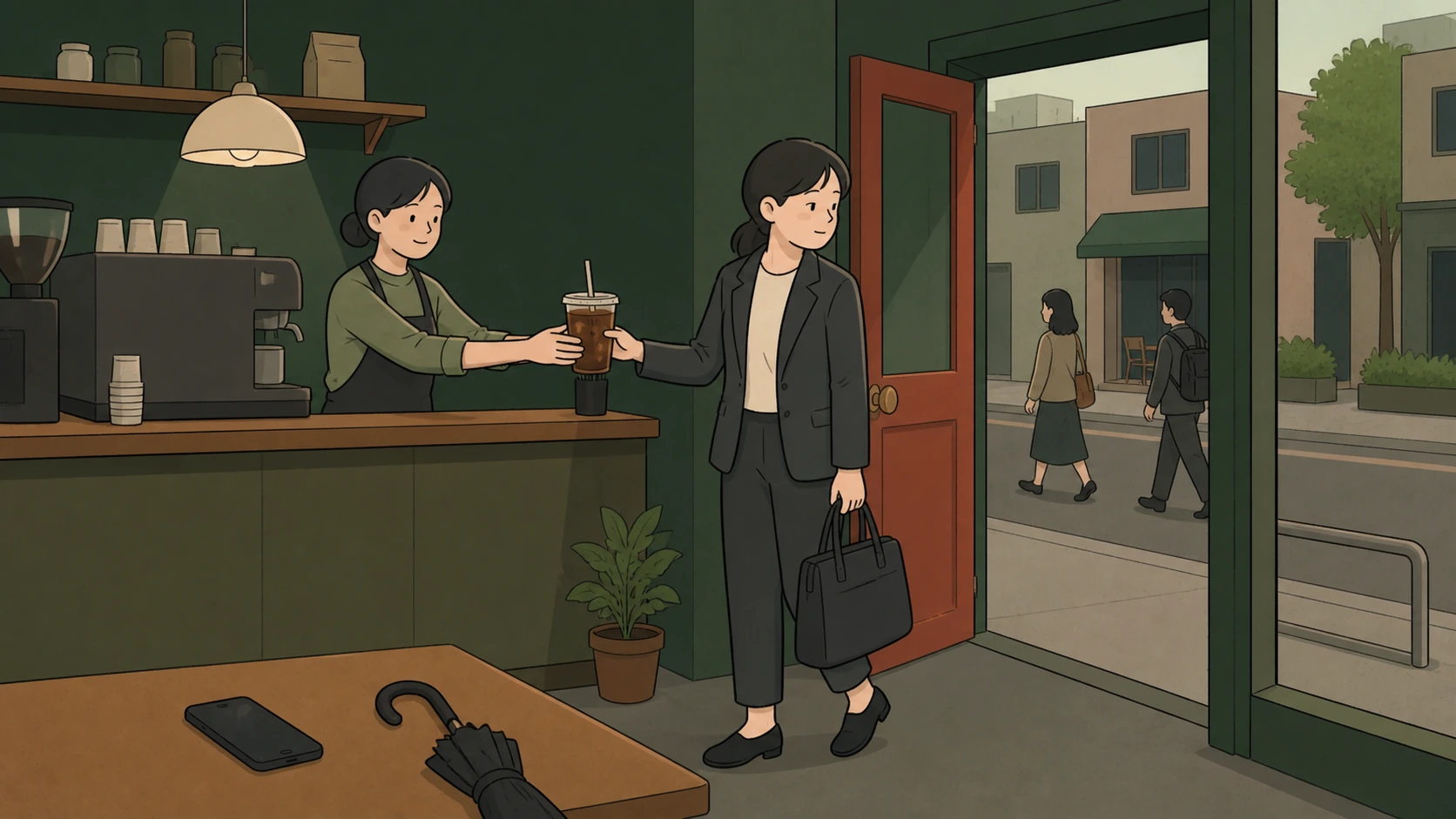
A worker can already be tired before reaching the office. The body has left home, but the mind has not fully caught up. On a morning like that, the cafe counter may feel like the first real stop of the workday.
You go inside, place an order, and wait for a takeout cup. Once the drink is ready, one hand closes around it and the commute resumes. The other hand may be carrying a bag or checking a phone, while the coffee stays with you all the way to the office.
The cup is not necessarily small. Instead of something finished in a few sips, people may buy an amount that looks larger than a small bottle of water. It is the kind of cup that can sit on a desk and be worked through over the entire morning. Sometimes it looks as though the size of the day’s workload was included in the order.
I drank coffee this way too. I did not pause the day for a cup. I carried a large cup because I needed to begin the day. The coffee did not always disappear at the same speed that my mind woke up, but at least it was sitting beside me.
That counted as morning preparation.
Then the Afternoon Arrives
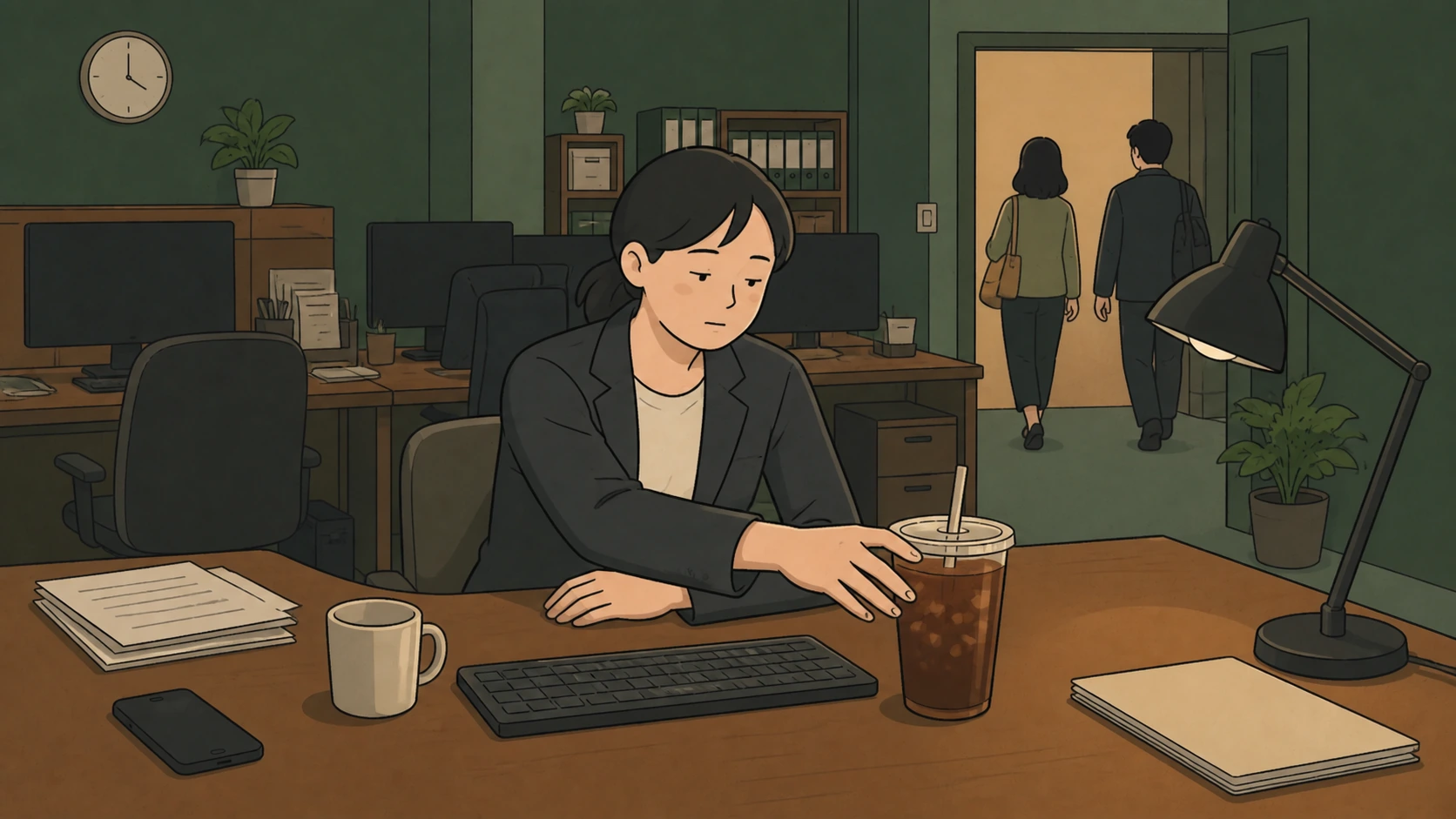
Finishing a large coffee in the morning does not always settle the matter. After lunch, the body can start loosening and concentration may no longer feel as sharp. The work is still sitting there, but the person doing it has slowed down.
That is when coffee returns to mind. The fact that I already had one in the morning is not a very persuasive argument against afternoon fatigue. I am tired now, so I start thinking about the coffee I need now.
If the workload suggests overtime, there is another reason to order. The normal time to leave gets closer, the list of unfinished tasks does not shrink, and it becomes clear that I will still be sitting at the desk in the evening. An afternoon coffee feels like energy stored in advance for the hours ahead.
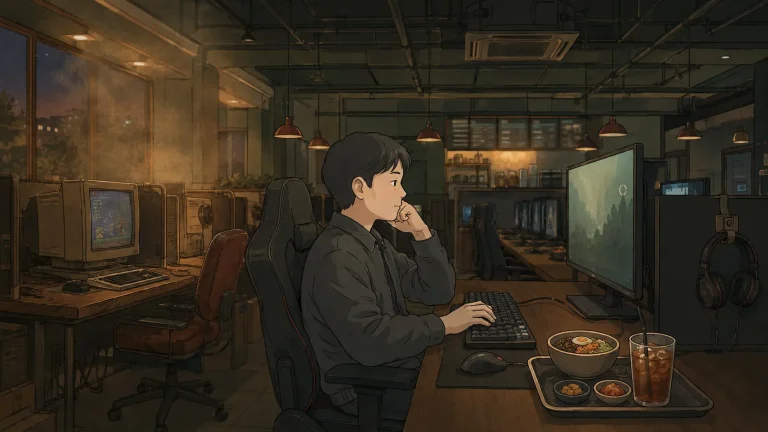
The problem is that drinking it does not make overtime effortless. Once overtime actually begins and fatigue builds again, another coffee can become tempting. One in the morning, one in the afternoon, and another while working late can form a chain across the day.
At that point, coffee feels less like a drink and more like an energy potion in a game. The difference is that a game shows the energy bar filling immediately. In real life, I can usually see only the cup becoming empty.
I drink it anyway. There is still work left.
This is why I hesitate when someone asks me to explain Korean cafe culture. The people who enjoy the space and atmosphere are real, but my own experience points more strongly toward a coffee culture. Before I notice where people drink, I notice the kind of life that keeps making them reach for another cup.
When a Cafe Starts Acting Like a Study Room
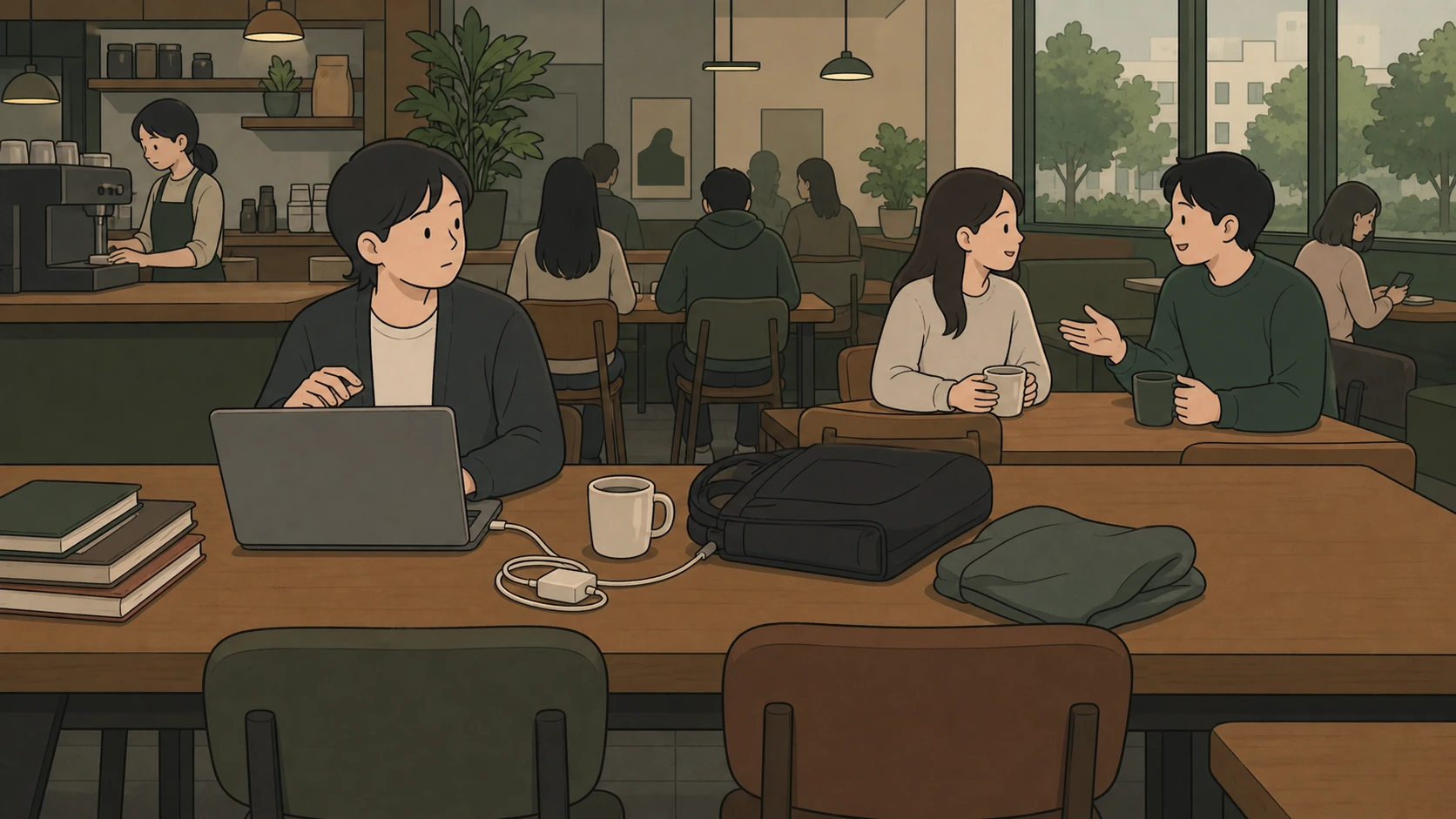
Korea has a word for people who spend a long time studying or working in cafes: cagongjok (카공족, people who study or work for hours at cafes). They open books or laptops at a table and remain there while the cafe continues operating around them.
I find it uncomfortable to sit in a cafe for long, so I usually take my coffee and leave. I have never personally watched one particular cagongjok occupy a table from beginning to end. I cannot honestly supply a detailed eyewitness scene that I did not experience.
I learned about the controversy through news reports. For a while, stories repeatedly discussed customers who treated cafe seats as long-term workspaces. Some reports went beyond the length of the stay and described conflicts with other customers.
One behavior drew particular criticism: people studying in a cafe sometimes objected to conversations at nearby tables. Other customers would be using the cafe normally, but someone studying would ask them to be quiet. One customer had effectively started trying to set the noise rules for the entire room.
The controversy did not disappear after a single article. As more stories appeared, readers filled the comment sections with reactions. Many criticized the idea of treating a cafe like a private reading room, and some openly mocked the behavior.
Those reports and comments gave the word cagongjok an image that went beyond simply studying in a cafe. Opening a laptop or reading a book was not the central problem. The problem was ordering one drink, holding a table for a very long time, and expecting everyone nearby to adjust to one person’s study conditions.
I have never argued with a cagongjok myself. I therefore cannot describe the person’s expression, exact words, or tone as if I had been standing there. What I could understand from the reports and the comments was what people found irritating: not studying itself, but acting as if a shared commercial space belonged to one customer.
The moment someone tries to control ordinary conversations at other tables, that person no longer looks like a customer who happens to be studying. They start looking like someone attempting to claim the entire room.
After the issue received prolonged news coverage and plenty of criticism and ridicule in the comments, such extreme behavior seems less common now. I do not have statistics to prove that. What is clear is that the public came to recognize this behavior as a problem.
If I Had to Stay for a Long Time
There may still be a situation when I need to work at a cafe for several hours. Even then, I would feel uncomfortable ordering one coffee and holding the same table indefinitely.
If time passed, the cup became empty, and my laptop and bag were still spread across the table, I would think about ordering another drink. I have heard of an unspoken practice of buying something again after about an hour when staying for work.
That is not a formal rule posted at every Korean cafe. A large, nearly empty shop is different from a small cafe where new customers keep looking for seats. Store policies also vary.
I would not turn one number into a universal law. The important part is noticing how long I have used the seat and remembering that the cafe is shared. If I need to remain there, ordering again and keeping my belongings from spreading across space meant for several people would feel more considerate.
I would be especially careful about criticizing other customers for talking. A cafe is a place where people are allowed to drink and have conversations. My decision to work there does not turn everyone else into library users.
If complete silence is essential, I should first ask whether a cafe is the right place for me. Choosing a more suitable workspace makes more sense than entering a cafe and attempting to make every other customer quiet.
How Ordering Works at a Korean Cafe
For a first-time visitor, the ordering process may be unfamiliar before the menu itself becomes a problem. Many cafes now use self-order kiosks instead of taking every order directly at the counter.
At the kiosk, you choose a drink, select whether you are staying or taking it away, and complete the payment. A first-time user may see many options on the screen, but the basic task is simply choosing the drink and how it will be served.
I almost always choose takeout. Once I have paid, I wait near the pickup area instead of searching for a table. When the coffee is ready, I take the cup and return to the office or head home.
It is the route I know best: enter, order, collect, and leave.
If Someone Hands You a Small Plastic Disc
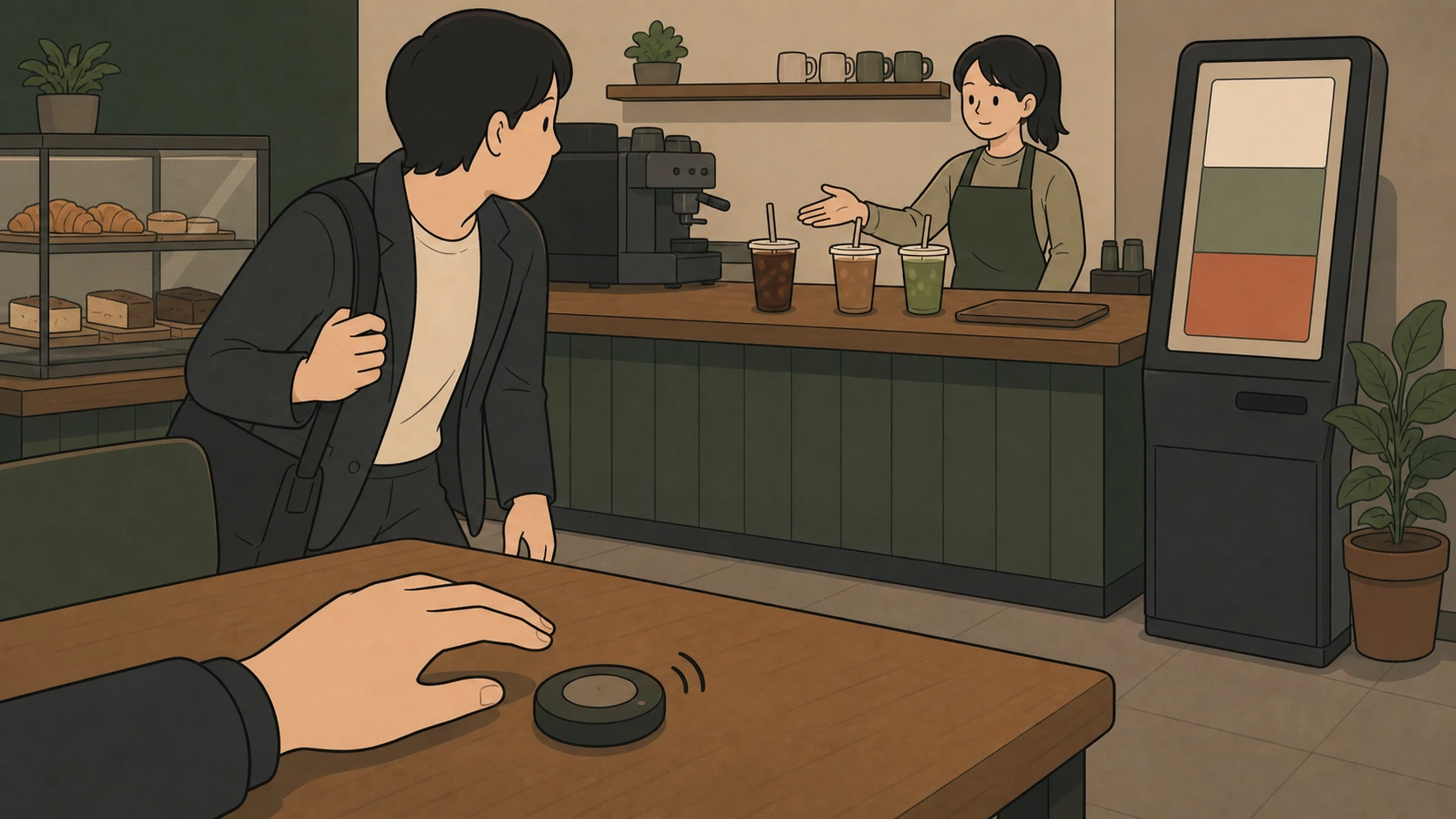
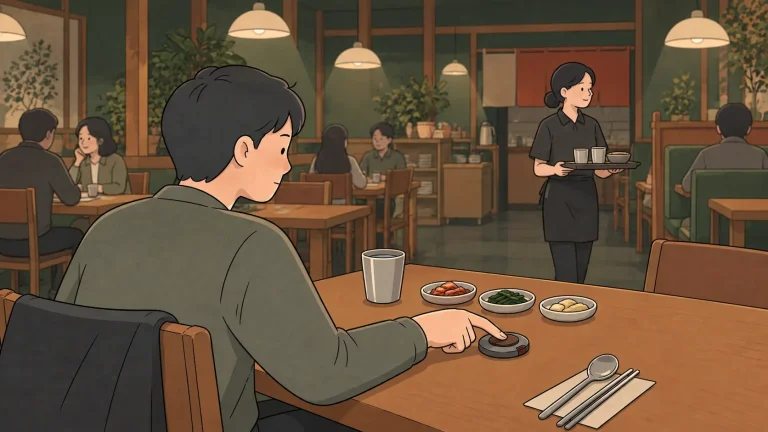
Some cafes give dine-in customers a pager after the order. It may look like a small plate. If you have never used one, receiving an object that is neither food nor a drink can leave you wondering where it is supposed to go.
Take it to the seat you want and wait. While you are sitting, the staff prepare the order. When it is ready, the pager buzzes. You may hear it, but you can also feel the vibration through your hand or the tabletop.
When it starts buzzing, go to the pickup counter. Your completed drink will be waiting there. Take the drink, return the pager to the staff, and carry the order back to your seat.
Several similar cups may be waiting at the same time, and it may not be obvious which one belongs to you. It is safer to ask than to pick one at random. If a staff member already knows which order you are waiting for, they may point toward the correct drink.
The kiosk, pager, and pickup counter can initially look like three separate systems. The actual sequence is short: order at the kiosk, wait with the pager, and collect the drink when it buzzes.
After doing it once, the process feels ordinary.
The Center of Korean Cafe Culture, as I See It
I have never personally watched a foreign friend or traveler react with surprise to the size, interiors, menu, or ordering system of a Korean cafe. No one has asked me directly why Korean cafes are special.
I therefore cannot claim that every foreign visitor will find one particular detail amazing. I also do not want to invent a reaction and present it as a real encounter.
Still, an explanation focused only on stylish interiors, dates, and conversations would leave out the everyday culture I know. For me, the cafe was not somewhere to remain for a long time, and coffee was not something I drank slowly while resting.
I carried a large cup to start the workday. I looked for another when my energy dropped in the afternoon. When overtime began, I temporarily forgot how many cups I had already consumed and considered one more.
In that routine, the cafe becomes a stop between destinations. It is somewhere I visit on the way to the office, on the way home, or between blocks of unfinished work. I enter, receive the coffee, and continue in the direction I was already going.
Someone else may go on a date there. Another person may talk with a friend, while someone nearby opens a laptop and studies. I take my coffee and head for the door.
The large cup in my hand does not feel like a symbol of leisurely rest. It feels like a small potion meant to carry me through what remains of the day. The cafe door closes behind me, and I continue walking.
If you visit a Korean cafe, decide first whether you want the room or only the coffee. Use the kiosk, keep the pager if you receive one, and order again if you occupy a table for a long time. I usually take my cup and keep walking; that is still my clearest picture of korean cafe culture.
Why are there so many cafes in Korea?
I cannot give one definitive reason for every cafe or every customer. People use cafes for dates, conversations, rest, study, and work.
In my experience, however, the working habit of buying coffee repeatedly matters as much as the cafe space itself. Someone may buy a large cup on the way to work, order again when afternoon fatigue arrives, and reach for another during overtime. At least in the life I have known, Korea’s cafe popularity is difficult to separate from the way workers use coffee to keep themselves going.
How do you order at a Korean cafe?
The method I see often now is a self-order kiosk. Choose the drink, select dine-in or takeout, and pay. I normally choose takeout and leave for the office or home as soon as I receive the cup.
If you stay in the cafe, you may receive a pager shaped like a small plastic disc. Take it to your seat and wait. When it buzzes, go to the pickup counter, collect the order, and return the pager. If you cannot tell which drink is yours, ask the staff instead of guessing.
Can you study or work in a Korean cafe?
I have not personally spent hours watching cagongjok, but I encountered the controversy repeatedly through news reports. The criticism was directed at customers who stayed too long or tried to stop ordinary conversations at nearby tables.
From my perspective, opening a laptop is not the real issue. The problem begins when someone acts as though the shared cafe belongs to them. Follow the store’s guidance, be aware of other customers, and do not expect a cafe to remain as silent as a library.
Should you order another drink if you stay a long time?
I cannot say there is one official rule for every Korean cafe. The size of the shop, the number of customers, and the store policy all matter.
If I had to work in a cafe for several hours, I would feel uncomfortable remaining with one empty cup. I would consider ordering again after about an hour because I want to stay aware of the time and space I am using. The precise number matters less than not treating the table like my private office.