Korean Delivery Culture: Why Your Food Can Vanish at the Door
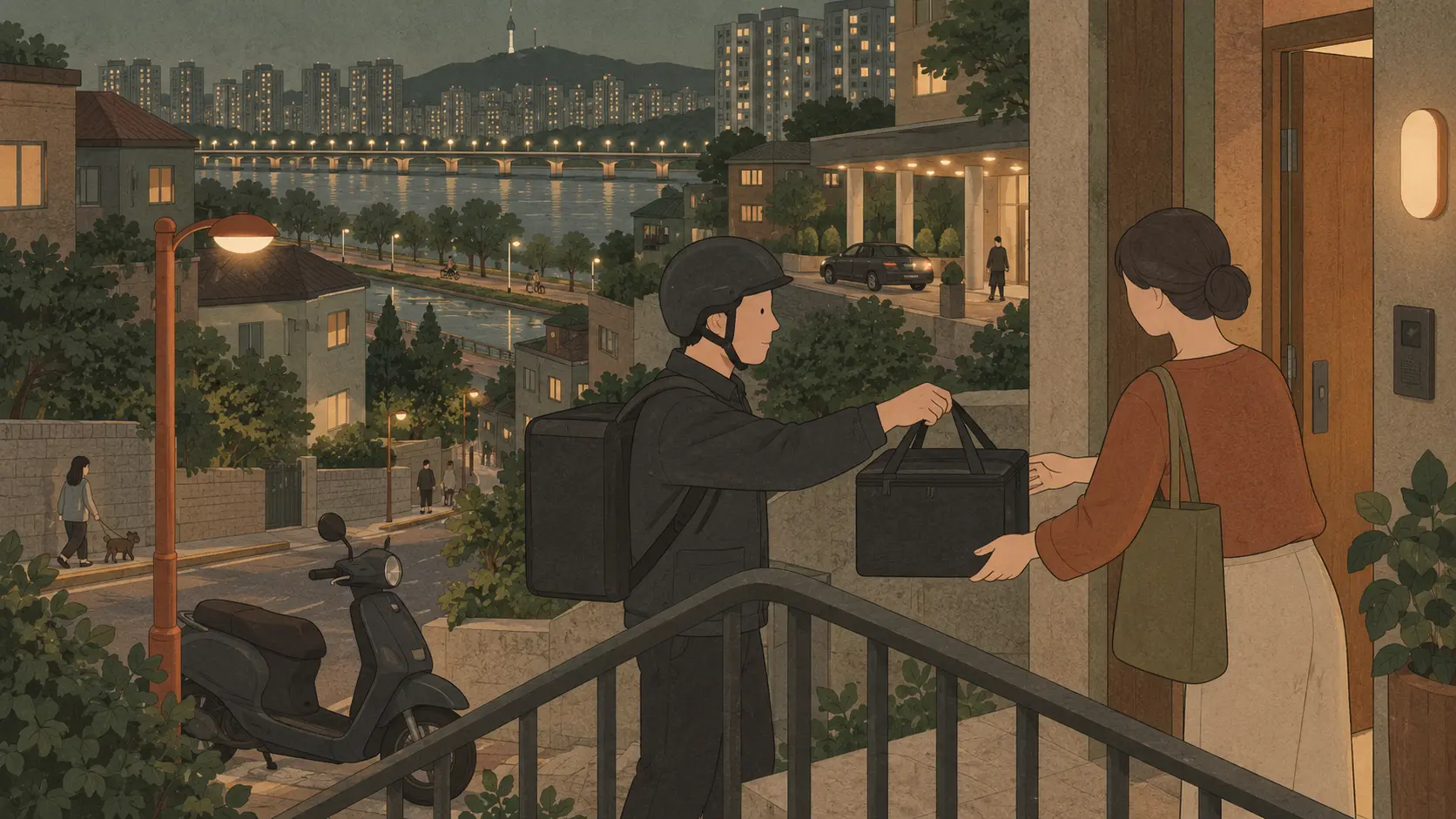
Korean delivery culture is often introduced with two words: fast and convenient. Those descriptions are fair, but international visitors are surprised by something broader. Food can arrive at a home, a hotel, a campsite, a subway-station entrance, or a designated meeting point beside the Han River. Some travelers arrive in Korea already wanting to recreate the fried-chicken picnic they have seen in dramas.
That range of delivery locations felt ordinary to me for a long time. I opened an app, chose food, entered an address, and paid. I only began to see it as a distinctive part of Korean life after watching foreign residents discuss it on television several times. A routine Korean habit could be an experience that a visitor had placed on a travel wish list.
Yet the questions travelers ask reveal a strange gap. The variety of food and delivery locations can be impressive, but a visitor may get stuck before placing an order. Do you need a Korean phone number? Will an overseas card work? How do you enter an address written in Korean? The famous speed begins after the order has successfully gone through.
Even then, pressing the order button does not end your part of the process. You need to check that the saved address is where you are now and that the phone number can reach you. A restaurant or rider may call or send a message. If you miss those small details, an efficient system can carry your dinner efficiently to the wrong place.
I learned that by paying for food I never ate.
The Night My Dinner Went to My Office

I once ordered delivery while I was at home. An old office address was still saved in the app, and I completed the order without noticing it. The food headed toward my workplace while I waited at home.
I was taking a shower when the rider tried to contact me, so I did not answer. By the time I checked my phone, there was little I could do to reverse the situation. The food never reached me, it was eventually treated as discarded, and I did not receive a refund.
I knew it was my mistake. I had failed to check the address and had also missed the call, so blaming someone else would not solve anything. That did not make the loss feel small. The meal was expensive, the delivery fee had been added, and I had paid the full amount without eating a single bite.
Fast delivery also makes incorrect information produce a fast result. Once the office address was attached to the order, the rider followed the destination shown in the app. I was waiting at home, but as far as the system was concerned, dinner belonged at work. A simple ordering process could not perform my final address check for me.
What International Visitors Actually Want to Know
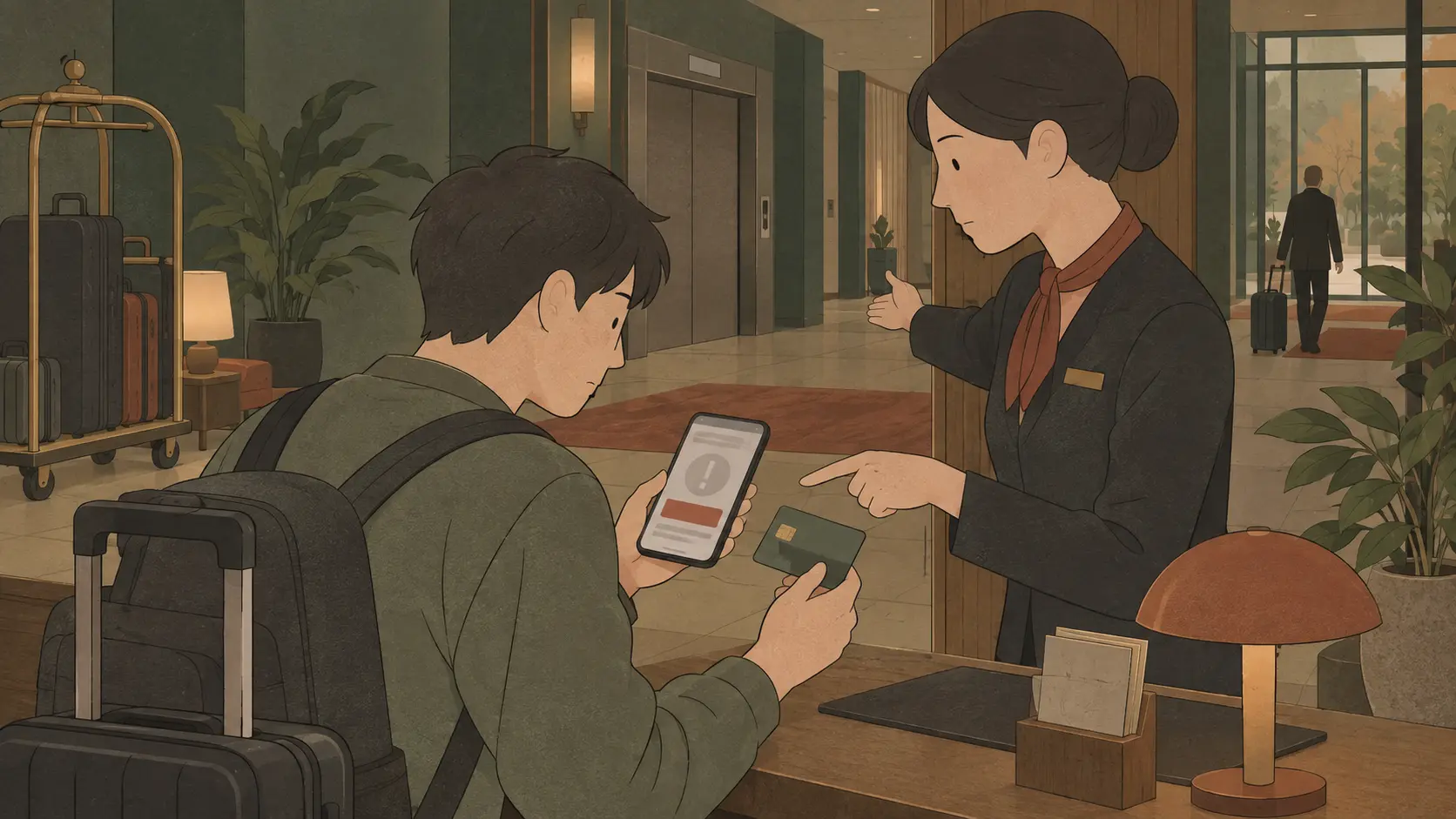
One question appears repeatedly in posts by foreign travelers: “Can I order food without a Korean phone number?” Some people describe reaching a registration screen and being unable to continue without a Korean number or resident identification. Others cannot find the option for an overseas card. Even after choosing a meal, a Korean-language screen can make the final buttons difficult to identify.
Other travelers report successfully ordering as guests with an overseas phone number and foreign card. Some used an on-screen translation tool to navigate the app. These accounts do not all match, however. App registration and payment support can change, and one traveler found that restaurant orders and convenience-store orders followed different rules within the same service. A method that worked for one person cannot be promised to every visitor indefinitely.
The Korea Tourism Organization identifies Korean-only apps, local-number verification, and limited support for overseas cards as common barriers. It also introduces a foreigner-focused delivery service that supports international cards and English customer assistance without Korean phone verification. Its coverage may be limited to certain service areas, so visitors still need to check availability at their location.
This is the contradiction inside Korean delivery culture for visitors. A Korean customer usually starts by deciding what to eat. A traveler may first have to find out whether the app will even accept them. The food photos have already won, but the phone-number field refuses to cooperate.
Korean Delivery Culture Beyond the Front Door

The Korea Tourism Organization highlights deliveries to hotels, campsites, subway-station entrances, and Han River parks. For someone unfamiliar with the system, food reaching an outdoor meeting point can feel like a small travel event. The destination does not always need to be a private home with a fixed front door.
At a Han River park, however, dropping a pin anywhere does not mean a rider will search the entire lawn for you. Visitors need to select the exact address of a designated baedal zone (배달존, delivery zone) and walk there to collect the order. They should watch in-app messages and be ready when the rider arrives. The romantic sentence “order chicken by the Han River” comes with one practical step: find the correct delivery zone.
Hotels require similar care. Do not assume that entering the hotel name and room number guarantees delivery to the room door. A property may ask guests to meet riders in the lobby or outside the main entrance. Check whether outside food delivery is permitted and where it must be collected. In Korea, choosing the receiving point can matter as much as choosing the meal.
Check the Address and Phone Number First
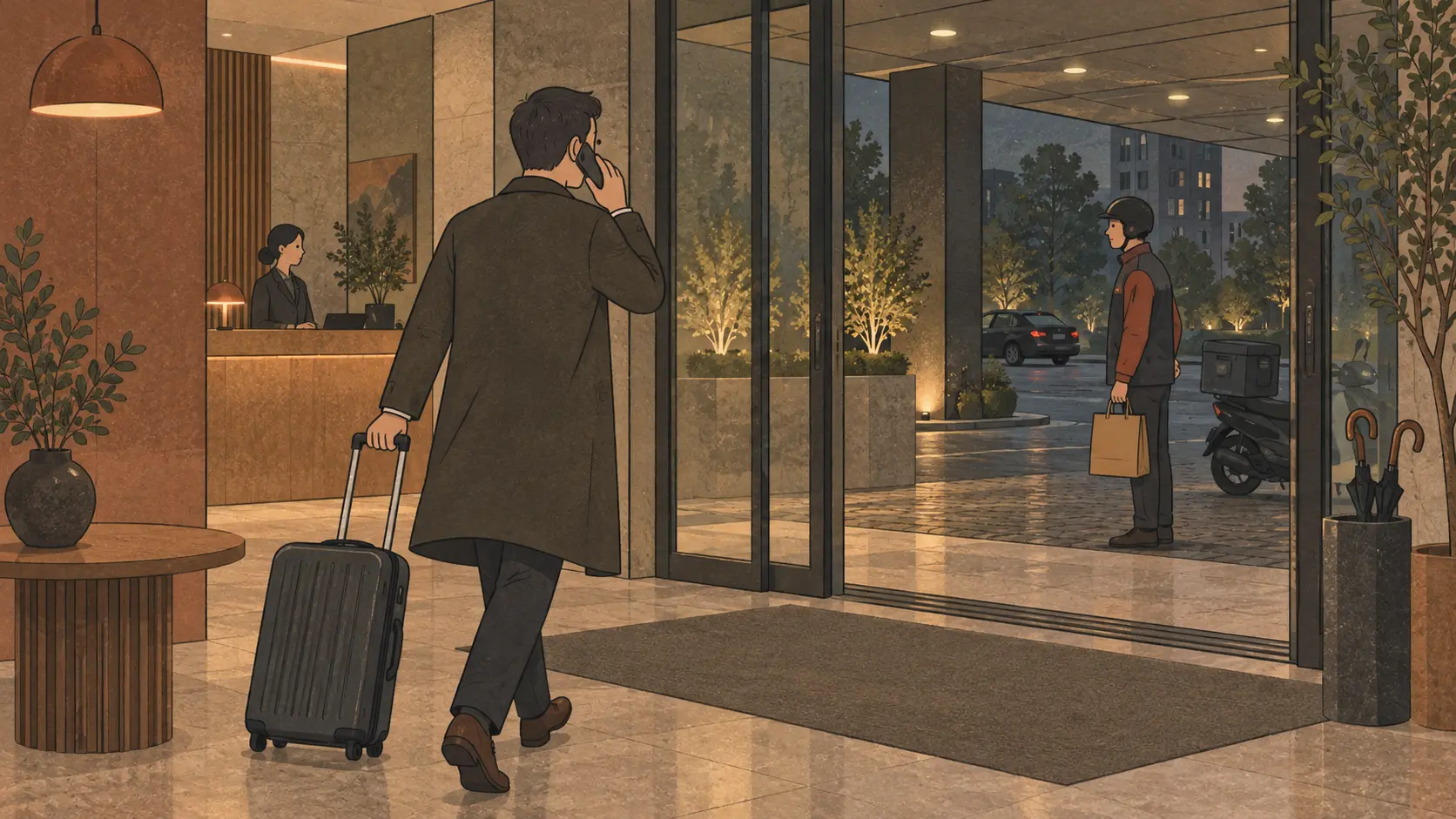
After my failed order, the most important pre-order check became obvious. Confirm that the delivery address is correct and that the phone number entered in the app can actually reach you.
If you use the same app in several places, do not trust the saved address without reading it. Home and work may both be stored, and the previously used address may still be selected. Check the road address, building name, apartment number, and any other details against your current location. A traveler should obtain the accommodation’s Korean address in advance and confirm whether the pickup point is the lobby, main entrance, or another part of the building.
The contact number matters for the same reason. Even with a correct address, a rider may need help finding an entrance or confirming the handoff point. Foreign users have also described receiving restaurant calls when an item was sold out and rider calls when an address was unclear. Several worried that the rider might not speak English, which makes an accurate written location and clear delivery note even more useful.
If the address is wrong, a call may be the last chance to correct it. In my case, the wrong address and missed call arrived together. That combination was enough to turn an ordinary dinner order into a complete loss.
The outcome can vary according to the order, instructions, restaurant, and circumstances. Food is not guaranteed to be left outside whenever a call goes unanswered. My own order was ultimately discarded after I missed the rider’s contact. Keep your phone nearby until delivery is complete. A shower can become a surprisingly expensive lesson.
When Delivery Used to Feel Free
In my memory, it was once common for restaurants to deliver without listing a separate delivery charge. I looked at the menu price and ordered. I did not pay the same attention to an additional fee appearing at the last stage of checkout.
Now delivery fees make the final total higher. I cannot point to one clear occasion when the delivery charge alone made me abandon an order. Food prices in general also feel more expensive, so I cannot honestly blame the entire increase on a single fee.
The charge became especially noticeable on the night I received nothing. I had lost the price of the meal and the money paid to transport it. A fee that normally felt like the cost of convenience looked much larger when no food appeared.
This delivery system should not be presented as automatically cheap. Ordering may be easy once access is established, but the final amount can still be substantial. Some foreign users also report that foreigner-focused services offer fewer restaurants in their area or feel more expensive than domestic options. Before checking out, look at the delivery charge, minimum order, and full total rather than judging the cost from the menu price alone.
The Most Practical Way to Order
If you are visiting Korea, first check whether the service currently supports your overseas phone number and card. If the interface is in Korean, prepare a screen-translation tool before reaching the payment stage. Save your accommodation’s address in Korean and learn exactly where deliveries must be collected. Asking the hotel front desk where to meet an outside rider can prevent a great deal of confusion.
Before payment, compare the selected address with your actual location and confirm that you can receive calls or messages through the number provided. At an outdoor location such as a Han River park, choose the designated delivery zone. After ordering, keep the app and phone within reach until the food arrives.
The speed and reach of Korean delivery culture genuinely deserve their reputation. Receiving dinner at a place where you did not expect delivery to be possible can become a memorable part of a trip. That convenience still depends on a usable payment method, an exact receiving point, and a working line of contact. Check the address once more before paying, then keep your phone close; that is the practical advice I earned from one very expensive missing meal.
Sources and Traveler Discussions
- VISITKOREA guide to delivery services for international visitors
- Travelers discussing delivery without a Korean phone number
- Foreign users discussing guest checkout, overseas cards, and language barriers
FAQ
Can international tourists order food delivery in Korea?
Some services allow it, but access depends on the phone number, payment method, and service area. Travelers have reported using guest checkout with overseas numbers and cards, while the Korea Tourism Organization also introduces a foreigner-focused service that works without Korean phone verification. App policies change, so check the current conditions and local coverage immediately before ordering.
Can I have food delivered to a Han River park?
Yes, but you cannot simply choose any point in the park. Select the exact address of the nearest designated delivery zone and go there to receive the food when it arrives. Watch your in-app messages and be ready to meet the rider.
Will a rider bring food to my hotel room door?
Hotel policies for outside food delivery vary. Instead of relying only on the hotel name and room number, ask whether deliveries are accepted and whether you should meet the rider in the lobby or at an entrance. Use the hotel’s exact address and a phone number through which you can be reached.
If I miss the rider’s call, will the food be left at the door?
That depends on the order instructions and circumstances, so you should not assume it will always be left outside. When I sent an order to my old office address and missed the rider’s call, the food was discarded and I received no refund. A restaurant or rider may also contact you about an unclear address or an unavailable item, so monitor calls and app messages after ordering.
Is delivery still free in Korea?
In my memory, separate delivery fees used to be less common, but today they often increase the final price. Food prices, delivery charges, and minimum orders vary by restaurant and service. Review the complete checkout amount before paying.