Korean PC Bang Culture: From Smoky Gaming Rooms to Full Meals
When English-speaking travelers ask about Korean PC bangs online, their questions often turn to food and logistics before computer specs. Can foreigners enter? Do you need a Korean phone number? How do you order a meal without leaving your seat? They want to know why food comes up so often in a place built for gaming.
The PC bang (PC방, a Korean gaming café where customers pay to use a computer) I first knew as a child was much simpler. It was where people went to play games. Gaming is probably still the main reason most customers visit, but these days, some people go for a meal and add a game or a movie while they are there.
That change still feels a little strange to me. The PC bang meal I remember was cup ramyeon with yellow pickled radish.
A Korean PC Bang Is Not Quite an Internet Café
In Korea, a PC bang was not a regular internet café with a different name. At least when I was growing up, I never encountered a separate café where people drank coffee and briefly checked their email. If a paid space had rows of computers, it was almost always a PC bang built around gaming.
I could play games at home too. The difference was that I had to remain aware of my mother or other family members. Even when I was absorbed in the screen, I noticed whenever someone walked behind me. I also thought about how long I had been playing.
That pressure disappeared at a PC bang. Nobody found it strange if I sat alone and played for hours because everyone around me had come for a similar reason. When friends went together, we could sit at separate computers and enter the same game. We gathered in one place, although our keyboards and mice were usually busier than our conversation.
A game that felt like a solitary hobby at home became a shared activity inside a PC bang. Friends could join the same side and hear one another react from the next seat. The hourly fee bought computer time, but it also bought freedom from the family’s watchful eyes.
In My Twenties, It Was a Date Spot and a Place to Wait for the First Train
I visited PC bangs often in my twenties. Sometimes I went there on a date. Other times, friends and I stayed out drinking all night and entered one to play games until the first train began running.
The last train was gone, the first train was still hours away, and the PC bang remained open. Instead of waiting outside with nothing to do, we could sit in front of a computer and start a game. Once I focused on the screen, time passed without my checking the clock every few minutes. A place to wait for transportation became a playground.
There was less to do there than there is now. We could browse the internet or play games, and the food selection was limited. I mainly played World of Warcraft.
For the Horde!
Looking back, going there on a date meant that we sat beside each other while staring at separate monitors. It did not feel odd at the time. Having my partner in the next seat while both of us became absorbed in our games was still a form of dating.
An Old Smoking PC Bang with “Jamshiman Annyeong” Playing
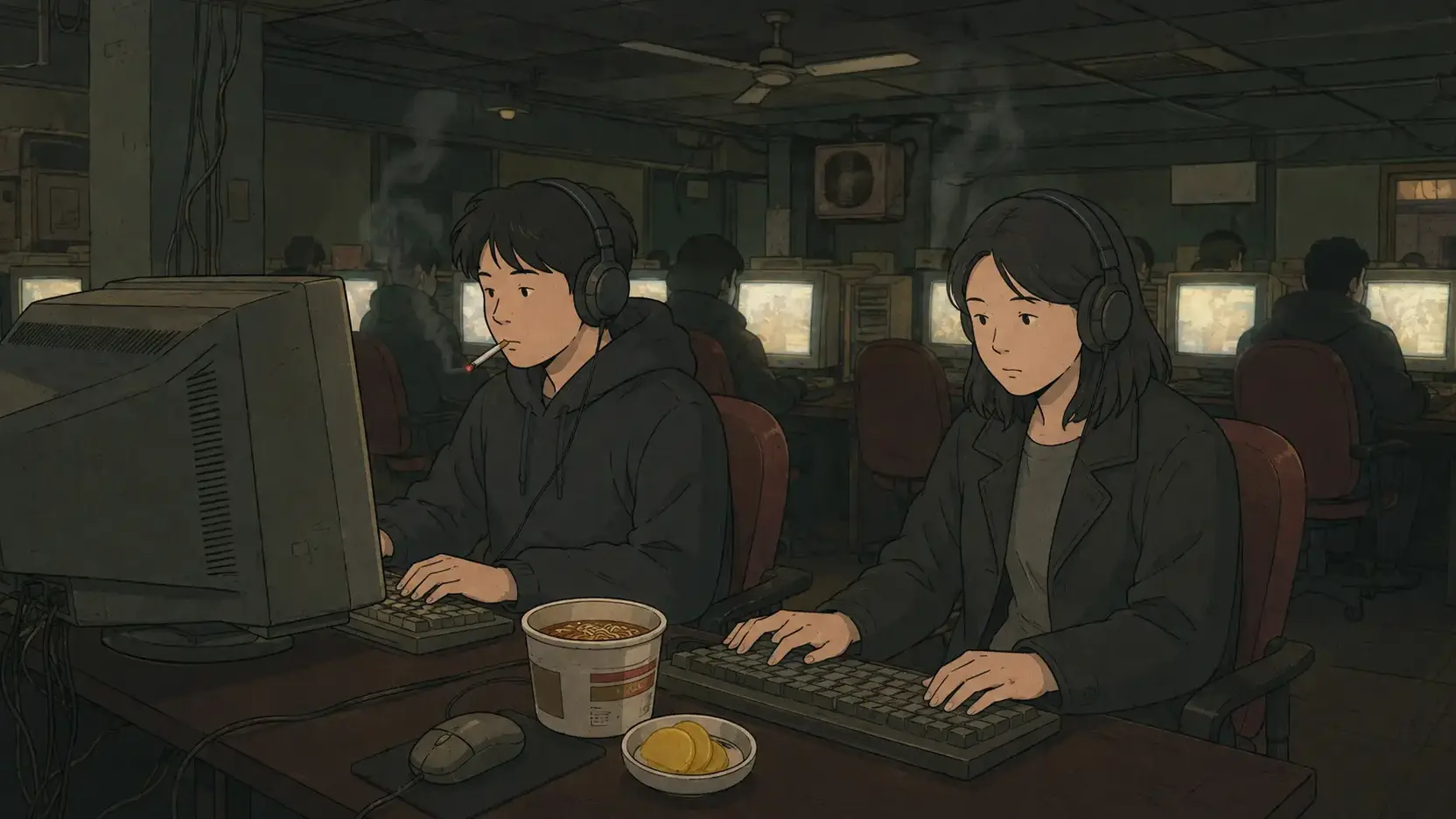
The clearest scene in my memory holds music and cigarette smoke together. Smoking is no longer allowed at PC bang seats, but back then, people commonly smoked in front of their computers.
Someone had turned up M.C the Max’s “Jamshiman Annyeong.” The song cut through game audio and the clatter of keyboards and spread across the room. People at computers here and there smoked while watching their screens, and I sat among them playing my game.
My partner at the time was beside me.
That person is now an ex. The song title means something close to “A Brief Goodbye,” which makes the memory feel almost too neatly written. I was probably far too focused on my game to notice the foreshadowing.
The scene is far removed from the clean image of a modern PC bang. Before comfortable chairs or long menus, I remember cigarette smoke, a song playing too loudly, and rows of glowing monitors. If I want to explain how PC bang culture changed, I have to begin with that old room.
When a Cup of Ramyeon and Yellow Pickled Radish Were the Whole Meal
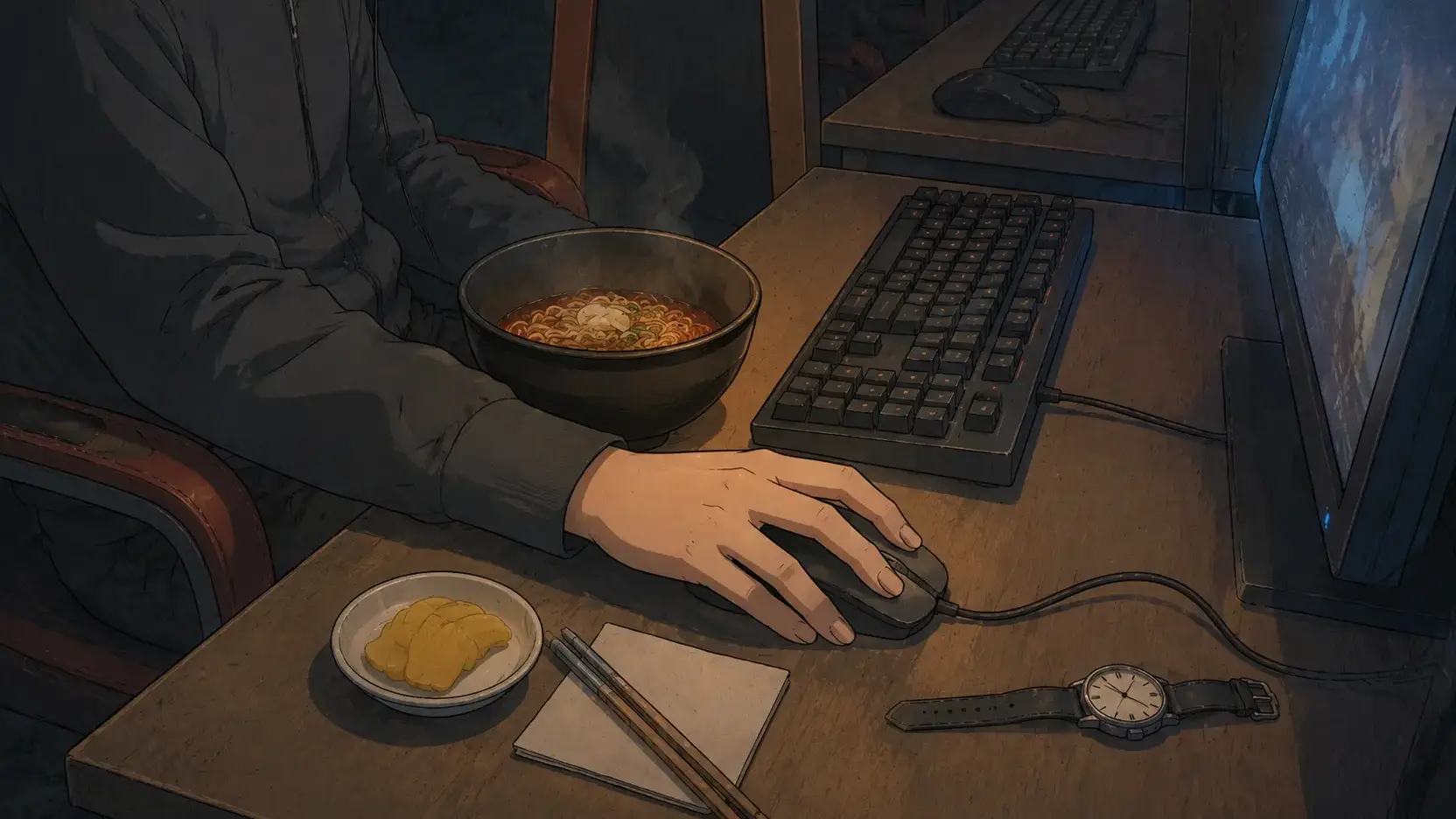
When I visited PC bangs regularly, cup ramyeon was almost the only food that could stand in for a meal. It came with yellow pickled radish. I do not remember choosing among the many rice dishes and snacks associated with PC bangs today.
We did not properly stop gaming to eat either. I waited for the noodles to soften, ate at the computer, and moved my hands back to the mouse and keyboard. It felt less like enjoying a meal and more like quieting my hunger so I could keep playing.
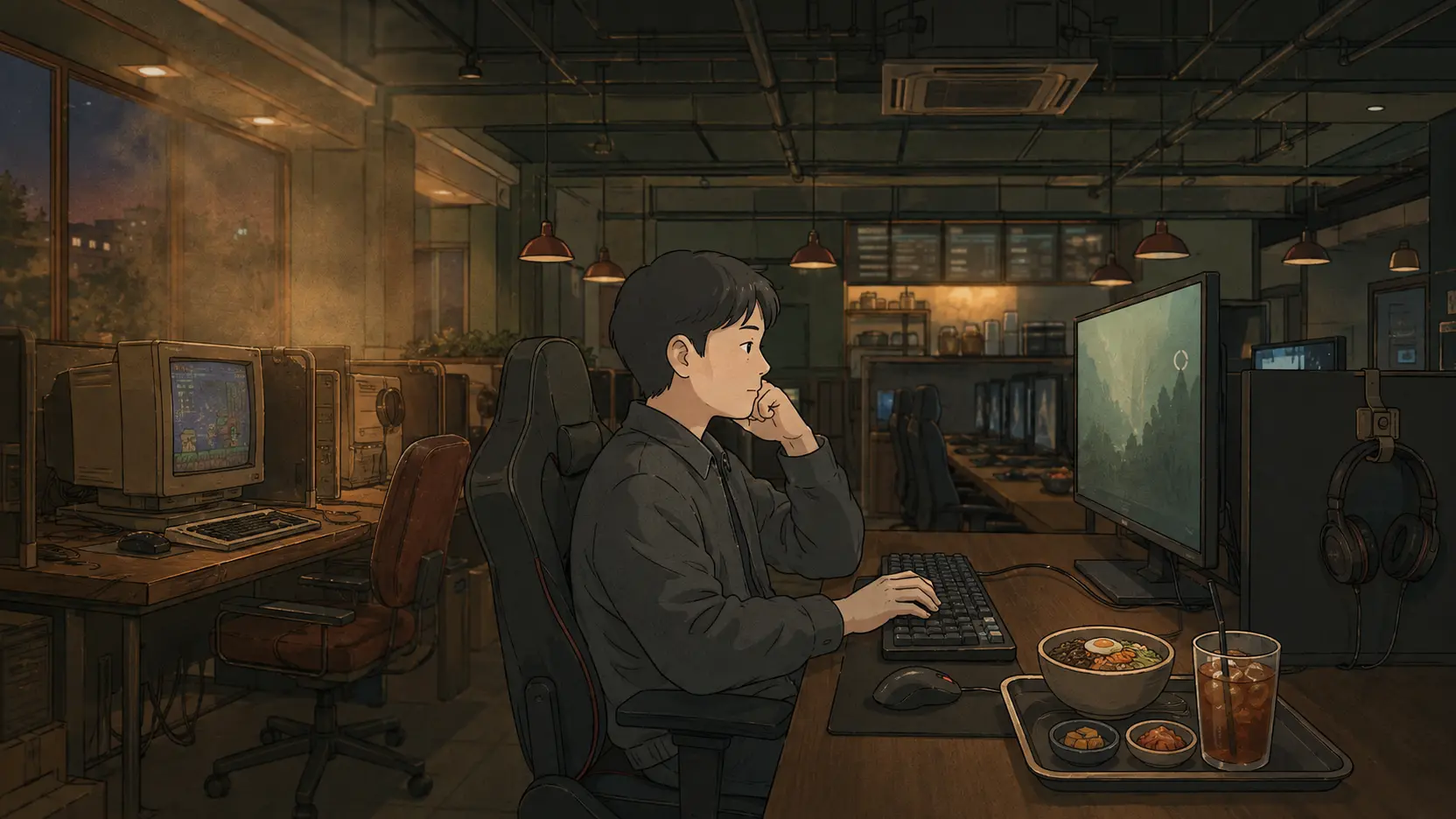
I now hear that PC bang food can be very good and that the menus have become much larger. Some people apparently go there to eat and then play a game or watch a movie. On my most recent visit, I ordered only an iced tea, so I cannot claim that I conquered the modern menu myself.
I merely progressed from cup ramyeon to iced tea.
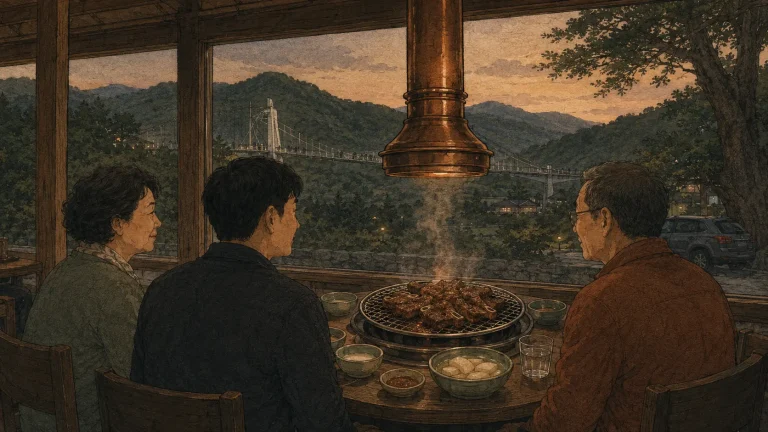
Still, the direction of the change seems clear. In the past, I ate the minimum needed to continue gaming. Now food itself can be one reason to visit. A simple computer room has taken on some of the roles of a casual restaurant and a place to watch something for a while.
What Remains on the Keyboard After a Customer Leaves
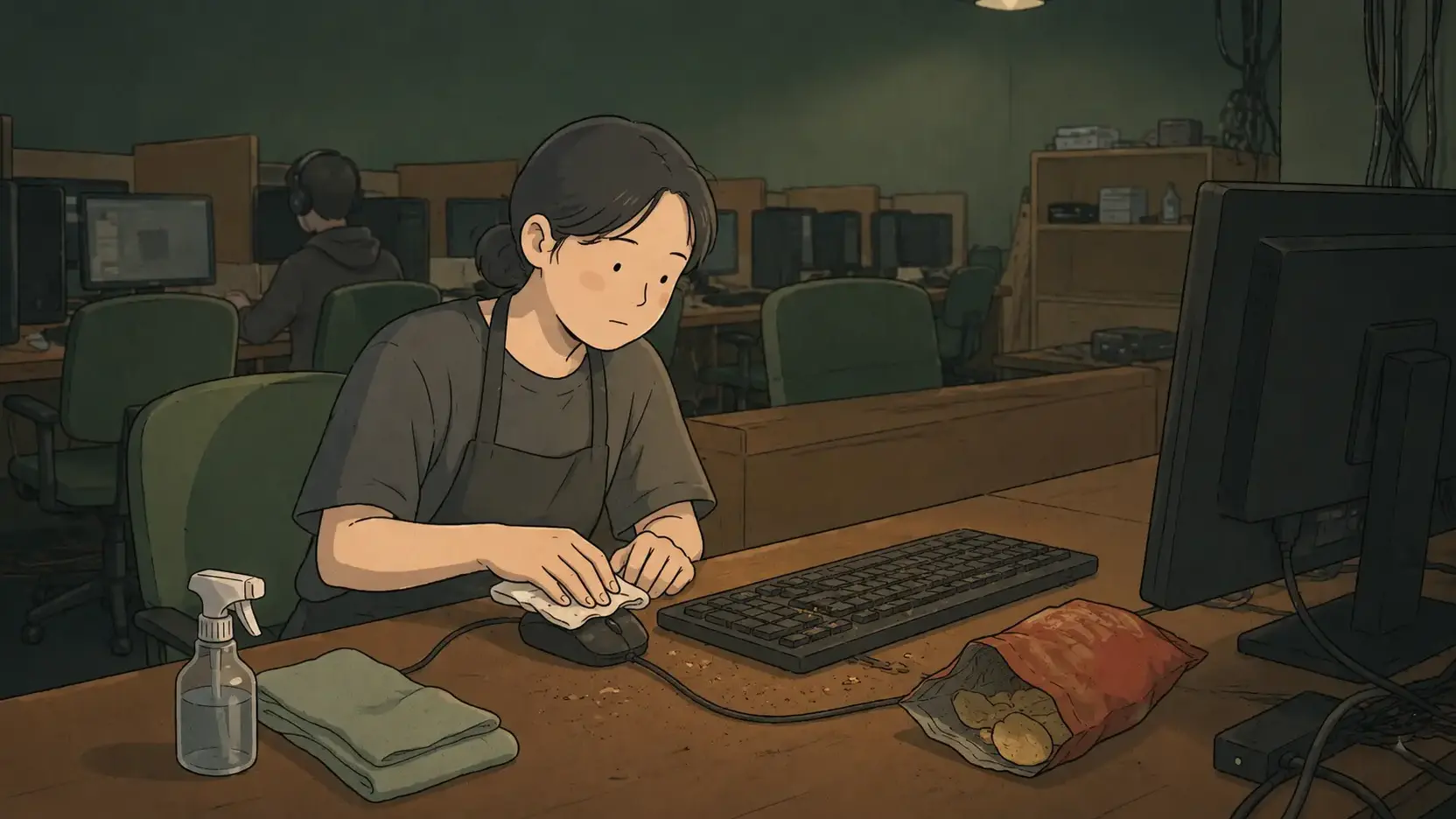
I did not experience PC bangs only as a customer. I once worked part-time at one, and snacks look a little different from the employee’s side of the counter.
When customers ate chips and returned their hands to the keyboard, crumbs fell between the keys. When they held the mouse with oily fingers, a slick film remained on its surface. For the customer, it was a quick snack during a game. After that customer left, I had to clean the keyboard and mouse.
I truly hated customers eating chips while they played. I did not know whether they had won their game, but the crumbs and grease definitely remained. From the employee’s perspective, the final boss may have been the chip bag.
Employees today may have much more to manage now that PC bang menus are broader. I did not work there during that period, however, so I cannot say exactly what their job is like. What I know for certain is that even one small snack can leave a surprisingly long trace around a computer.
How to Use a PC Bang for the First Time
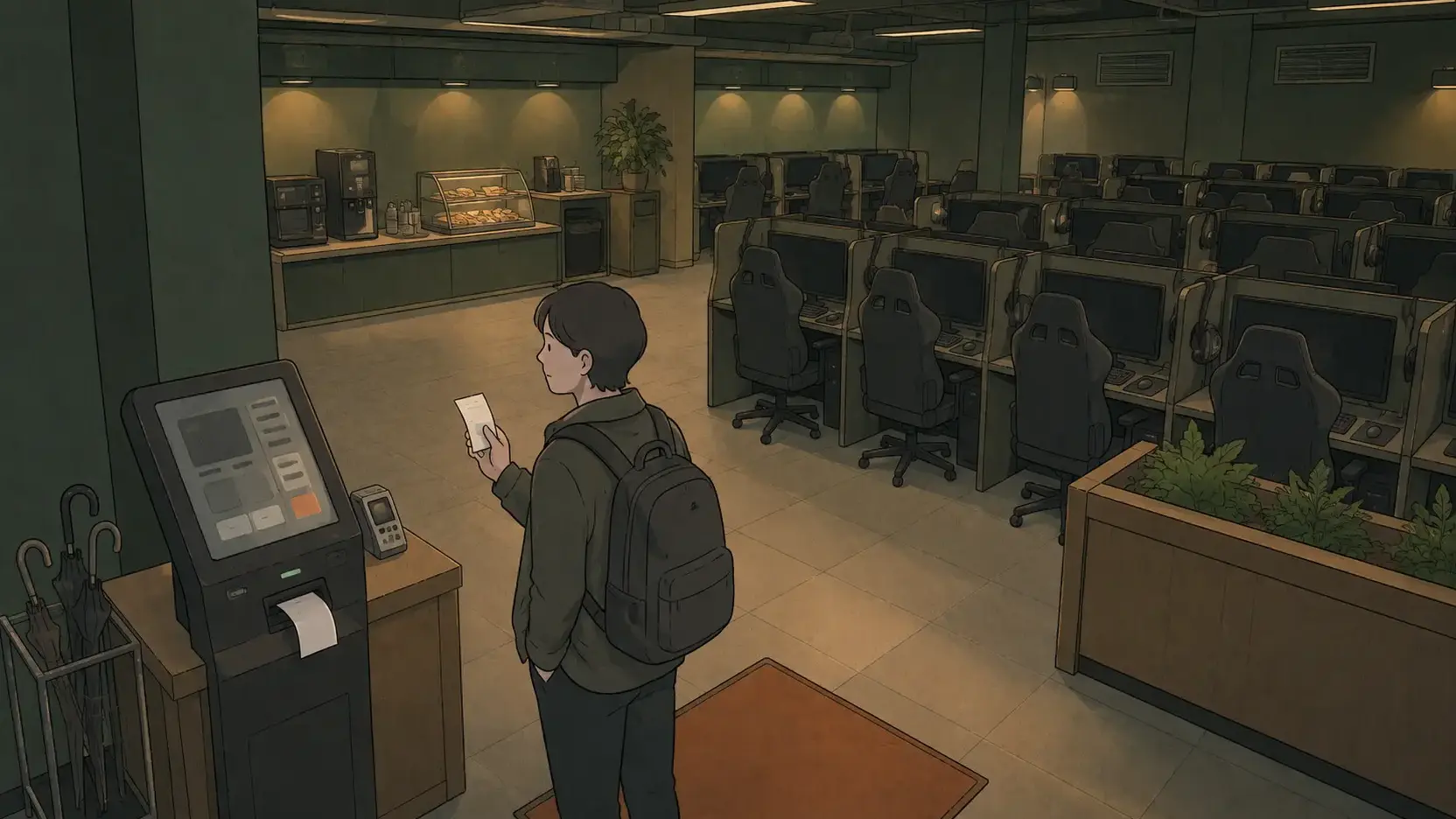
I do not visit PC bangs frequently these days, so I would not claim that every location works in exactly the same way. In the system I encountered most recently, I first chose how much computer time I wanted and paid at a kiosk near the entrance.
Buying a three- or five-hour block was cheaper per hour than paying one hour at a time. Once I knew roughly how long I wanted to stay, I selected the corresponding time package and paid.
The kiosk printed something resembling a receipt. A login number appeared near the bottom. I carried the slip to any available seat I wanted, entered the number on the screen, and my computer time began.
First-time visitors may also be surprised that a staff member does not necessarily assign a seat. It can be easy to mistake the number on the receipt for a particular seat number. In the system I remember, I chose an empty seat first and then entered the number there. Procedures can vary, so checking the kiosk instructions is sensible.
English-speaking travelers also frequently ask whether they need a Korean phone number or membership. A location may require identity verification for full membership, while a traveler can often look for a non-member option at the kiosk. Paying to use a PC bang computer and creating an account for a particular Korean game are separate matters. Check the location’s guest-use process and the login requirements for the game you want to play.
Fewer Children and the Change Brought by Phones
When I was young, a PC bang was almost the only place where we could freely use a computer. If a home did not have a personal computer, or if the family shared one machine, going to a PC bang with friends was a natural way to play.
On a recent visit, I felt that there were fewer young children than before. I have not checked official attendance figures, but that was what I saw. One possible reason is that children now have many games they can play on their phones without sitting in front of a computer.
The screen did not disappear. It moved into their hands. In the past, playing a game could mean walking to a PC bang and sitting in a row with friends. Now a game can begin immediately on each person’s phone.
Even so, PC bangs did not disappear. They found additional reasons for people to visit. They kept their basic role as places to play on good computers while adding full food menus and room to watch videos. The PC bang I knew was a room for gaming. The modern version seems closer to a place that tries to provide everything a person might need to stay in one seat for hours.
Returning to That Old Seat
When I hear “PC bang,” I remember an old song before I imagine a modern menu. “Jamshiman Annyeong” was playing loudly, cigarette smoke rose from several seats, and the person who is now my ex sat beside me.
Cup ramyeon and yellow pickled radish were enough to place on the desk. What mattered more was that I could play until the first train arrived without worrying about my family watching the clock.
If I returned to that same seat now, the smell of food might replace the cigarette smoke, and a long menu might appear where cup ramyeon once felt like the only choice. I would probably order an iced tea and stay for a while. But the moment I put my hand on the keyboard, the version of me who played all night in my twenties, finally free from the family’s watchful eyes, might return for just a moment.
Frequently Asked Questions
Can foreign travelers use a PC bang in Korea?
In general, a PC bang with a non-member option allows a traveler to buy computer time. A common process is to select non-member use at the entrance kiosk, purchase a time package, and enter the number printed on the receipt at an available computer. I have not verified the latest system at every location, so if the kiosk works differently or the process stalls, ask an employee how to use a seat as a non-member.
Do you need a Korean phone number to use a PC bang?
Many locations do not require a Korean phone number when you buy computer time as a non-member. Full store membership or an account for a particular Korean game may require identity verification, however. Entering a PC bang and accessing the Korean server of the game you want to play are separate issues, so check whether your game account will work in Korea before visiting.
How do you pay and choose a seat at a PC bang?
In the system I used most recently, I selected a one-, three-, or five-hour package at a kiosk and paid in advance. Longer packages cost less per hour than buying one hour at a time. I then checked the number at the bottom of the printed receipt, chose an available seat, and entered that number on the login screen. The interface and exact steps may vary by location.
How do you order food at a PC bang?
Ordering through a menu on the computer screen is now common at Korean PC bangs. When I visited frequently, however, cup ramyeon with yellow pickled radish was the standard meal, and on my latest visit, I ordered only an iced tea. Menus and payment methods vary, so check the food-ordering menu on the screen after you sit down.