Gimpo to Incheon With Luggage and a Flight to Catch
A traveler on Reddit’s Korea travel forum had a question about a Gimpo to Incheon connection: would two hours and 35 minutes work after flying from Jeju? They were adding up baggage collection, the train journey, and checking in again for an international flight. They were also worried about the boarding gate closing before the scheduled departure.
When I look at that question, I see several separate jobs beyond finding a ride between the airports. You have to leave the aircraft, collect your suitcase, travel to another airport, and complete international departure procedures. The time spent on the train covers only one part of that sequence.
I have traveled between the two airports by private car or airport taxi. I cannot offer a personal account of hauling large bags onto the airport railway. For the transport options and baggage procedures below, I am drawing on the published guidance checked for this article.
What are the Gimpo to Incheon transport options?

I will compare the AREX All Stop Train, an airport limousine bus, and a taxi. Before choosing, check which Incheon terminal your flight leaves from. Terminal 1 and Terminal 2 are different destinations, so you need to know which one to get off at.
I checked the transport information below on October 17, 2026. I used AREX’s fare table for train fares and the bus operator’s information for the bus fare. For journey times and the estimated regular taxi fare, I used ANA’s Gimpo airport guide. They exclude walking, waiting, and flight departure procedures.
| Transport | Published journey time | Adult one-way fare or estimated cost | What to consider |
|---|---|---|---|
| AREX All Stop Train | About 38–48 minutes to Incheon Airport, depending on the terminal | With a transport card: ₩4,350 to Terminal 1; ₩4,950 to Terminal 2 | You need to move your luggage between the station and passenger terminal |
| Airport limousine bus 6003 | About 32–52 minutes; subject to road conditions | ₩8,000 | Check the direction: the route serves Gimpo’s domestic and international terminals and both Incheon terminals |
| Regular taxi | About 40 minutes; subject to road conditions | About ₩45,000 in the guide | This is an estimate; check the total, including any tolls and surcharges |
For the railway, the guidance I checked points to an All Stop Train toward Incheon Airport from Gimpo Airport Station. The AREX Express Train, which runs between Seoul Station and Incheon Airport, does not stop at Gimpo. The distinction I want to make clear is that you do not need a separate express ticket simply because the name sounds faster. Before boarding, check both the train’s destination and the terminal where you need to leave it.
For the bus, the route I found in the guidance is 6003, boarding at the stop for Incheon Airport. Your boarding location can differ depending on whether you arrive at Gimpo’s domestic or international terminal, so compare the signs on site with the operator’s timetable. When I use the journey time in the table, I also need to allow for the wait for the next bus.
Having used a private car or airport taxi between these airports, I can see the advantage of avoiding the walk to the station with luggage. If you have several large suitcases, though, check whether they fit in the trunk as well as whether everyone fits in the car. I would not apply the estimate for a regular taxi to a larger vehicle or a prebooked car. For a booked transfer, use a quote based on the vehicle type, number of bags, and arrival terminal.
Do I collect my bags at Gimpo and check them in again at Incheon?
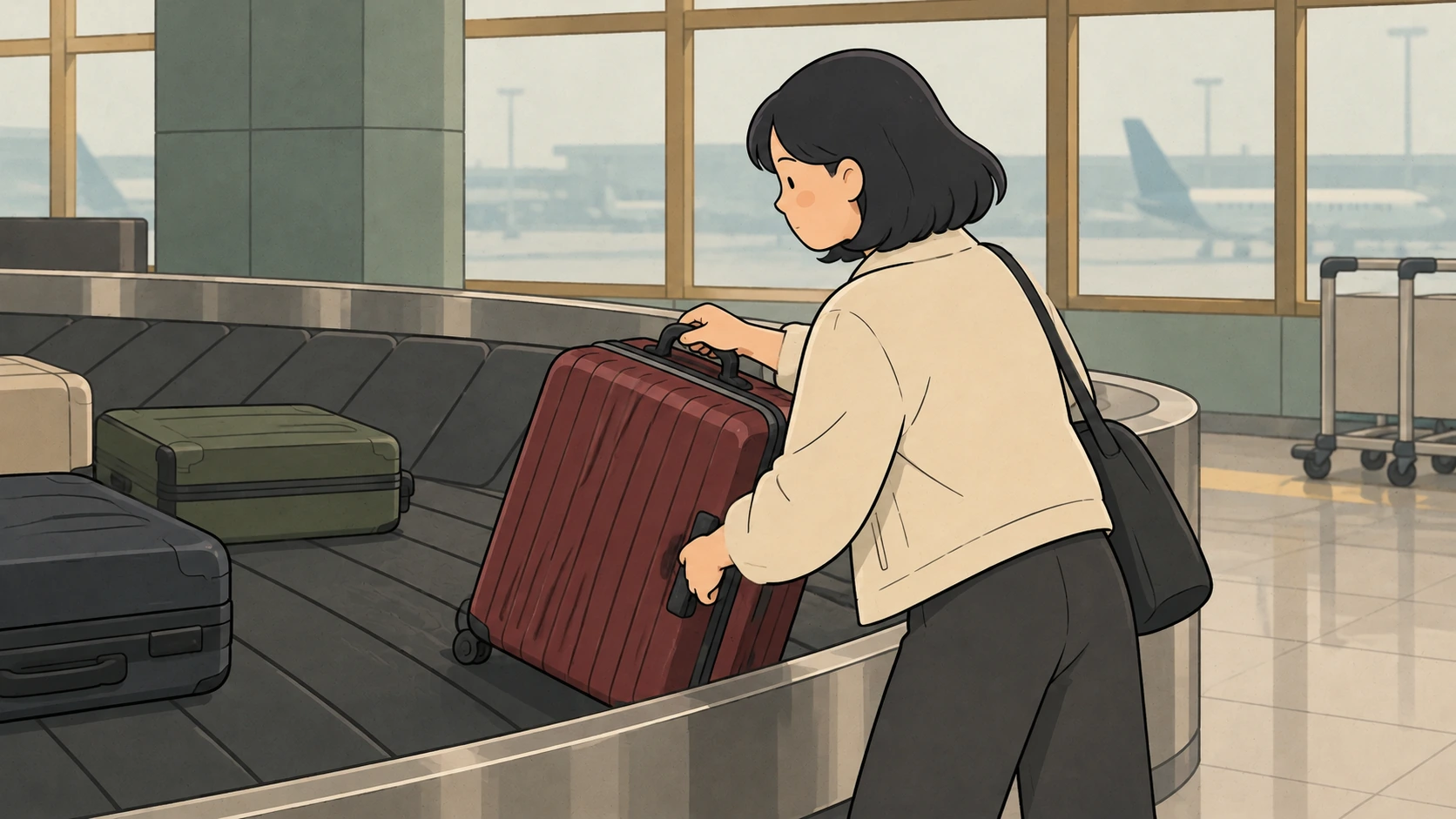
When your itinerary involves changing airports, prepare to move your baggage yourself. I also checked Asiana’s Gimpo airport guidance, which tells passengers transferring to Incheon to collect their bags after arriving at Gimpo. Ask the airline accepting your bags how your particular booking will be handled, but do not set off assuming your suitcase will follow you automatically between airports.
If you arrive at Gimpo on a domestic flight from Jeju or elsewhere, collect your checked bags and take them with you for the transfer. At Incheon, complete your departing airline’s check-in and bag-drop procedures, then go through security and departure immigration before heading to the gate. Even with online check-in completed, you need to check the bag-drop deadline if you have a suitcase to hand over.
I find it difficult to judge convenience from the ride time alone. In another Reddit discussion I read about transferring between Gimpo and Incheon, a commenter described the walks to the airport railway and from the arrival station as tiring with luggage. That was their experience; it does not mean every traveler finds the train inconvenient.
In another airport-transfer discussion, I found both a recommendation for the bus and advice to take the All Stop Train. That journey ran in the opposite direction, from Incheon to Gimpo, so I cannot simply apply its timings here. What I take from these accounts is how the choice changes according to whether you want to reduce walking with bags or reduce exposure to road congestion.
If you have a lot of luggage, start by locating elevators and bus stops on the airport map. A low train fare and a manageable walk to the station are two separate things to assess.
Are two or three hours between flights enough?
If you asked how much time I would want to leave, two or three hours would first come to mind. I would want longer during commuting hours. That is my personal sense of the time involved, however, and you should not treat it as a recommendation that everyone can make an international departure two or three hours after landing at Gimpo.
In the Incheon Airport guidance I checked, counter opening times vary by airline, and arriving around three hours before departure generally allows passengers to proceed with check-in. If you use that as your arrival target, baggage collection at Gimpo and the journey between airports need their own time before it.
Suppose your flight leaves Incheon at 6 p.m. and you plan to reach the airport at 3 p.m. Work backward from 3 p.m. to decide when you need to leave Gimpo. Subtract the journey time for your chosen transport, the wait before departure, and the walk to the station or stop. Your flight into Gimpo needs to arrive earlier still, allowing for getting off the aircraft, waiting for bags, and possible delays. I am using this example to explain the calculation; it is not an official minimum connection time.
The sequence is: international departure time → target arrival at Incheon → time to board transport at Gimpo → arrival time of your flight into Gimpo. If you are buying separate tickets, check the connection conditions and how delays would be handled with both airlines before booking. That helps establish whether catching the right train will solve the problem or whether you need an earlier incoming flight.
The traveler who asked the opening question was already adding the individual stages together. What is easy to miss is the extra time needed when those stages do not connect as expected. I cannot say whether the connection will work from two hours and 35 minutes alone; I would need the actual flight numbers, date, and number of bags to assess it.
If you have time left after reaching Incheon

First, check the departure displays and your airline’s information for the check-in counter, bag-drop deadline, and boarding time. When working out how much time remains, avoid counting every minute until the flight’s departure as free time.
Once you have allowed enough time for the departure procedures, you can plan a meal or a rest. If your wait is long enough to leave the airport, my guide to an Incheon airport layover and visiting Seoul can help. After arriving from Gimpo, subtract the travel time you have already used, then calculate the time needed to return to Incheon and complete departure procedures before going anywhere.
Frequently Asked Questions
Is there an AREX Express Train from Gimpo Airport to Incheon Airport?
At Gimpo Airport, use the AREX All Stop Train. The Express Train does not stop there. Check that your All Stop Train is heading toward Incheon Airport and confirm the terminal where you need to get off.
Will bags checked on my domestic flight transfer automatically to my international flight at Incheon?
For an itinerary involving a change between Gimpo and Incheon, prepare to collect and move your bags yourself. When first checking them in, ask the airline how your booking will be handled. At Incheon, check them in again before the next flight’s bag-drop deadline.
Is three hours between landing at Gimpo and departing from Incheon enough?
Three hours cannot be assumed to be enough. You need to include getting off the aircraft and collecting bags at Gimpo, traveling between airports, and completing international departure procedures and reaching the gate at Incheon. Ask your airline about the connection conditions for your itinerary and work backward from your target arrival time at Incheon.
Is a taxi the best choice with a large suitcase?
A taxi is worth comparing if you want to reduce the walk to the station. Check road congestion, vehicle type, trunk capacity, and the total fare together. Travelers who have used trains and buses also have differing opinions, so choose according to your number of bags and actual departure time.