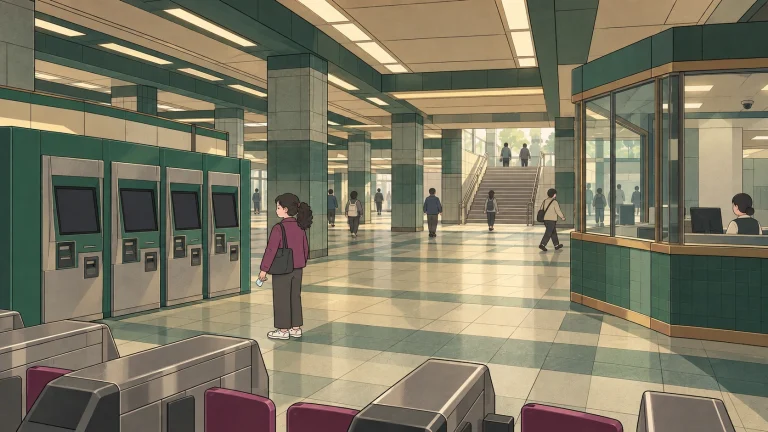
Check Your KTX luggage Space Before Bringing a Big Suitcase
Will a 28-inch suitcase fit in the luggage rack? A traveler heading from Seoul to Jeonju asked that question on Reddit’s Korea travel forum. If you are looking into KTX luggage, check both what you can bring and where you can put it on board. Travelers have reported taking large suitcases, but their experiences cannot guarantee space on your train.
I have little recollection of traveling long distances by KTX. My trips were relatively short, and I did not carry much. When I brought a small suitcase, I found a little space behind the last row of seats and put it there. That is the extent of my experience; I have no story about searching a holiday train for an empty rack with a large suitcase in tow.
For travelers bringing bigger bags, I looked separately at the official guidance and accounts from people who had made the trip.
Check the KTX luggage Rules and Storage Locations First
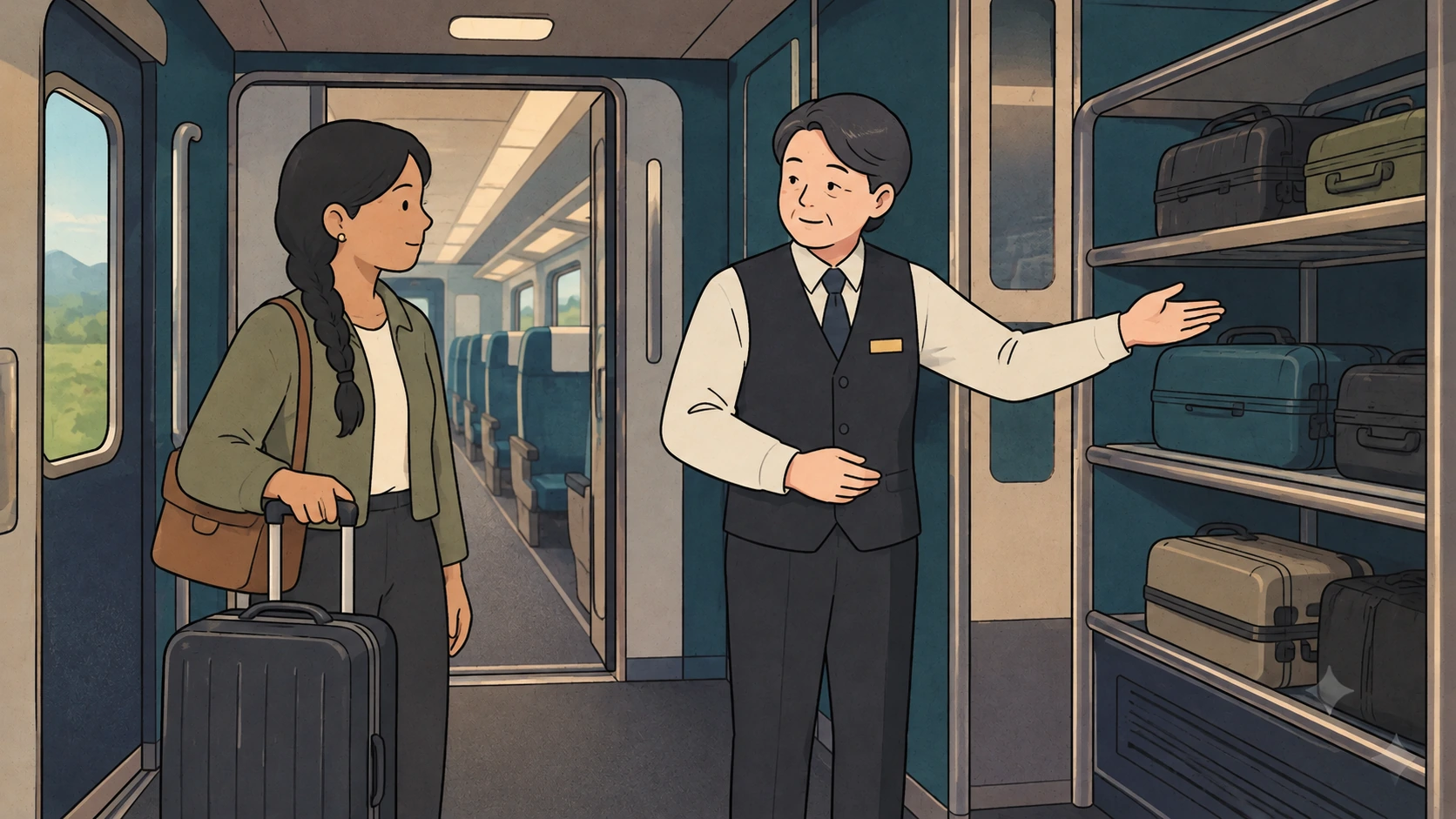
I checked Article 22 of Korail’s passenger transport terms, which allows passengers to carry up to two items that do not occupy seats or aisles. It says that detailed carry-on requirements are published separately on Korail’s website. Passengers are responsible for storing and looking after their belongings.
That clause alone does not establish that every 28-inch suitcase is allowed, or that there are no size restrictions. The provision I checked did not give suitcase dimensions for width, depth, or height. Instead of relying on a bag’s advertised 28-inch label, contact Korail beforehand about unusually large or heavy luggage. Have its actual dimensions, including wheels and handles, its weight, and the number of bags ready.
In Korail’s official KTX facility diagrams, I found designated luggage storage areas marked separately. Look for those first if you are bringing a large suitcase. Several train types operate under the KTX name, so check the diagram for your train instead of memorizing a particular car or seat number as the answer for every service. If you are unsure where the storage area is after boarding, ask a member of the train crew.
The space behind the last row where I put my small suitcase is not identical across all trains. Booking an end seat does not reserve a suitcase-sized space behind it. Even if you spot a gap, first check whether it is an appropriate storage location and whether your bag would obstruct passengers or access to equipment.
I also thought about simply putting a bag overhead. That does not mean every large suitcase belongs there. Check that you can lift it up and bring it down yourself, and that it fits securely within the rack. Forcing a heavy bag overhead should not be your solution to a full luggage area.
Some Travelers Found Space, Others Did Not
In the thread about the 28-inch suitcase, I read another traveler’s reply saying they had brought a large bag measuring about 30 inches. They explained that storage space was limited, so they arrived early and put their bag away as soon as boarding began. That is an example of someone traveling with a big bag, but arriving early was part of their account too.
I found differing experiences in another thread about taking the KTX between Seoul and Busan. One traveler reported no difficulty storing luggage when boarding in either city. Another wrote that, despite arriving early, they entered at the opposite end from the luggage area. By the time they reached it, the space was already full. Both outcomes appeared in the same discussion.
Those accounts describe particular trains on particular dates. They do not provide a basis for predicting that racks will always be empty on certain weekdays or full on holidays and weekends. They do show why it helps to prepare for limited space when traveling with a large suitcase.
Plan How You Will Board and Get Off a Busy Train
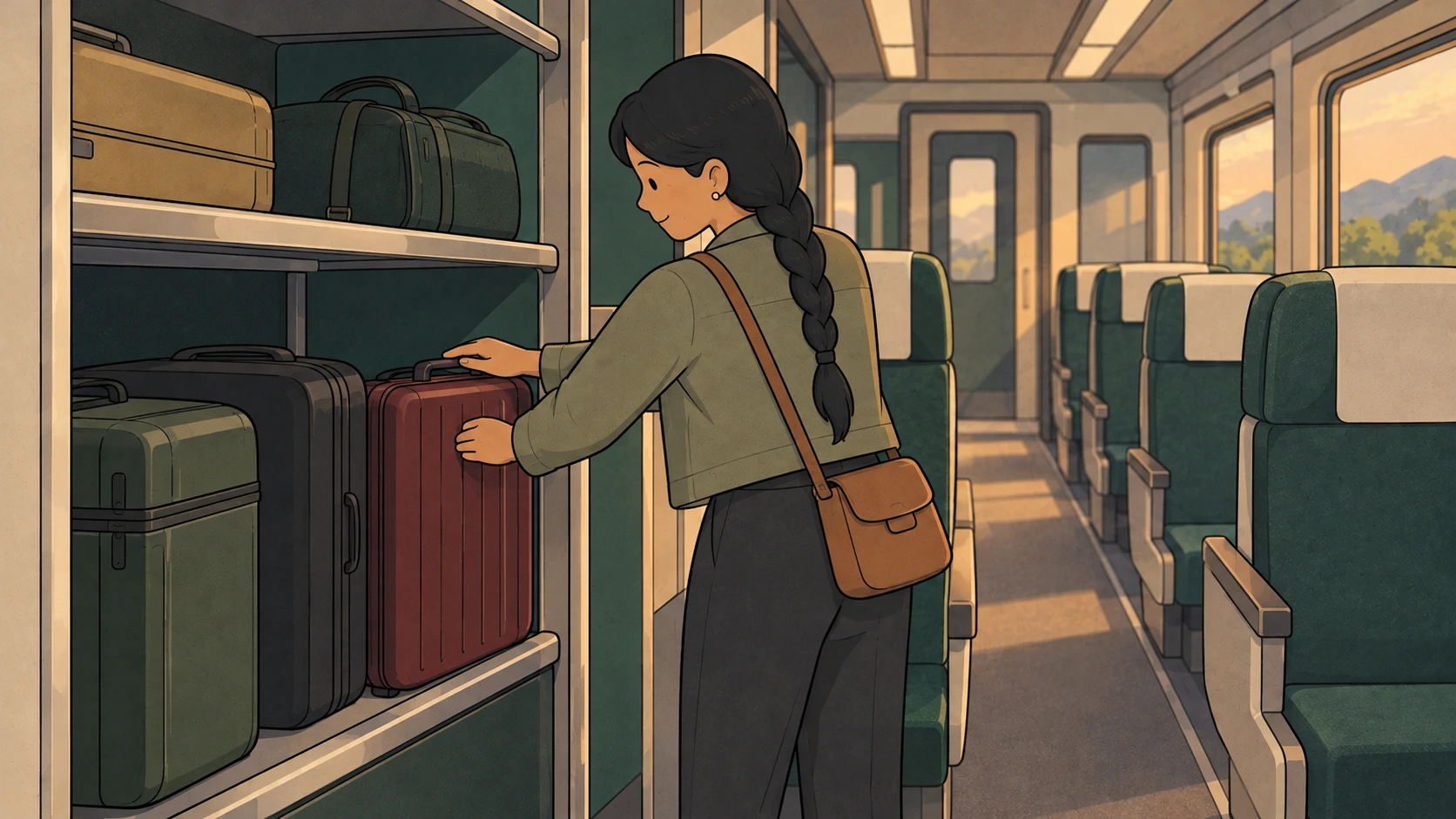
If you are traveling over a holiday or weekend, allow for the possibility that finding luggage space will take time. Leave enough time at the station to locate your platform and car. Once boarding is announced, check your car and the location of its storage area. Follow the announcements rather than assuming every train opens a fixed number of minutes before departure.
Keep immediately useful belongings, such as your passport, wallet, and phone, in a small separate bag. That saves you from reopening a large suitcase and blocking the storage area while you search for something. After putting the suitcase away, check that it cannot roll and that its handle does not project into the aisle.
If the luggage area is already full, avoid leaving your suitcase in a doorway or aisle and going to your seat. A traveler saying they did that does not establish that Korail permits it. Ask the crew for another storage location, and remember where you put the bag. Asking first is better than dragging it through neighboring cars without knowing where to go.
As your stop approaches, gather your smaller belongings and check the route to retrieve your suitcase. If passengers are already waiting near the door, take care not to block their way with it. If you have too many bags to board and get off on your own, consider reducing the number or choosing another way to transport them before the trip.
Compare the Bus and the Journey to Your Accommodation

I cannot offer a personal comparison of taking the KTX and a bus with lots of luggage. For those trips, I use my own car. My way of getting around as a Korean resident differs from the situation of a traveler visiting several cities without a car.
When comparing buses, first check whether your service has an underfloor luggage compartment and whether the operator accepts the number and size of bags you are bringing. Having a large suitcase does not automatically make a bus the better choice, and it does not mean the operator accepts unlimited luggage. This blog’s guide to Korea bus luggage rules covers the questions to check in more detail.
If you choose the KTX, also consider whether you can move your suitcases to the station and from your arrival station to your accommodation. A bus journey still leaves you with the trip from the terminal to where you are staying. Before comparing train and bus journey times, put all your actual bags together and check whether you can move them in one go by yourself. If several large bags feel unmanageable, check the operator’s luggage guidance and the number of transfers to your accommodation before choosing your transport.
Frequently Asked Questions
Can you take a 28-inch suitcase on the KTX?
Travelers have reported bringing large suitcases. However, the 28-inch label cannot guarantee that every bag will be accepted or have a storage space. Check Korail’s conditions allowing up to two items that do not occupy seats or aisles. For unusually large luggage, contact Korail beforehand with the actual dimensions and weight.
Where should you put a large suitcase?
First find the designated luggage storage area on the diagram for your train type. My experience of finding space behind the last row does not apply to every train. If you are unsure about a location or whether you can use it, ask the crew.
Can you leave luggage in the aisle if the racks are full?
Korail’s terms require carry-on belongings not to occupy seats or aisles. Even if a traveler reports leaving a bag in the aisle, do not treat that as an approved method. Ask the crew to direct you to another storage location.
Is a bus easier if you have several suitcases?
It depends on the bus’s luggage compartment, the operator’s conditions, and your journey from the terminal to your accommodation. I use my own car when carrying lots of luggage, so I have no personal comparison of the two options. Check with the operator using your actual bag count and dimensions, then compare the transfers before deciding.